
Inactive· since Apr 9, 2026
- 129
- days it ran
- 0
- relaunches
Ad copy
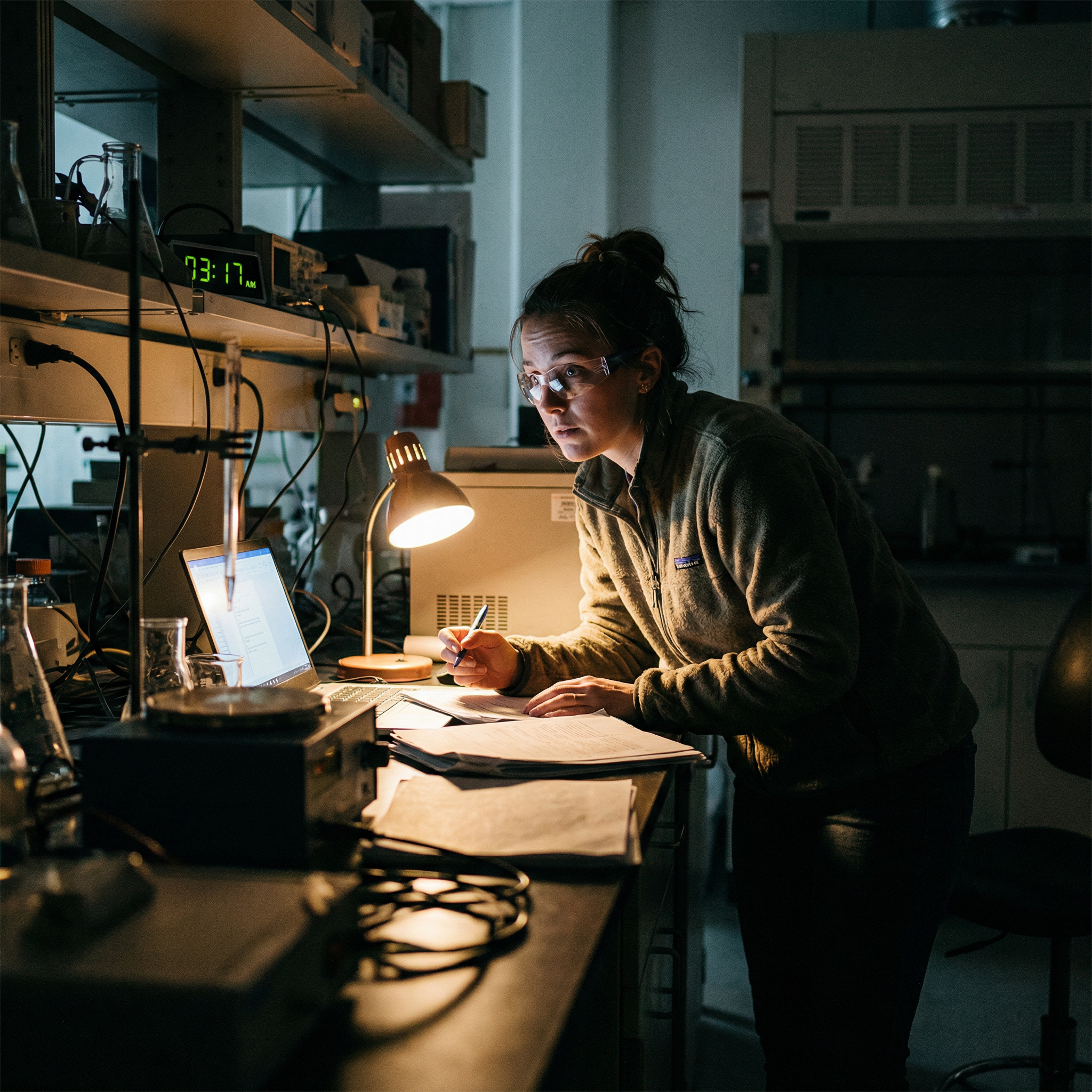
After my 51st birthday, my best friend told the whole table I "wasn't the same anymore." She said it with pity. Like I was already gone. So I found out what was actually wrong with me. And it wasn't what any of them thought. For fifteen years, I was the one who held everything together. The group trips. The birthday dinners. The 6 AM runs before work. I was the one everyone called when they needed a plan, a push, or a ride to the airport at 4 in the morning. At 48, I ran my first half marathon. At 49, I got promoted to VP of operations. At 50, I honestly still felt like I was in my mid-thirties. Then something shifted. It wasn't one morning. It was a hundred mornings. Waking up after eight hours of sleep feeling like I'd slept two. Standing in the shower trying to remember if I'd already used conditioner. Sitting at my desk at 2 PM unable to form a sentence for an email I would've written in thirty seconds a year ago. I gained fourteen pounds without changing a single thing about how I ate. My doctor ran bloodwork. Thyroid: normal. Hormones: "within range." Iron: fine. He looked at me over his glasses and said, "You're 51. This is what happens. Your body is slowing down. I'd recommend accepting the new normal." Accepting the new normal. Like I was supposed to just watch myself disappear and be grateful for the ride. Two weeks later. Saturday brunch. Same group of women I've had brunch with for a decade. I'm sitting there. I've already forgotten the waiter's name twice. I'm on my third coffee and I'm still exhausted. I can feel it on my face. I can see it in how they look at me. Then Lisa says it. She puts her hand on mine. Uses that voice. The one people use when they've already decided you're fragile. "Honey, we're worried about you. You just seem so... depleted. You're not yourself. You used to have so much energy, so much fire. Maybe you should take it easier. Let the younger team handle the big accounts at work." The whole table goes quiet. She keeps going. "I just think you're pushing too hard for where you're at. Your body is telling you something. You need to listen to it." Translation: You're past your prime. Stop embarrassing yourself. I smiled. Said something about being fine. Drove home. Sat in my driveway for twenty minutes. She wasn't saying I looked tired. She was saying I was finished. That night I called my cousin Priya. Priya is a biochemist. Runs a cellular metabolism lab at a research university. We're close but she's the kind of person who's so busy with grants and papers that you have to catch her at the right hour. I caught her. I told her what the doctor said. What Lisa said. How I'd been feeling for the past year. The exhaustion. The fog. The weight. All of it. She listened. Then she got quiet. "Your doctor isn't wrong that something is happening. But he's wrong about why." "What do you mean?" "You're not declining because you're 51. You're declining because you're running out of a molecule called NAD+." I told her I had no idea what that was. "You should. It's in every cell in your body. It's what your mitochondria use to produce energy. It's what your DNA repair enzymes need to fix damage. It activates your sirtuins — they call them the longevity genes. Without NAD+, your cells can't do basically anything." "Okay. So what's happening to mine?" "It's disappearing. After 40, NAD+ levels start dropping. Significantly. By the time you're 50, you've lost roughly half of what you had in your twenties. That's published research. Human tissue studies. Your cells are running on half a tank. That's why you're exhausted. That's why your brain feels slow. That's why the weight isn't moving. It's not willpower. It's fuel." Half. I sat with that for a moment. "Is there anything I can do about it?" "That's the part that would have been science fiction ten years ago. There's a precursor called NMN — nicotinamide mononucleotide. Your body converts it directly into NAD+. One enzymatic step. It's the most direct route to restoring what you've lost." "How do you know this works?" "Because it's not a wellness blog theory. Washington University ran a randomized, double-blind, placebo-controlled trial and published it in Science. Not a nutrition magazine. Science. One of the two most prestigious research journals on the planet. They showed NMN improved insulin sensitivity by about 25 percent in women who were prediabetic. That's comparable to what you'd see from a moderate exercise program." "You're serious." "Harvard Medical School has been researching NAD+ biology for over a decade. David Sinclair — he's a geneticist there, probably the most well-known aging researcher alive — he's been public about taking NMN daily. Wrote a bestselling book about it. This isn't fringe. The human clinical trial data is real and it's growing." I asked her if she takes it. She laughed. "Everyone in my lab takes it. My PI takes it. I started two years ago when I turned 44. I will never stop." She told me about Auvra. Said it was the one her colleagues trust. Clean formulation. Proper dosage based on the clinical research. "Start with 500 milligrams. Morning. Before you eat. Give it six weeks. If you don't feel a difference, I'll admit I was wrong." "And if I do?" "Then you'll be angry it took you this long to find out." I ordered Auvra that night. Started on a Monday. Week one. Subtle. Maybe I was sleeping slightly deeper. Maybe the mornings felt a fraction less heavy. Could have been placebo. I kept going. Week three. The 2 PM wall vanished. I don't mean it got better. I mean it was gone. I was sitting at my desk at 3:30 on a Wednesday and realized I hadn't thought about coffee since morning. I was just... working. Clearly. Steadily. The way I used to. Week four. I woke up before my alarm. Not once. Four days in a row. I hadn't done that in over a year. Week six. Monday morning leadership meeting. Twelve people around the table. I presented the full Q3 operations overhaul from memory. Numbers, timelines, vendor names, risk assessments. No notes. No slides. My director stopped me in the hallway after. "Whatever you're doing, keep doing it. That was the sharpest I've seen you in two years." I called Priya that night. "You don't owe me dinner," I said. "But you owe me an explanation for why my doctor didn't know about this." She didn't laugh. "Because most doctors are trained to manage symptoms, not restore cellular function. They'll prescribe a stimulant for your fatigue and an antidepressant for your fog before they'll measure your NAD+. It's not their fault. It's the system. The research is ahead of the clinic." Two months after I started Auvra. Lisa's birthday dinner. Same restaurant. Same group. Same women who watched me get called "depleted" at brunch ten weeks earlier. I walk in. I slept seven hours. I ran four miles that morning. I feel like myself for the first time in two years. Lisa is talking about her new thyroid medication. Second one this year. She's still exhausted. She tells the table her doctor wants to add a sleep prescription. Dana, across the table, says she's been having the worst brain fog of her life. Forgot a client's name in a meeting. She's 49. Karen says she tried every supplement on the shelf. Magnesium, B12, CoQ10, ashwagandha. Nothing moved the needle. They're all describing the same thing. Exhaustion. Fog. Weight they can't shake. The creeping feeling that their bodies have turned against them. Lisa looks at me. "Okay. What is happening with you? You look completely different. Your skin looks different. Your energy is different. What are you doing?" "I stopped treating symptoms and fixed the root cause." "Which is what?" "A molecule called NAD+. It's in every cell in your body and you've been losing it since your forties. My cousin explained it to me. She's a biochemist." Lisa looks skeptical. "A molecule? Come on." Before I can respond, Dana's husband walks over. He's a cardiologist. He's been listening from the next table. "Sorry to interrupt," he says. "Did you just say NAD+?" I nod. "Are you supplementing with NMN?" "I am." He turns to Dana. "This. This is exactly what I was telling you about. The Washington University trial published in Science. Improved insulin sensitivity. The exercise performance data. The cognitive studies." Dana stares at him. "You never explained it like that." "I tried." He looks back at me. "What dose?" "Five hundred milligrams. Every morning." "That's consistent with the clinical data. The Yoshino trial showed significant metabolic improvement at 250. Multiple trials have tested up to 1,200 with strong safety profiles. No serious adverse events across any of the published human research." He pulls up something on his phone. Shows it to Dana and Lisa. "Look at the institutional backing. Harvard Medical School. Washington University School of Medicine. University of Tokyo. Keio University. This isn't a supplement fad. This is published cellular biology with randomized controlled trials in humans." Lisa reads it. Looks at me. Then looks back at the screen. "And the energy? The brain fog going away? That's from this?" "NAD+ is required for over 500 enzymatic reactions in your body," he says. "Energy production. DNA repair. Brain function. When it drops — and it drops significantly after forty — everything downstream suffers. Restoring it doesn't add something foreign. It puts back what was already supposed to be there." Lisa hasn't touched her food. She's staring at me. This is the woman who told me to "take it easy." Who told me to "let the younger people handle things." She's on two prescriptions. I'm on zero. She can't sleep. I wake up before my alarm. She forgot where she parked. I just presented a Q3 strategy from memory. "You were saying something about me being depleted?" I said. She didn't answer. I drove home that night feeling something I hadn't felt in two years. Not just energy. Not just clarity. Authority. Over my own body. Over the story people were writing about me. The next morning. A text from Lisa. "Okay. I need the exact name of what you're taking. Don't make me ask twice." I screenshot it. Send it to Priya. She sends back: "Tell her to start now. Not next month. Now." "Why the urgency?" "Because NAD+ doesn't pause. The decline is happening every single day. There's no holding pattern. The studies are clear — the benefits are time-dependent. The sooner you intervene, the more cellular function you preserve. Waiting isn't neutral. Waiting is losing ground." She sends me a chart she uses in her lectures. NAD+ levels by decade. The line between 40 and 60 drops like a cliff. "Look at this. At 40, you still have most of your reserves. At 50, you're at roughly half. At 60, the deficit is severe. The window to restore doesn't close — but it narrows. Every year matters." I stared at that chart for a long time. I thought about Lisa. Two medications. A third on the way. Treating the symptoms of a problem no one ever explained to her. I thought about Dana. Her insomnia. Her brain fog. Her husband — a cardiologist — who knew what was happening at the cellular level and couldn't get her to listen. I thought about Karen. Who spent hundreds on supplements that never worked because none of them addressed the actual deficiency. I thought about my doctor. Who told me to "accept the new normal." Accept exhaustion. Accept fog. Accept watching yourself slow down and calling it dignity. No. Here's what I learned. For two years, I thought I was falling apart. My doctor called it aging. My friend called me "depleted." I was starting to believe them both. But I wasn't aging faster than I should have been. I was running out of the single most important molecule in my cells. And no one told me. Not my doctor. Not my trainer. Not the shelf of supplements I was already taking. NAD+ is the fuel your mitochondria need to make energy. The cofactor your DNA repair enzymes need to fix damage. The activator your longevity genes need to keep your cells functioning. It participates in over 500 reactions in your body. And after 40, you lose it. Steadily. Measurably. Roughly half by 50. NMN is the direct precursor. One step to NAD+. Backed by Harvard Medical School. Published in Science. Tested in multiple human clinical trials showing improved energy, sharper cognition, better metabolic function, and enhanced physical performance. This isn't a trend. This is the most well-researched cellular intervention in modern longevity science. My cousin's lab takes it. David Sinclair at Harvard takes it. The cardiologist at Lisa's birthday dinner recommends it to patients over 45. I take Auvra every morning. One capsule. Before the world wakes up. And I haven't felt this sharp, this strong, or this much like myself in years. The woman Lisa called "depleted" at brunch? She's the same woman whose director just told her that was the best presentation in two years. Priya told me something last week that I can't stop thinking about. "The hardest part of this research isn't the science. It's the timing. People don't look into NAD+ when they're 42 and the decline just started. They look into it at 55 when they've already lost a decade of cellular function. The molecule doesn't wait for you to have a crisis. It's leaving right now." Right now. While you're reading this, your NAD+ levels are lower than they were yesterday. If you're over 40 and you feel it — the exhaustion that sleep doesn't fix, the fog that coffee can't cut, the weight that won't move no matter what you do, the quiet fear that your body is giving up on you — It's probably not "just aging." It's probably a molecule your cells are running out of. And you can put it back. Not with another prescription to manage a symptom. Not with another supplement that doesn't address the root cause. With the actual precursor your body is missing. Lisa accepted the new normal. She's on three medications and still exhausted. I questioned the new normal. I'm running four miles before work and presenting from memory. The difference? One capsule. Every morning. The molecule my cells were starving for. Don't let someone tell you to "accept it." Don't let a doctor who doesn't measure NAD+ tell you there's nothing to do. Don't let the friend who's struggling herself convince you that struggling is normal. Your cells aren't broken. They're empty. Fill them back up. Your move.
Like this ad? Make it yours.
Crush rebuilds this exact creative around your product — your brand, your colors, your offer — in about a minute.