Rosacea Reset
Rosacea Reset Facebook ad: “Read If You've Tried Everything For Your Rosacea”
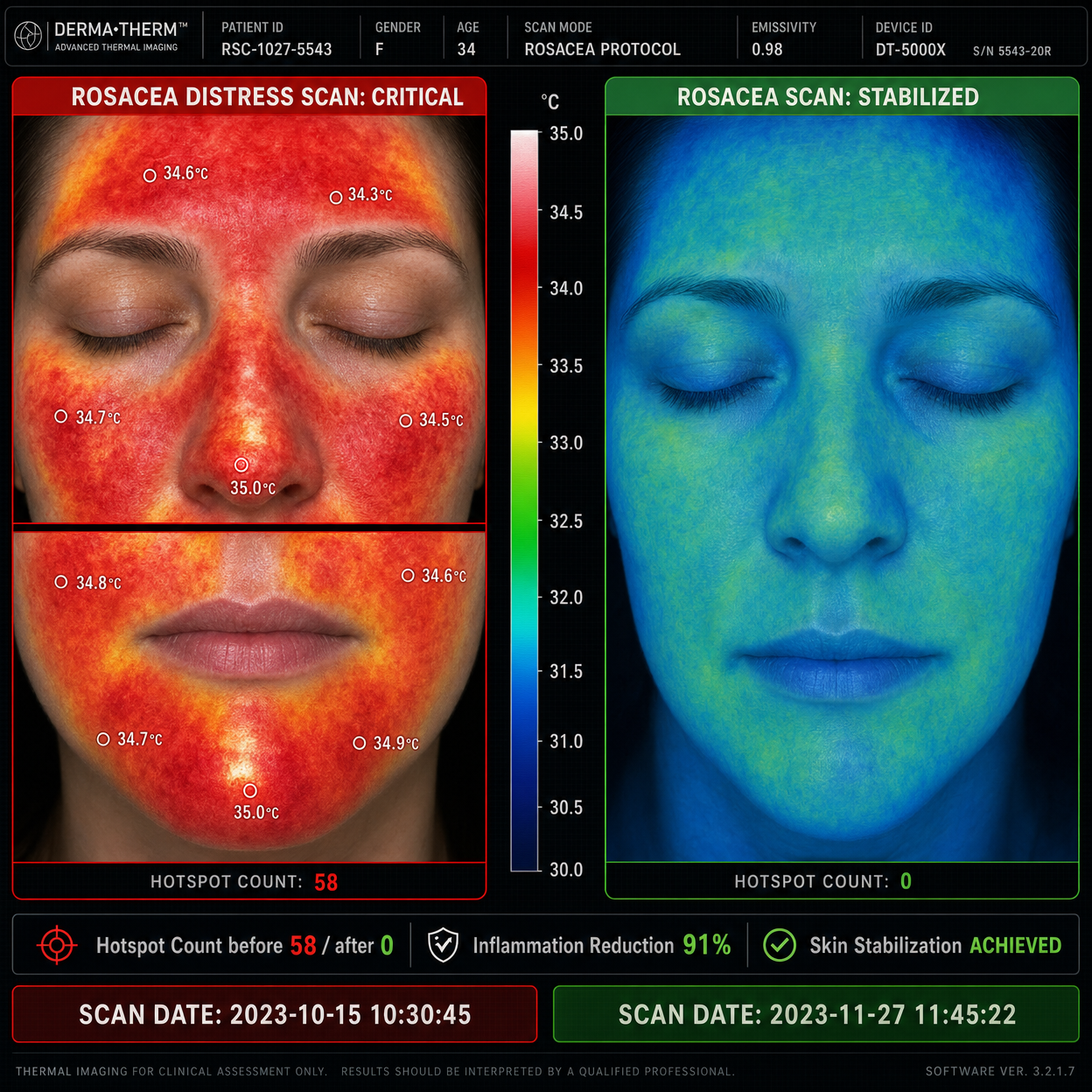
Ran for 23 days, from June 2 to June 25, 2026, the last day Crush saw it.
Run by Rosacea Reset on Facebook. Crush is not the advertiser and does not verify its claims. See this ad in Meta's Ad Library(opens in a new tab)
Want an ad like this for your product?
Crush makes new ad images for your product from this ad: your logo, your product photo, your offer.
Trials from $19.95 USD, then $79.95 USD a month. Cancel anytime.
About this ad
- Meta Ad Library ID
- 1348293500526580
- Platforms
- Facebook, Instagram, Audience Network, Messenger and Threads
- Relaunches
- 0
Ad text
I had a skin flare on a Mediterranean cruise. The ship's doctor was from Austria. She asked me ONE question that made my American dermatologist look 15 years behind. I'm 56 years old. My husband and I saved for two years for this cruise. Two weeks through the Mediterranean. Greece, Italy, Spain. Day four, we're walking through Santorini. Cobblestone streets. Steep hills. Beautiful. But the sun is killing me. My cheeks — red, burning, broken capillaries that have been getting worse for five years — are radiating heat with every step. My face feels so tight and inflamed that even the lightest mineral SPF stings going on. By the time we get back to the ship, my whole face is throbbing. The skin around my nose has flared so badly there are pustules forming. My eyes are watering. My husband looks worried. "We need to get that looked at." I don't want anyone looking at my face. I haven't let anyone see me without makeup in four years. Not a friend dropping by. Not a doctor I didn't have to see. Not my husband in good lighting. But the burning is bad enough that I don't have a choice. The next morning, I go to the ship's concierge. "I need to see a doctor about my skin." She makes a call. Gets me an appointment that afternoon with the ship's physician. Her office is small. Clean. On Deck 3 near the medical center. Dr. Weber. Austrian accent. Maybe mid-50s. She examines my face. Cleans the irritated area around my nose. Applies a cool compress. "The immediate issue is the trauma from the sun and heat exposure," she says. "But this is severe rosacea with significant inflammatory component. How long have you been treating it?" "About five years," I say. "My dermatologist back home has me on metronidazole cream. Every night. And ivermectin in the morning." "Has she discussed systemic loop interruption for your inflammation?" I stare at her. "What's that?" She looks at me for a moment. Then sets down her instruments. "Your face is where rosacea shows up," she says. "But it's not where it starts. Less than 5% of any topical addresses the actual inflammatory drivers in chronic rosacea like yours." "The bigger issue is underneath. The inflammation is a self-feeding cycle — fed by your gut, your bloodstream, and your hormones — that makes it up to 100 times more resistant to surface treatment. Every cream you apply hits the smoke. The fraction that calms the redness can't reach the cytokines being manufactured deeper, the bacterial fragments leaking from your gut into your bloodstream, or the hormonal brake your body lost at perimenopause. The fire is being fed from three places your topical was never designed to reach." I'm listening. But I don't understand why my dermatologist never explained this. "My dermatologist never said anything about a gut-skin connection." Dr. Weber nods slowly. "It's not commonly discussed in American dermatology practice," she says. "Most focus on topical protocols and oral antibiotics as the escalation. But in European dermatology, the gut-skin axis and systemic inflammatory drivers in rosacea have been understood for over a decade." "So what do I do?" I ask. "There's extensive research on systemic loop interruption," she says. "Lipid-soluble compounds — specifically carvacrol from oregano oil and thymoquinone from black seed oil — that enter the bloodstream and cut the fuel line from the inside. Bypassing the limits of any topical entirely. It's been showing significant results for chronic rosacea — especially in women whose flares accelerated in perimenopause." "My dermatologist never mentioned anything like that." "It's well-established in European clinical practice," she says. "But not standard protocol yet in the US. If I were you, I'd look into it when you get home." She paused. Then added: "Five years on a cream that addresses 5% of what's driving your rosacea is not treatment. It's monitoring the decline." I thank her and leave. But I can't stop thinking about it. For the rest of the cruise, it's in the back of my mind. Five years. My dermatologist had been prescribing creams. Checking my face every few months. Watching the redness spread from my cheeks to my nose to my chin. Telling me to keep applying. But she never once mentioned that the inflammation has three layers and the cream can't reach any of them except the surface. Or that the loop is self-feeding and gets 100 times more resistant once it's established. Or that there was research on cutting the fuel line systemically through the bloodstream. When we got home, I couldn't let it go. The night we unpacked, I opened my laptop. It was 11:45 PM. I started searching. "gut-skin axis rosacea inflammation" "systemic carvacrol rosacea cytokines" "European loop interruption rosacea protocol" At 1:30 AM, I found it. Peer-reviewed dermatology and gastroenterology research. Published in clinical journals. Study after study confirming exactly what Dr. Weber had told me. Topical antimicrobials address less than 5% of the inflammatory drivers in chronic rosacea. Women with rosacea are significantly more likely to have SIBO and H. pylori. Carvacrol from oregano oil demonstrates direct cytokine suppression and SIBO clearance comparable to prescription rifaximin. Thymoquinone from black seed oil directly suppresses IL-6, IL-12, and TNF-α, plus provides hormonal modulation in postmenopausal women. Both delivered systemically through the bloodstream. The research was there. Published. Peer-reviewed. Some of it over a decade old. I read the studies three times. I felt something rising in my chest. Not anger. Something else. Disbelief, maybe. My dermatologist had been prescribing creams since 2019. Five years. And there was published research — from before she even started treating me — showing that topicals can't reach the gut, the bloodstream, or the hormonal layer, and that systemic loop interruption could address the actual fuel line. Why hadn't she mentioned it? I kept reading. More studies. European research. Clinical data. All showing the same mechanism. Same results. At 2:50 AM, I started looking for products. Most oregano supplements were garbage. Generic powder at 20-30% carvacrol. Nowhere near the 70%+ standardization the research used. But I found one company making a pharmaceutical-grade formulation. Orgatics. Wild Oregano Oil standardized above 70% carvacrol. Cold-Pressed Black Seed Oil with standardized thymoquinone. Oil-based softgels for systemic delivery. I read the reviews. Women describing exactly what I was going through. Years of creams that never reached the cause. Then visible calming within weeks of switching to systemic delivery. I ordered a pouch at 3:15 AM. When it arrived, I started immediately. Two capsules with breakfast. No layered routine. No serums first. No special cleanser. No tinted moisturizer. Sixty seconds. Done. Week one: The burning sensation — that constant heat I'd carried for years — was calmer. Something was reaching the inflammation from inside. Week two: I looked closely at my cheeks in the morning. The flush that automatically appeared when I woke up — fainter. The tightness was gone. My skin was holding moisture differently. Week four: The redness reduction was wider. Visible without filters. Three areas showing the same pattern. The pustules around my nose flattening. Week eight: I took a photo and compared it to one from two months earlier. The difference was visible. Over 50% reduction in baseline redness. The flushing episodes had stopped. The papules and pustules were resolving. No new flares from heat exposure. The spreading had stopped. At three months, I went back to my regular dermatologist. She examined my face. Then she stopped. "Your erythema score has dropped significantly," she said. "Actually, the inflammatory papules are nearly resolved. That's unusual on topical protocol alone." "I stopped the creams three months ago." Her head came up. "You stopped?" "I found something else. A capsule. Pharmaceutical-grade oregano oil and black seed oil. Systemic delivery through the bloodstream. Cuts the fuel line that the cream couldn't reach." My dermatologist looked at my chart. "I'm not familiar with that approach," she said. "But the results speak for themselves. Keep doing whatever you're doing." I left her office feeling something I hadn't felt in years. Not angry. Not betrayed. Just aware. My dermatologist wasn't hiding anything from me. She just didn't know. The research existed. The studies were published. The results were documented. But it wasn't part of her training. It wasn't standard protocol in American dermatology. So she did what she was taught: prescribe creams, monitor the inflammation, consider long-term oral antibiotics or laser if it gets severe. Meanwhile, in European dermatology clinics, they'd been using systemic loop interruption as a treatment approach for over a decade. I'm 57 now. My face is calm. And I think about that cruise ship doctor all the time. The one who took ten minutes to explain what rosacea actually is. What the inflammatory loop does. Why creams can't reach the cause. Something my dermatologist had never mentioned in five years. If your dermatologist is prescribing creams and telling you to "be patient" with no improvement after months or years, you need to know something. The research exists. Published dermatology studies. Peer-reviewed clinical data. Showing that topicals address less than 5% of the inflammatory drivers and that systemic carvacrol at pharmaceutical-grade concentration can cut the fuel line feeding the loop. Your dermatologist probably hasn't seen it. Not because she's incompetent. But because American dermatology training focuses on topical protocols and antibiotic escalation. Systemic loop interruption with plant-derived compounds isn't standard protocol yet. So when your dermatologist says "keep applying the cream," she's telling you what she was trained to recommend. But she's not telling you about the research that could actually address why the inflammation survives behind three barriers no topical can reach. The brand I use is Orgatics Oregano & Black Seed Oil. Pharmaceutical-grade. 70%+ standardized carvacrol. Cold-pressed thymoquinone. Two capsules with breakfast. I don't get anything from sharing this. I just know what it's like to apply cream every night for five years with no improvement. And I know what it's like to have a doctor on a cruise ship — someone I met by accident because my face flared up in the Greek sun — explain in ten minutes what my dermatologist never mentioned in five years. If you're being told to "just keep applying," you deserve to know there's research your dermatologist might not have seen. Research that could cut the fuel line without long-term oral antibiotics or laser maintenance. Research that's been understood in European dermatology for over a decade. You don't have to wait for your dermatologist to learn about it. You can look into it yourself. 👉 tryorgatics.com/pages/rosacea 90-day money-back guarantee. If you don't see calmer skin, full refund. — Christine Novak, 57 P.S. — My husband took a photo of me in Santorini. Big sun hat, scarf wrapped around my cheeks in 90-degree heat while everyone else was bare-faced in the sunshine. Last month, we went out to dinner and I left the house without foundation. He looked at me and said, "I haven't seen that face in years." It had been hidden under coverage since before the rosacea got bad. My skin looks like itself again now that the inflammation is calm.
Where the ad sends people
tryorgatics.com
Read If You've Tried Everything For Your Rosacea ☝️
Orgatics
Learn more: tryorgatics.com(opens in a new tab)