Margaret Sterling
Margaret Sterling Facebook ad: “Click here and stop Diabetic Retinopathy tomorrow”
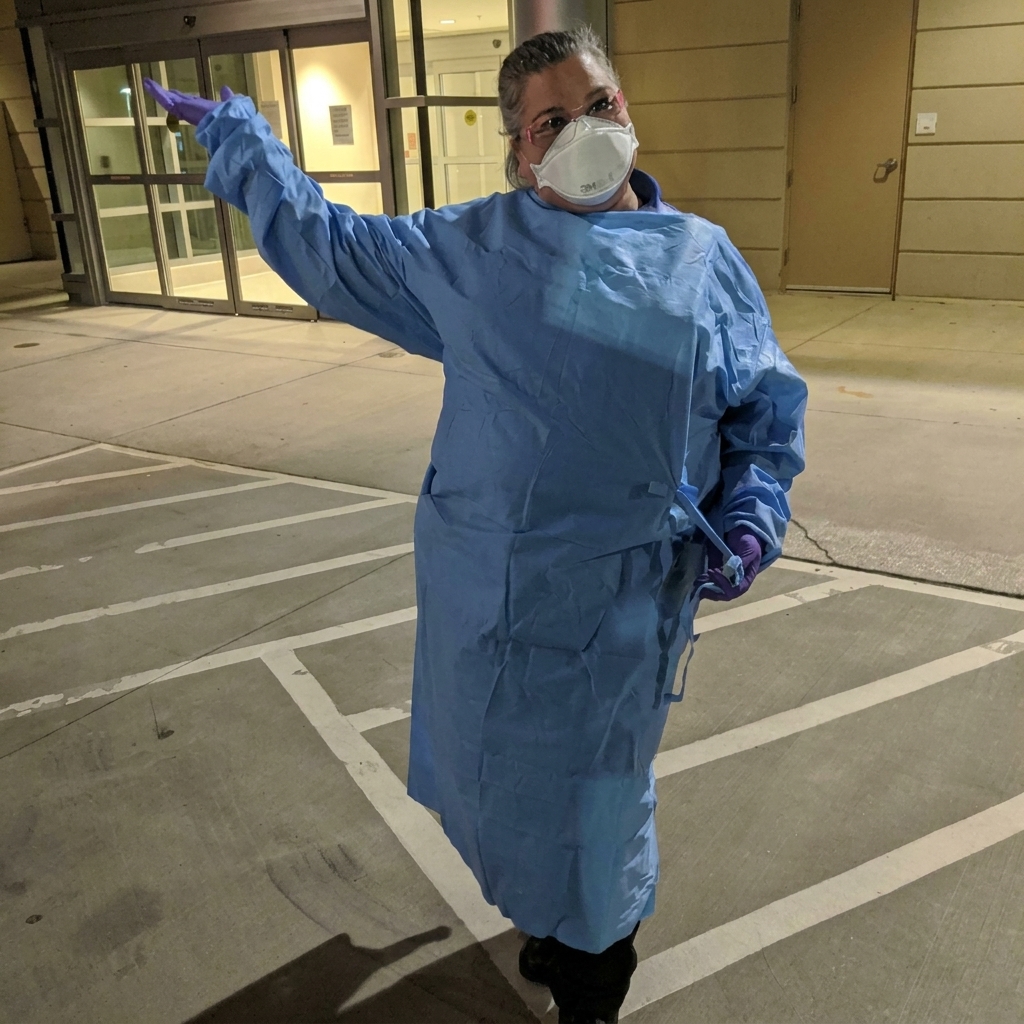
Ran for 21 days, from August 21 to September 11, 2026, the last day Crush saw it.
Run by Margaret Sterling on Facebook. Crush is not the advertiser and does not verify its claims. See this ad in Meta's Ad Library(opens in a new tab)
Want an ad like this for your product?
Crush makes new ad images for your product from this ad: your logo, your product photo, your offer.
Trials from $19.95 USD, then $79.95 USD a month. Cancel anytime.
About this ad
- Meta Ad Library ID
- 1366681675678220
- Platforms
- Facebook, Instagram and Threads
- Relaunches
- 0
Ad text
I'm an ophthalmic surgical technician. The retinal surgeon I've scrubbed in beside for sixteen years doesn't trust his own eye vitamin to protect his eyes. Every morning before we prep the first case, he opens a small amber bottle from his briefcase, takes two capsules with black coffee, and puts it back without a word. He's done this for sixteen years. I never once saw him mention it to a patient. I never asked either. Last October, I got a reason to ask. I'm going to tell you exactly what he said to me that night, because I spent sixteen years handing him instruments while he worked on eyes that didn't have to end up on his table. Eyes that belonged to people who thought they were doing everything right. I can't be the person who stays quiet about this anymore. My name is Sandra. At the surgery center, everyone calls me Sandy. I've been a certified ophthalmic surgical technician for seventeen years. I'm the one standing at the surgeon's elbow during the procedure, managing the instruments, keeping the field clear while he works inside someone's eye. I work at a retinal surgery center that handles north of six hundred procedures a year. Anti-VEGF injections, mostly, the needle they put directly into your eye when the retina starts to bleed. Laser. Vitrectomies. I've assisted on more than four thousand of them. Some planned weeks ahead, the patient anxious but prepared. Some urgent, a woman arrives with a dark smear across the center of her vision that wasn't there yesterday, and there's a clock running on her retina nobody can rewind. The surgeon I've stood beside for most of those years is a man I'll call Dr. Alderman. That's not his real name. By the time you finish reading, you'll understand why I can't use it. He is one of the finest retinal specialists in this part of the country. Patients drive four, five hours to see him. His hands are something else, a stillness to them that doesn't deteriorate at hour three, hour five, even on the long cases where one wrong micron means a detachment. That's the man whose briefcase I'd been watching for sixteen years. I want to tell you something most people will never see, because you need to see it before the rest makes sense. I know what a failing retina looks like from the inside. Not from a brochure. I've looked at it through a surgical microscope while the tissue was still alive. The macula is a tiny area, maybe five millimeters across, at the center of your retina. It's responsible for everything you think of as seeing. Reading. Recognizing your husband's face across a room. Seeing your grandchild's expression when they open a present. Threading a needle. Reading a pill bottle. Driving. A healthy macula has color to it. A yellow pigment sits over it like a filter on a lens. You can see it. It has density and structure. It's the macula's shield. When it's gone, and in a diabetic eye I have seen this more times than I can count, the macula looks exposed. Pale. Thin. Like someone stripped the roof off a house and left everything inside to weather. You can see the little deposits of waste that built up because nothing was protecting the tissue above. You can see where the light-sensing cells have started to die in clusters. And in the worst cases, the ones that make my stomach drop even after seventeen years, you can see where new, abnormal blood vessels have punched up from below. Leaking. Bleeding. That's when the injections start. That's when someone sits in a chair every four to six weeks and lets a needle go into their eye because there's no other option left. Every single time, the damage is heaviest at the center. Right at the fovea, the very middle, the point of sharpest vision, the place you're using right now to read these words. The edges sometimes look okay. The center is where it falls apart. I filed that away for a long time without understanding what it meant. Now let me tell you about Dr. Alderman's morning routine, because I watched it so many times it became part of the furniture of my day. He'd arrive early. Set down his briefcase, and before he even put on his white coat, he'd open it, take out a small amber bottle, shake out two capsules, and swallow them with what was left of his coffee. Then the bottle went back in the briefcase, and he'd start his day like it never happened. He didn't take them with the other vitamins some of the staff kept in the break room. They stayed in his briefcase. Like they were his. But here's the thing that made it stick, year after year. He never once, not in sixteen years, recommended that specific supplement to a patient. He prescribed the standard formula. PreserVision. Ocuvite. The same brands every retinal specialist recommends, because that's what the guidelines say, and that's what keeps your license clean. But whatever was in that amber bottle was something else. And it was only for him. Last October, I was sitting in an exam chair myself. A different ophthalmologist across town, someone who didn't know me, because I didn't want the people I work with to know what I was worried about. I was sixty-one. I'm diabetic, have been for years. My mother had trouble with her eyes too, spent her last years getting injections in both, every six weeks, gripping the armrests while a needle went in. She never complained. And her vision still got worse. By the end she couldn't see my face clearly from across her kitchen table. I'd been noticing things for about a year. A blur on the small print at work. The center of my vision not quite as crisp as the edges. Catching myself tilting my head to read. The Amsler grid on my refrigerator, the one I'd kept up for years because when you do what I do you check, had started to show a faint waviness near the center I couldn't pretend wasn't there. The scan came up. Early diabetic changes in the retina. Both eyes. Deposits building at the fovea. Macular pigment below normal for my age. He said it calmly. Clinically. "We'll monitor it. Come back in six months. Keep your sugar down, take your PreserVision, wear your sunglasses." And I felt the floor tilt. Because I'd been on the other side of "we'll monitor it" for seventeen years. I'd prepped the patients who got monitored. I'd set up the trays for the procedures that came after the monitoring stopped working. And now he was telling me to take PreserVision. The same one I already had in my bag. The same one I'd taken for three years thinking I was being responsible. I drove home and sat in my driveway for twenty minutes. Then I thought about the amber bottle in Dr. Alderman's briefcase. I need to tell you about a patient before I tell you what happened next, because she's the reason I finally opened my mouth. I'll call her Evelyn. Sixty-eight. Retired librarian. Diabetic, and diagnosed with early retinal changes five years before we ever saw her. The day she got that diagnosis she went straight to the pharmacy, bought PreserVision, and took it every day without missing. Wore the blue-light glasses. Ate her greens. Kept her sugar down. Every six-month follow-up like clockwork. Five years of perfect compliance. I prepped her. I pulled up her imaging while we waited for Dr. Alderman. Her scans told a story her supplement bottle couldn't. Over five years her deposits had grown, steadily, especially at the fovea. The outer ring of her macula didn't look terrible. Some pigment there. But the center, the part she needed most, the part that let her read and see faces and drive, was thinning. She'd converted to wet in her left eye. A small bleed on the scan. That's why she'd been referred to us. The injections were about to start. And sitting on top of her open purse was a bottle of PreserVision. Half empty. She'd brought it like a talisman. Like proof she'd been good. And I thought, she did listen. She did exactly what they told her. And here she is. I waited three more weeks. Fear, maybe. Or the deference that builds over sixteen years beside someone you respect. You don't question. You assist. But my own diagnosis was three weeks old, and every morning I watched him take those capsules, and every afternoon I helped treat eyes that looked like mine was going to look in five years. On a Thursday, after our last case, I found him in his office and said, "Dr. Alderman, can I ask you something personal?" In sixteen years I'd never asked him anything personal. He knew it. I told him. Early changes, both eyes. My mother's nine years of injections. Three years of PreserVision and my fovea already thinning. I watched his face change. Just a slight shift around his eyes, the way someone looks when they've been waiting for a conversation they hoped wouldn't come. "And I've watched you take something from that bottle every morning for sixteen years," I said. "And I've never seen you recommend it to a single patient. I need to know what it is." He set down his pen. Then he said, "Not here. Are you free for dinner?" We went to a diner twenty minutes away. Vinyl booths, a waitress who calls everyone hon. He ordered coffee. So did I. "Sandy, what I'm going to tell you, I need you to understand why I've never said it in the office. And I'm not telling you as your doctor. I'm telling you as someone who's watched you work sixteen years and doesn't want to see you end up in one of our chairs." "What do you think this disease is?" he asked. I gave the textbook answer. The diabetes. The deposits. The gradual breakdown, maybe slowed by the standard vitamin. He shook his head. "That's the version we tell people. It's not false. But it leaves out the part that matters." He pulled a napkin from the dispenser and drew a small circle. "Your macula sits at the center of your retina. About five millimeters. It handles everything you actually look at. And sitting on top of it, when things work the way they should, is a layer of yellow pigment. Think of it like built-in sunglasses your body lays down over the most vulnerable tissue in your visual system." He drew a dome over the circle. "That pigment filters the harsh light before it reaches the cells underneath. And it soaks up the daily oxidative wear. When it's thick, your macula is protected. When it thins, when it starves, everything underneath is exposed. The cells start dying. Waste builds up. And eventually the eye panics and grows those fragile vessels that leak." "That's wet conversion," I said. "That's wet conversion. And by then we're past prevention. We're doing injections every month to beat back vessels that never should have grown." He set down the pen. "Sandy, this isn't just your eyes getting old. At its root it's macular pigment starvation. That layer has been thinning quietly for years, and by the time you see it on a scan, the protection is already badly compromised." Then he leaned in. "And for a diabetic it's worse, because a diabetic eye burns through that center pigment faster than any other. And that center sits behind the blood retina barrier, a wall your blood sugar never crosses. So you can keep your numbers textbook, take your vitamin every day, and the center still gets nothing. Your control was never reaching it." "So the question," he said, "isn't how do we treat the deposits. It's how do we feed the pigment back." "Now here's where it gets complicated. And here's why I can't say it in the office." He drew three rings on the napkin. "Your macular pigment is made of three carotenoids. Not two. Three. Lutein, zeaxanthin, and meso zeaxanthin. And they're arranged in a specific architecture. Lutein in the outer ring, the perimeter guard. Zeaxanthin in the middle. And meso zeaxanthin right here, the fovea, dead center, the point of highest acuity. Where you read. Where you recognize faces." He looked up. "What's in PreserVision?" "Lutein and zeaxanthin," I said. "That's it. Ten milligrams of lutein. Two of zeaxanthin. No meso zeaxanthin. Zero. The standard formula every ophthalmologist recommends, including me, because it's the guideline and the guideline is what keeps your license, has two of the three your macula needs." "So you're protecting the outer ring and the middle," I said slowly. "But the center." "The center is exposed. The fovea, the exact point where the damage shows first, where your patients lose their reading and their faces and their driving, is the one area the standard vitamin doesn't specifically protect." I thought about Evelyn's scan. The outer macula holding. The fovea going. "If this is known," I asked, "why isn't meso zeaxanthin in the standard formula?" He rubbed his eyes. "Because the big trial that anchors every guideline was designed before meso zeaxanthin was commercially available in supplement form. So it was left out. And updating the guideline would mean admitting the gold-standard formula was incomplete. That's not a medical problem. It's a business problem. The newer research exists, it's published, peer-reviewed. But guidelines lag the research by years." "So what's in your briefcase?" He reached into his jacket, he'd brought it, because he'd known this conversation was coming the moment I asked, and set a bottle on the table. Amber glass. White label. The label said Neurobella. I turned it over. Lutein, 20 milligrams. Not ten. Twenty. Zeaxanthin, 2. Meso zeaxanthin, 2. All three, at doses that matched the research. And it kept going. Saffron. Astaxanthin. Bilberry. Ginkgo. Omega-3s. Zinc and copper. Fifteen ingredients. "It's a supplement," I said, and I heard how small that sounded against everything he'd told me. "It's a supplement. Not a drug. Not a procedure. A capsule you take every morning that gives your macular pigment the raw materials to feed itself back, all of them, not two-thirds." "Why this one?" "Because most won't give you what you need. Feeding the center takes specific things to be true about what you take." He held up a finger. "One. All three carotenoids at real doses. Not token amounts hidden in a proprietary blend. Twenty milligrams of lutein, double what most brands use. Two of zeaxanthin. Two of meso zeaxanthin, which most brands skip entirely because it's expensive and most people don't know to look for it." A second finger. "Two. It can't just be the carotenoids. Your retina is under oxidative wear every day. The astaxanthin is one of the few antioxidants that actually reaches retinal tissue. The saffron supports the light-sensing cells. The bilberry supports blood flow to the layer that feeds the retina. The omega-3s support the cell membranes. Every ingredient has a job." A third. "Three. It has to use standardized extracts, not raw ground-up powder that varies batch to batch. If your supplement uses a different form, you have no way of knowing whether what's in the capsule matches what the research tested." He set the bottle down. "I've looked at dozens over the years. Most fail on the first point alone. No meso zeaxanthin. The ones that include it usually put in a fraction of a milligram for the label. This one checks every box. That's why it's in my briefcase." "Why don't you tell your patients?" He looked at the table a long time. "Because I'm a board-certified retinal surgeon at a credentialed center. My recommendations have to align with published guidelines. The guidelines say the standard formula. If I tell patients to take something outside the guideline and one has a bad outcome, my malpractice carrier drops me, my privileges get reviewed, my license is on the table." "I have watched patients sit in my chair with five years of foveal thinning despite perfect compliance. I've started them on injection protocols that cost two thousand dollars a month and last the rest of their lives. And I've gone home and taken two capsules from a bottle in my briefcase that I believe, based on the evidence I've read with my own eyes, could have changed the trajectory of their disease if they'd had it five years earlier." His hands were flat on the table, pressing down, the way I'd seen them press flat on the surgical drape before a difficult case. "That's the system I work inside. I don't know how to fix it. But I can tell you what I take. And why." He pushed the bottle across. "Take it. Start tonight. Don't skip days. The pigment feeds back slowly, weeks for the carotenoids to deposit, months before it shows on imaging. But your fovea needs it now, not six months from now when your next scan shows more thinning and we start talking about what comes next." I asked one more thing before we left. "Can I tell people?" He was quiet. "I can't stop you from sharing your own experience. But if you write about it, don't use my name. Don't name the center." Then he said something that surprised me. "I've been hoping someone would talk about this for a long time. I just can't be the one who does." I started taking Neurobella that night. I want to be honest about what happened, because I'm not selling anything. I'm a surgical tech who makes her living handing instruments to someone smarter than me. No commission. No coupon code. I'm writing this because I spent sixteen years watching people lose their central vision after doing exactly what they were told. The first two weeks, nothing. I didn't expect otherwise, he'd told me the carotenoids need time to deposit. But I checked the Amsler grid every morning. Same faint waviness. No change. Week three, the first thing I noticed wasn't my central vision. It was strain. I work long hours under surgical lighting, and by the end of a day my eyes usually feel wrung out. End of week three, I got to the end of a ten-hour day and they didn't. Subtle. But there. Week four, colors. Not dramatic, not like new glasses, more like the saturation dial turned up a notch. The red on a stop sign redder. My granddaughter's crayon drawings on the fridge more vivid than I remembered. I stood in front of them one morning and cried and couldn't fully explain why. Week six, I was at the grocery store reading the small print on a cereal box at arm's length, and realized my reading glasses were still on my head. The fine print was clear. Not perfect. But clearer than it had been in over a year. Week eight, the Amsler grid. The waviness at the center, the thing that had sent me to that office in the first place, was less. Not gone. But the lines were straighter. I took a photo of it. I needed proof I wasn't imagining it. Six months later I went back for imaging. He ran the scan, compared it to six months prior, and was quiet longer than I expected. "Things look stable," he said. "The deposits at the fovea haven't progressed. More stable than I'd expect at this interval. Are you doing anything differently?" "Just a supplement," I said. "Whatever it is, keep doing it." No referral to a retina specialist. No injection timeline. No "we'll monitor it" in that careful tone that means we're watching it get worse and hoping it's slow. Just, keep doing it. I sat in that parking lot and called my sister, who has the same diagnosis. Then my friend Donna. Then I went home and started writing this. It fails because it starves. It starves because the supplement the whole system recommends is missing the carotenoid that feeds the center. And the center is where you live. Where your reading is. Where faces are. Neurobella doesn't cure anything. I want to be clear. Nothing does. Anyone who tells you otherwise is lying. But it gives your macula what it's been starving for. All three carotenoids at the doses the research used, plus the antioxidant and blood-flow support a two-ingredient formula was never designed to provide. It gives your fovea a chance. Let me talk to some of you directly. If you've been taking PreserVision faithfully and your scans still get worse, you're not doing anything wrong. You've been compliant. The formula is incomplete. Your fovea has been unprotected the whole time, and no amount of lutein and zeaxanthin alone changes that. You need the third carotenoid. You've needed it all along. If your doctor said the deposits at your fovea are growing year over year, that's your pigment thinning in real time. Every month without the complete carotenoid support is a month closer to the conversation about injections. The window to feed the pigment is now. If you've tried multiple supplements and nothing moved, check the label. No meso zeaxanthin, or it's buried in a blend with no milligram amount? You've been supplementing the edges while the center goes unprotected. It's not that supplements don't work. It's that incomplete ones don't. If you've just been diagnosed and your doctor said "we'll monitor it" and you're terrified, I was you. Eight months ago I sat in a parking lot with a diagnosis and a bottle of PreserVision and my mother's history of needles and no idea there was something better. You have time. But the window doesn't stay open forever. If someone you love went through the injections and you've sworn you won't follow that path, I understand that promise. I made it watching my mother grip those armrests every six weeks. This is part of how I'm keeping it. Neurobella comes with a 90-day money-back guarantee. Take it 90 days, and if you're not satisfied, send back the bottles, even empty, and get every penny back. I asked Dr. Alderman about that once. "What kind of company takes back empty bottles?" He said, "The kind that knows what happens at ninety days." Because the pigment doesn't feed back overnight. Ninety days isn't arbitrary. It's the window for the science to show up in your tissue. Compare that to the guarantee on your current eye supplement. Go ahead, check the box. One more honest thing. Supply. Real-dose meso zeaxanthin isn't cheap to produce. The big companies skip it precisely because it's expensive and most people don't know to ask. Neurobella includes it at the full dose, so their runs are limited in a way a mass-market bottle never is. I'm not telling you that to pressure you. I'm telling you because this doesn't wait for restocks. If it's available now and you're in a position to try it, I wouldn't wait. My name is Sandra Kowalski. My friends call me Sandy. I'm sixty-one. Seventeen years an ophthalmic surgical technician. More than four thousand procedures. I've watched more people lose their central vision than I can count, good, compliant people who did everything their doctors told them. I'm writing this because a surgeon I trust told me the truth, and it's too important to keep between two people in a diner booth. Your macula may be starving. The supplement you're taking, if you're taking one, is almost certainly incomplete. And the part of your vision that matters most, the center, is the part that's least protected. I take it every morning. Dr. Alderman takes it every morning. And for the first time in seventeen years, I feel like I'm doing something real for my eyes instead of just watching the clock. Two white capsules every morning with breakfast. — Sandy P.S. If you start and don't notice anything the first two weeks, don't panic. That's normal. The carotenoids are depositing at a level you can't feel yet. Stay consistent. The changes come quietly, less strain first, then color, then clarity. By week eight, you'll know. P.P.S. The 90-day guarantee is real. Empty bottles accepted. I confirmed it myself before I wrote a word, because I wouldn't ask you to try something I hadn't verified. P.P.P.S. If you're on PreserVision or another standard formula, talk to your eye doctor before changing anything. I'm not telling you to stop. I'm telling you what you're taking may be incomplete, and that adding the meso zeaxanthin your current supplement almost certainly doesn't contain is something worth raising with your doctor. P.P.P.P.S. I think about Evelyn sometimes. The librarian with the PreserVision in her purse. She's on monthly injections now. She did everything right. She just didn't have all the information. I'm writing this so you do.
Where the ad sends people
neuro-bella.com
👉 Click here and stop Diabetic Retinopathy tomorrow
70,000+ Happy Customers
Learn more: neuro-bella.com(opens in a new tab)