The Cattery Network
The Cattery Network Facebook ad: “82% of Purebred Cats Are Deficient”
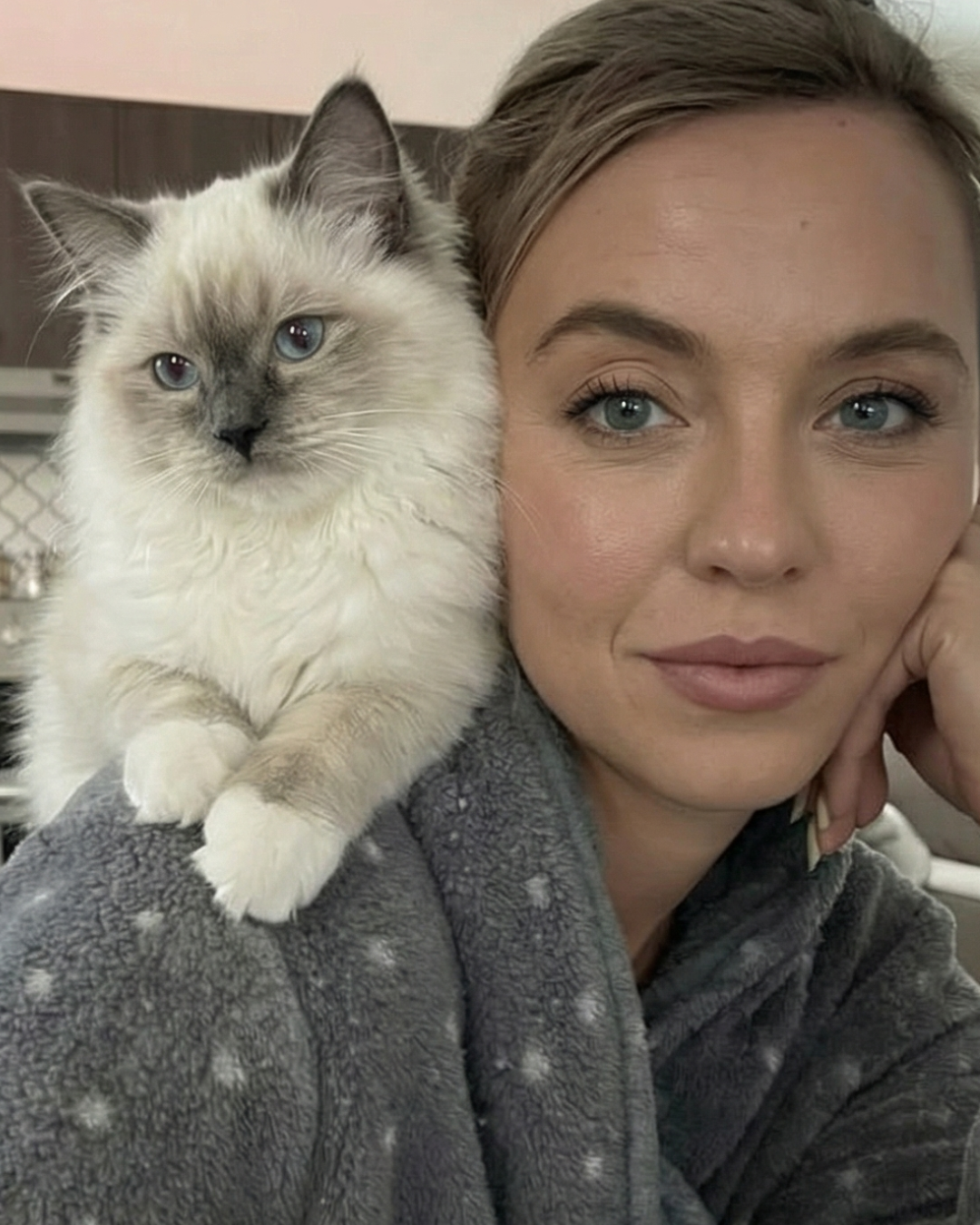
Ran for 51 days, from January 5 to February 25, 2026, the last day Crush saw it.
Run by The Cattery Network on Facebook. Crush is not the advertiser and does not verify its claims. See this ad in Meta's Ad Library(opens in a new tab)
Want an ad like this for your product?
Crush makes new ad images for your product from this ad: your logo, your product photo, your offer.
Trials from $19.95 USD, then $79.95 USD a month. Cancel anytime.
About this ad
- Meta Ad Library ID
- 1369788711027155
- Platforms
- Facebook, Instagram, Audience Network, Messenger and Threads
- Relaunches
- 0
Ad text
I'm a championship Ragdoll breeder with 9 Supreme Grand Champions and I just realized I've been sending $2,800 kittens home with an 825mg daily taurine deficit that's killing them before they turn 5. Every single one of them. For 13 years. My name is Jennifer Anderson. I run Sapphire Dream Ragdoll Cattery. I've produced 240 registered kittens, competed internationally, worked with veterinary cardiologists on genetic screening. I thought I was doing everything right. Then Marcus called. "Luna collapsed last night. The cardiologist said her heart is failing. She's only 3." Luna was from my 2021 litter. Perfect genetics. HCM gene-negative. Fed exactly what I recommended: Royal Canin Ragdoll Adult. The breed-specific formula. $92 per bag. "Complete and balanced." Marcus had already spent $6,400 on emergency cardiology. Multiple echocardiograms. Specialist consultations. Every genetic test: negative. Every cardiac screening: "consistent with DCM but no identifiable cause." But his $2,800 Ragdoll was dying. That's when I started asking the question that would destroy everything I thought I knew: "What if it's not genetic?" I called my vet. Dr. Reeves. We've worked together for 13 years. "I need taurine panels. On every Ragdoll from my last four litters." Three days later, he called back. His voice was flat. Clinical. "Fourteen cats tested. Twelve are deficient. Two are borderline." 86%. These weren't rescue cats eating bottom-shelf food. These were $2,200-$2,800 purebred Ragdolls in homes wealthy enough to afford that price tag. Homes feeding $75-$90 bags of premium, grain-free, "biologically appropriate," and even breed-specific formulas. Homes doing everything I told them to do. I sat staring at the lab results, physically nauseous. Because I finally understood what was killing my cats. Here's what no Ragdoll breeder tells you when you buy a $2,500 show-quality kitten: The same genetics that make them stunning also make them critically vulnerable. Ragdolls have significantly higher taurine requirements than average cats. Their larger body mass. Their specific breed metabolism. Their genetic predisposition to HCM (even when gene-negative). They need MORE taurine just to keep their hearts beating normally. And here's the part that made me want to scream: The premium foods I'd been recommending for 13 years—including the "Ragdoll-specific" formulas? They're calibrated for average 10-pound domestic shorthairs. Not 15-18 pound Ragdoll males with breed-specific cardiac vulnerabilities. Royal Canin Ragdoll Adult—literally formulated "for the breed"—lists taurine at 0.22% minimum. That meets AAFCO standards. It's labeled "complete and balanced." But for a Ragdoll with elevated cardiac demands and slower metabolism? It's not even close. Dr. Reeves walked me through the physiology: "Ragdolls need approximately 700-900mg of bioavailable taurine per day to maintain optimal cardiac function. But grain-free formulas with legumes? The peas and lentils contain anti-nutrients that block taurine absorption. And even 'breed-specific' foods assume average feline metabolism—Ragdolls process nutrients differently due to their size and genetics." I felt like I'd been gutted. I've spent 13 years selecting breeding pairs. Genetic testing for HCM, PKD, FeLV. Socializing kittens from day one. Providing lifetime health guarantees. And I've been sending them home with a taurine deficit that kills them before they're five. I started contacting other Ragdoll breeders in my network. Breeder in Washington: Lost her own 6-year-old queen to "sudden DCM." Fed Wellness CORE exclusively. Breeder in Texas: Three buyers reported lethargy and heart murmurs in cats under 30 months. All feeding the premium brands he recommended. Breeder in Ontario: Had to refund $8,200 to two buyers whose kittens developed heart failure at 18 and 22 months old. "Fed exactly what was on my care sheet." We've all been making the same catastrophic mistake. We obsessed over pedigrees. We tested for HCM genes. We marketed "championship bloodlines" and "genetically superior" cats. And we completely missed the most fundamental nutritional requirement for the breed. Here's what I learned after three weeks of desperate research: Ragdolls need approximately 700-900mg of bioavailable taurine per day to maintain optimal cardiac health. Maine Coons need 800-1,000mg. Norwegian Forest Cats need 750-950mg. British Shorthairs need similar amounts. Most premium grain-free foods—even the $95/bag boutique brands—provide about 60-90mg of bioavailable taurine per day when you account for: - Heat processing that degrades up to 50% of taurine during kibble manufacturing - Anti-nutrients in pea/lentil/chickpea formulas that block absorption - Storage degradation (taurine breaks down within 3-5 weeks after opening the bag) - Individual cats with compromised gut absorption Do the math. Your Ragdoll needs 700-900mg per day. Even "breed-specific" food provides maybe 75mg. That's an 825mg deficit. Every single day. For Ragdolls already genetically vulnerable to cardiac disease, that gap is the difference between living to 15 and dying at 3. After Luna's death, I did what I should have done years ago. I started supplementing every breeding cat and kitten in my cattery with pharmaceutical-grade taurine powder. 3 grams per day for adults, 1.5 grams for kittens over 12 weeks. Mixed directly into their food. Within eight weeks: - My 5-year-old queen who'd been "slowing down" started playing like a kitten again - My 7-year-old stud's coat went from dull to show-ring glossy - My retired 10-year-old female started jumping to perches she hadn't used in 18 months Dr. Reeves retested them at 90 days. Every single cat: optimal to high-normal taurine levels. But here's what destroyed me. I called Marcus. Told him everything I'd learned. Overnighted him pharmaceutical-grade taurine that afternoon. Too late for Luna. But Marcus adopted another Ragdoll—a 5-year-old rescue with early-stage DCM. He started taurine supplementation immediately. 3 grams daily. The cardiologist, Dr. Patterson, repeated the echocardiogram at 4 months. She used a word I never expected: "Stabilization." The cat's left atrial enlargement hadn't progressed. Ejection fraction remained steady at 48%. No new arrhythmias. "This is unusual," Dr. Patterson told Marcus. "DCM typically progresses. This cat is holding." Marcus sent me a video last month. His rescue Ragdoll jumping onto a seven-foot bookshelf. Playing with a wand toy. Moving like a healthy cat. "I thought I'd have maybe six months with her," Marcus wrote. "It's been eleven. She's thriving." I sobbed for two hours. Because I thought about all the buyers I never got to call. All the Ragdolls I sent home with championship pedigrees and HCM-clear genetics and a nutritional death sentence I didn't even know existed. I've changed everything about my breeding program now. Every single kitten goes home with: 1. Pedigree papers (CFA registered, $200 value) 2. Lifetime health guarantee 3. Complete vaccination records 4. A 90-day supply of pharmaceutical-grade taurine with breed-specific dosing instructions I don't care if they feed Royal Canin Ragdoll, raw diet, or homemade. The taurine is mandatory. Because perfect genetics loaded the gun. But inadequate nutrition pulled the trigger. And I will never send another Ragdoll into the world without cardiac protection. Here's what other Ragdoll breeders won't tell you: If you own a Ragdoll, Maine Coon, Norwegian Forest Cat, British Shorthair, or any large-breed cat, the food you're feeding—even breed-specific formulas—is likely not enough. Your breeder probably doesn't know. I didn't. The premium food brands can't admit it. Saying "complete and balanced" isn't adequate for certain breeds would destroy their market positioning. Taurine deficiency doesn't show on standard bloodwork. It doesn't cause obvious symptoms until irreversible cardiac damage has occurred. By the time you see the signs—lethargy, reduced jumping, dilated pupils, labored breathing—their heart has been quietly failing for months or years. The plasma taurine test costs $485 through most specialty labs. The supplement costs $39/month. Think about that. You paid $2,500 for a champion bloodline Ragdoll. You're spending $80-$90 per month on premium or breed-specific food. For half the cost of one bag of food, you could protect their heart for an entire month. Luna died because I didn't know. But Marcus's rescue is alive because he acted. If you're reading this and you own a Ragdoll: Don't wait for symptoms. Don't assume your breeder knew to warn you. Don't assume "breed-specific formula" means "breed-appropriate taurine levels." You can test their taurine if you want certainty—but at $485 per test, most owners can't justify it until there's already a crisis. Or you can start supplementing now for $39/month and never need that test. Because the pedigree you paid for came with a vulnerability nobody explained. And the food marketed "for Ragdolls" is still formulated for average cats. After Marcus's rescue stabilized, I started testing every taurine supplement I could find to determine which one I could trust with my breeding program and recommend to buyers. I ordered 11 different brands. All claimed "pure" and "pharmaceutical grade." I sent samples of all 11 to an independent lab for verification testing. What came back made me furious. PetHonesty Taurine+ (18,000+ reviews, sold at Petco): Only 380mg actual taurine per serving. Label claimed 500mg. 24% under. NaturVet Taurine ("Veterinarian Formulated"): Contaminated with rice starch and magnesium stearate (not listed). Blocks taurine absorption. VetriScience Cardio Strength: Only 250mg taurine per serving despite cardiac positioning. Inadequate for large breeds. Amazing Nutritionals Taurine Powder: Heavy metal testing showed lead levels 3.2x safe limits. Bulk Supplements Taurine: So degraded from improper storage it tested at 62% potency. PureFormulas Taurine (pharmacy-grade pricing): Cut with 35% maltodextrin. Not disclosed on label. I tested eleven brands. Ten failed. The only one that passed every verification: KittySupps. I called them. A real person answered in two rings. I requested Certificate of Analysis. Received within 90 minutes—third-party lab, full panel for purity, heavy metals, contaminants. I asked about sourcing. Pharmaceutical-grade taurine imported from Germany. GMP-certified manufacturing. I asked about batch testing protocols. Every single batch tested, not just random annual samples. I sent KittySupps taurine to my independent lab anyway. Results: 3,300mg pure crystalline taurine per serving (the full daily amount large-breed cats actually need, not the token amounts in food) Zero heavy metal contamination No fillers, binders, flow agents, or absorption blockers 99.9% pharmaceutical-grade purity One serving of KittySupps delivers more bioavailable taurine than 45 days of Royal Canin Ragdoll formula. Think about that. One scoop = six weeks of "breed-specific" food. That's not a supplement. That's the difference between a 15-year lifespan and sudden death at 3. It's the only taurine I use in my breeding program now. And it's the only taurine I send home with every Ragdoll kitten. I've put over 90 of my buyers on this exact protocol over the past 14 months. Sarah's Ragdoll Oliver (fed Royal Canin Ragdoll): "His cardiologist said the DCM progression stopped. First time she's seen stabilization without medication." Tom's Ragdoll Stella (fed Instinct Ultimate Protein): "She was sleeping 20 hours a day at age 4. After 6 weeks on KittySupps, she's playing again. Her pupils aren't dilated anymore." Rebecca's Ragdoll Jasper (fed Wellness CORE): "Even on grain-free, he was declining. Taurine brought him back to normal." These aren't anomalies. This is what happens when you give a Ragdoll's body the 700-900mg it biologically requires—not the 60-80mg their food provides. If your cat is a Ragdoll, Maine Coon, Norwegian Forest Cat, British Shorthair, or any large-breed purebred: Your breeder should have told you. Mine didn't know. Most still don't. Even "breed-specific" food isn't enough. The science is clear on elevated cardiac demands. Testing costs $485—more than a year's supply of protection. For $39/month, you can give them 3,300mg of pharmaceutical-grade taurine daily. That's what their champion genetics actually need. You don't need to wait. You don't need vet approval first. You don't need to change foods. Just add pharmaceutical-grade taurine to whatever you're feeding. But please—don't buy random supplements without lab verification. I tested them. Most are contaminated, under-dosed, or dangerous. The only brand I trust after independent testing: KittySupps. Get the same pharmaceutical-grade taurine I use in my championship Ragdoll breeding program. Most large-breed cats show visible improvement within 2-4 weeks: https://kittysupps.com/products/taurine P.S. If your Ragdoll sleeps more than 16 hours a day, that's not "normal for the breed." That's cardiac energy conservation—the first warning sign. At $39/month for 3,300mg daily vs. $485 just to confirm deficiency, prevention is obvious. Ragdolls under 5 typically respond within 10-16 days. Don't wait until the 825mg daily deficit causes heart damage that can't be reversed. P.P.S. I don't get paid by KittySupps. I use them because after testing every major brand, they're the only ones who passed independent lab verification for purity, potency, and safety standards. After 13 years breeding champion Ragdolls, I've finally found something that actually protects them. Your $2,500 investment deserves $39/month of protection.
Where the ad sends people
kittysupps.com
82% of Purebred Cats Are Deficient
Purebred cats need this one amino acid that Premium food lacks. Here's what breeders are starting to recommend instead.
Shop now: kittysupps.com(opens in a new tab)