
Inactive· since Jun 12, 2026
- 7
- days it ran
- 1
- relaunches
Ad copy
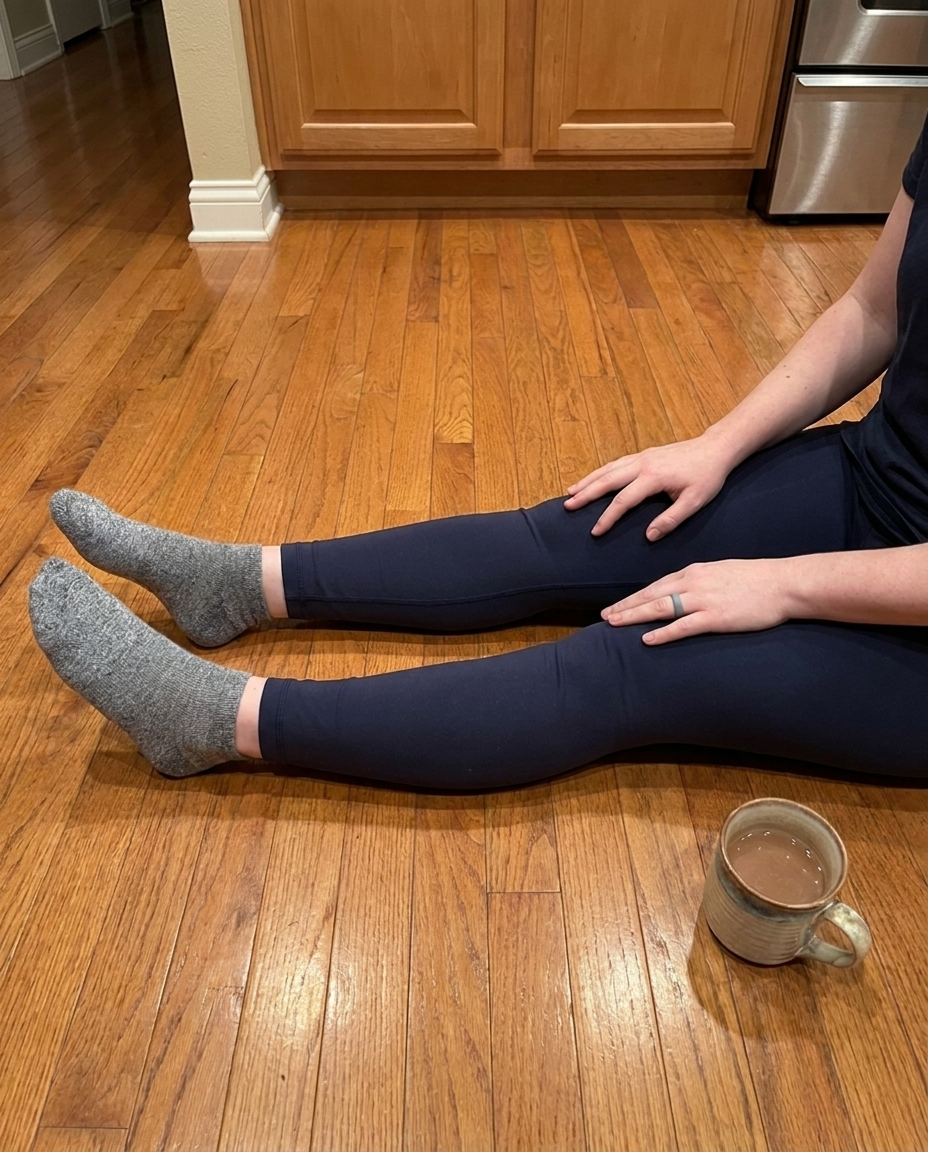
138 over 90. Then 141 over 93. Higher every single visit, no matter what they add. I had a stretch of calm readings last spring and I almost convinced myself I'd made the whole thing up. That's the part nobody warns you about. Not the high numbers. The normal ones. Because the normal ones lie to you. They tell you maybe it's gone. Maybe you imagined it. Maybe you're fine. And then you take your blood pressure at 11 o'clock on a quiet Tuesday night, after doing nothing all evening but fold laundry, and it reads 141 over 93, and you slide down onto your kitchen floor and you remember. My name is Jess. I'm 31. I live alone in a one-bedroom on the east side of Providence, three blocks from the river, with a radiator that knocks all winter and a windowsill where a peace lily I keep forgetting to water refuses, somehow, to die. I have a foam roller in my living room I trip over in the dark. I meal prep on Sundays. I have a blood pressure monitor from Target on my kitchen counter that I bought two years ago and have not had a single calm relationship with since. My aunt Diane had a stroke three years ago. She was 48. My mom's younger sister. She taught vinyasa at the Y on Saturday mornings and could fold herself into a bind I'll never get into in my life. She had it in the cereal aisle at the Stop & Shop on a Sunday morning, and the woman behind her in line thought she was reaching for something on a high shelf. She lived. But it took the right side of her body and most of her words. Three years later she still stops in the middle of a sentence, looking for a word that used to be right there, and watches it not come. Everybody in my family said the same thing afterward. She was the healthy one. I run social media for a credit union downtown. I go to the 6 a.m. vinyasa class three times a week at a studio on Wickenden Street. I track my cycle on an app. I have one sister, Becca, two years younger, who lives across town with her boyfriend. And I have been on the same little combination pill — the same gray foil pack — since I was 22 years old. The monitor is an Omron from the pharmacy shelf at Target. Forty dollars. Black cuff, gray screen, a little motor that hums when it inflates and a beep when it's done that I have come to hate the way you hate a sound in a horror movie. I bought it the week a nurse told me to "just keep an eye on it at home." I have kept an eye on it. That was the whole problem. This story is about that monitor. And it's about 35 minutes I spent on my kitchen floor on a Tuesday night in April. And it's about a coffee I had three days later with a woman from my yoga class, and the one thing she said that I think gave me my body back. But I'm getting ahead of myself. Let me back up. It started two years ago. Nothing dramatic. Just a number at a routine physical. The nurse took it, frowned a little, took it again. 138 over 88. She said, "That's a little high. But you're young, you're thin, you do yoga — it's almost certainly white coat. Buy yourself a monitor and keep an eye on it." I said okay. A few months later I went back with a logbook full of home readings in the 135-to-140 range. I sat with a nurse practitioner who scrolled through them. She said, "Are you stressed? Anxious? A lot of women your age run anxious." I said, "I'm a 29-year-old who does sun salutations at six in the morning. My biggest stressor this month was a typo that went out to forty thousand people." She smiled. She didn't do anything. She said keep watching it. A few months after that, 141 over 92. A real doctor this time, four minutes, hand on the door. He said, "Cut back on coffee. Maybe try meditation." He didn't ask me one single question about the pill I'd been swallowing every morning for nine years. Anxiety. That's what they call it. They call it anxiety and they send you home. While the number sits there and creeps, and you start to feel like an alarm is going off in a house where nobody can find the fire. I want to tell you what those two years actually felt like, because nobody in that office ever asked. They asked about the number. They never asked what it was like to be the person attached to it. It felt like a job nobody knew I had. I started waking up at four in the morning, every morning, mind already running, doing math on what the reading would be if I took it right then. I could feel my heart catch when I lay down, a little flutter and pause, like it forgot the beat, and a thumping in my ear against the pillow I'd never noticed before. My neck went tight at the base of my skull by every afternoon. And I started taking my blood pressure in the car. Before I went into anywhere — a dinner, a party, my sister's place — I'd sit in the driver's seat with the cuff on under my coat so nobody could see, and I'd tell myself that if it came up under 130 I was allowed to go in. I stopped going to the Thursday work happy hour. I told them I was tired. I wasn't tired. I started driving separately to things so I could leave early without a conversation about it. I cancelled on Becca twice. There was a guy I actually liked, and I turned down a second date, because I didn't want to feel my heart pounding across a table from him and have to explain it. My whole life got a little smaller, a little quieter, and the strange thing is nobody noticed. Including me. And the calm readings were the worst. Because a normal number didn't make me feel better. It made me wonder whether I'd been imagining all of it — which somehow felt worse than the high ones. I started to think maybe I was making it up. Maybe this was just what being a woman in her thirties felt like. Maybe Becca felt this way. Maybe the woman next to me at the studio felt this way. Maybe we were all just walking around with an alarm going off, smiling at each other, pretending we couldn't hear it. I want to tell you about the Tuesday now. Because it's important. It was a Tuesday in late April. The 22nd. I remember the date because it was three days before a follow-up I'd already half-decided to cancel. It had been the most unremarkable day of my life. I worked from home. I ate the lemon-chicken thing I'd prepped on Sunday. I'd been to the 6 a.m. class and felt good in it. One coffee, in the morning, like always. By nine that night I was on the couch folding laundry with a show on, calmer than I'd been in weeks. And at 11, out of nothing but habit, I rolled up my sleeve and put the cuff on. 141 over 93. I took it again. 139 over 94. I switched arms. 142 over 91. And here is the thing I could not get past, the thing that put me on the floor: I wasn't anxious. I wasn't tired. I wasn't stressed. I hadn't done anything. Every single thing they'd blamed it on for two years — the coffee, the stress, the white coat, the anxiety — none of it was in the room. It was just me, folding towels on a quiet Tuesday, and a number that should not have been there. If it wasn't any of the things they said it was, then what was it? And if nobody even knew what it was, who exactly was going to stop it? I slid down the cabinet and sat on the kitchen floor with the cuff still wrapped around my arm. I sat there for 35 minutes. I know because I kept unlocking my phone, like the time on it might say something different. The first ten minutes I was scared. Real scared. I kept thinking about strokes — about the FAST poster, face arm speech time — and I couldn't remember which letter was which. I pressed my fingers to my own face to feel if it was even. I said my own name out loud in my kitchen to hear if the words came. The next fifteen minutes I cried. Not loud. Just leaking — the kind where you don't notice until something lands on your wrist. And the last ten minutes I just sat there with my back against the cabinet, and I thought about my aunt Diane. About the cereal aisle. About how she was the healthy one. About how nobody, in all the years her blood pressure had been "a little high," had ever once asked her what she was taking, or what her body might be missing. They watched her number the same way they were watching mine. And then one Sunday morning she reached for the cereal and didn't come back the same. I called the next morning and canceled the April appointment. I told myself I'd reschedule when I had something to tell them. Three days later I went to the Saturday class, and afterward a few of us got coffee at the place next door like we sometimes did. I ended up at a little two-top by the window with a woman named Priya. I knew her the way you know people from class — by her mat spot and her water bottle and her laugh. She was 34. She worked in pharma, actually, on the data side. We'd never talked about anything real. I had my phone face-up on the table, and my blood pressure log was open on it — I'd been staring at it in the car before I came in, the way I always did. She glanced down at it. Then she looked at me. She said, "How long have you been keeping that?" I said, "About two years." She said, "And how long have they been telling you it's anxiety?" I started crying into a flat white in a coffee shop full of people I sort of knew. I don't know why. I told her everything. The floor. The 141. Diane. Two years of being told to relax. She listened to the whole thing without once telling me to breathe. Then she said, "Can I tell you something? Not as advice. Just as my story." I said okay. She said, "I got diagnosed at 29. Same as you — fit, did everything right, numbers wouldn't come down. My OB had me on Ortho Tri-Cyclen since college. My cardiologist ran a stress test and a holter monitor and a hundred dollars of bloodwork. You know what not one of them ever did? Put those two facts in the same sentence. The pill, and the pressure." She turned her cup around on the saucer. "For two years I just thought that was how my body was. That I was built wrong. That I'd drawn a bad card." I asked her what changed. She said, "I figured out what the pill had been taking from me. And I started putting it back." I said, "Taking what?" She said, "Magnesium." I must have looked at her like she'd said it in another language. Magnesium. The thing in the calm-sleep gummies at the checkout line. She said, "I know. That's exactly what I thought. It sounds too small to matter." She pulled out her phone and started showing me things — a study, then another, then another. She said the estrogen in the pill quietly lowers your magnesium, year after year, and that magnesium is one of the main things your blood vessels need in order to relax. She said about half of adults are low on it to begin with, and the pill just digs the hole deeper. She said it the way someone says something they've read a hundred times and are still a little angry about. She'd been doing her version of it for 16 months when I met her at that table. She'd switched to a patch after the capsules did nothing — transdermal, she said, so it doesn't have to survive your gut. I asked her how she felt now. She thought about it for a second. Then she said, "Like my body isn't a problem I'm carrying around anymore." That sentence went into me like a hook. Because that's exactly what I'd been doing for two years. Carrying my own body around like a problem I hadn't solved yet. Like a thing that might go off. I went home that afternoon. I put my phone on the charger, opened my laptop, and I didn't get up for four hours. I'm going to tell you what I found, because not one person with a medical degree ever told me any of it, and I think about that a lot. The thing they don't tell you about blood pressure is that the number is a symptom. It's not the disease. It's the smoke. The fire is somewhere else. The fire is in the walls of your blood vessels. Those walls are wrapped in a thin layer of muscle, and that muscle is supposed to relax and let the blood move easily. When it relaxes, the pressure drops. When it clenches, the pressure climbs. Simple. Here's the part I had to read three times. For that muscle to relax — to unclench — it needs magnesium. Magnesium is the signal that tells it to let go. Calcium tells it to squeeze; magnesium tells it to release. The two are supposed to sit in balance, like a hand that opens and closes. When you don't have enough magnesium, the hand can't open. The calcium wins. The muscle stays clenched. The vessels stay narrow. And the pressure has nowhere to go but up. That was the fire. My blood vessels were a fist that couldn't open, and for two years everyone had been staring at the smoke alarm. A pill — a real blood pressure pill — pries the fist open by force. It works, kind of. But it doesn't put back the thing that went missing. It just holds the fingers apart and hopes you don't notice the hand still wants to clench. And then I read the part that made me put the laptop down and walk to the window. Estrogen pulls magnesium out of your body. The estrogen in the pill. The pill I had taken every single morning since I was 22. Nine years. For nine years, the little gray tablet I swallowed to be responsible had been quietly draining the exact mineral my blood vessels needed to relax — and, on top of that, draining the B vitamins that keep your nervous system from running hot at four in the morning. Half of adults are already low on magnesium to begin with. The pill had been digging my hole deeper every day, and the same kind of doctor who handed it to me had spent two years telling me my rising blood pressure was a personality flaw. I wasn't anxious. I was deficient. And nobody had looked. I want to be honest about who I am. I'm not a doctor. I'm someone who finally started asking the questions nobody asked for me. But none of this was hidden. None of it was a secret. Estrogen and magnesium — it's in the textbooks. It's been known for decades. It was sitting right there the whole time, and every person I paid to look at me looked right past it. So I tried to fix it the obvious way first. I bought a bottle of magnesium capsules at the pharmacy that night. It was the wrong move, and here's why. Most of the magnesium you swallow, you don't actually absorb — a big chunk never makes it through your gut, and the cheap form most bottles use, the oxide, mostly just sends you running to the bathroom. I spent a week bloated and no better. That's the trap with magnesium: the mineral is right, but the delivery is a lottery, and most people lose. What changed everything was reading how the women who actually got results were taking it. Not swallowing it. Through the skin. A patch you wear overnight, that puts the magnesium straight into you while you sleep — skipping the gut entirely, no absorption lottery, no bathroom — during the exact window at night when your body is finally trying to calm down on its own. That's when I started looking for a real one, because by then I knew the form and the dose were everything. Most of what's out there is junk. I wanted three things: magnesium from a clean, traceable source, not scraped out of who-knows-where; something third-party tested, so the dose on the box was the dose on my skin; and ideally the B vitamin the pill had been draining too, in the form the body can actually use. I found one that hit all three. It's called the NerVana+ Magnesium Patch. The magnesium in it is magnesium chloride drawn from the Zechstein Sea — an ancient seabed buried under Europe, sealed off and untouched for millions of years, which is about as clean as a source gets. It's third-party tested. And it's paired with the activated form of B12 — methylcobalamine, the kind your body can use straight away instead of the cheap version it has to convert first — which is the other thing the pill had been quietly taking from me. It came with a 60-day money-back guarantee. I figured if it did nothing, I'd send it back and I'd have lost nothing but a few nights of sleeping with a patch on. I didn't send it back. And to be clear, because someone always asks: I didn't come off the pill. I'm not telling you to. That's between you and a doctor who actually asks you questions. All I did was stop letting it take something out of me every single morning without ever putting it back. One patch. On the inside of my arm before bed. That was the whole routine. The first week, nothing dramatic. I slept a little deeper — I'd wake up and the clock would say 5:40 instead of 4:00, which doesn't sound like much until you've spent two years meeting the 4 a.m. ceiling every night. That was about it. I almost talked myself out of the second week. The second week, something moved. I took my reading on a Wednesday morning, out of pure habit, expecting the usual. 127 over 83. I sat there and looked at it. I took it again. 126 over 82. It was the first number under 130 I'd seen on that machine in almost two years. I stood in my kitchen holding my own arm and laughed out loud, by myself, like something was wrong with me. Three weeks in, I noticed I'd stopped taking it five times in a row. I'd take it once, see 124 over 81, and just… believe it. Put the cuff back in the drawer. The drawer. Not the counter. Four weeks in, my friend Sofia had her birthday dinner at a loud place downtown, the kind of room I'd been turning down for a year. I went. And I didn't sit in the car beforehand with the cuff under my coat doing math on whether I was allowed to go in. I just parked and walked in. I didn't realize until I was driving home, somewhere over the bridge, that I'd done the thing I was afraid of and forgotten to be afraid. I checked when I got home, because I'm still me: 122 over 80. Seven weeks in, I went to my sister's for a Sunday and we walked the whole loop around the reservoir, talking the entire time, and I never once did the quiet thing where I press two fingers to my wrist to see if I'm okay. 120 over 78. Becca noticed before I told her anything. She'd noticed I stopped canceling on her. That was the thing she clocked — not a number, not my face. Just that I'd stopped bailing on Sunday dinners at the last minute, stopped texting "so sorry, not feeling up to it" an hour before. The third Sunday in a row I actually showed up, she stopped on the sidewalk by her building and looked at me and said, "Okay. What changed?" And I stood there and realized I didn't know how to explain it to her. I didn't know how to say that I'd stopped feeling like my body was a problem I hadn't solved yet. That I'd stopped carrying it around like something that might go off. So I just said, "I figured out what was actually wrong," and then I told her the whole thing, on the sidewalk, until it got cold. She said, "Send me the link." Her readings had been creeping too — she's two years younger than me and on the same kind of pill, and her last physical flagged 134 over 86. She's been wearing the patch for two months now. She checked at the pharmacy machine last week: 121 over 78. She texted me a photo of the screen with about nine exclamation points. I went back for that follow-up in the summer — the appointment I'd rescheduled after the floor. The nurse put the cuff on, the machine did its thing, and she frowned at it. Took it off. Did the other arm. 119 over 78. She said, "Have you changed anything?" I told her. The pill, the magnesium, the patch, all of it. She didn't write anything down. She was quiet for a second. Then she said, "Well. Whatever you're doing, keep doing it." I keep doing it. I think two things happened at once. I think the magnesium did what the studies said it would — let my blood vessels do their actual job. And I think, somewhere in those weeks, I stopped being afraid of the cuff. And it turns out a person who isn't bracing for a bad number gets a better one. The fear had been part of the reading the whole time. Nobody ever told me that either. I want to tell you the thing about my aunt Diane I haven't told you. For years before the cereal aisle, her blood pressure had been "a little high." Not dramatic. Borderline. She was a yoga teacher in her forties — everyone, including her doctor, looked at her and saw the healthy one and waved it off. And she'd been on the pill, on and off, since she was younger than I am now. Nobody ever put those two facts in the same sentence. Nobody asked what she might be running low on. They watched her number the way they watched mine. I think about that constantly. I think about whether her blood vessels had been clenched for years, starved of the one thing they needed to relax, while everyone admired how well she held a handstand. I think about whether a strip of something on her arm at night — something that costs less than her monthly coffee — might have left her with her words. I'll never know. That's the part that doesn't close. But I know this. I sat on my own kitchen floor at 31 with a cuff on my arm and a number I couldn't explain, certain my body had betrayed me. And a woman from my yoga class turned her coffee cup around on a saucer and told me it wasn't my body that betrayed me — it was everything I'd been handed to take care of it. And four weeks later I walked into a loud birthday dinner without checking the car. If you've been watching your number climb while everyone in a white coat tells you it's stress, or anxiety, or just how you're built — and you've been quietly arranging your whole life around the next reading — I want you to know there's another way to think about this. Your blood pressure is not the disease. It's the alarm. The fire is in the walls of your vessels, in a mineral that's been getting drained out of you for years while nobody mentioned it. The NerVana+ Magnesium Patch puts it back. Clean magnesium chloride from the Zechstein Sea, through your skin, overnight — plus the activated B12 the pill takes too. Not forcing your body open. Giving it back the thing it needs to open on its own. One patch a night. 60-day money-back guarantee. If your body doesn't tell you something is different, you send it back and you're out nothing. I'm not a doctor. I'm a 31-year-old who spent two years being told her own body was an overreaction, until a woman from my yoga class I'd never talked to about anything real told me the truth in one sentence. I'm telling you the same thing she told me. It isn't your body that's failing you. It's everything you were handed to fix it. 👉 https://uk.avalaine.com/products/nervana-%C2%AE-magnesium-patches P.S. Priya and I still get coffee after the Saturday class. Same place, same two-top by the window. Last month she told me her readings have been sitting around 117 over 75 for over a year now. She just got back from two weeks in Portugal — a trip she'd been putting off for years because she didn't trust her body on a plane, in the heat, that far from her own kitchen and her own monitor. She went. She told me she didn't check it once. P.P.S. The 60-day guarantee is the part I want you to sit with. When my OB put me on the pill at 22, nobody offered me a refund on the years it spent quietly draining me. When that office spent two years telling me my blood pressure was anxiety, nobody refunded the night I spent on the kitchen floor, or the mornings I woke up at four doing the math before I was even out of bed, or the parties I drove home early from, or the second date I never went on. The guarantee is this company saying: try it for two months, and if your body doesn't tell you something changed, send it back. You're risking 60 days. I risked two years believing I was the problem. Don't do that. P.P.P.S. If your sister has been on the same pill since college and her readings have started to climb. If your friend keeps leaving the party early and won't say why. If you've watched a woman you love get told it's just stress, just hormones, just anxiety, one more time. If you yourself have been sitting in the car with a cuff under your coat, deciding whether you're allowed to walk in — this is not how your body is. This is not who you are. This is a mineral that's been pulled out from under you for years, and a nervous system running hot because nobody put it back. There is another way. One patch. Sixty days. A coffee after yoga. A monitor from Target. A woman named Priya. A small thing the pill had been quietly taking from you, finally going back in. 👉 https://uk.avalaine.com/products/nervana-%C2%AE-magnesium-patches
The Natural Way to Support Your Blood Pressure
"I’ve struggled with my blood pressure for years and didn’t want to rely on more pills. I decided to try NerVana+ patches and now I feel more balanced, less tense, and my readings have been more consistent. It’s so easy to use, and I love that I can just put it on and go about my day."
SHOP NOWLike this ad? Make it yours.
Crush rebuilds this exact creative around your product — your brand, your colors, your offer — in about a minute.