Crysta Rollins
 Facebook ad: “You are reading the Bible wrong.”
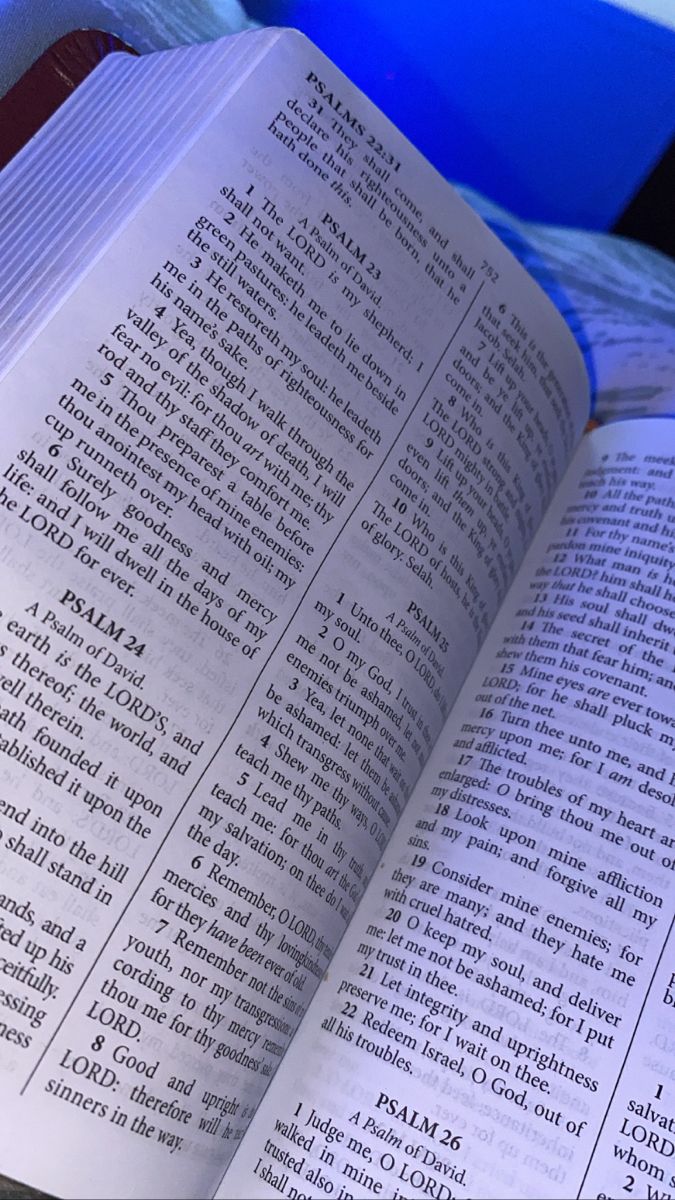
Ran for 5 days, from August 10 to August 15, 2026, the last day Crush saw it.
Run by Crysta Rollins on Facebook. Crush is not the advertiser and does not verify its claims. See this ad in Meta's Ad Library(opens in a new tab)
Make your own version of this ad
Crush makes it, launches it in your own Meta ad account, scales the winners and pauses the losers.
About this ad
- Meta Ad Library ID
- 1374178444184246
- Platforms
- Facebook, Instagram, Audience Network, Messenger, WhatsApp and Threads
- Relaunches
- 0
- Niche
- Education & Courses
Ad text
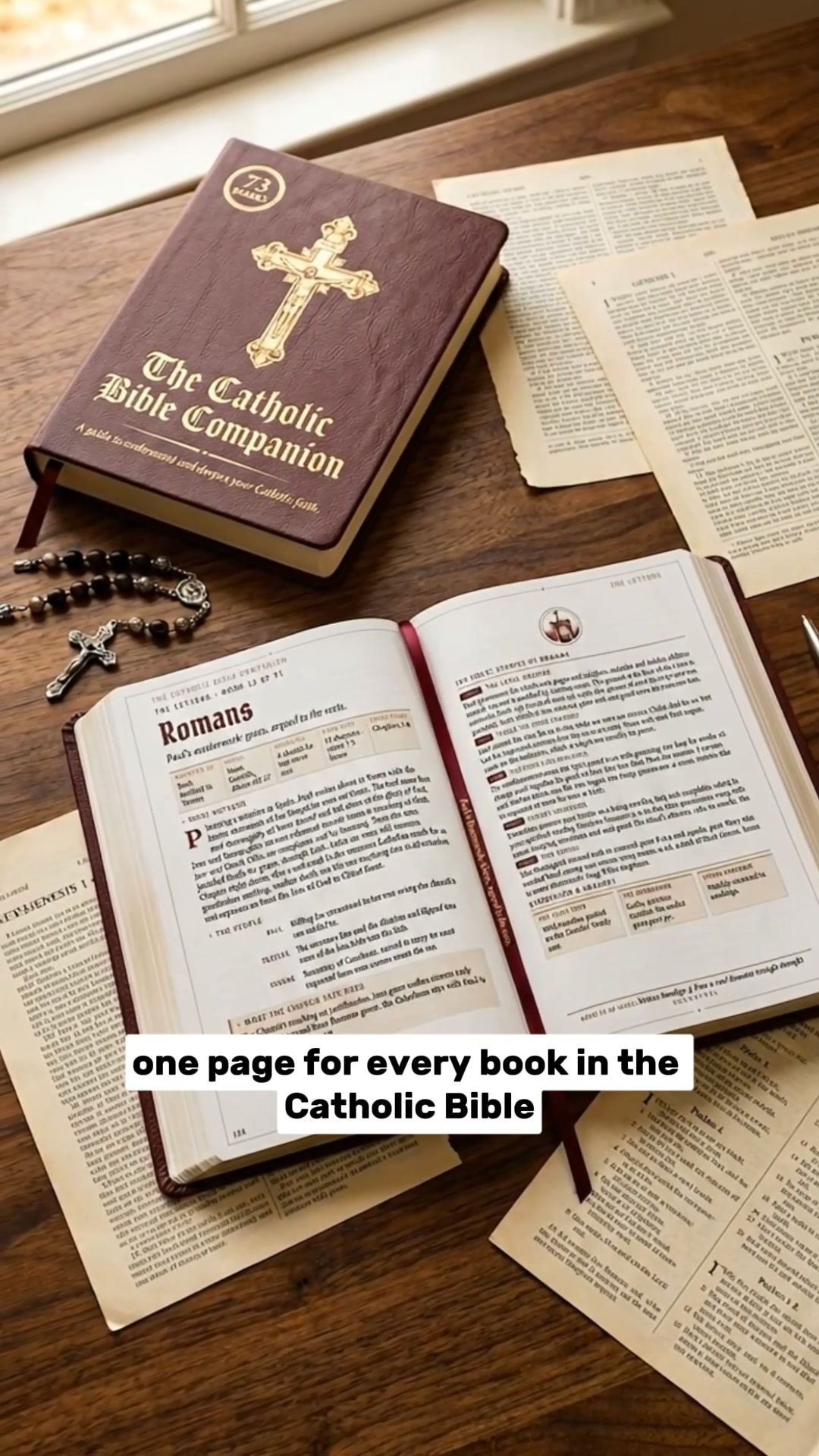
Psalm 23 is the most recited prayer at every Catholic funeral Mass. It was read over my mother seven weeks ago. And sitting in that pew, holding my sister's hand, listening to the lector read "The Lord is my shepherd, I shall not want" — I realized I had no idea what a single line of it actually meant. I have been Catholic for fifty-eight years. I have heard Psalm 23 at more funerals than I can count. I have whispered it in hospital rooms and prayed it on my knees at night when sleep would not come. And I was hearing it read over my dying mother without understanding a single word. What I am about to share with you is what I found when I finally went looking. It changed Psalm 23 for me permanently. It changed how I understand my mother's funeral. And it led me to something in my own Catholic Bible that I am still shaken by — something that has been sitting there my entire life, waiting for me to find it. — "The Lord is my shepherd, I shall not want." Every Catholic can finish the rest from memory. The green pastures. The still waters. The valley of the shadow of death. The rod and the staff. The table. The overflowing cup. We know the words. We have heard them our whole lives. We find them beautiful and comforting. And almost none of us know what any of them actually describe. Because we do not know what a shepherd actually did. David did. He was one. And he was not writing a poem. He was writing a testimony. Every line describes something specific, physical, and real that a first-century Middle Eastern shepherd did for his sheep. "He makes me lie down in green pastures." Sheep do not lie down voluntarily. They are prey animals. Constant anxiety is their natural state. A sheep will not rest unless it is free from fear, free from friction with other sheep, free from parasites, and free from hunger. A shepherd who makes his sheep lie down has not asked them to relax. He has removed every source of anxiety from their lives. They rest because he made it safe enough to stop being afraid. "He leads me beside still waters." Sheep are terrified of moving water. Their wool absorbs it and they drown. A shepherd never leads his flock to a rushing stream. He finds a still pool or physically dams a stream with rocks to create calm water his sheep can drink from without dying. He does not tell them the water is safe. He reshapes the water until it is. "He restores my soul." The Hebrew word is yashuv. It means to turn back, to bring back. It is the word used for a shepherd who searches for a sheep that has wandered off a cliff or into a thicket and carries it home on his shoulders. This is not a metaphor for feeling better. It is a rescue operation. "Though I walk through the valley of the shadow of death." This is not a metaphor either. There is a real valley near Jerusalem — a narrow, steep-walled ravine between the city and the Dead Sea. Predators waited in the shadows of the cliff walls above. The only path to the green pasture on the other side went directly through the place where death was hiding. The shepherd did not go around the valley. He walked his sheep through it. Because the pasture was on the other side. "Your rod and your staff, they comfort me." Two different tools. The staff has a crook — used to pull sheep out of crevices and guide them back to the path. The rod is a weapon. A short, heavy club used to fight wolves and lions and bears. The sheep are not comforted by a walking stick. They are comforted because their shepherd is armed and has already proven he will kill anything that comes for them. "You prepare a table before me in the presence of my enemies." This is not a dinner table. The Hebrew word refers to a flat, elevated grazing area — a plateau. Shepherds scouted these tablelands in advance, clearing poisonous plants, killing snakes, and driving predators from the edges. The shepherd did not remove the enemies. He fed his sheep in full view of them. The enemies watched. The sheep ate. "You anoint my head with oil." Shepherds poured oil over their sheep's heads because flies and parasites would burrow into the sheep's nasal passages and lay eggs, causing infection, madness, and sometimes death. The oil created a barrier the insects could not cross. Anointing was not a ceremony. It was protection from the things that would destroy them from the inside. "My cup overflows." At the end of the day, the shepherd counted his flock through a narrow gate one at a time. He inspected each sheep for wounds, thorns, and parasites. If one was hurt, he poured oil and water from his cup into the wound. An overflowing cup meant the shepherd had more than enough to heal every injury. No wound would go untreated. None would be missed. Every single line. David was describing what a real shepherd physically did for real sheep in the real hills outside Jerusalem. And a thousand years later, Jesus stood up and said, "I am the good shepherd. The good shepherd lays down his life for the sheep." He was not borrowing a metaphor. He was claiming the job description David had written. The shepherd who removes every fear. Who reshapes the water. Who carries them home. Who walks them through the valley. Who fights with a weapon. Who feeds them in front of their enemies. Who protects them from the inside. Who heals every wound. That is Psalm 23. And most Catholics have been hearing it at every funeral Mass their entire lives as a beautiful poem — without ever knowing what the shepherd was actually doing. — My mother's funeral was on a Thursday morning in March. Mass of Christian Burial. Saint Catherine's. The same church where she was baptized seventy-nine years earlier. The lector read Psalm 23 as the responsorial psalm. I mouthed the words from memory. So did my sister. So did everyone in that church. But I could not have told you what the valley was. I could not have told you why the waters had to be still. I could not have told you what the rod did, or what the table was, or why the cup overflowed. I had been praying those words over the dying and the dead for decades. And I did not understand what I was praying. The second reading that morning was from the Book of Wisdom. Chapter three. "The souls of the just are in the hand of God, and no torment shall touch them. In the eyes of the foolish they seemed to have died. But they are at peace." I had heard that passage at Catholic funerals my entire life. I had let it comfort me every single time. Beautiful words about heaven. About peace. But sitting there that morning, something in me — the same instinct that was already pulling at Psalm 23 — asked a question I had never thought to ask. What comes before that passage? Who wrote it? When? Why? I did not know. I had heard those words at every Catholic funeral I had ever attended. And I did not know what book they came from, who wrote them, or what they were actually saying. I went home after the burial and sat at my kitchen table — the same table where my mother used to drink her coffee when she visited — and I opened my Bible to the Book of Wisdom. What I found in chapter two made me close the book and sit still for a very long time. The chapter immediately before the funeral reading — the chapter nobody ever reads at funerals, the chapter I had never been told about — describes a righteous man who calls himself a child of God. His enemies conspire against him. They mock him. They test him with torture. They condemn him to a shameful death, saying that if God really loves him, God will save him. That was written approximately one hundred years before Jesus was born. And the next line says: "Thus they reasoned, but they were led astray, for their wickedness blinded them, and they did not know the secret purposes of God." They did not know what God was doing. And then — immediately — Wisdom chapter three. The funeral reading. "The souls of the just are in the hand of God, and no torment shall touch them. In the eyes of the foolish they seemed to have died. But they are at peace." The suffering. The mocking. The shameful death. And then — peace. Victory. The foolish thought it was over. They did not understand. The funeral reading was not a standalone verse about heaven. It was the resolution of a prophecy. The chapter before it described the passion of Christ a century before Bethlehem. And the passage we read at funerals is the answer — what looks like death is not what it appears to be. I sat at my mother's kitchen table and wept. Not just because she was gone. But because the reading at her funeral — the one I had heard at every Catholic funeral for fifty-eight years — was saying something so much bigger than I had ever known. And nobody had ever told me. — That night I could not sleep. I kept thinking about Psalm 23 and Wisdom 3. Two readings I had heard at nearly every Catholic funeral of my life. Both of them carrying meaning I had never seen. Both of them transformed completely by context I had never been given. And then a third thought arrived and would not leave. At my mother's funeral, after the Mass, after the commendation, after the sprinkling with holy water and the incense, I had prayed for her. I had asked God to receive her soul. I had prayed for the dead — the way Catholics do, the way my mother prayed for her own mother, the way our family has prayed for generations. And I realized I had no idea where that practice came from in Scripture. I had been praying for the dead my entire Catholic life. It is one of the things that makes us Catholic. And I could not point to the passage that tells us to do it. So I looked. The answer is in the Second Book of Maccabees. Chapter twelve. Judas Maccabeus, after a battle, discovers that his fallen soldiers were carrying forbidden pagan amulets. He takes up a collection and sends it to Jerusalem as a sin offering on behalf of the dead — "that they might be delivered from their sin." The text says explicitly: "It is a holy and pious thought to pray for the dead, that they might be loosed from their sins." A holy and pious thought. To pray for the dead. That is the scriptural foundation for one of the most distinctive practices in all of Catholic life. It is the passage the Church has pointed to for nearly two thousand years as the basis for praying for the faithful departed, for offering Masses for the dead, for the entire Catholic understanding of purgatory and the communion of saints across the boundary of death. And it is in a book that Protestants removed from their Bibles five hundred years ago. Second Maccabees. One of the seven deuterocanonical books. One of "the extra ones." I had been praying for my mother every day since her funeral. I had been praying for the dead my entire Catholic life. And I had never known that the passage telling me to do it was sitting in my own Bible — in a book I had never opened. — In the weeks after my mother's funeral, I tried to close the gaps I had suddenly discovered. I bought a study Bible. Dense. Heavy. Footnotes in a font I needed a magnifying glass to read. I opened it to Wisdom. The academic language made my eyes glaze over in minutes. It joined the stack on my shelf. I tried a Bible reading plan. Started in January. Abandoned in Leviticus. I tried a well-reviewed Bible guide a woman in my grief support group had recommended. I opened it looking for the Book of Wisdom — the reading from my mother's funeral. It was not in there. I checked the table of contents. Sixty-six books. No Wisdom. No Maccabees. No Sirach. No Tobit. No Baruch. No Judith. The passage read at my mother's funeral — not included. The scriptural basis for praying for the dead — not included. Seven entire books of my Catholic Bible — not included. I had almost handed my grief to a resource that did not contain the readings from my own mother's Mass. That was the moment I understood something I should have seen decades ago. The problem was never that I was bad at reading the Bible. The problem was never that Scripture was too hard for ordinary Catholics. The problem was two things. Both invisible. Both devastating. First — I had been opening Scripture cold my entire life. At Mass, at home, at funerals. No context. No orientation. No understanding of who wrote what I was hearing or when or why. Just words — beautiful, sacred words — floating past me year after year without anything to anchor them. Second — nearly every resource I had ever encountered was built for a sixty-six-book Bible. Not mine. Not the Catholic Bible. Not the one with Wisdom and Maccabees and Sirach and Tobit. The one with the funeral readings and the prayers for the dead and the prophecy of the passion and the wisdom tradition Jesus himself drew from. I had been trying to understand my Catholic faith with tools that were built for someone else's Bible. And I had been blaming myself every time it didn't work. It was never my fault. It was never any of our faults. — My niece found the Catholic Bible Companion. She had watched me struggle through the study Bible, the reading plan, the sixty-six-book guide. She is thirty-one. A cradle Catholic. The kind of young woman who researches everything before she buys anything. She called me on a Saturday morning. "Aunt Marie, I found something. It covers all seventy-three books. It's Catholic. One page per book. I already ordered you one." It arrived on a Tuesday. Leather. Gold foil. A ribbon marker. Heavier than I expected. The kind of book that felt like it belonged beside my Bible — not on top of it, not replacing it, just beside it. I opened it to the page on Wisdom. One page. Four minutes. Who wrote it. When — a Jewish author in Alexandria, first century before Christ. Why — to convince a Jewish community surrounded by Greek philosophy that the wisdom of God was worth more than anything the world offered. The connection to Catholic faith — Wisdom chapter two has been read by the Church as a foreshadowing of the passion since the earliest centuries, and Wisdom chapter three is proclaimed at Catholic funerals because the suffering and the peace are two halves of the same argument. Four minutes. And the reading from my mother's funeral — the one I had heard at every Catholic funeral for fifty-eight years — finally made sense. Not as a beautiful verse about heaven. As the answer to a prophecy of the cross. Suffering first. Then peace. Written a hundred years before Bethlehem. I sat at my mother's table and didn't move for a long time. Then I turned to the page on Second Maccabees. Four minutes. The Maccabean revolt. The fight to preserve Jewish faith and identity under Greek persecution. The mother who watched seven sons die rather than abandon God. And the passage about praying for the dead — the passage that became the foundation for what I had been doing for my mother every single day since her funeral. I had been praying for her soul without ever knowing the Scripture behind it. Now I did. And the prayers felt different. Not because they changed. Because I finally understood why I was praying them. Then I turned to the page on Psalms. Four minutes. And everything I learned about ancient shepherding — everything I've shared with you above — suddenly had a frame. I understood that David wasn't writing poetry. He was testifying. And I understood that when the lector read Psalm 23 at my mother's funeral, she was not just reciting a beautiful poem over a casket. She was declaring that my mother's shepherd had already walked through the valley, already fought the predator, already poured oil into every wound, and already prepared the table on the other side. One page. Four minutes. Then read. Every single time, words I had heard my entire life became something I had never truly heard before. — Mass changed after that. The Sunday readings stopped floating past me. When the lector read from Paul's letters, I knew which church, which crisis, which argument. When the first reading came from the prophets, I knew which century, which exile, which king. When the responsorial psalm was Psalm 51, I knew David had written it after the worst sin of his life — and the words "have mercy on me, O God" were not a liturgical formula. They were a man on his knees begging for forgiveness after destroying everything he loved. I heard Mass the way it was meant to be heard. Not as fragments. As conversations. Real authors writing to real communities about real crises. And the Church had arranged these readings across the liturgical year to tell a story — a story I was finally able to follow. It was a small thing. But after fifty-eight years of hearing those readings and forgetting them before I reached the parking lot, a small thing felt like answered prayer. — Did you know that Mary's prayer in the Gospel of Luke — the Magnificat, "My soul proclaims the greatness of the Lord" — is almost a direct echo of Hannah's prayer in the First Book of Samuel? A barren woman miraculously given a son, singing praise to God for reversing the fortunes of the humble. Mary was not composing new words. She was standing in a tradition a thousand years old, praying a prayer that had been prayed before by a woman whose story foreshadowed her own. Catholics pray the Magnificat every evening in the Liturgy of the Hours — often without knowing its roots reach back to Hannah. Did you know that the Book of Jonah is not primarily a story about a whale? It is a story about a prophet who was furious that God showed mercy to Israel's worst enemies. The entire point of the book is that God's mercy extends even to the people you believe do not deserve it. Most people learn "Jonah and the whale" as children and never discover what the book is actually about. The Church reads Jonah during Lent because his resistance to mercy mirrors our own. Did you know that every time the priest sprinkles holy water over a casket at a Catholic funeral, he is echoing baptism? The Church is declaring that this person's story began in water and ends in water — that the same grace that claimed them at the font follows them into the grave. The gesture takes three seconds. The theology behind it spans the entire Bible. Context changes everything. Every single time. — The Catholic Bible Companion covers all seventy-three books of the Catholic Bible. Not sixty-six. Seventy-three. Every deuterocanonical book the Catholic Church has guarded for two thousand years — Tobit, Judith, Wisdom, Sirach, Baruch, First Maccabees, Second Maccabees. The books that contain the funeral readings, the prayers for the dead, the prophecy of the passion, the clearest resurrection hope in the Old Testament, and the wisdom tradition Jesus himself drew from. Each book gets one page. Who wrote it. When. Why. What was happening. Major themes. Key people. Symbolism. And how it connects to Catholic faith and tradition specifically. You read the page. Four minutes. You open your Bible. And for the first time, you understand what you are reading. The book itself feels like something you will keep. Real leather. Gold foil. Sewn binding. Ribbon marker. Large, clear type. This is not something disposable. It is the kind of book that sits beside your Bible for years — and when the time comes, you place it in the hands of your daughter and say, "This is what I wish someone had given me decades ago." — I think about my mother's funeral sometimes. I think about the lector reading Psalm 23 — and all of us hearing poetry when David had written testimony. I think about the reading from Wisdom — and all of us hearing comfort when the author had written prophecy. I think about the holy water on the casket — and none of us knowing we were watching baptism reach across the boundary of death. All those funerals. All those readings. All those years. And all we ever needed was four minutes of context before we listened. If you have ever sat in a pew at a Catholic funeral and heard Psalm 23 without knowing what the shepherd actually did — this is for you. If you have ever heard "the souls of the just are in the hand of God" without knowing the extraordinary prophecy that comes right before it — this is for you. If you have ever prayed for the dead without knowing where in Scripture you were told to — this is for you. If you have been Catholic your entire life and you have carried a Bible with seventy-three books without ever being told what was inside seven of them — this is for you. One page before you read. Every book. Every time. Start tonight. Pick any book. Read the Companion page first. Four minutes. Then open your Bible. And hear the words you have heard your entire life as if you are hearing them for the very first time. Because you will be. — EDIT: Almost forgot to drop the link. Here it is. https://selinary.com/pages/list
Where the ad sends people
https://selinary.com/pages/list
You are reading the Bible wrong..
Selinary
Learn more: selinary.com(opens in a new tab)