Senior Health Guide
 Facebook ad: “Why Managing Neuropathy Isn't Treating It”
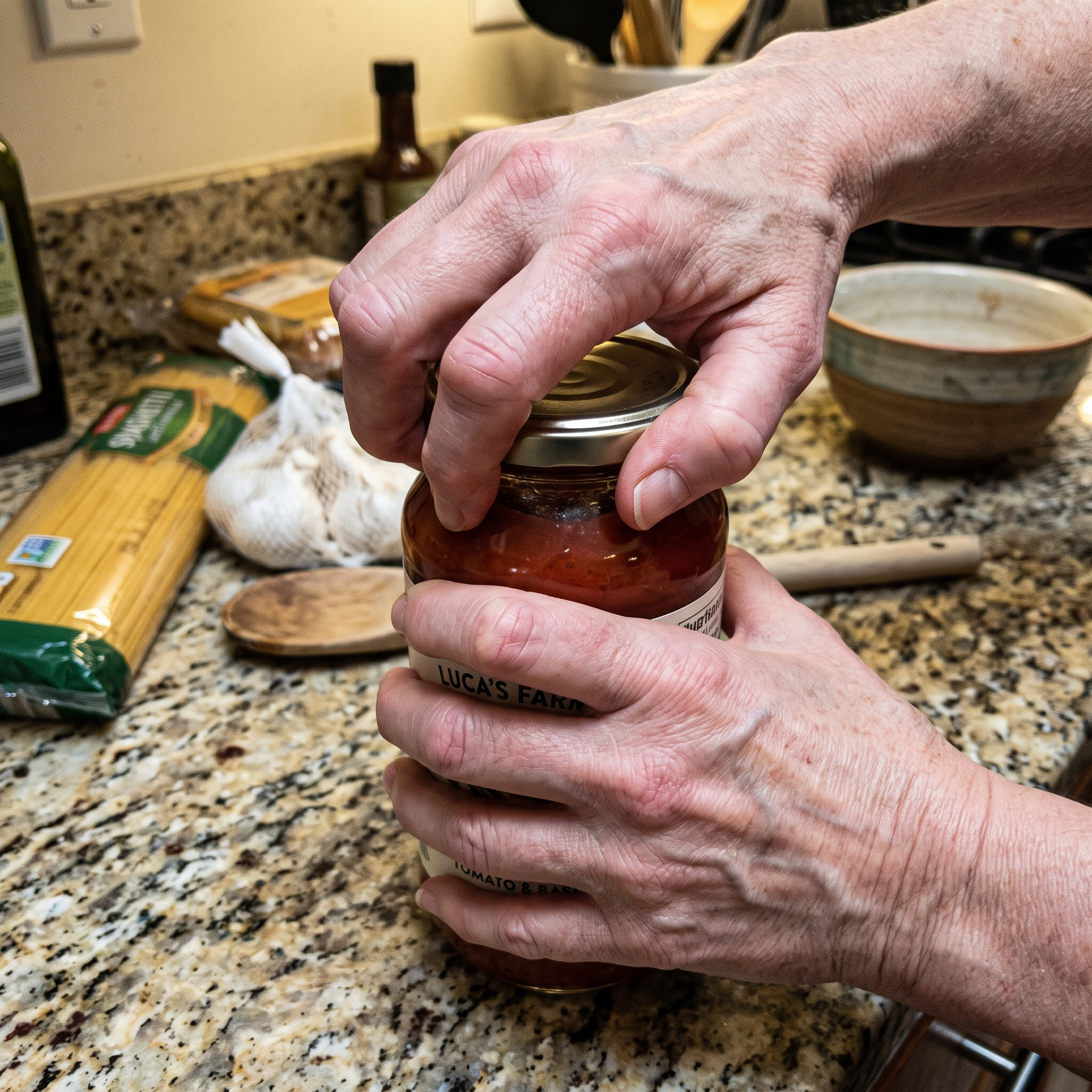
Ran for 26 days, from September 16 to October 12, 2026, the last day Crush saw it.
Run by Senior Health Guide on Facebook. Crush is not the advertiser and does not verify its claims. See this ad in Meta's Ad Library(opens in a new tab)
Make your own version of this ad
Crush makes it, launches it in your own Meta ad account, scales the winners and pauses the losers.
About this ad
- Meta Ad Library ID
- 1377402484547282
- Platforms
- Facebook, Instagram, Audience Network, WhatsApp and Threads
- Relaunches
- 1
- EU reach
- 807
- Niche
- Clinics & Medical
Ad text
The most dangerous word in neuropathy isn't "pain." It's "manageable." ⠀ I'm Dr. Emily Hartman. I trained in Munich, I've been a neurologist for eighteen years, and I have handed that word to more patients than I can count. We'll manage it. Here's something to manage it. Keep managing it, check back in six months. I said it with a straight face and a clean conscience, because it's what we are all taught to say. ⠀ I was wrong every single time. I just didn't find out until it cost me something I couldn't prescribe my way out of. ⠀ Because "manageable" is not a treatment. It is the word my profession uses when it has quietly decided your disease is going to win and the plan is to keep you comfortable while it does. I said it to hundreds of people and watched them get slowly worse and called that success, because the pain scores looked fine and the appointments were uneventful. ⠀ Then I said it to my husband. And I got to watch, up close, in my own kitchen, exactly what that word had been hiding from me for eighteen years. ⠀ His name is Thomas. He's the reason I'm in America — I followed his job to Boston four years ago. He played guitar every evening of the thirty-one years I've known him. Not for anyone. Just at the kitchen table after dinner, the same six or seven songs, badly, happily. ⠀ Then the neuropathy started in his fingers. ⠀ He was diagnosed the ordinary way, the way I'd diagnosed a thousand patients. Burning, then numbness, in the hands and the feet. And I did for him exactly what my training said to do — exactly what I'd done for eighteen years and never once questioned. ⠀ We managed it. ⠀ Gabapentin for the burning. When that dulled him too much, we tried Cymbalta. Then a lidocaine cream for his hands. When the grip started to go, I added a second medication and told him what I told everyone: this is a manageable condition. We'll stay on top of it. ⠀ And every one of those things did something. The burning got quieter. He slept better some nights. On paper, we were managing it beautifully. ⠀ Meanwhile he stopped being able to feel the strings. ⠀ I watched it happen over about two years, the way I'd watched it happen to patients for eighteen years. ⠀ First he couldn't feel the thinner strings under his fingertips. Then he started looking at his hand to know where it was on the neck, because his fingers had stopped reporting back. Then he'd finish a song and not realize he'd been pressing so hard the frets left marks in his fingertips he couldn't feel. ⠀ One evening he put the guitar back on its stand mid-song, quietly, and didn't take it down again. ⠀ He didn't say anything. Neither did I. We'd been managing it. The medications were doing what medications do. His last appointment had gone fine — the burning was under control, we agreed to keep on as we were, recheck in six months. ⠀ That is what "managing it" looks like from my side of the desk. A man who can't feel his own hands anymore, and a chart that says everything is under control. ⠀ Because here is what that word hides, and what took me eighteen years and my own husband to finally see. ⠀ Every single thing we had given Thomas worked on the same target: the pain signal. Gabapentin and Cymbalta reach up into the central nervous system and turn down the volume on what the nerve is reporting. The lidocaine deadened the surface of his skin for an hour at a time. Every one of them managed his experience of the damage. ⠀ Not one of them touched the damage. ⠀ Because the damage wasn't happening where the drugs were working. It was happening in the tissue of his hands and feet — an inflammatory process eating the nerves, stripping the protective coating off them, choking the small vessels that keep the nerve alive. That process ran for two years, unmanaged, unaddressed, completely untouched — while every treatment I gave him worked overtime to keep him from feeling it happen. ⠀ Sit with what that means, because it took me eighteen years to. We weren't managing his neuropathy. We were managing his ability to notice his neuropathy. The disease did exactly what it wanted, on schedule, while the medications sanded down the alarm that would have told him. I wasn't treating my husband. I was sedating the smoke detector while the house burned. And I did it by the book, with the best drugs available, exactly the way I'd been trained to do it to everyone else. ⠀ The difference between managing the pain and treating the damage is the difference between a quiet chart and a man who can't feel his own hands. For eighteen years I called the quiet chart a win. ⠀ That was the night I did something I hadn't done since residency. I sat at the kitchen table — his guitar on its stand across the room — and I stopped reading what the guidelines said to do and started reading what I had been missing. ⠀ Not "how do we manage neuropathy." I knew that cold. I'd built a career on it. ⠀ The question I couldn't answer was simple: why does the tissue keep degrading when the pain is controlled? ⠀ The next morning I called someone I should have called years earlier. Dr. Lena Vogt — a researcher I'd known since Munich, who spent her career on peripheral nerve inflammation, the tissue side, the part I'd spent mine ignoring. I told her about Thomas. The controlled pain. The hands that had gone quiet anyway. The two years of managing it beautifully while he lost the strings. ⠀ She was quiet for a moment. Then she said the thing I've never been able to un-hear. ⠀ "Emily, you've been treating what he feels. You were never treating what's happening to him." ⠀ "They're the same thing," I said. "The pain is the neuropathy." ⠀ "No. The pain is the alarm. The neuropathy is the fire." I could hear her choosing her words. "Everything in your prescription pad works on the alarm — turns it down, muffles it, unplugs it. None of it goes near the fire. And the fire is in the tissue, not the brain. It's inflammation, degrading the nerve, choking the little vessels that feed it. That's what takes his hands. Not the pain. The pain is just the part he can feel." ⠀ "Then why does every guideline stop at the pain?" ⠀ "Because for a long time, the pain was all we could reach. So we built the whole protocol around reaching it, and we started calling that treating the disease." She paused. "It isn't. Controlling the signal and healing the tissue are two different jobs, and your husband has only ever had one of them done." ⠀ I sat with that. Eighteen years of quiet charts. Eighteen years of calling the alarm going silent a success while the fire spread underneath. ⠀ "So what treats the fire?" I asked. ⠀ "That's the right question," she said. "Finally." And then she said something that stopped me, because the answer had been in my own training the whole time. "You already know one thing that works on it. You just stopped being able to prescribe it when you moved." ⠀ She meant alpha-lipoic acid. ⠀ Back in Germany, it's one of the accepted treatments for neuropathy — a potent antioxidant that goes after the oxidative stress and the poor circulation damaging the nerve directly. There it's a regulated, prescribed medicine. In America the exact same compound sits on a shelf as a supplement, rarely mentioned, because the FDA never approved it as a drug and insurance never built it into the protocol. Same molecule. Treated as medicine in one country, an afterthought in the other. I'd prescribed it for years and then, without noticing, left it behind at customs. ⠀ "That's your proof of principle," Vogt said. "A compound aimed at the mechanism — the inflammation, the circulation — helps the nerve even when the pills only touch the pain. The idea is sound. The problem is the delivery." ⠀ "Because it's swallowed," I said. I was ahead of her now. ⠀ "Because it's swallowed. It disperses through the whole body before a fraction of it ever reaches his feet. You're right about the principle. The pill just leaves most of it behind." She let that land. "So ask the sharper question. What if you took that same principle — a compound going after the inflammation and the circulation right at the nerve — and got it into the tissue directly, instead of routing it through his entire body first?" ⠀ That was the question I took to bed and got up early to chase. ⠀ I found the research on treating the tissue directly — targeted compounds applied to the affected area to calm the inflammatory cascade and restore the failing circulation, at the site, on the skin, instead of numbing the perception from the inside. Different compounds than alpha-lipoic acid, but the same target: the mechanism, not the origin. Frankincense and Myrrh to quiet the inflammation attacking the nerve, Angelica Sinensis to bring circulation back to the starved tissue, Comfrey to support the nerve's repair environment. And this time, applied where it actually needs to go. ⠀ And I did exactly what a patient would do. I bought the first thing I found that promised it. ⠀ A neuropathy cream. Four and a half stars, thousands of reviews, "nerve support" right on the front. I gave it to Thomas and had him use it twice a day for six weeks. ⠀ Nothing moved. The numbness was the same. His hands were the same. He still wasn't touching the guitar. ⠀ "So it didn't work," he said. Not a question. The flat voice of a man who'd stopped expecting anything. ⠀ I told him I'd find out why. And then I did the thing I should have done before I ever handed it to him — I read the label the way I read a chart. And I got angry. ⠀ It was a con dressed up as medicine. The actives that actually matter were in there in trace amounts, buried inside a "proprietary blend" — which is the word this industry uses when it doesn't want you to know how little it put in. But that wasn't even the real crime. The real crime was that nowhere on the jar, nowhere on their site, was there a single word about how any of it was supposed to get through the skin and down to the nerve. Because it wasn't. It was oil and cooling agents sitting on the surface of his hands. A menthol tingle engineered to feel like something is happening while nothing reaches the tissue at all. They sell the sensation and skip the medicine, and four and a half stars says it works because a tingle feels like proof. ⠀ That is the trick the entire shelf runs on. The compounds can be right and still never arrive — and a cream that never arrives is a cream that does nothing, no matter what the front of the jar promises. Getting the active down into the tissue where the nerve lives is a harder problem than filling a jar, and almost no one on that shelf has solved it. They just make the surface tingle and let you assume. ⠀ So I graded every product the way I grade a treatment. Not on stars. On four things. The right compounds. At doses that match the research, not hidden in a blend. A real delivery system that carries them into the tissue instead of parking them on the skin. And made cleanly, without the fillers that dilute the whole thing. ⠀ One met all four. **Senzio Miracle Balm.** ⠀ The right botanicals — Frankincense, Myrrh, Angelica Sinensis, Comfrey — at meaningful amounts, named on the label instead of hidden. And the piece every cream I'd rejected was missing: a **lipid-based delivery system**. A sesame oil and beeswax base whose fat-soluble carriers follow the skin's own pathways, pulling the actives down into the tissue and holding them against the nerve long enough to work, instead of sitting uselessly on the surface the way the first cream had. ⠀ That was the difference between a jar of nerve cream and something that actually reached the fire. ⠀ I gave it to Thomas on a Wednesday. I told him the truth: you won't feel this the way you felt the lidocaine. There's no instant tingle standing in for a result. The tissue changes slowly. Work it into your hands and feet morning and night, three minutes a day, and give it real time. ⠀ He stayed on his medication the entire time. I never asked him to stop it, and I want to be clear about that — I would never tell anyone to stop a prescription through a story on a screen. The pills were managing his pain. This was going after the thing the pills were never built to touch. Both halves, for the first time. ⠀ Week two: the burning that flared at night settled on its own, without the extra dose. ⠀ Week four: he told me he could feel the floor under his bare feet in the morning again — the deep numbness that he'd stopped mentioning because he assumed it was permanent had eased. ⠀ Week six he called me from the kitchen. ⠀ "I can feel the third string." Almost casual. "Not all of them. The third one." ⠀ Week nine, the numbness that had been climbing past his wrist had stopped climbing. For the first time in two years it had held still instead of creeping higher. ⠀ I want to be careful and honest, because this is where the cheap products lie to you. Nerve damage that has been building for years does not undo itself in a month, and I will never tell you it reverses on a schedule. What I watched was slower and quieter than that. The burning easing. The feeling coming back into his feet. The numb line halting where it had been advancing for two years. His hands, finding the strings again one at a time. ⠀ I took what I was seeing to his own neurologist myself, and told her to keep him exactly where he was on his medication — because she should. She kept the prescription. And she started paying attention to the tissue, the way I finally had. ⠀ Since Thomas, I've recommended it to fourteen of my own patients. The ones who'd been "managing it" for years, exactly as I'd taught them to. Eleven have come back and used a word I had not heard from a neuropathy patient in eighteen years of managing symptoms. ⠀ Not "manageable." ⠀ Better. ⠀ If you have been told your neuropathy is manageable while your hands or your feet quietly get worse — if you've done everything right, taken every pill, managed it beautifully on paper, and still can't feel the things you used to — stop and hear what that word has been doing to you. ⠀ You did not fail. You followed instructions perfectly. The instructions were the problem. Every pill you were handed was aimed at your perception of the damage, and not one of them was ever pointed at the damage itself — the inflammation in the tissue that is taking your hands, your balance, your feet, right now, while your chart says everything's under control. Nobody built you a treatment for that side. Nobody even told you it was going untreated. You were managed. You were never treated. ⠀ That is not a gap in your effort. It is a gap in the treatment you were handed — and you were never told it was there. ⠀ That is exactly the gap Senzio was built to fill — the tissue side, delivered where your pills were never designed to go. ⠀ Try it for 60 days. Right now it's 50% off, with a full money-back guarantee. Work it into your hands and feet morning and night — three minutes a day, that's the whole protocol. ⠀ Watch the things you'd stopped watching because you were told this was just something to manage. The burning. The numbness. Whether you can feel what you touch. How far you walk before it starts. ⠀ If nothing changes in 60 days, you contact the team and every dollar comes back. No questions. ⠀ Because "manageable" was never a treatment. It was a word for what we do when we've decided not to look for anything better. ⠀ I looked. I found it too late for two years of my husband's hands — but not too late for the rest of what he can still get back. ⠀ You don't have to wait as long as he did. ⠀ — Dr. Emily Hartman, MD Board-Certified Neurologist Formerly Munich Center for Peripheral Nerve Disease Currently practicing in Boston
Where the ad sends people
senzio.store
Why Managing Neuropathy Isn't Treating It
Unlock the power of nature with Senzio Miracle Balm. This herbal powerhouse soothes, heals, and rejuvenates your skin—experience the magic!
Learn more: senzio.store(opens in a new tab)