PetHaven Cat Care
PetHaven Cat Care Facebook ad: “Don't buy a cat water fountain!”
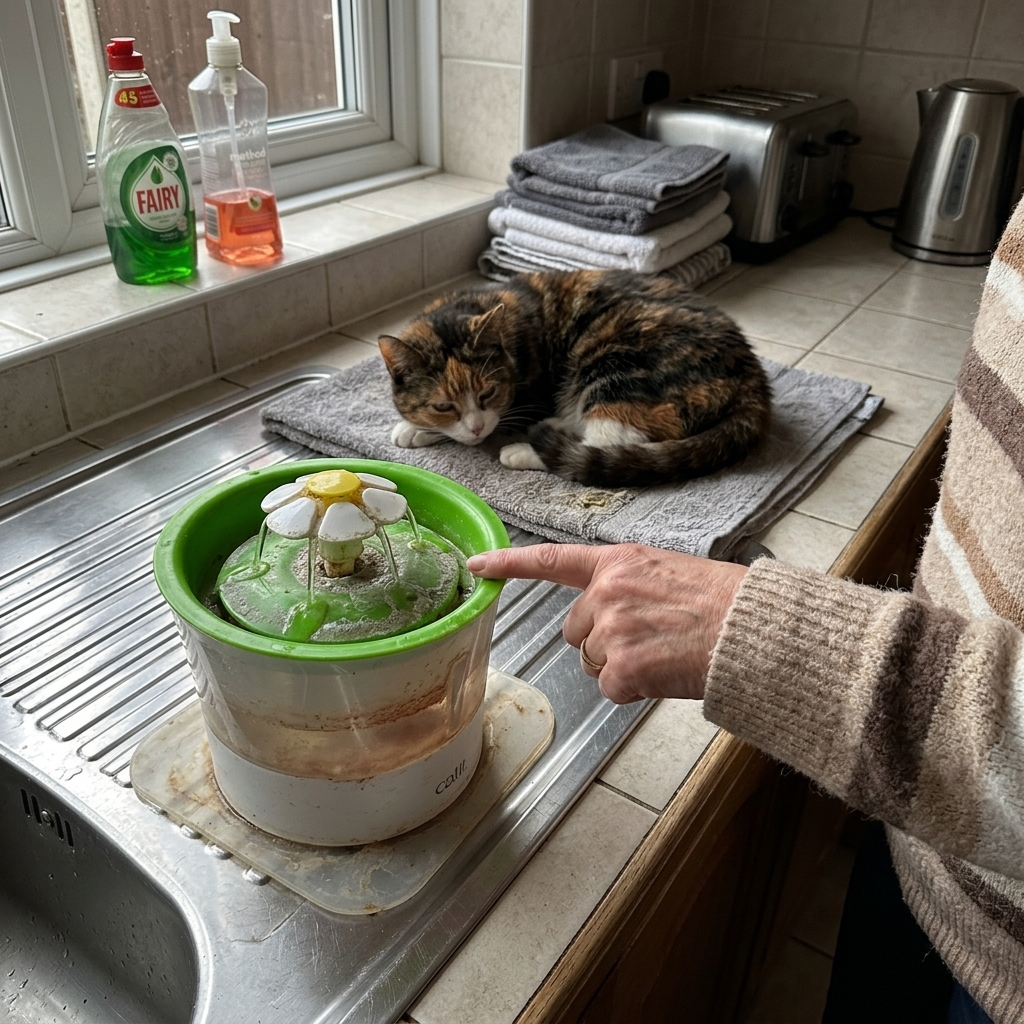
Ran for 4 days, from August 29 to September 2, 2026, the last day Crush saw it.
Run by PetHaven Cat Care on Facebook. Crush is not the advertiser and does not verify its claims. See this ad in Meta's Ad Library(opens in a new tab)
Want an ad like this for your product?
Crush makes new ad images for your product from this ad: your logo, your product photo, your offer.
Trials from $19.95 USD, then $79.95 USD a month. Cancel anytime.
About this ad
- Meta Ad Library ID
- 1381183640886636
- Platforms
- Facebook, Instagram, Audience Network, Messenger, WhatsApp and Threads
- Relaunches
- 0
- Niche
- Pets
Ad text
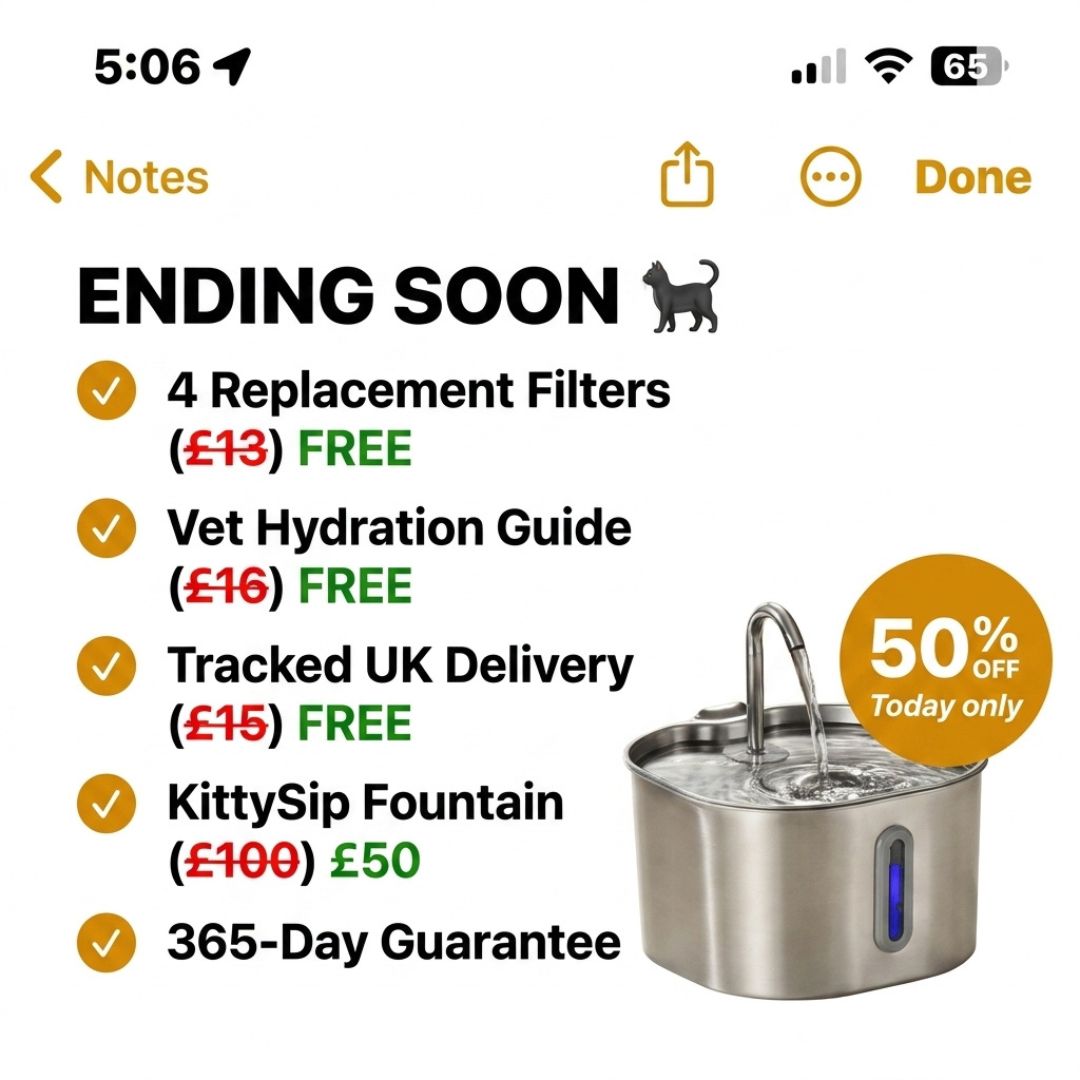
Everyone told me some cats just don't take to fountains. Plastic one, ceramic one, the one that said stainless steel. It didn't matter. She quit on every single one. So I cleaned them more. Changed the filters early. Scrubbed the reservoir out every Sunday. I spent two years sure my cat was just difficult. She wasn't. It was never anything she was doing. I'm 58. Bess is thirteen. The kind of woman who does everything by the book with an animal. Vaccinations on time, teeth checked, the good food, the vet's number in my phone. That's what made this one so hard to say out loud. Because I'd done the right thing. I'd looked it up. Cats prefer moving water. Everyone knows that. So I bought a fountain like you're supposed to. And for two weeks it was perfect. She drank from it the first afternoon. Properly, not a couple of licks. I stood in my kitchen feeling quite pleased with myself. Then somewhere in the third week it started. First the hesitating. She'd walk over, lower her head, and stop. Then the sniffing and turning away. Then nothing at all, and back to crying at the tap at six in the morning like the fountain wasn't even there. And there was this other thing I could never explain to anyone. The fountain looked immaculate. Clean water. New filter. I'd scrubbed it myself. Not dirty. Not dusty. Immaculate. And she wouldn't go near it. So I did what a careful woman does when she's told her cat is just fussy. I bought another one. The ceramic one, forty pounds, because obviously the cheap plastic was the problem. Two weeks. Then she quit on that one the same way. So I bought a third. The one that said stainless steel on the box, forty-two pounds, because that had to be the answer. Two weeks. Same. I cleaned them daily. Then weekly. Then daily again. When she wouldn't use any of them I went back to running the tap for her, morning and night, like her butler. I bought a water additive because a woman online swore by it. All that did was make her avoid the bowl too. Add it up and it was over a hundred pounds of fountains, all three of them still under my sink. And here's the story I told myself the whole time. That she was just an awkward cat. That some cats are like that, and I'd got one, and there was nothing to be done. I had the fountains. I had the receipts. I had a whole case built, and my own cat was the one on trial for it. And underneath all of that, quietly, something else was happening that I refused to look at. She was getting thinner. Sleeping more. On the radiator, in the sun, always somewhere warm. But I put that in a completely separate box. That was age. That was a thirteen-year-old cat. That was just what happens. The fountain thing was her being difficult. The slowing down was just time. Two different problems, on two different shelves, and it never once crossed my mind they were the same thing. I mentioned it at her check-up. The vet looked at the notes, said some cats simply prefer running taps, and to keep an eye on her weight. I drove home feeling like I'd made the whole thing up. Like a grown woman who couldn't manage to get her own cat to drink. What actually turned it around was Dr Sarah Brown. She was the one I saw at the recheck, six weeks later, when Bess's bloods came back with her kidney markers up. Early, she said. Not dangerous yet. But she needs more water going into her, and she needs it now. And I just told her. The three fountains. The two weeks each. The hundred pounds. The tap at six in the morning. The whole stupid two years of it. She stopped writing. She said: "That's not two problems. That's one. And your cat hasn't done a single thing wrong. I have this conversation most weeks." And then she explained the thing nobody, in two years, had ever explained to me. And she kept it simple. There are microbes in every container of water. Always have been. In fresh water they sit there and cause no trouble at all. But water that circulates in the same reservoir all day doesn't stay the way you poured it. A little of your cat goes in every time she goes near — saliva, hair, dust, crumbs off her whiskers. And that is food. The microbes that were sitting there quietly suddenly have a feast in front of them. So they multiply. And when enough of them crowd into one spot, they do something clever and a little horrible. They build a shield. A sticky, slimy layer they wrap around themselves and glue down, so nothing can reach them. "You know that slightly slippery feel," she said. "Round the inside of the reservoir. The thing you always thought was just wet." I said yes. Probably too loud. "That's the shield. It has a name — biofilm. It's basically the same thing the dentist scrapes off your teeth." And here's what it does. You cannot see it. You cannot smell it. She can. A cat's nose isn't slightly better than ours. It's in a different league entirely. She stands over that water reading it in a level of detail you have no access to. So every time she approached, hesitated and walked away — she wasn't being difficult. She was reading the water and declining it. And every day she declined it, she drank less than she needed. For two years. Which is what was sitting on that piece of paper at the vet's. The fountain quitting and the kidney numbers were never two things. They were one colony, doing two jobs. Putting her off the water I could see, and quietly dehydrating the cat I was watching slow down. Now here's the part I still find hard. "But it's moving water," I said. "That's the whole point of a fountain. It shouldn't go stagnant." And she said: "Moving water is half of it. What was it made of?" Plastic. All three. Even the one that said stainless steel — the bowl on top was steel, and the tank underneath, where the water actually sits for twenty-three and a half hours a day, was plastic. I had never once turned one over. She explained why that matters. Biofilm needs texture to grip. On a smooth, non-porous surface it struggles to establish and it rinses away. But plastic isn't smooth. Not after you've owned it. Plastic develops microscopic surface damage within weeks. Not scratches you'd notice — fine damage from washing up, from grit in a sponge, from a brush going round the inside every Sunday. And the colony establishes itself down inside that texture, where a sponge physically cannot reach and washing up liquid doesn't clear. So think about what actually happened. Week one: brand new plastic. Smooth. Nothing established. Bess drinks happily. At the same time: my first few cleans are putting fine damage into the reservoir. Week two: the colony starts building in the texture my own cleaning had created. Week three: she can smell it. Approaches, reads it, declines. Week four: back at the tap. And I'm blaming her. The fountain hadn't stopped working. The water in it had changed, and only one of us could tell. That's why every one of them worked for a fortnight and then died on me. It was tidying the surface while the real thing rebuilt underneath. The daily cleaning, which just put damage in faster. The filter I changed early, sitting inside a reservoir that was the actual problem. The water additive, floating on top of a colony living below it. None of it was a scam. It was all just aimed at a layer the problem doesn't live on. So the real question was never which fountain. It was how you stop the colony ever getting a grip in the first place. You don't clean it out. You give it nothing to hold onto. And you have to do two things at the same time. The water has to move, so her instinct brings her over to it at all. And the surface has to be non-porous, so the colony has nowhere to build and she's still coming back on day sixty. That's the part nobody in the pet aisle can help you with. What Dr [VET NAME] pointed me to wasn't a treatment or a coating. It was a material. 304 medical-grade stainless steel. The same specification they make surgical instruments from — and that grade exists precisely because there are places you cannot allow a colony to establish. But here's the catch, and it's the one that cost me forty-two pounds. Half the fountains sold as "stainless steel" aren't. The steel is the bowl on top. The visible part. The part in the photograph. The tank underneath is plastic. So the water stands in plastic. Builds its colony in plastic. Then gets lifted into a steel bowl for the few seconds before your cat sniffs it and walks away. You'd never know unless you turned it over. Turn one over before you buy it. That's the single most useful thing I can tell anyone. That's why she recommended KittySip specifically. It's the one where the steel goes all the way through — bowl and tank both — with a continuous stream running day and night, and a three-layer filter that takes out the chlorine taste we stopped noticing at about the age of five and cats never stop noticing. The moving water brings her over. The steel is why she's still coming back six months later. Neither one on its own had ever been enough for Bess, which is exactly why three fountains had failed. I'm not going to pretend it was overnight, because it wasn't. Here's how it actually went. Day one, she circled it twice, sniffed it and walked off. I stood in my kitchen convinced I'd wasted my money for the fourth time. Monday morning I heard her drinking before I was out of bed. Properly drinking. By day three she hadn't been at the tap once. I made a cup of tea on my own for the first time in two years. End of the first week I had to top it up. Which had never happened before, because the others never went down. Week two, the crying at the bath at night stopped. And then the bit that mattered — week four, week six, week ten. She was still using it. That had never once happened. Not every cat moves at the same pace. But the vet said the order tends to hold. Curiosity first. Then drinking. Then the tap stops. We went back at six weeks. Her numbers had come down. Not back to normal — cats her age don't go backwards to normal — but down, and heading the right way, and she wanted to know what I'd changed. I told her I'd thrown the plastic ones out. She wrote it in her notes. But that's not even the part I think about. The part I think about is that I stopped apologising to my own cat. I look at her now and I'm not building a case against her. I stopped believing I'd been given an awkward animal. Because I never was. I just didn't know what I was actually looking at. So if any of this sounded like your kitchen, here's what I need you to hear. The fortnight is not a coincidence. The fortnight is the shield being built. And every day after it, she's taking in less water than she needs. Picture yourself a year from now if nothing changes. Still running the tap at six in the morning. Still buying the next fountain that's finally going to work. Still telling yourself she's just fussy. And still, quietly, sitting in a consulting room being told her numbers are up. You can put that case down. You don't need a fourth plastic fountain. You need a surface the colony can't get a grip on, because that's the only place this is ever actually solved. That's the whole reason KittySip exists. I just wish I'd turned one of those fountains over two years and a hundred wasted pounds sooner. 👉 https://shoppethaven.co/products/kittysip-cat-water-fountain-stainless-steel
Where the ad sends people
shoppethaven.co
Don't buy a cat water fountain!
50,000+ Happy Cat Parents
Shop now: shoppethaven.co(opens in a new tab)