Linda
LindaLinda Facebook ad: “Read this if you get migraines”
Ran for 23 days, from February 1 to February 24, 2026, the last day Crush saw it.
Run by Linda on Facebook. Crush is not the advertiser and does not verify its claims. See this ad in Meta's Ad Library(opens in a new tab)
Want an ad like this for your product?
Crush makes new ad images for your product from this ad: your logo, your product photo, your offer.
Trials from $19.95 USD, then $79.95 USD a month. Cancel anytime.
About this ad
- Meta Ad Library ID
- 1390328552829394
- Platforms
- Facebook, Instagram, Audience Network, Messenger and Threads
- Relaunches
- 0
- Niche
- Insurance
Ad text
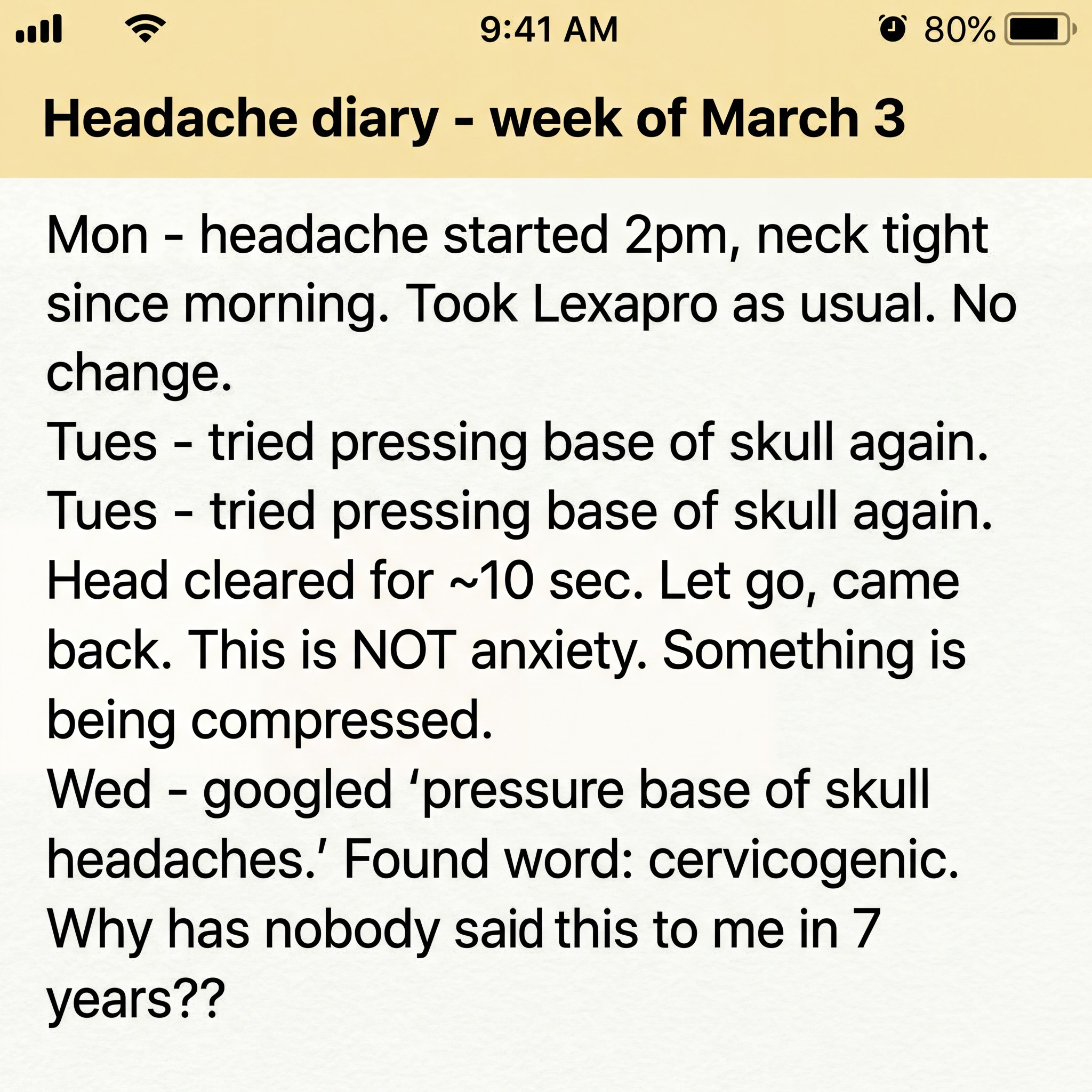
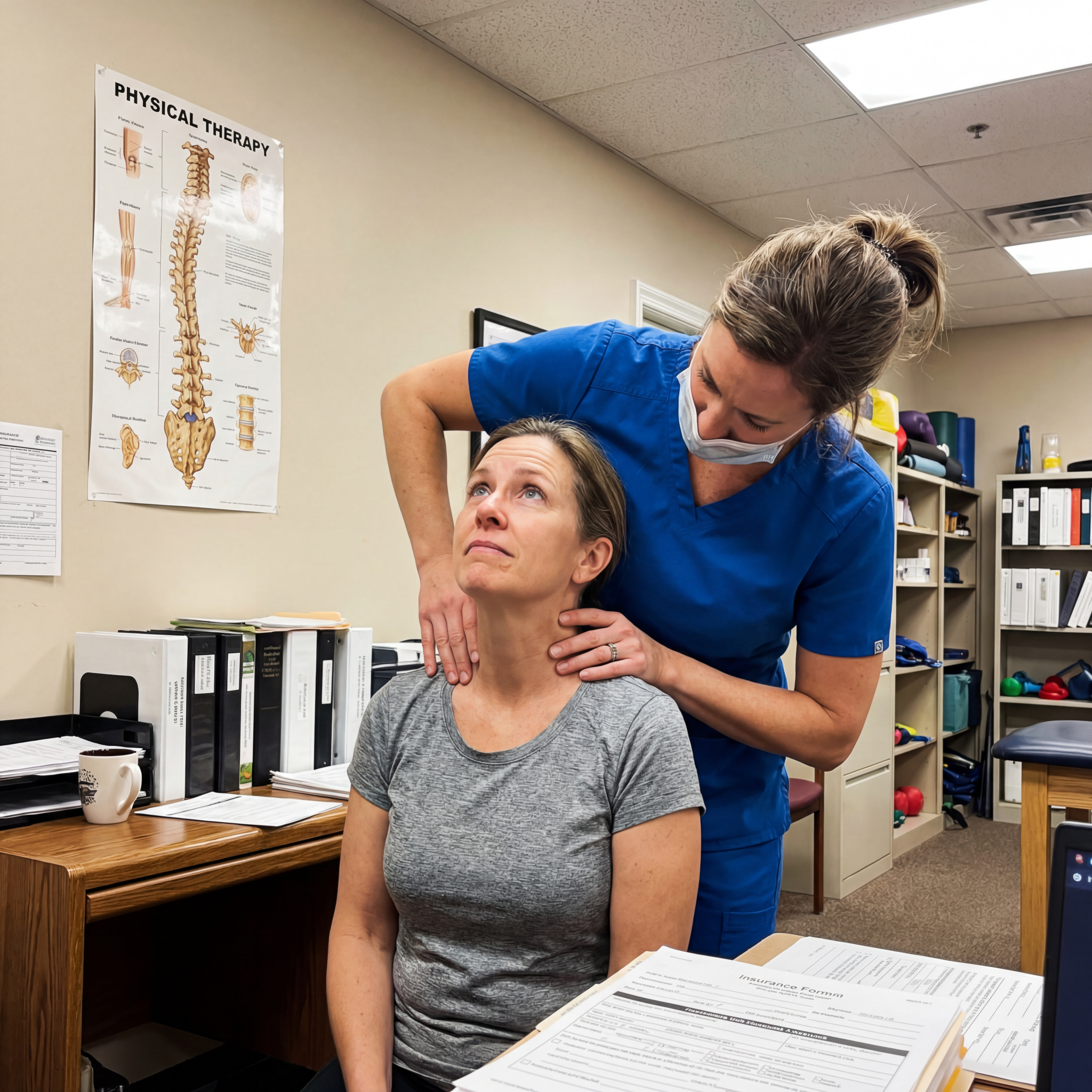
The Neurologist Couldn't Find It. The MRI Missed It. My Migraines Were Hiding In My Neck. I had my first migraine when I was 32. By 44, I was having them three to four times a week. That's 12 years. 12 years of neurologists. 12 years of medications. 12 years of missing my daughter's soccer games because I was locked in a dark room with ice on my head. Let me tell you what I tried. Imitrex. Maxalt. Zomig. Three different triptans, because my neurologist said "everyone responds differently." I responded the same to all of them: temporary relief that wore off in hours, then the migraine came back worse. Topamax for prevention. Made me so foggy I couldn't remember my own phone number. My husband said I wasn't myself anymore. I quit after four months. Botox injections. $1,200 every three months after insurance. 31 needles in my forehead, temples, and the back of my head. The neurologist said most patients see results after the second round. I did five rounds. Eighteen months. $6,000. The migraines kept coming. Nerve blocks. They injected anesthetic into the occipital nerves at the base of my skull. It worked for about two weeks. Then nothing. I tried eliminating gluten. Dairy. Caffeine. Alcohol. Artificial sweeteners. I kept a food diary for eight months. No pattern. I bought blue light glasses. Changed all my lightbulbs. Downloaded apps that adjusted my screen color. I looked ridiculous and felt worse. I tried acupuncture. Massage therapy. A chiropractor who cracked my neck so hard I was scared he'd paralyze me. I even tried a $400 device that sent electrical pulses to my forehead. It felt like being stung by bees. Did absolutely nothing for the migraines. $15,000. I added it up once. $15,000 over 12 years on migraine treatments, not counting the neurologist visits. And after all of that, my last neurologist looked at me and said: "I've tried everything I know. I'm out of options. I think you just need to learn to manage the pain." Manage the pain. Like it was a personality flaw. Like I hadn't spent 12 years desperately trying to make it stop. I drove home from that appointment and sat in my driveway crying. This was it. This was my life now. Missing dinners. Missing events. Lying in dark rooms while my family lived their lives without me. I was 44 years old and I had accepted that I would be a prisoner to my migraines forever. But then something happened. Three weeks after that appointment, I was at my cousin's house for Thanksgiving. I was already dreading it. Fluorescent lights, loud kids, the smell of food—all migraine triggers. By 2pm, I felt it starting. That familiar pressure behind my right eye. The tightening in my neck. I found a dark room and lay down. My cousin Emily found me twenty minutes later. Emily is a physical therapist. Has been for 15 years. I'd never really talked to her about my migraines because I assumed she couldn't help—she works with knees and backs, not heads. She sat on the edge of the bed and asked me something no doctor had ever asked. "Linda, does your neck hurt before your migraines start?" I thought about it. Actually thought about it for the first time. Yes. It did. Every single time. The pain always started in my neck—that grinding tension at the base of my skull—and then it moved UP into my head. I'd always assumed the neck pain was a symptom of the migraine. Emily shook her head. "What if the neck pain isn't a symptom? What if it's the CAUSE?" She started explaining something I'd never heard of. Cervicogenic headaches. Headaches that originate from the cervical spine—your neck—not from your brain. She said 89% of migraine patients have neck pain with their migraines. But almost none of them get their necks examined. The neurologists scan the brain, check blood work, analyze brain chemistry. But the source isn't in the brain. She explained that the C1, C2, and C3 vertebrae at the top of your cervical spine share nerve pathways with your trigeminal system—the same nerves responsible for head and face pain. When those vertebrae compress from years of poor posture, desk work, or looking down at screens, they irritate nerve roots. Those irritated nerves send pain signals UP. Into your head. Behind your eyes. Across your temples. Your brain interprets this as a migraine. But the signal is coming from your neck. "In 90% of cases where patients think they have chronic migraines," Emily said, "the real cause is cervicogenic. It's coming from their neck. And no amount of triptans or Botox can fix mechanical compression." I just stared at her. Twelve years. Four neurologists. Thousands of dollars. And not ONE of them had checked my neck. Not one had asked if my neck hurt before my migraines started. They'd done MRIs of my brain. EEGs. Blood panels. They'd injected Botox into my forehead and nerve blocks into my skull. But the problem was six inches lower. In my cervical spine. Where no one had thought to look. I asked her what I was supposed to do. Go to more appointments? More injections? More doctors who'd tell me to "manage the pain"? She said no. The solution for cervicogenic headaches isn't medication. You can't take a pill for spinal compression. The solution is cervical traction—creating space between the compressed vertebrae so the nerve roots stop being irritated. Physical therapists and chiropractors do this. They use traction tables to gently pull your head away from your neck, creating negative pressure that decompresses the spine. The problem? You'd need to go daily. Or at least several times a week. At $80-120 per session, that's hundreds of dollars a month. But Emily told me about something else. A device that does the same thing at home. Something you use for 10 minutes a day. Uses gravity and the weight of your own head to create gentle traction. She said some of her patients with chronic headaches had seen better results from 10 minutes daily at home than from weekly sessions at her clinic. "Daily decompression beats weekly treatment," she said. "The compression happens 24/7. You need to counteract it daily." I was skeptical. Beyond skeptical. I had a closet full of devices that promised relief and delivered nothing. The electrical forehead thing. The acupressure headband. The "migraine hat" that was basically frozen peas in a mask. Why would this be any different? Emily understood. She deals with skeptical patients all day. "Linda," she said, "every treatment you've tried has targeted your HEAD. Triptans affect brain chemistry. Botox paralyzes muscles in your forehead. Nerve blocks numb nerves at your skull. None of them address why those nerves are irritated in the first place." She touched the back of my neck. "The source is HERE. Compressed vertebrae. Irritated nerve roots. Until you create space in your cervical spine, the signal keeps firing. The headaches keep coming." It made sense. For the first time in 12 years, something actually made sense. I ordered the device that night. It was called Cervionix. It arrived three days later. Honestly, it looked weird. Like a contoured foam thing with two raised sections that form a Y-shape. The instructions said to lie down with the device under my neck, positioning the Y-shape so it supports both sides of my cervical spine. Let gravity do the work. Start with 5 minutes, work up to 10-15. I lay down on it that first night. And I felt something I hadn't felt in years. My neck actually RELEASED. Not like a massage, where you feel relaxed for an hour and then the tension comes back. This was different. Deeper. Like vertebrae that had been crushed together for years finally had space to breathe. I lay there for 8 minutes. When I got up, my neck felt... lighter. The constant grinding tension I'd learned to live with was quieter. I went to bed that night cautiously hopeful. The next morning, I woke up without a headache. That might not sound like a big deal. But you have to understand: I woke up with a headache almost every single day. It was my normal. Day 2: Used it again. 10 minutes this time. Neck felt even better. No headache. Day 3: This was the day I usually reached for my Imitrex. The "every three days" pattern my neurologist had documented. I waited for the migraine to start. It didn't. Day 4. Day 5. Day 6. No migraine. By the end of week one, I had gone seven consecutive days without a migraine. That hadn't happened in over a year. Week 2: I started noticing other things. My sleep was better—I wasn't waking up at 3am with neck pain anymore. I had more energy. My mood was better. And I realized something that made me want to cry. The "brain fog" I'd blamed on Topamax? The exhaustion I'd attributed to the migraines themselves? Some of that was probably coming from YEARS of compressed cervical nerves affecting my whole system. Week 3: I went to visit my daughter at college. A trip I'd cancelled twice before because I was terrified of getting a migraine away from home. I packed my Imitrex out of habit. I never opened it. We walked around campus for hours. Ate at a loud restaurant. I even had a glass of wine. No migraine. Month 2: I saw my regular doctor for a checkup. Told her what happened. She was skeptical—she'd seen my chart, knew my history. I showed her the research on cervicogenic headaches. The 89% statistic. The cervical nerve pathway connection. She admitted she'd never considered it. Said most of her migraine patients get referred straight to neurology. "Maybe we should be checking necks first," she said. Month 3: I realized I hadn't taken a triptan in 10 weeks. TEN WEEKS. I used to take them three to four times a week. I calculated the cost savings: roughly $2,400 per year in medications alone. Plus the neurologist visits I was no longer making. The Botox appointments I'd cancelled. The Cervionix cost me $49. That was eight months ago. I still use it every day. 10 minutes in the morning while I drink my coffee. Sometimes another 10 minutes before bed if my neck feels tight. My migraines haven't disappeared completely. I still get one every few weeks. But the frequency went from 15-18 per month to 2-3. The intensity dropped. When they do come, they respond to a single Imitrex instead of requiring multiple doses. My neurologist called it "remarkable improvement." Asked what I was doing differently. I told her about cervicogenic headaches. About cervical traction. About the 89% of migraine patients with neck pain who never get their necks examined. She listened. Actually listened. Then she said: "I wish someone had taught me about this in medical school." Here's what I want you to understand: I'm not saying your migraines are definitely cervicogenic. I'm not a doctor. But I am saying this: If you've tried triptans and they don't work well enough— If you've done Botox and it didn't deliver— If you've seen neurologist after neurologist and they're "out of options"— If your neck hurts before or during your migraines— Then maybe the problem isn't in your head. Maybe, like me, you've spent years and thousands of dollars treating the wrong location. Maybe the source is mechanical compression in your cervical spine that no medication can fix. The Cervionix costs $49. It's on sale right now from $79. It comes with a 30-day money-back guarantee and free shipping. 30 days is enough time to know if cervical decompression helps your headaches. If it doesn't—if your migraines aren't cervicogenic—send it back. You'll get a full refund. But if it works? If you're like me and 10 minutes of daily decompression does what 12 years of medications couldn't? You'll wish someone had told you about this sooner. I wish Emily had found me at that Thanksgiving five years earlier. I would have saved $15,000 and gotten five years of my life back. But I can't go backward. I can only tell you what I know now. Your migraines might be hiding in your neck. The Cervionix might be the thing that finally sets you free. There's only one way to find out. [Get Cervionix Now - 30-Day Money-Back Guarantee] To finally getting answers, Linda M. Age 45, Former Chronic Migraine Sufferer P.S. — I know you're skeptical. I was too. After everything I'd tried, I almost didn't order it. But at $49 with a money-back guarantee, I figured I had nothing to lose. Turns out I had everything to gain. If your neck hurts when you get migraines, please just try this. It might be the missing piece no one thought to look for. P.P.S. — The Cervionix design hits both sides of your cervical spine at once with its Y-shape. Cheaper knockoffs only hit one side, which means uneven decompression. If you've tried other neck stretchers and they didn't work, that might be why. This one is different.
Where the ad sends people
cervionix.com
Read this if you get migraines 👆
Finally, something that makes sense
Learn more: cervionix.com(opens in a new tab)