Spectrum Bloom
Spectrum Bloom Facebook ad: “In the context of Sensory Integration, the auditory…”
Ran for 44 days, from April 8 to May 22, 2026, the last day Crush saw it.
Run by Spectrum Bloom on Facebook. Crush is not the advertiser and does not verify its claims. See this ad in Meta's Ad Library(opens in a new tab)
Want an ad like this for your product?
Crush makes new ad images for your product from this ad: your logo, your product photo, your offer.
Trials from $19.95 USD, then $79.95 USD a month. Cancel anytime.
About this ad
- Meta Ad Library ID
- 1395708625925200
- Platforms
- Relaunches
- 0
Ad text
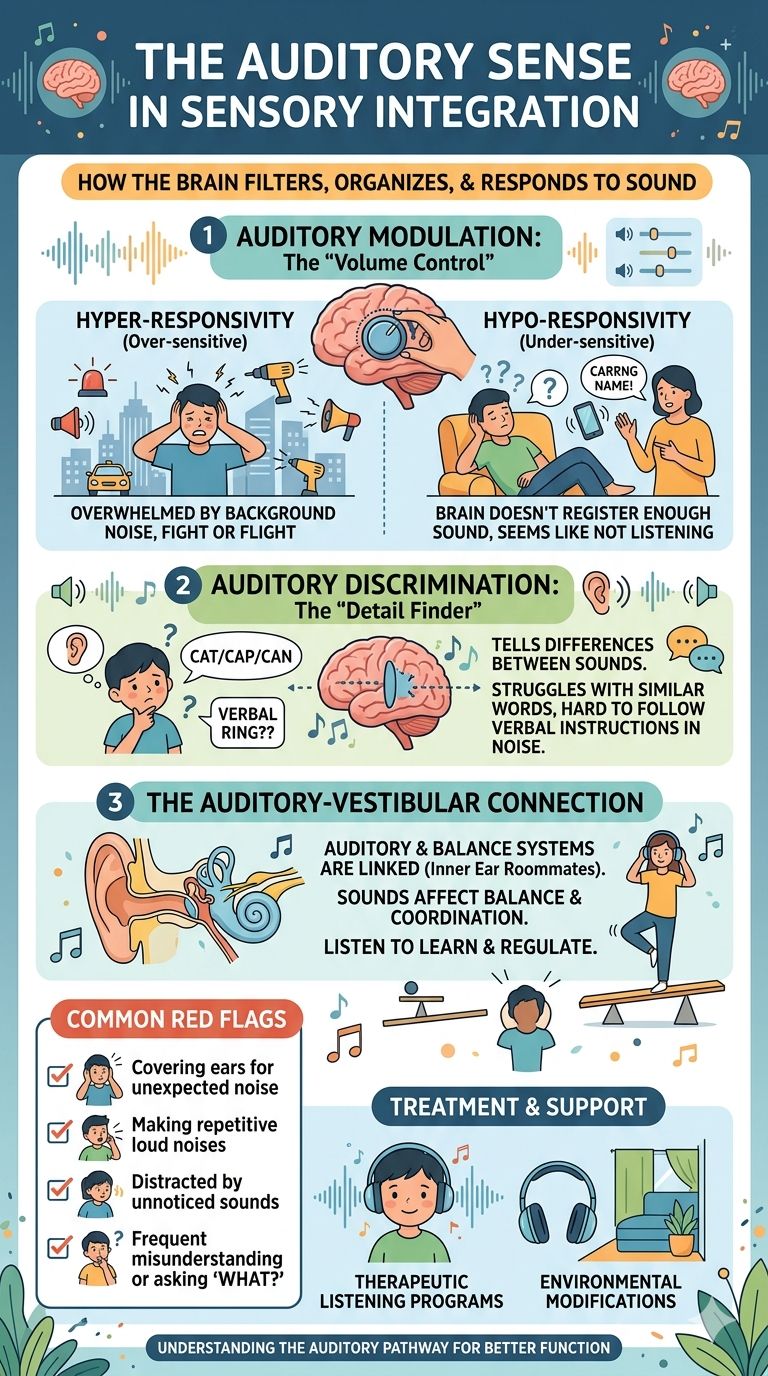
In the context of Sensory Integration, the auditory sense is much more than just the ability to hear sounds. It is about how the brain filters, organizes, and prioritizes sound information to help us function in our environment. When we talk about the auditory system within a "Sensory Diet" or a sensory integration framework, we focus on three main areas: 1. Auditory Modulation (The "Volume Control") This is how the brain regulates its response to sound. Some children have a "volume knob" that is stuck too high or too low. Hyper-responsivity (Over-sensitive): The brain can’t filter out background noise. A distant lawnmower or the hum of a refrigerator feels as loud and intrusive as someone shouting. This often triggers a "fight or flight" response. Hypo-responsivity (Under-sensitive): The brain doesn't register enough sound. The child might seem like they aren't listening or may not respond when their name is called, even though their hearing is fine. 2. Auditory Discrimination (The "Detail Finder") This is the ability to hear the differences between sounds. It is the foundation for speech and language. The Struggle: A child might struggle to tell the difference between "cat," "cap," and "can." The Impact: This makes it very hard to follow verbal instructions in a classroom where there is echo or other children whispering. 3. The Auditory-Vestibular Connection In sensory integration theory, the Auditory and Vestibular (balance) systems are roommates—they live together in the inner ear and share the same cranial nerve. Because they are so closely linked, sounds can actually affect a child’s balance and muscle tone. This is why many sensory integration therapies (like the Tomatis Method or Integrated Listening Systems) use specialized music to help improve a child's coordination and emotional regulation. Common Red Flags in Sensory Integration If a child has an auditory processing issue within their sensory profile, you might notice: Covering ears at unexpected noises (flushing toilets, sirens). Making repetitive loud noises (humming or screaming) to "drown out" unpredictable sounds. Being easily distracted by sounds that others don't notice. Misunderstanding or asking "What?" frequently, even in quiet rooms How It’s Treated Developmental Therapists often use Therapeutic Listening programs. These involve: Filtered Music: Music modified to emphasize certain frequencies that "train" the ear and brain to attend to human speech. Environmental Modifications: Using noise-canceling headphones or creating "quiet corners" to help a child regulate when overwhelmed.
Where the ad sends people
fb.com
www.fb.com
Visit profile: fb.com(opens in a new tab)