Linda Thompson
Linda Thompson Facebook ad: “Read This If You'd Rather Die Than Get Cut Open”
Ran for 22 days, from March 2 to March 24, 2026, the last day Crush saw it.
Run by Linda Thompson on Facebook. Crush is not the advertiser and does not verify its claims. See this ad in Meta's Ad Library(opens in a new tab)
Want an ad like this for your product?
Crush makes new ad images for your product from this ad: your logo, your product photo, your offer.
Trials from $19.95 USD, then $79.95 USD a month. Cancel anytime.
About this ad
- Meta Ad Library ID
- 1396788588860582
- Platforms
- Facebook, Instagram, Audience Network, Messenger and Threads
- Relaunches
- 0
Ad text
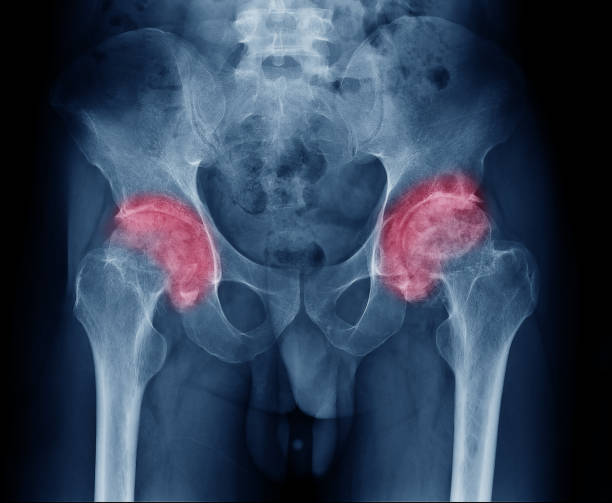
You're Not Afraid Of Hip Surgery. You're Afraid Of What You'll Become Afterward, And You Should Be. My mother went into the operating room as the woman who raised four kids, ran the church bake sale for 22 years, and never missed a single one of my son's baseball games. She came out as someone I barely recognized. I'm not talking about the surgery itself. The surgery was "successful." That's what Dr. Hendricks said when he came out to the waiting room, still in his scrubs, smiling like he'd just fixed a leaky faucet. "Everything went perfectly. She'll be walking in no time." He lied. The first night, I heard my mother scream for the first time in my life. Not cry. Not moan. Scream. The kind of sound that comes from somewhere deeper than pain. The nurses rushed in with more morphine. I sat in the hallway at 3:17 AM, shaking, wondering what we had done to her. Week one, she couldn't get out of bed without two people lifting her. Week two, she developed a blood clot in her left calf. Week three, the incision got infected. Yellow drainage. Fever of 102. Week four, she looked at me from her hospital bed, this woman who had never asked anyone for anything, and whispered: "I want to go home. I want to die at home." She didn't die. But something in her did. Six months after surgery, my mother could walk again. Technically. With a walker. Slowly. Eyes fixed on her feet like the floor might swallow her whole. The physical therapist said she was "progressing nicely." But I watched her flinch every time one of the grandchildren ran past her. Terrified they'd bump her. Terrified she'd fall. Terrified her new hip would dislocate, a word she'd learned in the hospital that now haunted her like a ghost. She stopped going to church. Stopped hosting Thanksgiving. Stopped being Mom. She became a person who managed a hip replacement. That's not living. That's existing in fear of breaking. I swore I would never let that happen to me. And then, at 56 years old, I felt the first twinge in my own hip. At first, I ignored it. Just stiffness. Just age. Just "overdid it in the garden." Six months later, I was limping. Twelve months later, I couldn't sleep through the night. Eighteen months later, I was sitting in an orthopedic surgeon's office, looking at an X-ray of my own hip, listening to words I'd heard before: "You've got significant joint space narrowing. We should start discussing your surgical options." My hands went cold. I saw my mother's face in that hospital bed. Heard her scream at 3:17 AM. Watched her shuffle across the kitchen with her walker, afraid to lift her eyes from the floor. And something inside me said: Not me. Not yet. There has to be another way. That night, I didn't sleep. I sat at my kitchen table with my laptop, the blue light burning my eyes, searching for something, anything, that wasn't a surgeon's saw. I read about glucosamine. Already tried it. Four years. Nothing. Turmeric. Collagen. Fish oil. CBD. Tried them all. Hundreds of dollars. Maybe thousands. My medicine cabinet looked like a supplement store exploded in it. None of it worked. And the question that kept me up until 4 AM was: Why? Why did nothing work? I wasn't lazy. I wasn't noncompliant. I did everything right. So why was my hip still dying? The answer came from a place I never expected. A research paper from the University of Rochester. I almost scrolled past it. The title was technical, full of words I didn't understand. But one sentence stopped me cold: "Chondrocytes in osteoarthritic joints demonstrate a 40-60% reduction in mitochondrial ATP production, resulting in an energy deficit that prevents inflammation resolution and impairs tissue repair capacity." I read it three times. Then I read it again out loud. And suddenly, everything made sense. Every cell in your body has tiny power plants called mitochondria. They produce ATP, the energy your cells need to function. To heal. To repair. To fight inflammation. In healthy joints, mitochondria pump out ATP like a factory running three shifts. But in arthritic joints? The mitochondria are damaged. Dying. Sputtering out. Your joint cells are literally starving for energy. And here's the part that made me want to throw my laptop across the room: When cells don't have energy, they can't use the building blocks you give them. Glucosamine? Your cells were too exhausted to absorb it. Collagen? Couldn't be incorporated without ATP. Turmeric? Reduced inflammation temporarily, but didn't fix the underlying energy crisis. I hadn't been failing. My cells had been starving. I was delivering groceries to a house with no one home. But it gets worse. Damaged mitochondria don't just stop producing energy. They start producing poison. Free radicals. Oxidative stress. Which damages more mitochondria. Which produces less energy. Which creates more free radicals. It's a death spiral. And it happens quietly, invisibly, while you're taking your supplements and doing your exercises and wondering why nothing works. Your joint isn't wearing out from age. It's being murdered from the inside by its own broken power plants. Once I understood the problem, I became obsessed with finding the solution. Not a bandaid. Not another supplement that "supports joint health." Something that actually fixes damaged mitochondria. I found research on compounds I'd never heard of: PQQ: a molecule that stimulates your cells to build brand new mitochondria. Not repair the old ones. Build new ones. CoQ10: but in a specific form called ubiquinol that people over 40 can actually absorb. The regular kind barely works after age 45. Specific B3 compounds that restore something called NAD+, the "energy currency" that mitochondria need to produce ATP. This wasn't joint support. This was cellular resurrection. I started taking these compounds together. Not expecting a miracle. Just hoping for a delay. A few more months before I'd have to face the surgeon. A few more holidays standing up instead of sitting down. A little more time. The first two weeks, I felt nothing. Week three, I realized I'd slept through the night. Week four, I stood up from my chair without gripping the armrest. Week five, I walked to the mailbox without thinking about my hip. Not because the pain was masked. Because something was actually changing. My six-month follow-up appointment, Dr. Patterson pulled up my X-rays. The old one. The new one. He looked at them for a long time. Then he looked at me. "What have you been doing?" I told him about the mitochondrial compounds. He didn't laugh at me. He didn't dismiss me. He said: "Your joint space narrowing has stabilized. Your inflammation markers are down significantly. Whatever you're doing, keep doing it." Then he said words I never expected to hear: "Let's push out the surgical conversation. I want to see you in another six months." I'm not going to tell you I'm cured. I'm not going to tell you surgery is off the table forever. I'm 57 years old. My hip has damage that can't be undone. But I'm not my mother. I'm not shuffling across the kitchen with a walker. I'm not flinching when my grandchildren run past me. Last month, I got down on the floor to play trains with my 4-year-old grandson. When I stood back up, my husband had tears in his eyes. Because six months ago, we didn't know if I'd ever do that again. I don't know how much time I've bought. Maybe a year. Maybe five. Maybe more. But I know this: Every day I'm not recovering from surgery is a day I get to live. Every holiday I host instead of attend. Every walk I take with my husband. Every time I pick up a grandchild without wincing. That's not just pain relief. That's my life back. If you're where I was six months ago — staring at surgery, watching the countdown, terrified of becoming someone you don't recognize... Please understand this: Your cells might be starving for energy. And no amount of glucosamine will fix that. The research exists. The compounds exist. Your doctor probably doesn't know about them because they don't learn about mitochondria in orthopedic residency. But you can know about them. And you can try them before you let someone strap you to a table and saw through your femur. I'm not selling anything. I'm sharing what I found at 4 AM when I was desperate. Below this post, I've linked information about the specific compounds that support mitochondrial regeneration in joints. The ones that gave me back my life. Or at least, gave me more of it. My mother is 79 now. She still uses a walker. She still flinches when the grandchildren run. She still wishes she'd known there was another option. I can't go back and save her. But maybe I can help you save yourself.
Where the ad sends people
eveom.health
Read This If You'd Rather Die Than Get Cut Open 👆
"We've been telling patients their cartilage is 'wearing out' for 40 years. In 73% of cases, their cells were actually starving to death from an energy crisis we never tested for." — Dr. Richard Keene, Orthopedic Surgeon,
Learn more: eveom.health(opens in a new tab)