
Inactive· since Jan 18, 2026
- 7
- days it ran
- 0
- relaunches
Ad copy
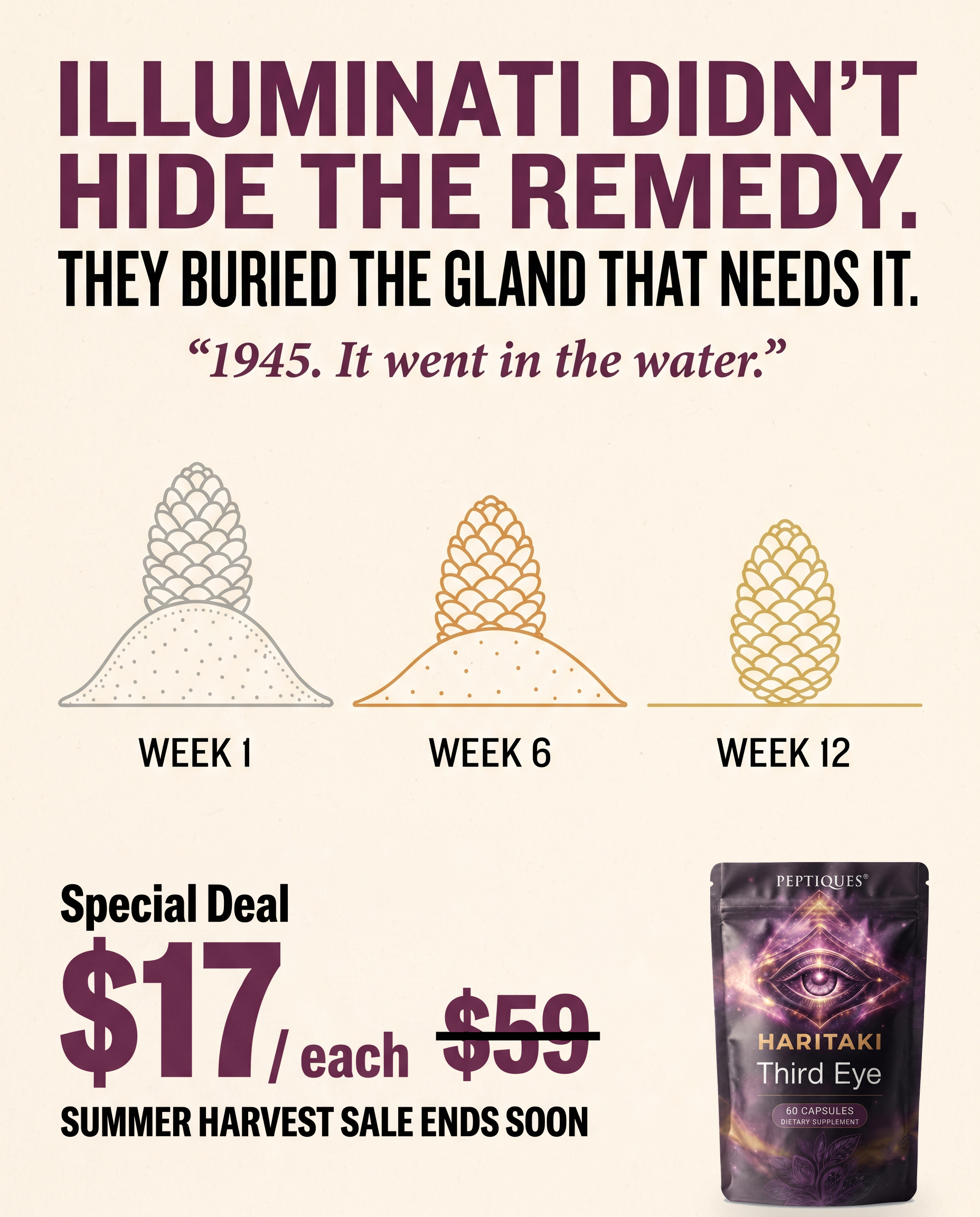
I blamed my lack of clarity on burnout for years before I learned about something building up in the center of my brain. That sounds dramatic. I know. But stay with me because this isn't some clickbait thing. This is just what happened to me. For most of my thirties, I was sharp. Quick. The person in meetings who could process information fast and respond while others were still catching up. I built a career on that. Being the one who could hold multiple complex things in my head at once without dropping any of them. Then somewhere around 38 or 39, the fog rolled in. Not all at once. It crept up slowly. Like trying to see through a windshield that gets a little dirtier each day. You don't notice it until suddenly you realize you can barely see the road. At first I thought I was just tired. I had two kids under six. A demanding job. A marriage that required actual effort. Of course I was foggy. But the tiredness didn't explain everything. It didn't explain why I'd read the same email three times and still not absorb what it said. It didn't explain why I'd walk into rooms and stand there with absolutely no memory of why I came in. It didn't explain why conversations felt like they were happening underwater. Like there was a half second delay between someone speaking and my brain actually processing the words. I mentioned it to my doctor during a routine physical. She nodded sympathetically. "You're a working mom with young kids. That's normal. Have you tried getting more sleep?" Thanks. Revolutionary advice. I tried getting more sleep. I tried drinking more water. I tried cutting caffeine then adding it back. I tried supplements from the vitamin aisle that promised "mental clarity" and "cognitive support." Nothing touched it. The fog just sat there. Heavy. Permanent. Like it had moved in and wasn't planning to leave. My husband started finishing my sentences because I'd trail off mid thought, losing track of what I was even saying. "You okay?" he'd ask. "Just tired," I'd say. But I wasn't just tired. Something was wrong. I could feel it. I just couldn't name it. Then last fall, I had lunch with an old college friend. She's a functional medicine practitioner now. The kind of doctor who asks different questions than regular doctors. I wasn't planning to turn lunch into a consultation. But halfway through my salad, I found myself unloading. The fog. The mental slowness. The feeling like my brain was wrapped in cotton. She listened without interrupting. Then she asked me something no doctor had ever asked. "How's your water quality? Where you live, what's the fluoride level?" I laughed. "What does that have to do with anything?" She didn't laugh back. "There's a gland in the center of your brain called the pineal gland. It's tiny but important. Regulates sleep. Affects cognitive function. And it has a problem." She explained that the pineal gland has no blood brain barrier protecting it. It's essentially exposed to whatever's circulating in your system. And one thing it's really good at absorbing is fluoride. "Over time," she said, "the fluoride deposits cause the gland to calcify. Harden. And when that happens, people report exactly what you're describing. Brain fog. Mental slowness. Feeling like you can't think clearly anymore." I sat there with my fork halfway to my mouth. "This is real? Like actual science?" She pulled out her phone and showed me studies. Published research from universities. Brain scans showing calcified pineal glands that looked like little white stones in the center of people's heads. The research showed that calcification rates increase with age and fluoride exposure. By the time most Americans hit 40, more than half have significant calcification. Some researchers were calling it an "epidemic of cognitive decline" that nobody was talking about. I went home that night and looked up my city's water report. Fluoride added at 0.7 parts per million. The maximum recommended level. I'd been drinking that water for twelve years. Brushing my teeth with fluoride toothpaste twice a day for my entire life. And apparently all of it was accumulating in a gland I didn't even know existed. I called my friend the next day. "Okay. So my pineal gland is probably calcified. Is there anything I can do about it?" She was honest. "The science on reversing calcification isn't definitive. But there are things that support the body's natural detoxification processes. Things that have been used for thousands of years in other cultures." She mentioned something called Haritaki. I wrote it down and promptly forgot about it for two weeks. Then one night, during another bout of insomnia brought on by a brain that wouldn't quiet down, I remembered and started researching. What I found was fascinating. Haritaki is a fruit that grows in Southeast Asia and the Himalayas. It's been used in Ayurvedic medicine for over 5,000 years. The ancient texts call it "the king of medicines." In traditional practice, it was specifically used for mental clarity and what they called "purification of the mind." Not in a spiritual sense. In a physical sense. They believed it helped clear blockages that prevented clear thinking. Modern science is starting to catch up. Studies show Haritaki has strong antioxidant properties. It supports healthy inflammation response. It aids the body's natural detoxification pathways. Researchers are exploring its effects on cognitive function and finding promising connections. None of this is FDA approved to treat anything. Nobody's claiming it cures brain fog or reverses calcification overnight. But the traditional use and the emerging research lined up in a way that felt worth exploring. I started looking for Haritaki supplements. This is where I almost gave up. Most of what's available is garbage. Amazon is flooded with cheap Haritaki powders from unknown sources. Wrong species. Wrong growing region. Harvested at the wrong time. Mixed with fillers and flowing agents. The reviews told the story. People trying it, feeling nothing, concluding the whole thing was nonsense. But the problem wasn't Haritaki. The problem was that most companies are selling the equivalent of gas station sushi and wondering why people don't like fish. I dug deeper. Found forums where people discussed sourcing. Learned that real Haritaki only reaches full potency when grown in specific Himalayan regions and harvested at the right time of year. Eventually I found a small company that did things correctly. Single ingredient. Himalayan source. Harvested once annually. Cold processed. No additives. The reviews were different. Not miracle claims. Just people quietly reporting that something shifted. Thinking felt clearer. The fog lifted a bit. They felt more like themselves. That's all I wanted. To feel like myself again. I ordered a bottle. First week, nothing. Took the capsules every morning and felt exactly the same. I almost stopped. Almost decided it was all placebo nonsense and I'd wasted my money. But something made me keep going. Around day twelve, I had a moment. I was in a meeting at work. A complicated discussion about budget projections and resource allocation. The kind of conversation where I'd normally zone out and have to ask people to repeat themselves. But I didn't zone out. I followed the entire thing. Responded in real time. Made connections between points that others hadn't made. Afterward, my colleague looked at me and said, "Sharp today." I hadn't been called sharp in years. Could have been coincidence. Could have been a good night's sleep. But it kept happening. By week four, the fog wasn't gone, but it was different. Thinner. Like looking through a dirty window that someone had finally wiped down. I could hold thoughts longer. Complete sentences without losing my place. Read an email once and actually know what it said. My husband noticed. "You seem more here lately," he said one night. I was. For the first time in years, I was actually here. I've been taking Haritaki for five months now. The results aren't dramatic. I'm not suddenly a genius. I still have foggy moments, foggy days even. But the baseline has shifted. The heavy, suffocating fog that used to be my normal has lifted enough that I can function like I used to. I think a lot about how long I accepted that fog as just part of life. Part of being a busy adult. Part of aging. It didn't have to be. Something was building up in my brain for decades and nobody thought to mention it. Not my doctor. Not the public health officials adding fluoride to my water. Not anyone. I had to stumble into this information through a friend who happened to know the right questions to ask. That feels backwards. I'm not saying everyone's brain fog is caused by pineal calcification. Bodies are complicated. There are a hundred reasons someone might not think clearly. But if you've tried everything and nothing has worked. If doctors keep telling you you're fine when you know you're not. If the fog just won't lift no matter what you do. Maybe it's worth looking at what's been accumulating in your head for your entire life. And maybe there's something that can help. It helped me. That's all I know for sure.
Like this ad? Make it yours.
Crush rebuilds this exact creative around your product — your brand, your colors, your offer — in about a minute.