Stirring our pot
Stirring our pot Facebook ad: “If you spend enough time reading the Bible…”
Ran for 5 days, from August 14 to August 19, 2026, the last day Crush saw it.
Run by Stirring our pot on Facebook. Crush is not the advertiser and does not verify its claims. See this ad in Meta's Ad Library(opens in a new tab)
Want an ad like this for your product?
Crush makes new ad images for your product from this ad: your logo, your product photo, your offer.
Trials from $19.95 USD, then $79.95 USD a month. Cancel anytime.
About this ad
- Meta Ad Library ID
- 1401945605398394
- Platforms
- Relaunches
- 0
Ad text
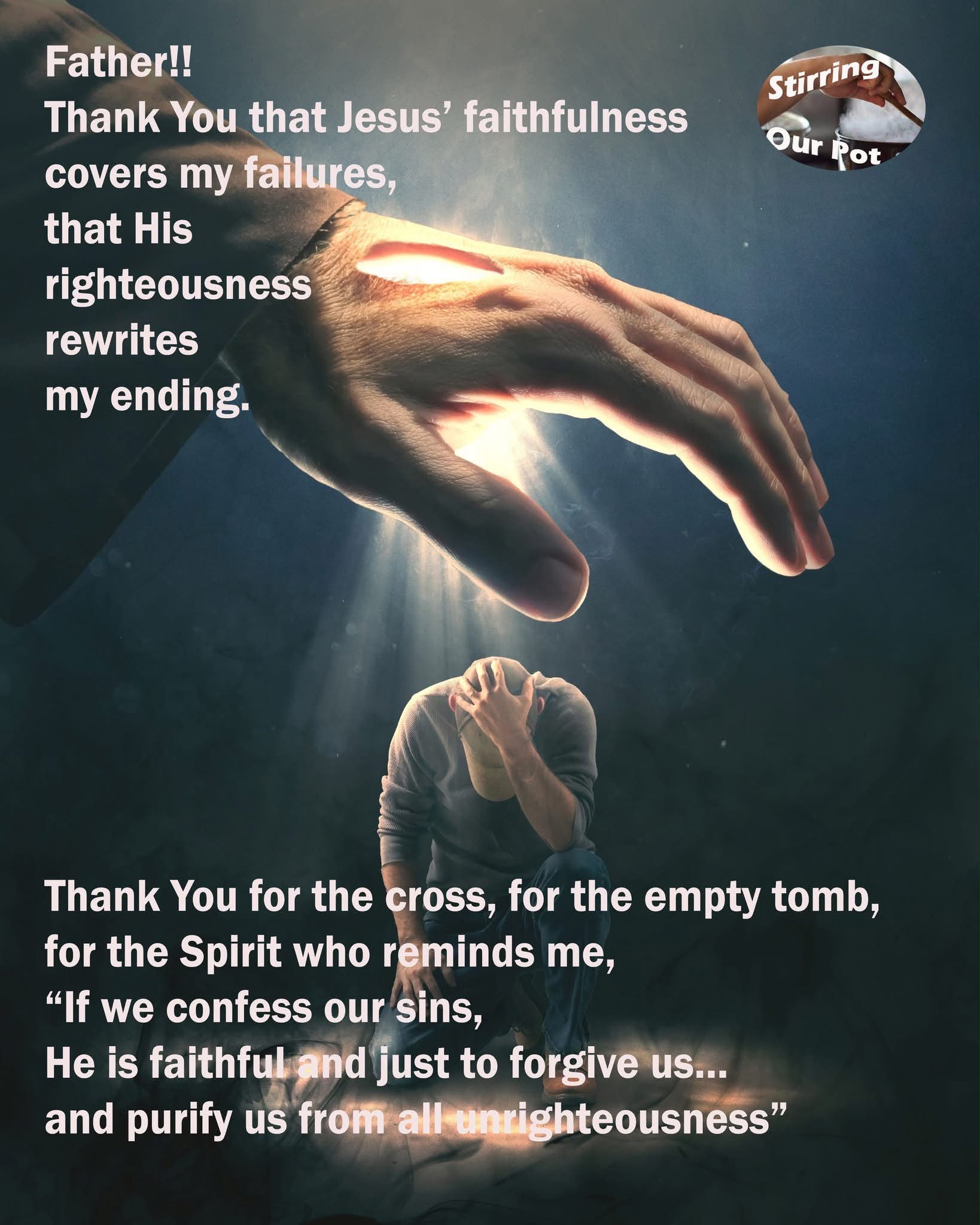
If you spend enough time reading the Bible, you start to notice a certain rhythm, almost like a drumbeat: blessing, then testing. It’s everywhere, once you’re looking for it. Once I saw it, I can’t unsee it. Let me show you what I mean. Start at the very beginning—Genesis 1 and 2. Adam and Eve are blessed beyond measure: paradise, each other, the sheer closeness of God. But then, Genesis 3. The serpent slithers in, temptation arrives, and their blessing turns into a test. We know how that one ends (Genesis 3:1-6). They fail, and the fallout echoes through every page that follows. Fast forward to Abraham and Sarah. God promises them a child, and with that promise comes blessing—Genesis 12:2-3, Genesis 15:5-6. But then, Genesis 16. The waiting gets heavy, faith wavers, and Sarah gives Hagar to Abraham as a surrogate. They try to force God’s timing, and again, the test is failed (Genesis 16:1-4). David is another case study. Anointed king, blessed by God (2 Samuel 5:1-5), David seems like he’s on top of the world. But then comes Bathsheba, and a temptation he doesn’t resist (2 Samuel 11:2-5). Not only does he stumble, but he drags Uriah into his failure, too. It goes on and on. Israel is freed from slavery, blessed with manna and the promise of a land flowing with milk and honey (Exodus 16:4, Exodus 3:8), but when hunger or thirst hits, they grumble and doubt (Exodus 16:2-3, Numbers 14:1-4). Elijah calls down fire on Mount Carmel (1 Kings 18:36-39), but not long after, fear and despair send him fleeing into the wilderness (1 Kings 19:3-4). The pattern is so consistent it’s almost unnerving: blessing, then testing, and—almost without exception—failure. Each story is a mirror, showing us how we crack under the pressure, how quickly we forget the blessing when the test comes. This pattern reaches its climax in the Gospels. In Matthew 3, Jesus is baptized. The heavens open, the Spirit descends like a dove, and the Father’s voice thunders: “This is my beloved Son, with whom I am well pleased” (Matthew 3:16-17). Immediate blessing. But what happens next? Matthew 4:1—“Then Jesus was led up by the Spirit into the wilderness to be tempted by the devil.” The test comes right away. This time, though, the story breaks the cycle. Jesus doesn’t just stand firm—He walks straight into the wilderness, led by the Spirit, and stares down every test the enemy can throw at Him (Matthew 4:1-11). Forty days without food, the kind of loneliness that would break most people, and Satan whispering every shortcut imaginable. Adam buckled in a garden full of abundance (Genesis 3). Israel crumbled in the desert, even with manna falling from heaven (Exodus 16). David, a man after God’s own heart, fell hard when temptation knocked (2 Samuel 11). Elijah, for all his miracles, ran for his life and begged for it to end (1 Kings 19). But Jesus? He doesn’t flinch. Where every story before Him is a string of almosts and not-quites, Jesus is the faithful Son that God called for from the start. “For as by the one man’s disobedience the many were made sinners, so by the one man’s obedience the many will be made righteous” (Romans 5:19). He’s the true Israel, the better Adam, the fulfillment of every promise. When the devil says, “If you are the Son of God…” Jesus answers with Scripture, not excuses: “Man shall not live by bread alone, but by every word that comes from the mouth of God” (Deuteronomy 8:3; Matthew 4:4). This is why it matters so much. Jesus’ perfect faithfulness isn’t just His own badge of honor—it’s our rescue. “For our sake he made him to be sin who knew no sin, so that in him we might become the righteousness of God” (2 Corinthians 5:21). Where you and I stumble—where we repeat the same old pattern of blessing, then testing, then blowing it—His obedience stands in the gap. His victory is the turning point, the reason your story doesn’t have to end in failure. So, when you spot that cycle in your own life—when the blessing comes, and the test follows, and you’re bracing for another fall—remember you’re not stuck there. Not because you’ve suddenly figured out how to pass every test, but because Jesus already did. His faithfulness covers your failures. His righteousness is the new ending to every old story. “There is therefore now no condemnation for those who are in Christ Jesus” (Romans 8:1). The cycle is broken—not by your willpower, but by His finished work. Father, I come before You in awe, because Jesus didn’t just stand His ground—He walked headlong into the wilderness, arms wide open to every trial, and came out undefeated. Where hunger gnawed at Him for forty days, where loneliness pressed in like a storm, where darkness whispered every shortcut to relief—He stayed true. “He was tempted in every way, just as we are—yet He did not sin” (Hebrews 4:15). Not once. Lord, I see myself in the failures of the past. Over and over, humanity buckles under the weight of testing. “All we like sheep have gone astray; we have turned—every one—to his own way” (Isaiah 53:6). But Jesus—Your Son—never flinched. Where every story before Him is a record of almosts and not-quites, He is the faithful One You always intended. “For as in Adam all die, so in Christ all will be made alive” (1 Corinthians 15:22). He is the true Israel, the second Adam, the fulfillment of every promise and prophecy. When the enemy hissed, “If you are the Son of God,” Jesus stood on Your Word, not on pride or excuses—“It is written: ‘Man shall not live by bread alone, but by every word that comes from the mouth of God’” (Deuteronomy 8:3; Matthew 4:4). So I thank You, God—not just for Jesus’ victory, but for what that victory means for me. “God made him who had no sin to be sin for us, so that in him we might become the righteousness of God” (2 Corinthians 5:21). Where I stumble, where my life repeats that old story of blessing, then testing, then falling short—Jesus stands in the gap. His obedience is my hope. His victory is my rescue. “He himself bore our sins in his body on the tree, that we might die to sin and live to righteousness” (1 Peter 2:24). Lord, I confess: I see the cycle in my own heart. Blessing comes, the test follows, and I brace for another fall. But You whisper, “My grace is sufficient for you, for my power is made perfect in weakness” (2 Corinthians 12:9). I am not stuck. Not because I’m strong, but because Jesus was strong for me. “There is therefore now no condemnation for those who are in Christ Jesus” (Romans 8:1). The cycle is broken—not by my effort, but by His finished work. Thank You, God. Thank You that Jesus’ faithfulness covers my failures, that His righteousness rewrites my ending. Thank You for the cross, for the empty tomb, for the Spirit who reminds me, “If we confess our sins, He is faithful and just to forgive us…and purify us from all unrighteousness” (1 John 1:9). Let my life sing, “Thanks be to God, who gives us the victory through our Lord Jesus Christ” (1 Corinthians 15:57).