Jamie Richardson
Jamie Richardson Facebook ad: “How families who lost a parent are making sure their own…”
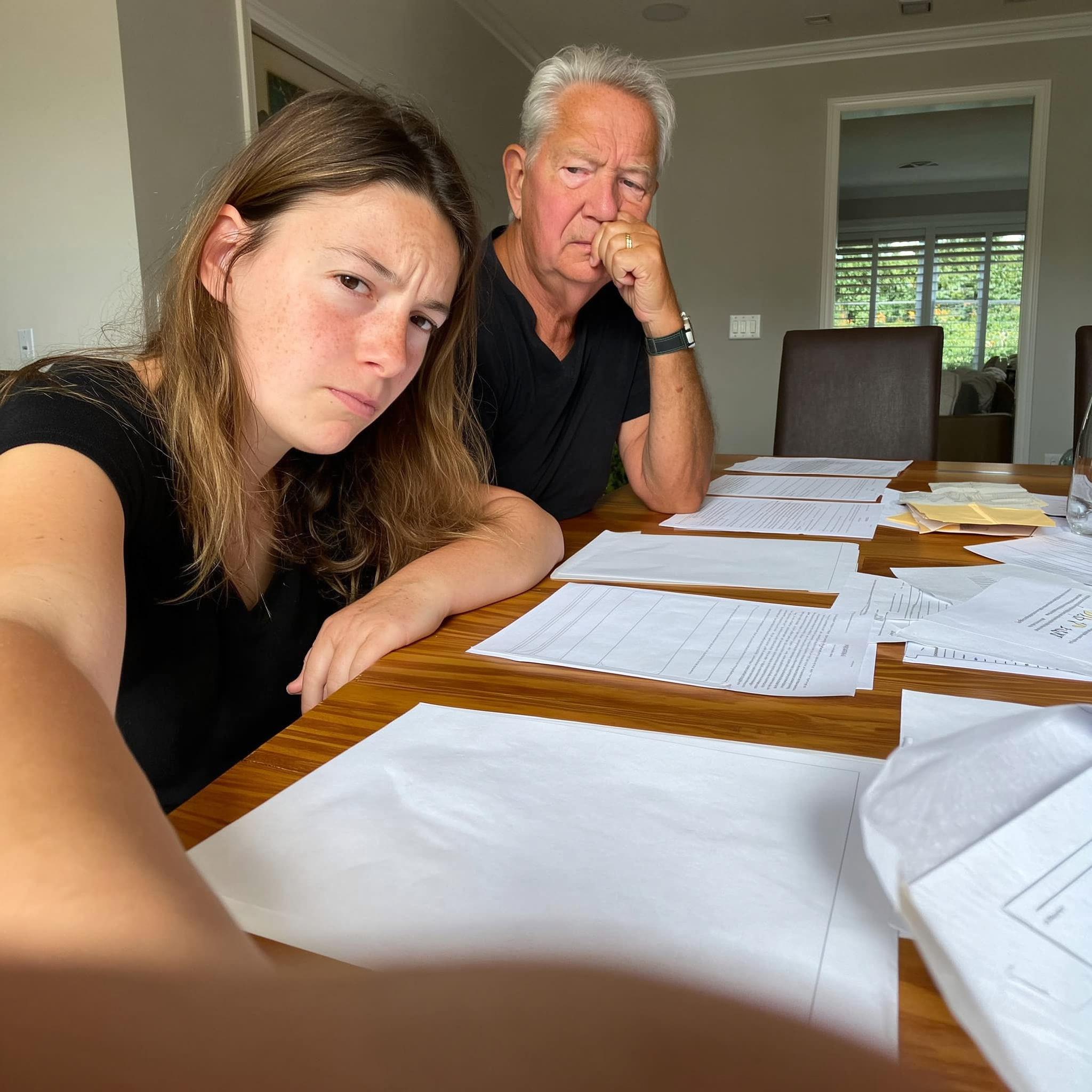
Ran for 3 days, from February 21 to February 24, 2026, the last day Crush saw it.
Run by Jamie Richardson on Facebook. Crush is not the advertiser and does not verify its claims. See this ad in Meta's Ad Library(opens in a new tab)
Want an ad like this for your product?
Crush makes new ad images for your product from this ad: your logo, your product photo, your offer.
Trials from $19.95 USD, then $79.95 USD a month. Cancel anytime.
About this ad
- Meta Ad Library ID
- 1405595421363835
- Platforms
- Facebook, Instagram, Audience Network, Messenger and Threads
- Relaunches
- 0
Ad text
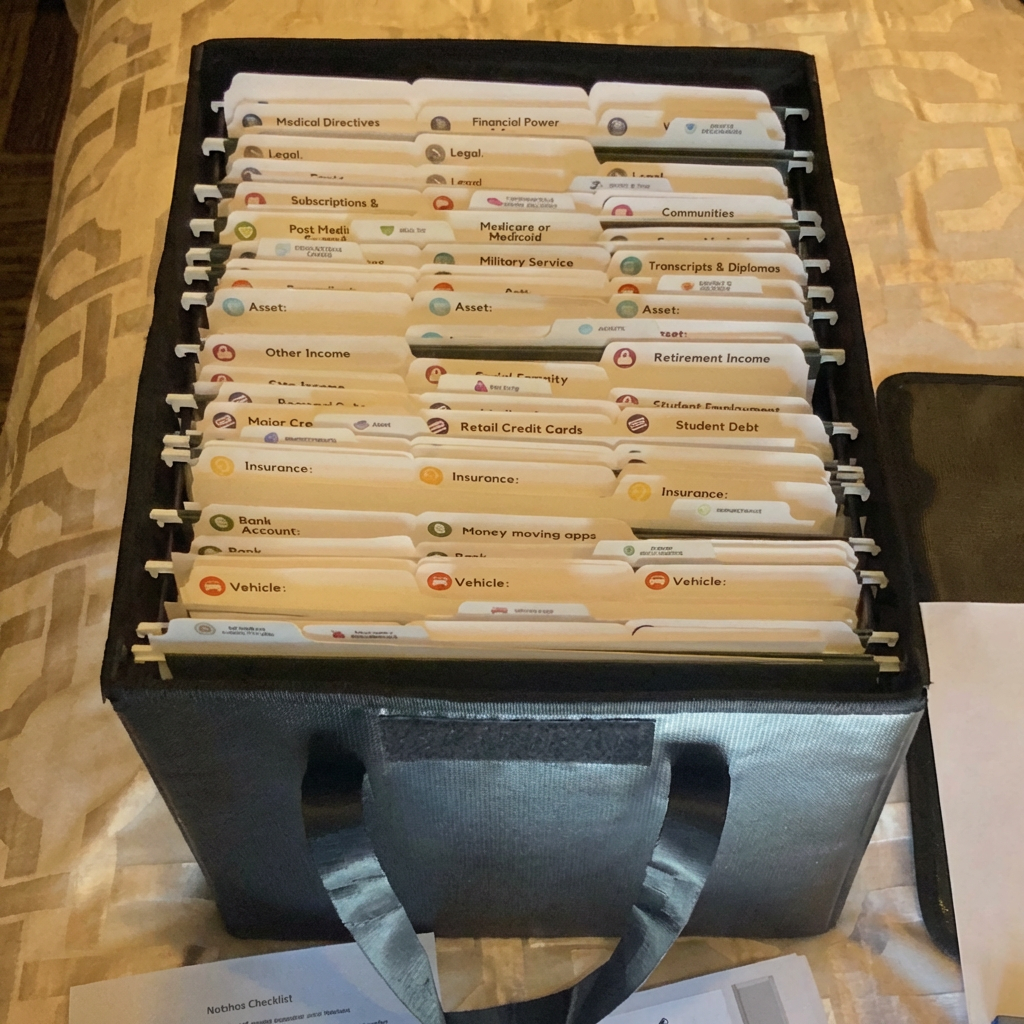
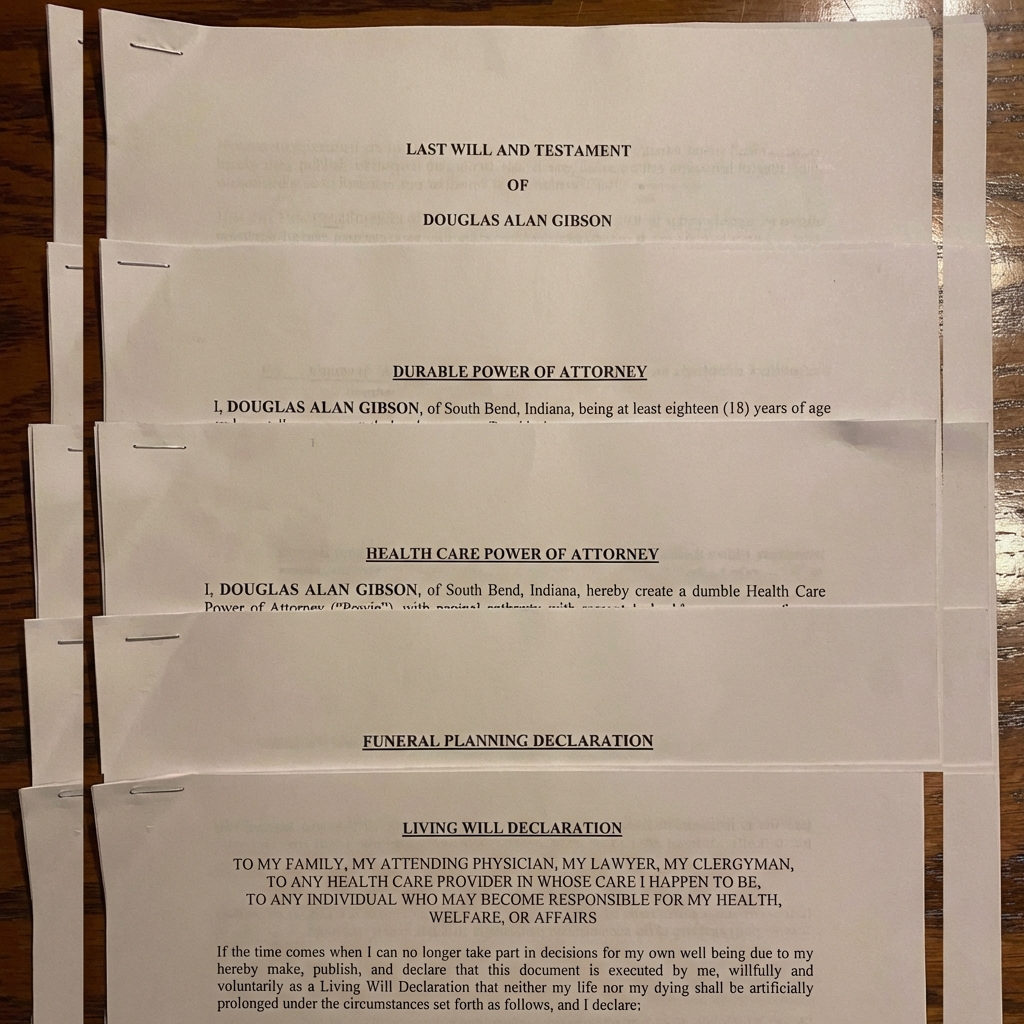
The bank manager quietly told my sister-in-law why having her deceased husband's login credentials still wasn't enough to access their joint savings, and it had nothing to do with the bank's policies. It had to do with a six-digit code that was sent to a phone that was sitting in an evidence bag at the county coroner's office. My brother-in-law David died in October. Cardiac arrest at 51. No warning. Went to bed on a Wednesday, didn't wake up Thursday. He was healthy. Ran three miles every other morning. Didn't smoke. The kind of guy who changed the oil in his truck before the sticker told him to. He also handled everything digital in that household. Every account. Every login. Every bill. Every subscription. Everything ran through his phone, his laptop, and his email. His wife Karen knew this in the way that most of us know things we don't want to think about too hard. She knew he "took care of it." She knew the bills got paid. She knew there were accounts somewhere. She just never needed the details because David was always there to handle it. Until he wasn't. The first seventy-two hours were pure grief. Family flew in. People brought food. The kids were home from school. Nobody was thinking about money or bills or accounts. You don't think about any of that when you're trying to explain to a fourteen-year-old why his dad isn't coming home. It was day five when the panic started. Karen realized she didn't know the password to their primary checking account. Not the bank itself. The online portal. David had set it up years ago. He logged in from his phone. She had never once needed to. She drove to the branch. Brought the death certificate. Brought her marriage license. Brought her driver's license. Sat with the bank manager for forty-five minutes. He was sympathetic. Genuinely kind. He pulled up the account. Confirmed her name was on it. Started the process to grant her access. Then the system sent a two-factor authentication code to the phone number on file. David's phone. The one that was locked behind FaceID. The one she physically had in her possession but could not open because it required a face that was no longer alive. The bank manager looked at her and said there was nothing he could do from his end. The verification system was automated. It required that code. There was no override. There was a form she could fill out, but it would take seven to ten business days to process, and she would need to provide additional documentation to prove her identity, and even then, access might only be partial. She had $211 in her personal account. The mortgage was due in six days. David's checking account, the one that paid everything, had over $14,000 in it. She could see the balance on a screen in front of her. She just couldn't touch it. Karen called me that night. Not crying. Past crying. Her voice was completely flat. She said, "I'm sitting in a house that's paid for with money I can see but can't use, and I can't even turn off his Spotify because I don't know the password to his email." I didn't know what to say. Over the next few weeks, I watched her try to untangle David's digital life one thread at a time. The electric bill was on auto-pay through his checking account. She couldn't log in to change it. The life insurance company needed a claim filed online through a portal David had created an account on. She didn't have that password either. His email, which was the recovery option for almost every account he had, was locked behind a Google login that required, again, a verification code sent to his phone. It was all connected. Every account pointed back to one device. And that device was a locked black rectangle on the kitchen counter. She eventually got into the bank account. It took nineteen days and three notarized forms. By then the mortgage company had sent a late notice. She had borrowed money from her mother to buy groceries. I want to be clear about something. David had a will. They had done the responsible thing. They had gone to a lawyer, paid good money, and had a legal document drawn up that specified exactly who got what. They thought they were covered. But the will didn't know the password to the electric company. The will didn't know which email address was tied to the mortgage auto-pay. The will didn't know the login for the health insurance portal where Karen needed to file a claim for the ambulance ride. The will didn't have the PIN to David's phone or the answers to his security questions or the recovery codes for his two-factor authentication. The will handled the legal stuff. Nobody had handled the actual stuff. I went home that night and sat at my own kitchen table and started counting. Not money. Accounts. I manage everything digital in our house. Mortgage portal. Two bank accounts. Three credit cards. Health insurance. Dental insurance. Auto insurance. Electric. Gas. Water. Internet. Netflix. The kids' school payment portal. My wife's prescription auto-refill. Our cloud storage. My email. Twenty-three accounts. I counted twenty-three. Every single one behind a unique password that lives in my head or on my phone and nowhere else. If I died tonight, my wife would be locked out of her own life within 48 hours. She wouldn't be able to pay the electric bill. She wouldn't be able to access the health insurance. She wouldn't know what auto-pays are draining which accounts or when. She would be standing in the same branch, talking to the same kind of bank manager, staring at the same two-factor authentication wall. And we have a will. A good one. Filed and signed. That realization kept me up for a long time. I tried to fix it the obvious way first. I opened a Google doc and started typing in usernames and passwords. Got about eight accounts in before it hit me that I was creating a document that, if anyone ever accessed it, would contain the keys to our entire financial life sitting on a cloud server protected by one more password my wife would not know if I were gone. That felt like solving the problem by making it worse. I thought about just writing it all down on paper. But where would I put it? In a drawer? Mixed in with the rest of the paperwork that nobody organizes? How would my wife know which notebook, which drawer, which scrap of paper had the one account number she needed at 11 PM on a Tuesday when the gas company is threatening to shut off service? I spent about two months going back and forth like this. Knowing the problem was real. Knowing it was urgent. But not knowing how to actually solve it without creating a new mess or a new security risk. Then I saw something a woman posted in a Facebook group for people dealing with estate issues after a death. She mentioned something called the When We Die folder. Said she had filled one out after her mother's passing and that it had given her the first real sense of control she'd felt in years. I looked it up. It was a physical folder. Cloth-bound. Heavy. Looked like something that belonged on a bookshelf, not in a filing cabinet. But what caught my attention was that it had sections already labeled inside. Thirty-three of them. Each one designated for a specific category of information. Passwords. Insurance. Medical. Financial accounts. Subscriptions. All of it, already organized into a structure that someone else had clearly spent a lot of time thinking about. The thing that mattered to me, after watching Karen spend nineteen days fighting to access her own checking account, was that it was physical. Not digital. Not behind a login. Not dependent on a phone or a face scan or a six-digit code texted to a device nobody can unlock. You pick it up. You open it. You find the label. You have the answer. I ordered one. Filled it out over about a week and a half. Not all at once. Just a section or two at night after the kids were asleep. The labels told me exactly what to include, which was the part I could never figure out on my own. I didn't have to guess what my wife would need. It was already mapped out for me. I just had to fill in the blanks. I put it on the top shelf of our bedroom closet. Showed my wife exactly where it was. Told her that if anything ever happened to me, everything she needed to keep this household running was inside that folder. Every account. Every login. Every policy number. Every auto-pay. All organized by category, all labeled, all physical. She held it for a second and said, "This is heavier than I expected." I think she meant the folder itself. But honestly, so was everything that led me to it. I still think about Karen sitting in that bank with $14,000 on a screen she couldn't touch. I think about the nineteen days. I think about the Spotify still playing David's running playlist on a phone nobody could open. The will protected the house. The will protected the money. But the will didn't protect Karen from the three worst weeks of her life being spent on hold with customer service departments that could not have cared less that her husband had just died. The folder doesn't replace a will. It doesn't replace a lawyer. But it covers the gap that nobody talks about, the actual daily operational reality of keeping a household alive after the person who ran it is gone. It's called the When We Die folder. The name is hard to look at. I get it. But so is watching someone you love try to access their own bank account with a death certificate and a prayer. If your spouse handles the digital side of your household, you probably already feel the quiet version of what Karen felt the loud version of. That small, nagging awareness that you wouldn't know where to start if they were suddenly gone. I'm not saying this folder fixes everything. I'm saying it's the first thing I've found that fixes the part nobody plans for. The part that actually breaks families.
Where the ad sends people
apexedge.shop
How families who lost a parent are making sure their own kids never go through the same nightmare 👆
Everything you need to leave behind peace—not confusion. The folder includes guided sections with easy prompts to organize: ✓ Legal & Identity Documents✓ Bank Accounts & Bills✓ Financial snapshot✓ Insurance & protection✓ Home, Car & Asset Protection✓ Online Accounts &am...
Shop now: apexedge.shop(opens in a new tab)