
Inactive· since Jan 17, 2026
- 41
- days it ran
- 1
- relaunches
Ad copy
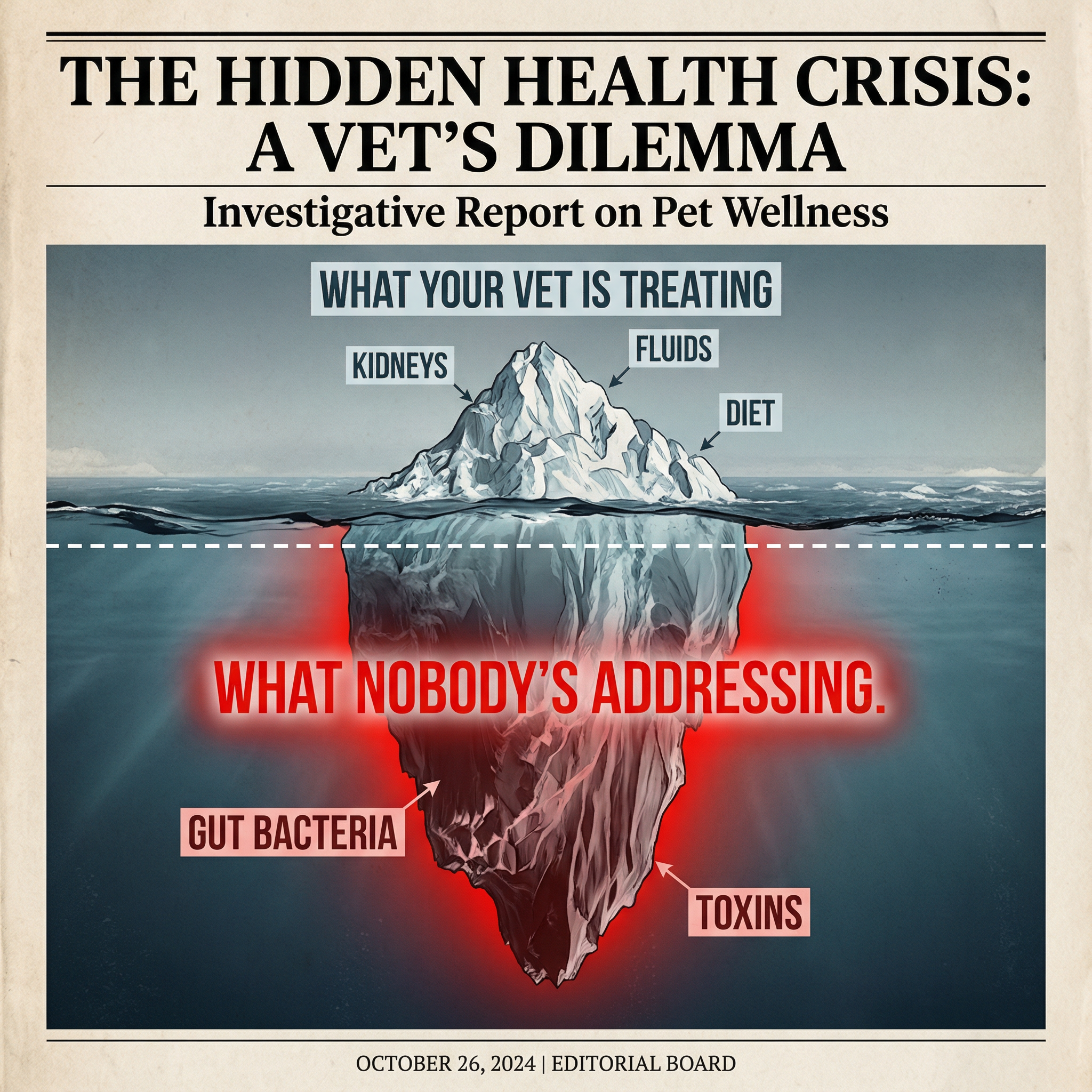
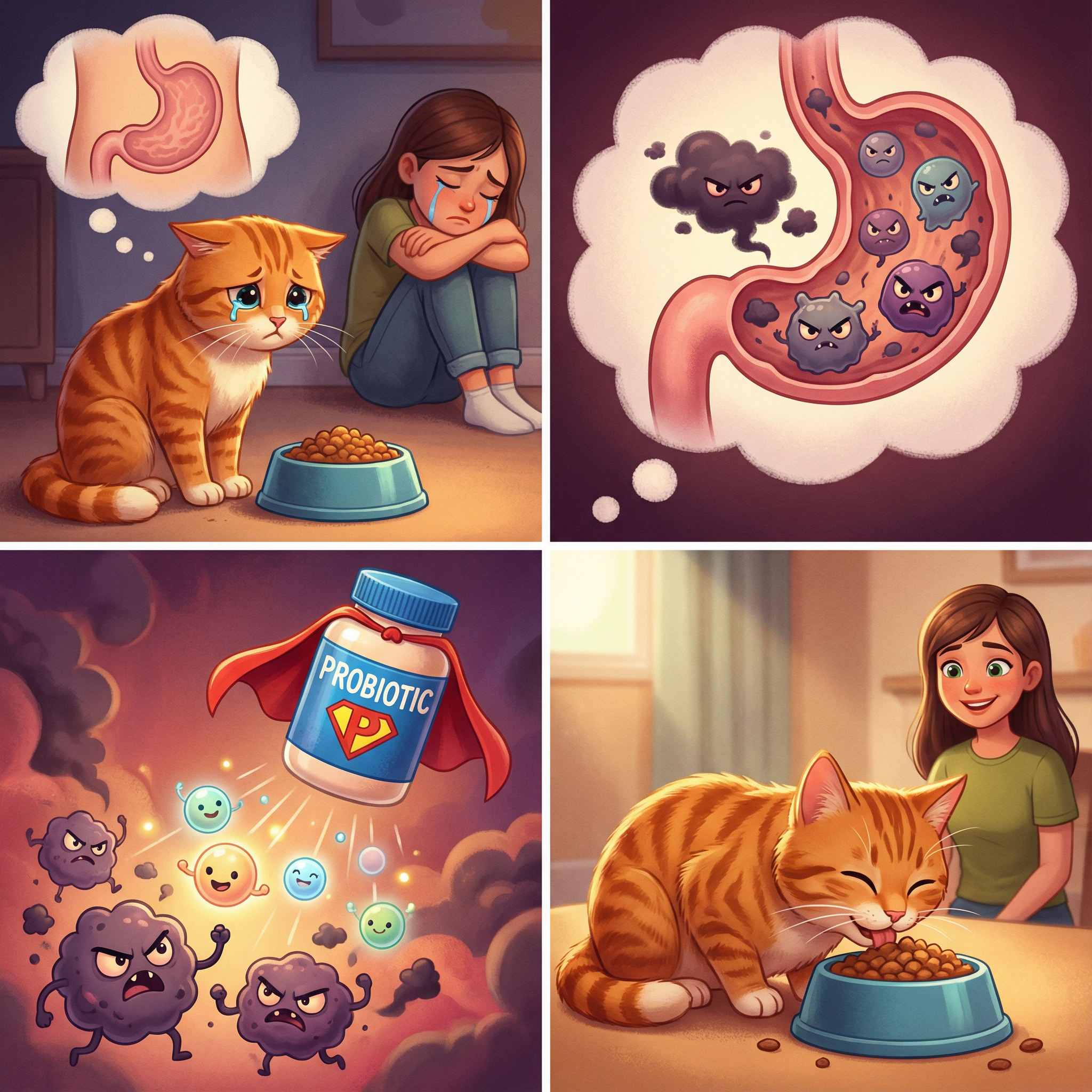
I'd spent $4,287 in five months and Bella was still dying. --- I knew the exact number because I tracked every expense in a spreadsheet. $847 for the initial diagnosis and bloodwork. $312 for prescription kidney food (most of which she refused). $156 for anti-nausea medications. $89 for appetite stimulants. $734 for SubQ fluid supplies and vet training. $298 for phosphate binders. $1,851 for follow-up vet visits and bloodwork. Plus countless hours. The two-hour daily routine of fluids, medications, trying to get her to eat. And after all of that—ALL of it—her creatinine had gone from 4.1 to 5.9. Worse. She was getting worse despite doing everything exactly right. --- The breaking point came on a Tuesday. I was sitting in Dr. Morrison's office with Bella's latest bloodwork in front of us. "Her values are continuing to progress," she said carefully. "We're doing everything we can to manage the disease, but kidney disease is degenerative. The treatments slow it down, but they can't stop it." I stared at the paper. Five months of perfect compliance. Five months of following every instruction. And "progressing" was the nicest word for what was happening. "So what do we do?" I asked. "We keep doing what we're doing. Keep her comfortable. Monitor closely." "That's it?" She gave me the look. The kind, patient, slightly pitying look. "I know this is hard. But we're doing everything medicine can do for chronic kidney disease." I walked out with another prescription for the same medications that weren't working and a printout of bloodwork showing my cat was dying on schedule despite my $4,287 and my perfect compliance. --- That night, I couldn't sleep. I kept thinking about that phrase: "everything medicine can do." Because if this was everything—if prescription kidney diet, SubQ fluids, anti-nausea meds, phosphate binders were EVERYTHING—then why wasn't it working? Not even a little. She was worse. I'd read all the forum posts. Everyone said the same thing: "These treatments slow progression. They can't stop it, but they buy time." Bella wasn't getting time. She was declining faster. So either I was doing something wrong, or... Or what? --- At 1:43 AM, I started googling differently. Not "how to help cat with kidney disease." But "why do kidney disease treatments fail." I found a blog post from a veterinary researcher I'd never heard of. Dr. Sarah Chen, nephrology specialist. The post was titled: "The Treatment Paradox: Why Standard CKD Protocols Don't Always Work." I clicked. She wrote about something I'd never considered: Standard kidney disease treatment assumes the problem is the kidneys' inability to filter waste. So we give fluids (to help flush toxins), prescription diets (to reduce waste production), medications (to manage symptoms). But she said there's a missing piece most vets don't talk about: Where are those toxins actually coming FROM? --- I sat up straighter. She explained that uremic toxins—the waste products poisoning kidney cats—aren't just created by normal metabolism. They're created by bacteria in the gut. When you eat protein, gut bacteria break it down. Some of that breakdown produces toxic compounds like indoxyl sulfate and p-cresyl sulfate. In healthy cats, kidneys filter these out. No problem. But in kidney disease, the kidneys can't keep up. Toxins accumulate. Here's the part that made me stop breathing: Those accumulated toxins damage the gut lining. Damaged gut lining allows MORE bad bacteria to flourish. More bad bacteria produce MORE toxins. It's a self-perpetuating cycle. And none of the standard treatments interrupt it. SubQ fluids? They dilute toxins already in the bloodstream. They don't stop new toxins from being produced in the gut. Prescription diet? Reduces protein intake, which helps. But only if the cat actually eats it. And even then, the gut bacteria are still producing toxins from whatever protein they DO eat. Anti-nausea meds? Block the symptom. Don't address the source. Phosphate binders? Important for bone health. But they don't touch the uremic toxins causing the nausea and kidney damage. We were treating downstream. The problem was upstream. --- I looked at the time. 2:31 AM. I'd been reading for almost an hour. My hands were shaking. This explained everything. Why Bella was getting worse despite perfect compliance. Why the treatments that "should" work weren't working. We were bailing water out of a boat while ignoring the hole in the hull. --- Dr. Chen's post continued: The breakthrough research is happening around the "gut-kidney axis"—the connection between intestinal bacteria and kidney function. Studies show that modifying gut bacteria can reduce uremic toxin production at the source. But not with just any probiotic. Most probiotics are destroyed by stomach acid before reaching the intestines. They never make it to where toxins are produced. You need specific strains that can survive the journey. She mentioned one: Bacillus coagulans. Spore-forming bacteria that survive stomach acid. Studies in cats showed significant reductions in uremic toxin levels. Some cats' kidney values stabilized. A few even improved. I clicked on the study links. Read the data. The before-and-after bloodwork. This wasn't alternative medicine. This was published veterinary research. So why hadn't my vet mentioned it? --- Wednesday morning, I called Dr. Morrison's office. "I want to try a probiotic. Bacillus coagulans. For the gut-kidney axis." The receptionist put me through to a vet tech. "We don't typically recommend probiotics for kidney disease. They're not part of the standard protocol." "I know. But there's research—" "If you want to try it, you can. It probably won't hurt. But it's not a substitute for her medications." "I'm not stopping her medications. I want to add this." "Okay. You can find probiotics at pet stores." She didn't understand. Regular probiotics wouldn't work. I needed the specific strain. I ordered it myself. Overnight shipping. $62. At this point, what was another $62 on top of $4,287? --- It arrived Thursday. Two drops, twice daily, mixed into food. I didn't expect miracles. I just wanted something—anything—to be different. Because doing the same thing and getting worse was unbearable. Week one: Nothing obvious changed. Week two: She seemed slightly less nauseous. Maybe. Hard to tell. Week three: She ate more. Not a lot more. But noticeably more. Week four: Bloodwork day. I dropped her off at the vet with a knot in my stomach. Dr. Morrison called that afternoon. "Her creatinine is 5.6." My heart sank. Still terrible. Then she said: "Last month it was 5.9. It went down." Silence. "That's... unusual," she continued. "Kidney values don't typically improve. They can stabilize, but improvement is rare. What have you been doing differently?" "The probiotic. The one I asked about." Another silence. "Well. Something's working. Let's check again in a month." --- Month two: Creatinine 5.2. Month three: Creatinine 4.8. Dr. Morrison stopped using the word "unusual" and started using "remarkable." "I'm not saying the disease is reversed," she said carefully. "The kidney damage is still there. But the progression has stopped. And these numbers are significantly better than three months ago." She paused. "I've been practicing for 18 years. I don't typically see this kind of improvement in Stage 3-4 cats." "Why do you think it's working?" "Honestly? I don't know. The probiotic is the only variable that changed. Maybe it's reducing the toxic load on her kidneys. Giving them a chance to stabilize." She made a note in Bella's chart. "I'm going to start mentioning this to other kidney cat owners." --- That was four months ago. Bella's creatinine is now 4.3. Her BUN is in normal range. She's gained back the weight she lost. Her coat is shiny again. She plays with toys. Last week, she jumped onto the kitchen counter and knocked over my coffee. I laughed. Then cried. Because that's the most normal, annoying, wonderful thing she's done in a year. I still give her SubQ fluids twice a week. She still eats mostly kidney-friendly food. I still give her phosphate binders. But for the first time, these treatments are actually WORKING. Because we're finally addressing the source, not just the symptoms. --- Here's what I wish someone had told me five months ago: The reason standard treatments sometimes fail isn't because you're doing them wrong. It's because they're incomplete. They address the kidneys' failure to filter. But they don't address the gut's production of toxins. If toxins keep being produced faster than treatments can manage them, you're fighting a losing battle. That's why some cats decline despite perfect compliance. That's why I spent $4,287 and got worse. We were treating downstream while the problem raged upstream. --- I'm not saying conventional treatment is wrong. Bella still needs fluids, diet management, medications. But she also needed something that interrupted the cycle at its source. Something that reduced toxin production in her gut. That's what made the difference between "progressing despite treatment" and "stabilizing with treatment." The probiotic didn't replace standard care. It completed it. --- If you've been doing everything right and your cat is still getting worse... If you've spent thousands and the numbers keep climbing... If your vet says "we're doing everything we can" but it's not working... It's not because kidney disease is unstoppable. It might be because there's a piece missing. The gut-kidney axis. The source of toxin production. Look into Bacillus coagulans. The strain that actually survives digestion. That reaches the gut where it matters. It's not a replacement for standard treatment. It's the missing piece that makes standard treatment work. At least it was for Bella. Four months ago, I was watching her decline despite doing everything right. Now I'm cleaning up spilled coffee and laughing about it. That's worth more than $4,287. That's worth everything. --- I still have the spreadsheet. I added a new line: Probiotic: $62/month. Best $62 I ever spent. Because it was the thing that finally worked when everything else didn't.
Like this ad? Make it yours.
Crush rebuilds this exact creative around your product — your brand, your colors, your offer — in about a minute.