
Diane C. Roberts
Active· since Jun 26, 2026
- 85
- days running
- 0
- relaunches
Ad copy
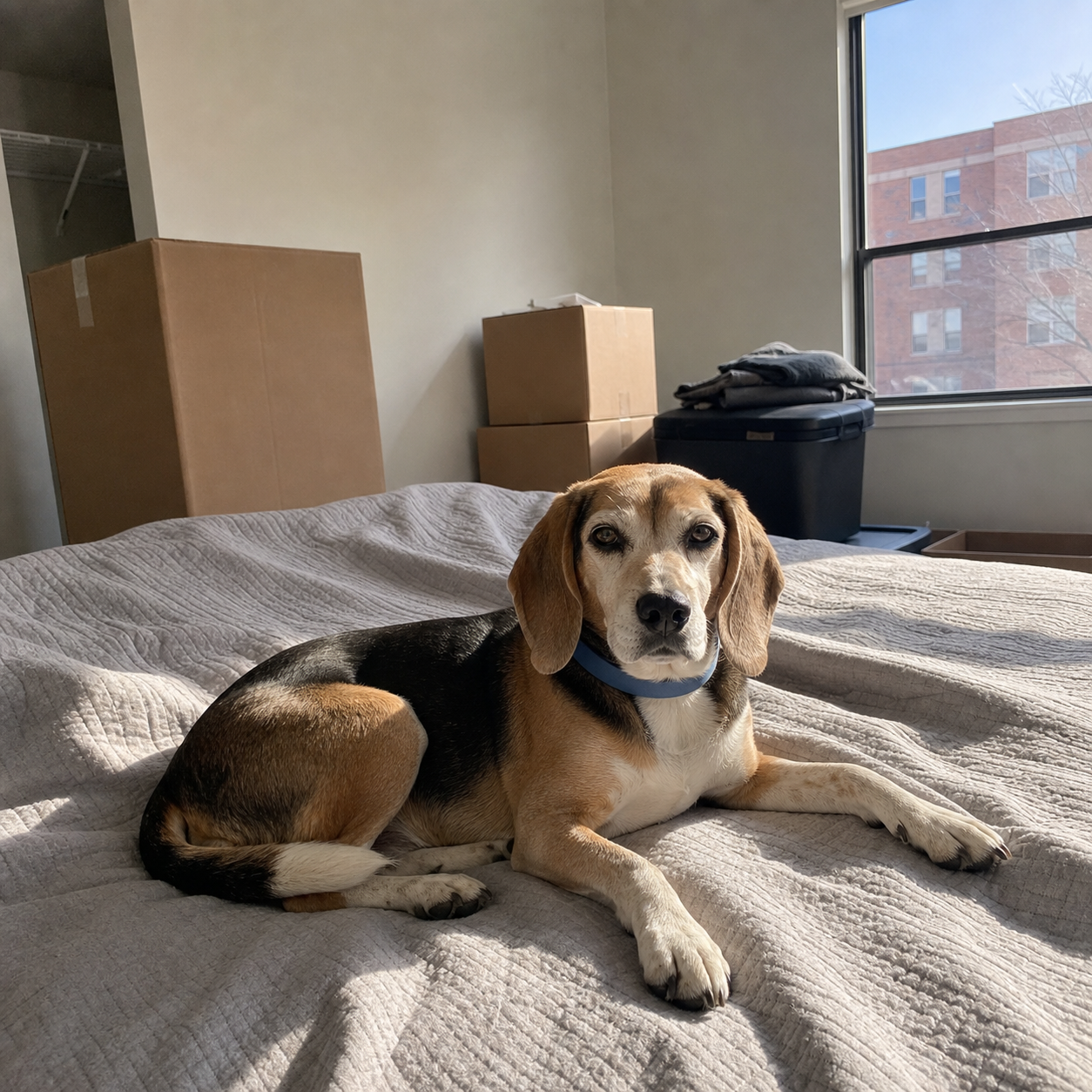
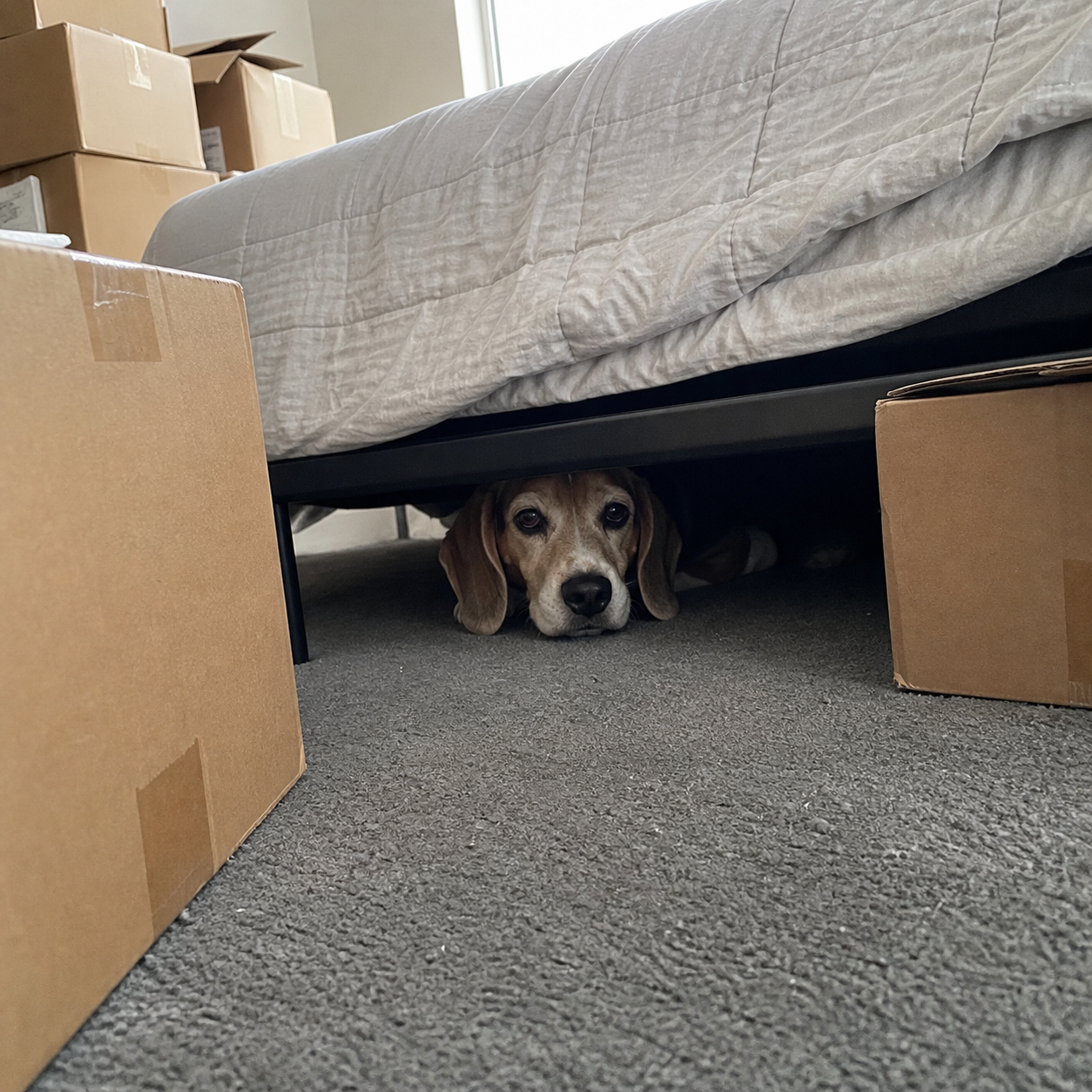
We had to find a new vet after the move, and I almost didn't bother during all the unpacking. I'm glad I did, because he was the first person who didn't tell me Otis would "just adjust." He felt along the dog's ribs, frowned at how much weight he'd dropped, and then he sat down and told me something about what a move does to a dog that I had never once considered in all my years of owning them. It changed how I saw every single thing Otis was doing. For thirteen years, my dog knew exactly one home. Otis is a beagle, and we got him as a pup the year we paid off the house we'd raised our kids in. He knew every corner of that place. His spot by the back door where the afternoon sun came in. The exact patch of yard that was his. The smell of thirteen years of our lives soaked into every room. He was the easiest dog in the world there, because he had never once had a reason to feel unsafe in it. I'm sixty-eight. My husband is seventy. This spring, we did the thing everyone our age talks about doing. We sold the big house, the one with the stairs and the yard that had gotten to be too much, and we moved across town to a smaller place, ten minutes from our daughter and the grandkids. It's a good little house. It was the right decision for us. The one we never thought about, in all the planning and packing, was Otis. I'll tell you what the first weeks did to him, because if you've moved a dog, you may be watching the same thing. He stopped eating, near enough. A beagle, the breed that will eat a hole in the couch looking for a crumb, started turning his head away from a full bowl. He stopped sleeping and started patrolling instead, all night, window to window, door to door, his nails clicking on the new floors, checking sounds he didn't recognize. And he started hiding under our bed, coming out only to be let into a yard that wasn't his yet, then going straight back under. Everyone told me he'd adjust. Dogs are adaptable, they said. Give it time. So I gave it time. A week. Two. A month. And he didn't get better. He got thinner, and quieter, and more frightened, until I was living with a ghost of the dog I'd moved. I want to be honest about the guilt, because if you've moved a dog you might be carrying it too. We didn't have to move. We chose to, for us. And the one who never got a vote was the one falling apart in a house he didn't choose. And I didn't just wait, either. I tried everything I could think of to make the new place feel like the old one. I set his old bed up in the same corner, facing the same way. I dug his ratty favorite blanket and his toys out of a box so the rooms would smell a little like home. I kept his routine down to the minute. Same walks, same meals, same bedtime. I bought calming treats. I bought a plug-in diffuser. I left the radio on the station we'd always had on, so there'd be one familiar sound in the house. None of it touched him. He'd lie in his old bed, in his old blanket, in a room I'd made smell like the old house, and still shake, still hide, still turn away from his dinner. Because it was never the bed or the blanket. It was that the whole world around them had changed overnight, and nothing I owned could change it back. There was a night about a month in when he wouldn't come out from under the bed at all. Not for dinner. Not for the yard. Not for me on the floor with his leash and a piece of cheese, talking to him like he could understand a word. He just stayed pressed to the wall in the dark, shaking a little. The next morning I called the new vet we'd had to find after the move, and I'm grateful every day that I did. His name is Doctor Mirko Ivaldi, he's been a veterinarian for twenty-three years, and he was the first person who didn't tell me Otis would just settle in. He ran his hands down the dog's sides and stopped smiling at how much weight he'd lost. "He can't keep dropping like this at his age," he said. "We need his appetite back in the next week or two, not whenever he decides to feel at home." "A dog this stressed, for this long, starts to go downhill in ways that get hard to turn around." Then he sat down across from me and told me the thing nobody else had. "Otis isn't being stubborn, and he isn't broken," he said. "You took away every single signal that told him he was safe, all on the same day." "Think about what his old house was. Thirteen years of his own smell in the carpet. His spots. His routine. His territory, marked and known. To a dog, all of that together is what the word safe actually means." "Here, every smell is a stranger's. Every sound is brand new. So his body never gets the all-clear. It stays on alert all day and all night, because nothing in this house has told it yet that it's allowed to stand down." I asked him why food, why hiding, why all of it. "Because a body running on that much stress, around the clock, shuts down the things that don't feel urgent," he said. "Eating. Sleeping. Curiosity." "He's not sulking. He's a dog whose whole sense of safe got packed into a truck, and he has no way to understand that this is home now." I started to cry a little, right there in the exam room, because for the first time all of it made sense. "You can't explain it to him," Doctor Ivaldi said. "You can't reason him into feeling at home, and you can't wait him into it fast enough at his age." "What you can do is give his body one steady signal of safe to hold onto, while the new place slowly becomes his." Then he reached into a drawer and set a soft collar on the table. "This isn't a calming treat and it isn't a sedative," he said. "Those just make a dog groggy, and a groggy frightened dog is still frightened." "This carries a copy of the scent a mother dog gives off to tell her puppies they're safe. It's the oldest safety signal a dog has, from before he could open his eyes." "It speaks to the part of the brain that's stuck on alert, and helps it finally come down." "And it's a collar, so that signal goes with him. Under the bed. In the yard. In the middle of the night when a new sound wakes him. One familiar, safe thing, in a house where nothing else is familiar yet." I asked him if it really worked, or if he was just being kind to a crying woman. "I've sent it home with a lot of dogs after a move," he said. "It's the thing I've seen help them decide a new house is allowed to be home." I put it on Otis that afternoon. The first day, honestly, he stayed under the bed and I wondered if I'd wasted my hope on a dog collar. But on the third evening, I came into the bedroom and he wasn't under the bed. He was lying on the floor at the foot of it, out in the open, in a patch of evening sun coming through a window he'd decided, maybe, wasn't a threat. It's a small thing. I sat down on the floor next to him and didn't move for an hour. It wasn't a straight line. The day the new neighbors had a party, and the day a delivery man knocked, he was right back under the bed. But the floor of it kept lifting. The checking stopped first. He quit making his anxious rounds of the doors and windows, and started just lying in a room instead of standing guard over it. Then he did the thing that told me he'd really turned a corner. He started following the sun around the new house, window to window, settling into the warm spots, the exact way he used to work his way around the old one. He went out to the new yard on his own and lay down in it like he owned it. The eating came back too, and at his recheck Doctor Ivaldi put him on the scale, nodded, and said the weight was returning. But it was the sun spots that got me. A dog only claims the warm corners of a house he's decided is his. I need to tell you what the collar actually is, because the name alone won't mean anything. It's called a CalmiCollar. It carries that nursing-mother calming signal, the one a dog's brain trusts before it trusts anything else, the calming pheromone vets have studied for decades. That's the difference from the chews I'd tried. Those just make a dog drowsy, and a drowsy frightened dog is still frightened. This works on the fear underneath, the alarm that a strange new house keeps switched on. And because it's a collar, it's on him everywhere, in every unfamiliar room, the one steady safe signal in a place where nothing else is his yet. You clip it on and let it do the part you can't do with words, which is tell a frightened dog he's home. Here's what it costs, against what I'd have paid to get my old dog back. A behaviorist starts around $150 to $300 just to come to the door. Medication runs every month, plus the visits. A CalmiCollar costs about what you'd spend on a decent bag of dog food. One lasts about a month, and settling a dog into a new home takes more than a month, so what matters is keeping it on him steadily while the new place becomes his. The three-pack is the one I'd point you to. It carries you through the first few months, the stretch where a new house really gets its chance to start feeling like home. Every order has a thirty-day guarantee. If you don't see a difference in your dog, you get every penny back. But I'll tell you what I told my daughter. I clipped it on Otis, and within a week he was eating, sleeping, and lying in the sun in a house I'd been afraid I'd ruined him by moving to. I never sent it back. I don't think you will either. Otis sleeps in the sun by the new back door now. He found the warmest spot in this house the way he found it in the last one, and he claimed it. He eats. He sleeps the night through. He stopped checking the doors weeks ago. He was never being difficult, and moving him was never a mistake we couldn't fix. He was just a dog who lost the only home he'd ever known, with no way to understand that a new one could be home too. If you've moved a dog and you're watching him struggle the way I watched Otis, you don't have to just wait and hope he figures it out on his own. If the link below is still live, go give him one familiar thing to hold onto while he does. https://try.calmicollar.com/ccl-dog-adv-rev03-26
He hides under the bed
YES! My border collie was so reactive to everything. Started with the CalmiCollar 2 weeks ago and she's a different dog. No more barks when she is alone at home, no more anxiety. Even my skeptical husband is amazed.
LEARN MORELike this ad? Make it yours.
Crush rebuilds this exact creative around your product — your brand, your colors, your offer — in about a minute.