

Politics 101 with Dr. David Hinds
Active· since Feb 20, 2026
- 215
- days running
- 0
- relaunches
Ad copy
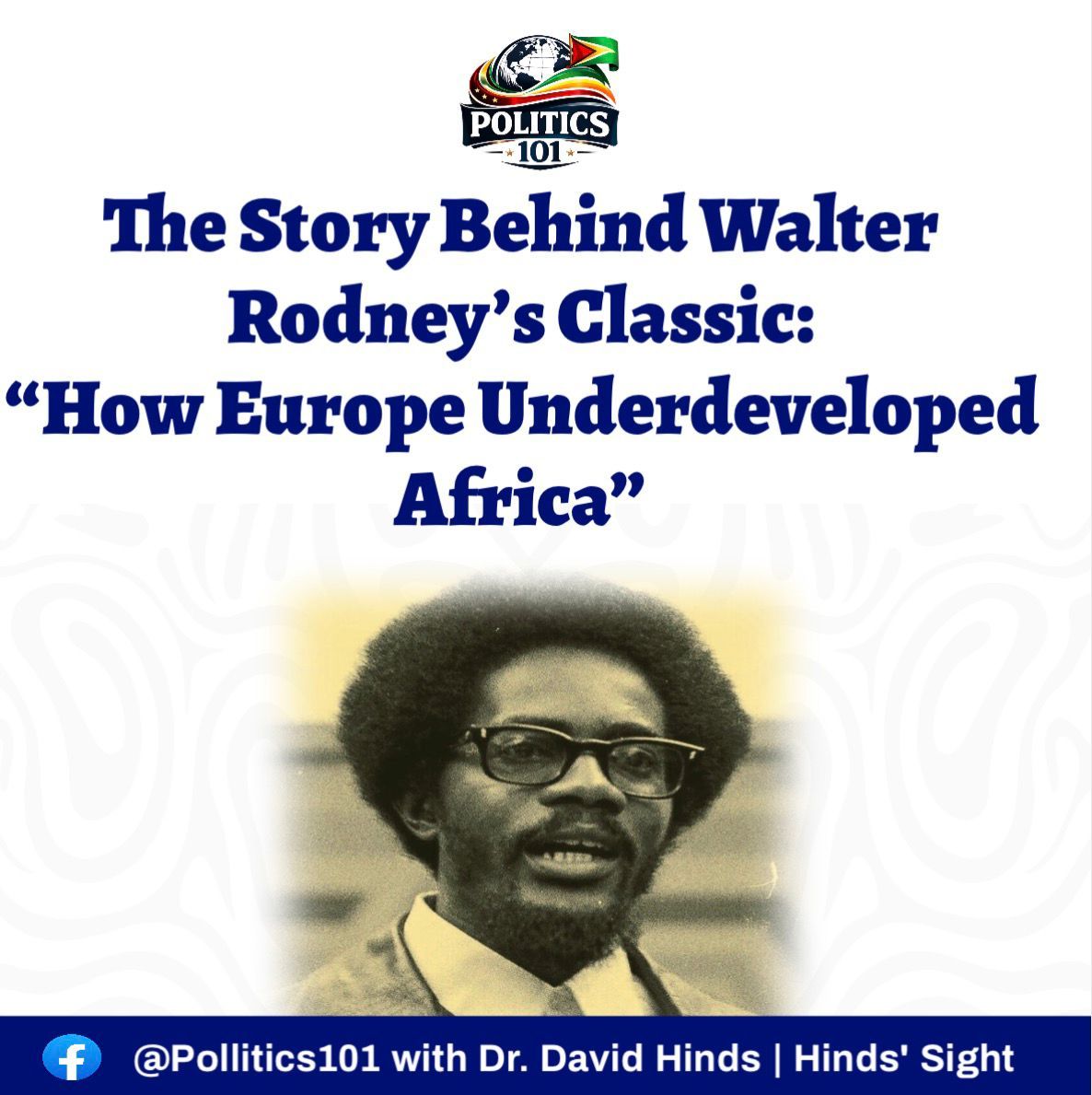
The Story Behind Walter Rodney’s Classic “ How Europe Underdeveloped Africa” POLITICS 101|| Africa’s underdevelopment was not accidental but engineered through centuries of exploitation, Dr. David Hinds declared during a lecture examining Walter Rodney’s seminal work, ‘How Europe Underdeveloped Africa.’ Delivering a lecture last Sunday on the 1972 publication, Dr. Hinds described Rodney as one of the Caribbean’s most influential intellectuals, a historian and activist. He was also a co-founder of the Working People's Alliance (WPA). “Rodney was not just writing history, he was intervening in a global debate about power, inequality and who controls the world economy,” Dr. Hinds told an online audience . His delivery was part of an ongoing series of lectures organised by the International Decade of People of African Descent- Guyana (IDPADA-G), commemorating black history month. Born in 1942 in Georgetown, Rodney was educated at Queen’s College before entering the University of the West Indies at age 18. Hinds noted that Rodney often recalled a formative moment at UWI when he realised he had been trained to write confidently about Europe but not about Africa. He would later earn his doctorate at the SOAS University of London, becoming one of the region’s more prominent historians of Africa at a young age. In 1968, the Jamaican government barred him from re-entering the country after he attended a Black Writers’ Conference in Montreal. The decision sparked widespread protests, now referred to as the “Rodney Riots,” and propelled him into international prominence. He later joined the University of Dar es Salaam, where he lectured between 1969 and 1974. It was there, while addressing teachers and African liberation fighters, that Rodney developed the lectures that became ‘How Europe Underdeveloped Africa.’ Hinds argued that the book emerged during a moment of global upheaval marked by decolonisation, black power and third world political assertion. As Caribbean and African nations gained independence, he explained that they inherited economies crafted by slavery and colonialism, while global financial rules were structured by western nations through institutions such as the International Monetary Fund (IMF) and the World Bank. “It was a world not made for them,” Hinds emphasised. According to the WPA co-leader, Rodney rejected the notion that Africa was inherently poor. Instead, he argued that Europe’s development was linked to Africa’s exploitation. Rodney later returned to Guyana, where he became a prominent political figure and critic of authoritarianism. He was assassinated in June, 1980 at the age of 38. According to Hinds, Rodney’s book broke from earlier European interpretations of African history, shifting the focus from questioning Africa’s “backwardness” to interrogating Europe’s rise and the systems that maintained inequality. More than five decades later, Hinds said, the book remains relevant because the global structures Rodney criticised continue to shape relations between the developed and developing world. “This generation was trying to explain why newly independent countries were politically free but economically constrained. Rodney provided an answer and that answer still resonates,” Dr. Hinds stated.
Like this ad? Make it yours.
Crush rebuilds this exact creative around your product — your brand, your colors, your offer — in about a minute.