Kathy Miller
Kathy Miller Facebook ad: “The Secret to Safe Car Transfers After Hip Surgery.”
Ran for 32 days, from January 21 to February 22, 2026, the last day Crush saw it.
Run by Kathy Miller on Facebook. Crush is not the advertiser and does not verify its claims. See this ad in Meta's Ad Library(opens in a new tab)
Want an ad like this for your product?
Crush makes new ad images for your product from this ad: your logo, your product photo, your offer.
Trials from $19.95 USD, then $79.95 USD a month. Cancel anytime.
About this ad
- Meta Ad Library ID
- 1418950549577772
- Platforms
- Facebook, Instagram, Audience Network, Messenger and Threads
- Relaunches
- 0
Ad text
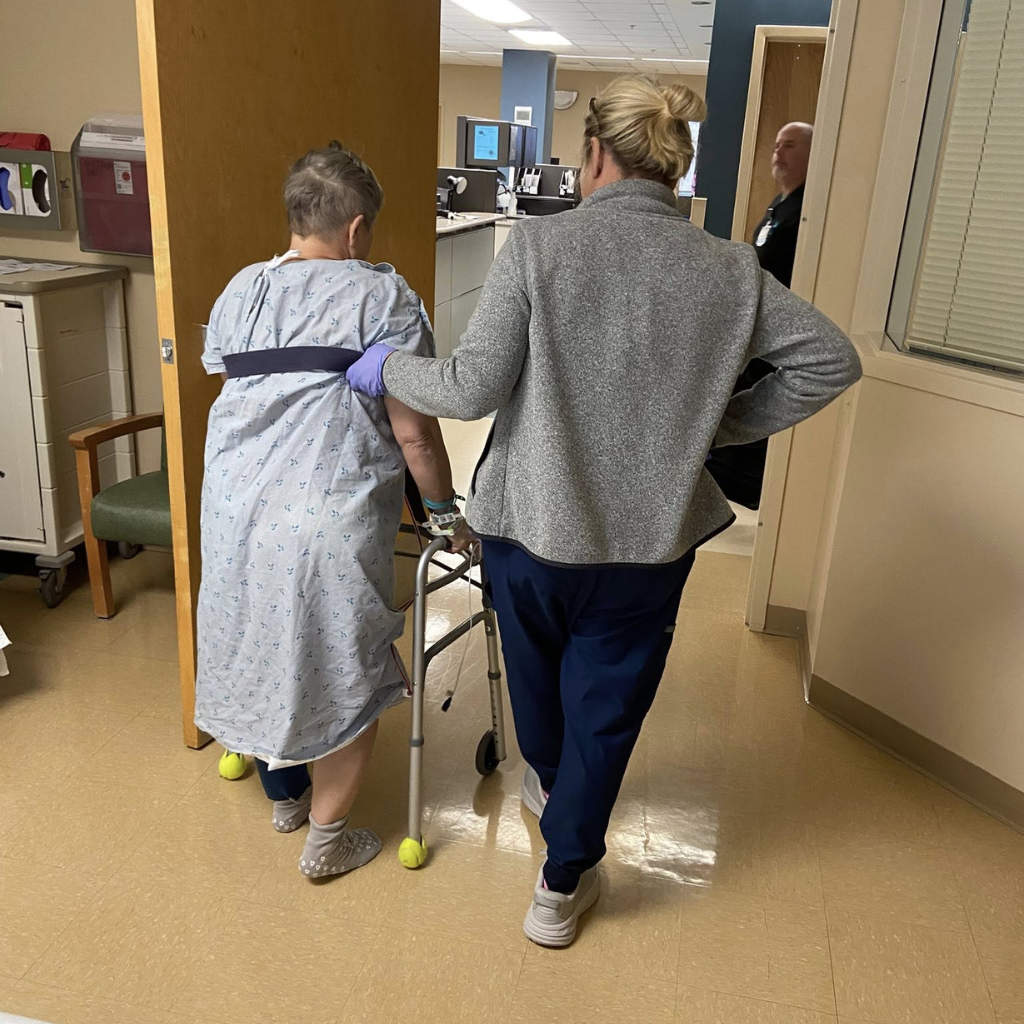
I've been an orthopedic nurse for 22 years. I've discharged thousands of hip replacement patients. Handed them their paperwork. Gone over their medications. Explained their restrictions. Watched them wheel out the door with their families. And there's something I tell my own family members that I'm not officially supposed to tell patients. It's about what happens when they get to the car. See, hospitals have protocols. We have approved equipment lists. We have specific things we're trained to cover during discharge education. Raised toilet seats, shower chairs, walkers, grabber tools—all of it scripted, all of it documented, all of it important. But there's a gap in that protocol. A big one. Nobody talks about car transfers. Not in the official discharge education. Not on the equipment checklist. Not in any of the paperwork we hand patients on their way out the door. And yet, within five minutes of leaving my unit, every single hip replacement patient is going to attempt the most challenging transfer of their entire recovery. Getting into a car. I've watched it from the window for 22 years. Families pull up to the discharge entrance. The patient gets wheeled out. There's hugging, there's relief, there's 'let's get you home.' And then there's the car door. I've seen patients freeze. I've seen them attempt three or four different approaches. I've seen family members physically lifting people who just had major joint surgery. I've seen faces go white with pain or fear. Once, I watched a woman slip off the running board of an SUV and catch herself on the door. Her husband was trying to help, but he was in the wrong position. She torqued through her surgical hip in exactly the way we'd just spent 20 minutes telling her not to. I wanted to run outside. But she was discharged. She wasn't my patient anymore. That image stayed with me for weeks. Here's what I understand that most patients don't: The hip precautions we drill into you—don't bend past 90 degrees, don't rotate internally, don't cross your legs—exist because your new joint is vulnerable. The soft tissue around it is healing. The muscles that stabilize it are weak. For the first six weeks especially, certain movements can cause the ball to pop out of the socket. Dislocation. The word surgeons don't like to say too loud because it scares people. But it happens. More often than the statistics suggest, because many dislocations occur at home and get resolved without being formally reported. I've taken calls from panicked family members describing exactly what a dislocation sounds like. And when I ask what they were doing when it happened, one of the most common answers? Getting in or out of a car. Think about the mechanics. To get into a typical car, you need to: Turn your back to the seat—rotating through your hips. Lower yourself down—bending your hip, often past the safe angle. Swing your legs in—rotating again, sometimes crossing. Every step violates at least one precaution. And unlike the toilet or the bed, there's no equipment designed to help. When my sister needed a hip replacement last year, I didn't give her the official discharge speech. I gave her the real one. I told her that the first six weeks would be harder than she expected, but not for the reasons she thought. The surgery would go fine. The pain would be manageable. The exercises would be boring but doable. The hard part would be getting to her PT appointments without hurting herself in the parking lot. I told her about every patient I'd watched struggle at that discharge entrance. Every call I'd fielded about something going wrong during a car transfer. Every time I'd wished I could do more than hand someone a folder full of paper and wave goodbye. And then I gave her something that wasn't on any hospital equipment list. A car handle. It's a simple device. Hooks into the U-shaped striker on your car door—the thing the latch clicks into when you close the door. Gives you a solid, stable handle right where you need one. I'd learned about it from a physical therapist friend who recommends them to all her joint replacement patients. She showed me how it works. Explained why the grip position makes such a difference. Told me about patients who went from terrified to confident once they had something stable to hold. I ordered one for my sister before she even had her surgery date. The day she came home from the hospital, it was already in her car. Her husband hooked it in before they even left the parking lot. She told me later it was the only transfer that day that didn't scare her. 'I had something to hold,' she said. 'Something that wasn't going to move. I could lower myself down without feeling like I was going to fall or twist wrong. Why doesn't the hospital tell people about this?' I didn't have a good answer. She used that handle for every single car transfer for the next two months. PT appointments. Doctor visits. Eventually, trips to see friends and run errands. Every time, she grabbed that handle, lowered herself in safely, and didn't have to worry. Her recovery went smoothly. No setbacks. No scary moments. No calls to me in a panic. Since then, I've quietly mentioned car handles to every family member, friend, and neighbor who's had hip surgery. Not officially. Not as part of my job. Just as someone who's seen what happens and wants to help. I'm telling you now for the same reason. If you or someone you love has a hip replacement coming up—or just had one—please hear me. The hospital is going to give you equipment for your bathroom, your bedroom, your daily dressing routine. All important. All helpful. They're probably not going to mention the car. But you're going to need to get in and out of a car dozens of times before you're fully healed. Every PT appointment. Every follow-up. Every pharmacy run and grocery trip and visit to see grandkids. Each one of those transfers is a risk if you don't have proper support. You can try the tricks people suggest—plastic bags on the seat, reclining the seat back, having someone hold you. Some of them help a little. None of them solve the fundamental problem, which is that you need a stable grip point at the right height to transfer safely. A car handle provides that. It's simple. It's inexpensive—less than what you'll pay for most of the other recovery equipment. It's rated to support real body weight. And it works. The one I bought for my sister is still in her car. She doesn't need it anymore—her hip is fully healed—but she keeps it there anyway. 'Just in case,' she says. 'And because it still makes getting in easier.' I'll put the link below. They have a 60-day guarantee too, so there's no risk to try it. I wish I'd found this sooner. https://gripmobi.com/products/car-handle-assist I wish I could give this speech to every patient I discharge. I wish it was part of the official protocol. Maybe someday it will be. Until then, I'm telling everyone I can, one person at a time. Don't let the car transfer be the thing that sets you back. You've been through too much already.
Where the ad sends people
gripmobi.com
The Secret to Safe Car Transfers After Hip Surgery.
Learn more: gripmobi.com(opens in a new tab)