

The Calm Formula
Active· since Feb 18, 2026
- 217
- days running
- 0
- relaunches
Ad copy
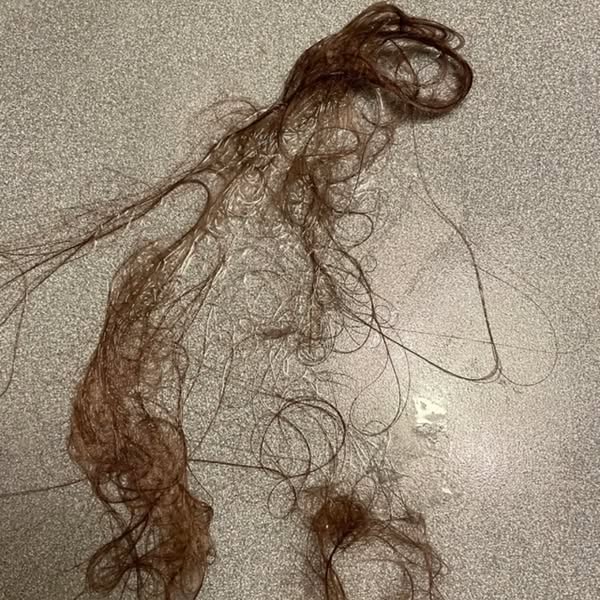
Got prescribed Levothyroxine today. The same medication that took my mother's life before she was even gone. TSH is 5.2. Doctor says that's "elevated and symptomatic." She's starting me on 50 micrograms. One pill. Every morning. For the rest of my life, probably. I took the prescription. Walked to my car. Sat there. Couldn't drive. Couldn't move. Just sat there holding this piece of paper. Levothyroxine 50mcg. My mother took this for thirteen years. I don't know what to do. March 16th Didn't fill it yet. Husband asked why. I couldn't answer. Just keep thinking about Mom. She took it every single morning. 6:15 AM. Never missed a dose. Had this little pill organizer. Sunday through Saturday. Would show me every week — all seven days empty. "See? I'm taking it. I'm doing everything right." She'd show me her lab results too. Every six months. After the endocrinologist appointments. "TSH is 2.1. Doctor says it's perfect. The medication is working." But she wasn't working. Year 2, they let her go from the school where she'd been teaching for seventeen years. "Performance issues." Never missed a day before the thyroid thing. But then she was calling in sick two, three times a week. "I just can't get out of bed," she'd say. "I sleep eleven hours and I'm more exhausted than when I went to sleep." Her principal thought she was lazy. Making excuses. She wasn't lazy. She was dying. But her TSH was perfect. I keep coming back to that. If the medication was working — if her TSH was in the perfect range — why couldn't she get out of bed? That doesn't make sense. March 19th Doctor's office called. "You haven't picked up your prescription." I said I needed more time. The nurse sounded annoyed. "Your TSH is 5.2. You're symptomatic. This is important." Important. Mom's TSH was 2.1 when she died. "Perfect range." What's important is I don't want to end up like her. March 23rd Can't stop thinking about the weight. Mom gained 45 pounds in less than a year. Year 3 of taking the medication. I watched what she ate. Salads for lunch. Grilled chicken and vegetables for dinner. Smaller portions than me. I was maintaining my weight. She was gaining. "You're just getting older," her doctor said. "Metabolism slows down. Try eating less." She tried. Cut her portions in half. Gained another twelve pounds. I remember Dad suggesting — not cruel, just confused — "Maybe you're eating when nobody's looking?" She didn't speak to him for two days. Then one morning I found her in the bathroom. Just staring at herself in the mirror. Pinching the fat on her stomach. Not crying. Just staring. "I haven't eaten all the pies," she said quietly. "Why does everyone think I ate all the pies?" Her TSH was 2.1. Perfect. But her body wasn't listening. I'm already gaining weight. Eighteen pounds in two months. Haven't changed anything. What if it gets worse on the medication? What if my TSH goes to 2.1 and I gain forty more pounds and everyone thinks I'm lying about my food? March 26th The hair. God, the hair. Year 5. She just started wearing scarves one day. Then hats. Then she answered the door in a wig. Smiled like nothing was different. "Mom. Your hair —" "It's fine. This is easier." She wouldn't let me see her without it. Not for two years. When she finally did — I could see her scalp. Patches completely bare. "Dermatologist says it's stress. Another pill." She never wore her real hair again. Not to family dinners. Not to church. Not anywhere. I'm losing hair now. In the shower. On my pillow. When I brush it. Handfuls. Started looking at wigs online last night. Researching which ones look most natural. I'm 48. I'm researching wigs. Mom was 54 when she started wearing them. March 29th Husband found me up at 2 AM last night. Sitting at the kitchen table with my laptop. Research articles everywhere. "Rachel. What are you doing?" "Research." He sat down. Looked at the screen. I'd typed: "does levothyroxine work for everyone" First result: Medical journal. "25-30% of hypothyroid patients remain symptomatic on Levothyroxine despite normalized TSH." Twenty-five to thirty percent. One in four. Maybe more. He didn't say anything. Just sat there reading with me. Clicked another link. Patient forum. "I've been on Levo for nine years. My TSH is 'perfect.' I lost my job because I kept calling in sick. Nobody believes me when I say I can't get out of bed. They think I'm lazy. But I'm not lazy. I'm dying." That could be Mom writing that. Another post: "Gained fifty pounds on Levothyroxine. Eating 1100 calories a day. Doctor says I must be lying about my food intake. I'm not lying." Another: "All my hair fell out. I wear wigs now. Can't remember the last time I went out without one. Doctor says my TSH is fine. But I'm not fine." Another: "I have no thyroid. Had it removed eight years ago. Been on Levothyroxine ever since. My TSH is always 'perfect.' But I'm exhausted, freezing, gaining weight, hair falling out, can't think straight. If the medication is working, why do I still feel this way?" My husband looked at me. "These people... they sound exactly like your mom." "I know." "But their doctors say the medication is working." "I know." "So what's happening?" "I don't know. But I'm not filling that prescription until I figure it out." April 3rd Found something. Was searching "can levothyroxine not work" and found a study. "T4-to-T3 conversion is primarily performed by the Deiodinase 1 enzyme, which is most abundantly expressed in the liver." Read it three times. Levothyroxine is T4. That's the inactive form. Your body has to convert it to T3. That's the active form. That's what your cells actually use. And the enzyme that does this conversion — Deiodinase 1 — lives primarily in your liver. If something damages that liver... if that liver is inflamed, or full of fat, or under attack... the enzyme can't do its job. The medication just sits there. In your blood. Not getting into your cells. TSH would look perfect. Because TSH measures the signal from your pituitary to your thyroid. It sees the T4 in your blood and thinks everything is fine. But your cells are starving. Oh my god. Mom had fatty liver. Diagnosed the same year as her thyroid. Same bloodwork. Two problems. Two separate doctors. Nobody ever connected them. What if her liver was the reason the medication never worked? April 4th Couldn't sleep. Back at the laptop. Searched: "fatty liver thyroid hormone conversion" Article after article. "Non-alcoholic fatty liver disease is associated with impaired intrahepatic thyroid hormone metabolism. Hepatic Deiodinase 1 activity is reduced in damaged and inflamed liver tissue." "Pro-inflammatory cytokines — TNF-alpha and IL-6 — directly suppress Deiodinase 1 expression." There it is. That's the enzyme. That's the step. A damaged, inflamed liver shuts it down. Found a review from the European Thyroid Journal: "In patients with liver injury, Deiodinase 1 drops while Deiodinase 3 — which INACTIVATES thyroid hormone — increases." Your damaged liver isn't just failing to convert the medication. It's actively destroying what little T3 gets made. T4 to T3? Blocked. T3 to inactive metabolite? Accelerated. They never tested Mom's liver function in the context of her thyroid. Not once. Two separate specialists. Two separate waiting rooms. Thirteen years. April 5th Went down a rabbit hole. If a damaged liver blocks thyroid conversion... what does poor thyroid function do back to the liver? Searched: "hypothyroidism causes fatty liver" "Reduced T3 levels associate with decreased hepatic lipase activity, leading to increased triglyceride accumulation in the liver." "Hypothyroidism impairs lipolysis and promotes hepatic lipogenesis." "Low thyroid function directly worsens fatty liver disease." I sat back from the laptop. Stared at the screen. It's a death spiral. A damaged liver can't convert T4 to T3. Without active T3, your liver accumulates more fat. More fat damages the liver further. Which makes conversion worse. Which makes the liver fattier. Round and round and round. Mom's liver was getting fattier because her thyroid wasn't converting. Her thyroid wasn't converting because her liver was getting fattier. And nobody saw it because they treated them as two separate problems. Endocrinologist managed the thyroid. Checked TSH. "Perfect. Medication is working." Primary care managed the liver. Checked enzymes. "Still elevated. Lose weight." Two doctors. Two charts. Two waiting rooms. One death spiral. For thirteen years. April 6th I went through Mom's medical records last night. She kept everything. Manila folders. Dates written on the tabs. Her liver enzymes climbed every single year. Year 1: ALT 68. Fatty liver diagnosed. "Lose weight." Year 3: ALT 79. Still elevated. "Continue diet and exercise." Year 5: ALT 91. Hashimoto's diagnosed. Hair falling out. Year 8: ALT 108. Autoimmune gastritis. Fibromyalgia. Year 10: ALT 119. Cognitive decline. They tested her for dementia. Year 13: Wheelchair. Her liver got worse every year. Every year it got worse, her conversion got worse. The medication they kept prescribing sat in her blood. Her body kept declining. Six specialists. Nine medications. Thirteen years. Nobody once asked: what if her thyroid medication isn't failing? What if her liver is failing her thyroid? April 8th If the liver is the problem… Then why was nobody fixing Mom's liver? They told her to lose weight. But she couldn't lose weight because her thyroid wasn't converting. Her thyroid wasn't converting because her liver was damaged. Her liver was damaged because she couldn't lose weight. "Lose weight" isn't a solution when the organ responsible for your metabolism is trapped in a death spiral. They gave her milk thistle at one point. Year 4. Her naturopath recommended it. She took it for a year. Nothing changed. Because — and I just figured this out tonight — a damaged liver isn't failing for one reason. A hepatology review. Three simultaneous attacks destroy a struggling liver: First — cellular destruction. Toxins, medication byproducts, and free radicals punch holes in liver cell membranes. That's what elevated ALT and AST measure — damaged cells leaking enzymes into your blood. Second — chronic inflammation. When cells get damaged, your body sends inflammatory molecules. TNF-alpha. IL-6. In a struggling liver, this inflammation becomes chronic. Never shuts off. And those exact inflammatory cytokines directly suppress Deiodinase 1. The inflammation destroying your liver is ALSO blocking your thyroid conversion. Third — fat suffocation. Fat deposits build up inside liver cells. Hepatocytes drowning in lipid deposits. And fat-filled hepatocytes can't perform deiodinase conversion properly. Three attacks. All feeding each other. All making thyroid conversion worse. Milk thistle addresses one. Cell protection. That's it. Doesn't touch the inflammation suppressing your conversion enzyme. Doesn't clear the fat suffocating your liver cells. Like putting a bandage on one wound while two others hemorrhage. No wonder it didn't work for Mom. April 12th Okay so it's the liver. Three attacks. But what am I supposed to do about that? Can't fix it with diet. Can't lose weight when the organ running my metabolism is trapped in a spiral. Can't exercise my way out when I can barely get off the couch. Milk thistle alone didn't work for Mom. One attack out of three. I need something that addresses all three simultaneously. Searched: "compounds that target all three pathways of liver damage" April 15th Started finding the research. Three specific compounds kept coming up: Silymarin — the active compound in milk thistle. But NOT at the doses in cheap supplements. At 240mg — pharmaceutical-grade, 80% standardized — it creates a protective barrier around liver cell membranes. Stops the cellular destruction. Increases glutathione production by up to 35%. Stimulates actual regrowth of new liver cells. European clinical studies used exactly this dose for hepatoprotection. Curcuminoids — from turmeric extract standardized to 95%. At 380mg active, they directly shut down NF-kB — the master switch that keeps liver inflammation chronic. Block the TNF-alpha and IL-6 that suppress Deiodinase 1. Stop the inflammation that's simultaneously destroying your liver AND blocking your thyroid conversion. Myo-Inositol — at 1000mg. A lipotropic agent. Prevents fat from accumulating inside liver cells AND mobilizes existing fat deposits out. Clears the fat suffocating your hepatocytes so they can perform deiodinase conversion again. Three compounds. Three attacks. Simultaneously. But the doses matter. Desperately. 30% silymarin instead of 80% means a third of the active compound. Generic turmeric at 5% curcuminoids instead of 95% means you'd need a whole bottle to reach therapeutic levels. Inositol at 200mg when you need 1000mg is a rounding error. April 20th Ordered them. Separately. Amazon. Best-rated brands I could find. Milk thistle. Turmeric. Inositol. $147 a month. Nine capsules a day. Started Monday. May 28th Five weeks. Nothing has changed. Still exhausted. Still bloated. Still gaining weight. Hair still falling out. ALT came back at 71. It was 67 when I started. Getting worse. Wasted five weeks. June 1st Something weird happened today. Was reading a forum. Pharmacist posted: "Most supplement brands use extract concentrations that are a fraction of what the clinical studies use. Your milk thistle might say 'standardized' on the label, but if it's 30% silymarin instead of 80%, you're getting a third of the active compound. Your turmeric might be 5% curcuminoids instead of 95%. At those concentrations, you'd need an entire bottle to reach a therapeutic dose." I froze. Went to my counter. Picked up the bottles. Turned them around. The milk thistle: 30% silymarin. Not 80%. The turmeric: "turmeric extract 500mg." No standardization listed. Could be 5%. Maybe less. The inositol: 500mg. Clinical dose is 1000mg. I'd been taking the right compounds at the wrong doses. Expensive sawdust. Mom's milk thistle probably had the same problem. Nobody checks the back of the label. You see "milk thistle" and think you're getting what the studies used. You're not. June 5th Tried again. Better brands. Specialty suppliers. Pharmaceutical-grade silymarin at 80%. Turmeric extract at 95% curcuminoids. Inositol at 1000mg. Plus methionine for Phase II detox. Plus vitamin C. Six bottles. Eleven capsules a day. $167 a month. But I'm desperate. My ALT is climbing. My symptoms are Mom's symptoms. And I keep seeing her timeline playing out in front of me. Year 1: Hypothyroid. Fatty liver. Year 3: Weight gain nobody can explain. Year 5: Hashimoto's. Hair loss. I'm on Year 1. I have to break this spiral before it breaks me. June 19th Two weeks on the real doses. Something shifted. The bloating. Tuesday night after dinner — for the first time in months — my stomach didn't distend into that hard, pregnant-looking ball. It was just... mildly full. Normal full. I almost cried over a normal stomach. June 26th Three weeks. Woke up Saturday morning and got out of bed. Just... got out of bed. Didn't lie there for forty-five minutes willing my body to move. Didn't hit snooze four times. Opened my eyes. Sat up. Got up. Husband noticed. "You're up before me." I couldn't explain it. Same hours of sleep. But getting out of bed didn't feel impossible anymore. Made breakfast. Took a shower. Got dressed. Didn't need to rest between each task. July 3rd Four weeks. Lost four pounds. Didn't change anything. Same food. Same activity. Just... lost it. And I went for a walk yesterday. Twenty minutes around the neighborhood. Didn't crash. Didn't need to sit down after. Didn't need to lie down for two hours when I got home. I just... walked. My legs didn't feel weak and shaky. I can move again. July 10th Five weeks. Was in a meeting at work. Someone asked me a question. I answered immediately. Full, coherent answer. Didn't lose my train of thought. Didn't get that cotton-wrapped feeling in my brain. Later I realized: I didn't forget where I parked that morning. Didn't walk into a room and forget why. Didn't need to write everything down because I couldn't trust my own memory. The fog is lifting. July 17th Six weeks. Ran my hand through my hair in the shower this morning. Ten strands came out. Maybe twelve. Not forty. Not clumps. Just... normal shedding. Checked the shower drain. Barely anything. Checked my pillow. Two strands. My hair is still thin. Can still see my scalp in places. But it's not falling out in handfuls anymore. I don't need to buy wigs. July 22nd Six-week bloodwork. I was shaking in the waiting room. Genuinely shaking. Dr. Patel came in. Pulled up results on her tablet. Looked at the screen. Frowned. Scrolled. Looked again. Looked at me. "Rachel. Your ALT is 29." Silence. "Down from 71. That's... significant." She scrolled more. "AST is 22. Normal." She kept scrolling. "And your TSH — it shifted. 3.8. Down from 5.2." I couldn't breathe. "Without the Levothyroxine?" "Without the Levothyroxine." She waited for me to explain. I told her. The liver-thyroid connection. Deiodinase 1. Three attacks on the liver. How the inflammation was suppressing the conversion enzyme. How I'd been addressing all three — cell protection, inflammation shutdown, fat clearance — simultaneously at clinical doses. She typed notes. Nodding slowly. "Your liver enzymes have normalized. And your thyroid function appears to be improving with it." "Because my liver can convert now," I said. "The inflammation is down. The fat is clearing. The enzyme can do its job." She closed the tablet. Looked at me for a long time. "Let's hold off on the Levothyroxine. Recheck in eight weeks. If this trajectory continues, we may not need it." May not need Levothyroxine. No thirteen years on medication with perfect labs while my body falls apart. No autoimmune cascade. No wheelchair. I walked to my car. Got in. Sat there. Then I called my husband. "ALT is normal. TSH is dropping. No medication." I heard him exhale. Then his voice broke. "Thank God. Rachel, I was so scared you'd —" "I know. Me too." July 25th Problem. The six bottles on my counter. $167 a month. Eleven capsules a day. One brand changed their formula last month. Silymarin dropped to 60%. Didn't announce it. I only caught it because I check labels now like my life depends on it. Because it does. Another brand — the turmeric — backordered for three weeks. I had a gap. No curcuminoids for eighteen days. By the end of those eighteen days the bloating was creeping back. The pressure under my right ribs returned. The protocol works. But the execution is a nightmare. Six bottles from six companies with inconsistent quality and unreliable supply and no guarantee they won't quietly change their formula tomorrow. I need someone who put this together properly. In one formula. At the right doses. With real standardization. August 2nd Was in an online thyroid support group. Thousands of women. Most on Levothyroxine. Most still symptomatic. I posted about the liver-thyroid connection. The Deiodinase 1 enzyme. The three attacks. My lab results. Got flooded. "My doctor never mentioned my liver." "I have a damaged liver AND hypothyroid and nobody ever connected them." "I've been on Levo for seven years and still feel terrible. My liver enzymes have been elevated the whole time." Over and over and over. One woman messaged me privately. She'd been through the same rabbit hole. Same realization. Same experience sourcing everything separately. "There's a company called Ritual Labs," she wrote. "They have a formula called Happy Liver. It has everything. Silymarin at 80% — 240mg. Curcuminoids at 95% — 380mg. Inositol at the full 1000mg. Plus the supporting compounds. All in two capsules." Two capsules. I went to their site. Skeptical. Ready to be disappointed. Read the label three times. 300mg Milk Thistle Extract standardized to 80% Silymarin — 240mg active. The exact dose from the European clinical studies. 400mg Turmeric Extract standardized to 95% Curcuminoids — 380mg active. Therapeutic dose. Not the 5% garbage from Amazon. 1000mg Myo-Inositol. Full clinical dose. The lipotropic agent that clears fat from hepatocytes so Deiodinase 1 can function again. L-Methionine for Phase II detox completion. Pueraria Extract for toxic metabolite neutralization. Vitamin C for antioxidant synergy. Every compound. Every dose. Two capsules. I stared at the price. $24.99. I've been spending $167 a month. Six bottles. Inconsistent quality. Supply chain anxiety. Checking labels like a detective. $24.99. I showed my husband. He laughed. "Order it." I did. August 8th Bottle arrived. Stopped all six supplements. Switched to Happy Liver. Two capsules with my coffee every morning. September 30th Eight-week check. Results posted to my portal at 4:47 PM. Opened them sitting on my bed. Alone. Wanted to see them by myself first. ALT: 24. AST: 19. Both normal. Both lower than my last draw. Scrolled down. TSH: 2.6. Down from 5.2 five months ago. Down from 3.8 eight weeks ago. Normal range. Optimal range. No medication. I put my phone down. Stared at the ceiling. Then I went to the closet. Pulled out Mom's manila folders. Spread them on the bed. Year 1. ALT: 68. TSH: 5.8. Year 3. ALT: 79. TSH: "managed" at 2.1 on Levothyroxine. Still gaining weight. Year 5. ALT: 91. Hair falling out. Hashimoto's diagnosed. Year 8. ALT: 108. Fibromyalgia. Autoimmune gastritis. Two more prescriptions. Year 13. Wheelchair. Her liver got worse every year. And every year it got worse, her conversion got worse. And the medication they kept prescribing kept sitting in her blood doing nothing. And her body kept declining. And nobody once — not once in thirteen years — said "what if we fix the liver and let the conversion enzyme work again?" Six specialists. Nine medications. Thirteen years. Nobody asked the right question. Today It's been five months. I hike with my daughter on weekends now. Three miles. Four. Uphill. With a pack. Last Saturday she grabbed me in a hug at the summit. "Mom! You did it! Can we do this every weekend?" My throat tightened. My eyes burned. Because the answer was yes. And because I thought about Mom. Who spent thirteen years too exhausted to walk to the mailbox. Too heavy to climb stairs. Too cold to leave the house. Too foggy to remember my daughter's birthday. While her TSH was perfect the whole time. While her liver was screaming and nobody listened. What I know now: Your liver contains Deiodinase 1 — the primary enzyme that converts T4 into the active thyroid hormone T3. If your liver is damaged, inflamed, or full of fat, that enzyme can't work. Your medication sits in your blood. Your TSH looks perfect. Your cells starve. A damaged liver doesn't fail for one reason. Three simultaneous attacks — cellular destruction, chronic inflammation, and fat accumulation — feed each other in a death spiral. And the inflammation directly suppresses the enzyme that activates your thyroid medication. Milk thistle alone addresses one attack out of three. That's why it didn't work for Mom. That's why it doesn't work for most people. You need to address all three simultaneously. At clinical doses. With properly standardized extracts. 240mg silymarin from 80% extract. 380mg curcuminoids from 95% extract. 1000mg inositol. Not the underdosed garbage on Amazon with a fraction of the active compounds. You'll know within weeks. The bloating eases first. Then the energy. Then the fog lifts. Then your labs start moving. I'm writing this down because I want to remember. Five months ago I was terrified. Holding a prescription for the medication that failed my mother. Watching my body start the same decline. TSH 5.2. Symptoms worsening. No options. Thought I was trapped. But I wasn't. The trap was believing: TSH tells the whole story (it doesn't) Medication always works if TSH normalizes (it doesn't) Doctors test for everything relevant (they don't) Fatty liver and thyroid problems are separate issues (they're not) You can fix your thyroid without fixing your liver (you can't) All liver supplements are the same (they're not) Once I stopped believing those things — once I saw the death spiral — the path became clear. Fix the liver. All three attacks. At real doses. Let Deiodinase 1 work again. Let the medication — or your own thyroid — finally convert. Simple. Not easy. But simple. I don't know who will read this. Maybe no one. Maybe just me in ten years, looking back. But if you're reading this and you see yourself in my story — If your TSH is 5.2 like mine was. Or 8. Or 12. Or you're already on medication and your TSH is "perfect" but you still feel awful. If you're exhausted all the time. That deep exhaustion that doesn't go away no matter how much you sleep. The kind where getting out of bed feels impossible. Where showering and getting dressed takes everything you have. If you've gained weight you can't lose. Tried every diet. Cut your calories to nothing. Gained more weight. Have people suggesting you're eating in secret. But you're not. You haven't eaten all the pies. Your liver just can't convert the hormone that runs your metabolism. If your hair is falling out. Not thinning. Falling out in clumps. You can see your scalp. You've thought about wigs. Or you're already wearing them. If you're freezing all the time. Wearing three layers when everyone else is in short sleeves. Space heater at your desk. Socks to bed in summer. If you have brain fog. Forget where you parked. Walk into rooms and can't remember why. Lose your train of thought mid-sentence. If your belly bloats every single night. If there's a dull ache under your right ribcage. If your ankles swell and your face is puffy every morning. If you're on three medications. Five. Seven. And you still don't feel okay. If you can't afford a functional medicine doctor. Insurance won't cover it. Your endocrinologist says your TSH is fine. But you're not fine. The formula is Happy Liver by Ritual Labs. Two capsules a day. $24.99. Money-back guarantee. My ALT went from 67 to 24. My TSH went from 5.2 to 2.6. Without Levothyroxine. Because I stopped treating the thyroid and started treating the organ that converts thyroid hormone. I verified the label. 240mg silymarin at 80%. 380mg curcuminoids at 95%. 1000mg inositol. Third-party tested. No proprietary blends. Every dose published. I felt the difference within two weeks. The bloating eased first. Then the energy. Then everything else followed. There's a link below. They sell out. The pharmaceutical-grade extracts at these standardizations aren't cheap to source. Once people in the thyroid community started connecting the liver-thyroid dots, demand overwhelmed their supply. I've seen women in the support group say they waited weeks for it to come back. So if you click and they still have inventory — grab it. Because your endocrinologist isn't going to tell you this. They don't treat livers. Your primary care doctor will tell you to lose weight. You can't lose weight when the organ that runs your metabolism is trapped in a death spiral. You have to break the spiral yourself. I broke mine. Mom never got the chance. 👉 rituallabs-us.com/products/happy-liver — Rachel February 2026
Clear the Toxins, Restore the Energy
Your liver processes everything - alcohol, medications, junk food, environmental toxins. Happy Liver provides daily protection with clinical doses of Milk Thistle, Turmeric, Pueraria, and Inositol. Whether you're looking to shield your liver from daily stressors or repair years of damage, this power...
LEARN MORELike this ad? Make it yours.
Crush rebuilds this exact creative around your product — your brand, your colors, your offer — in about a minute.