Linda Hayes
Linda Hayes Facebook ad: “Protect yourself in an emergency”
Ran for 89 days, from June 11 to September 8, 2026, the last day Crush saw it.
Run by Linda Hayes on Facebook. Crush is not the advertiser and does not verify its claims. See this ad in Meta's Ad Library(opens in a new tab)
Want an ad like this for your product?
Crush makes new ad images for your product from this ad: your logo, your product photo, your offer.
Trials from $19.95 USD, then $79.95 USD a month. Cancel anytime.
About this ad
- Meta Ad Library ID
- 1428809155938706
- Platforms
- Facebook, Instagram, Audience Network, Messenger and Threads
- Relaunches
- 0
- EU reach
- 158
Ad text
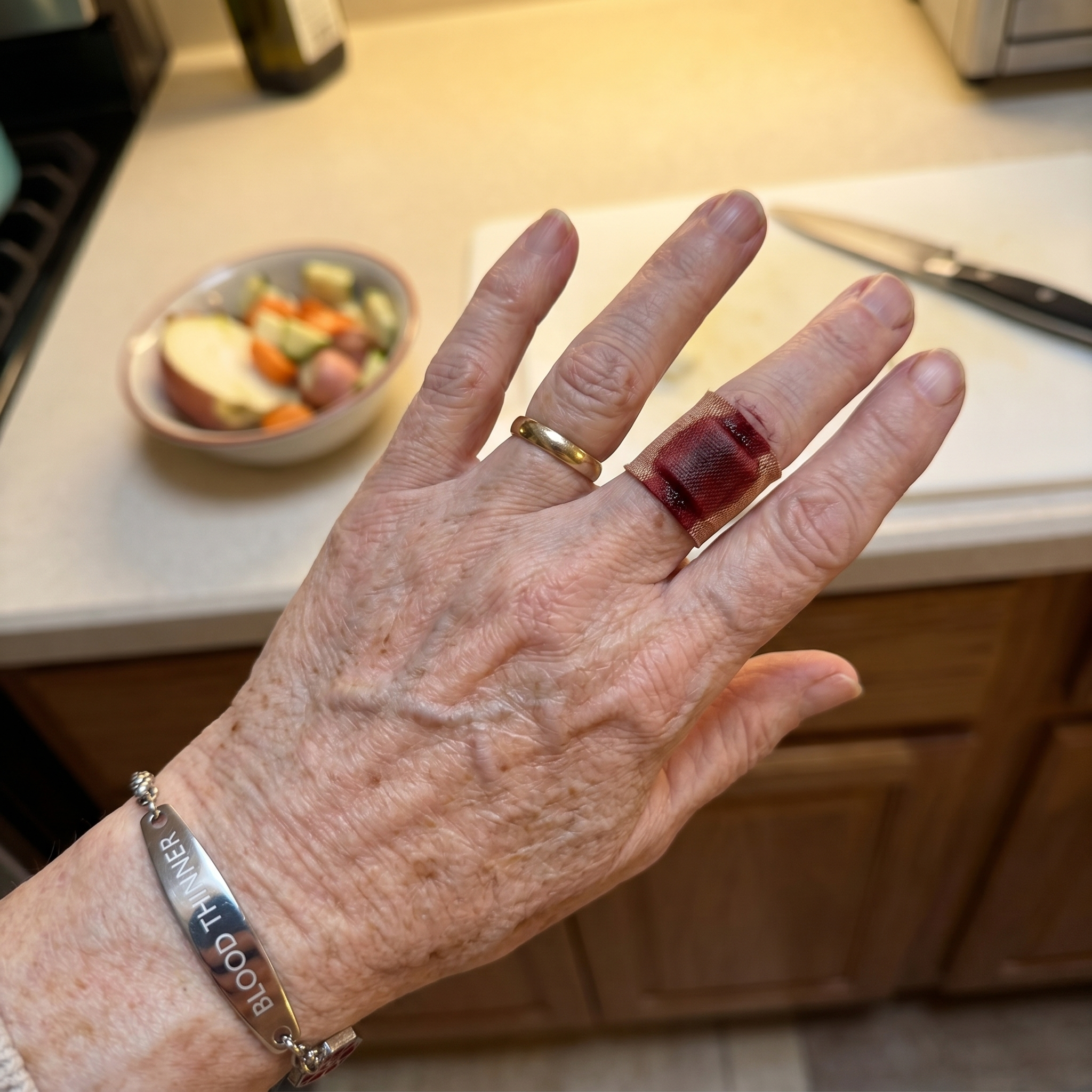
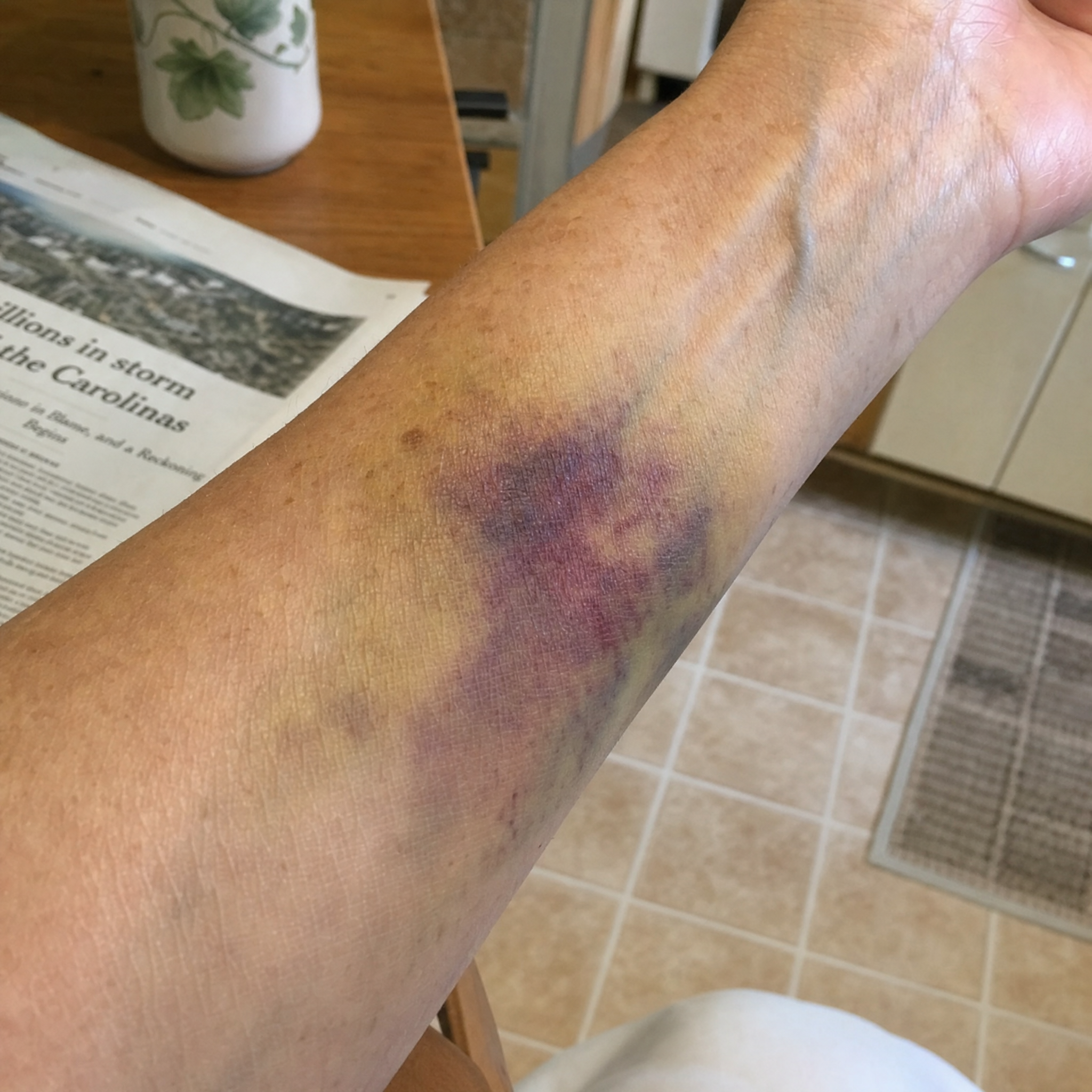
Since I went on a blood thinner I've been quietly rehearsing my own emergency in the shower every morning. I didn't notice I was doing it until my sister visited for the weekend. We were having coffee on a Saturday morning and she said, very lightly, "You've told me three times since I got here what you'd do if you fell." I hadn't realised. I genuinely hadn't realised. I thought I was just making conversation. I'm 67. I was diagnosed with AFib about 18 months ago, started on the medication a week later, and for about a year now I have been living what I can only describe as a quietly exhausting double life. On the outside I'm fine. I cook. I see my book club on Thursdays. I take my granddaughter to her swimming lessons. I am, by any reasonable measure, doing well. On the inside, I am running a small private operation that I never agreed to take on. It goes like this. Every time I get into the bath, I think about what would happen if I slipped. Every time I drive past the big intersection near the post office, I think about what would happen if someone ran the light. Every time I bump my shin on the coffee table I look at it for longer than I used to, watching to see if the bruise is going to be bigger this time than it was last time. Every time my heart does that little flutter that it sometimes still does, I make a mental note of where my phone is. It's not panic. That's the thing I want to be clear about. I am not a panicker. I have raised three children and buried a husband and I know what panic is. This isn't that. This is something quieter and in a way worse. It's a low background hum. It's a tab open in my head that I can't close. By the time my sister noticed, I'd been running this private operation for about eight months. I hadn't told anyone. I didn't really know how. If I said it out loud to my daughter she'd want to "do something," and I knew what "doing something" looked like. It looked like the pendant my mother-in-law had worn in the last years. If I said it out loud to my doctor she'd probably refer me to someone, and I didn't want to be referred to someone. I wasn't ill. I was tired. My sister went home on the Sunday and I sat at the kitchen table that night and tried to be honest with myself about what was happening. What was happening was that I had been on Xarelto for 18 months and the medication was working, but the worry the medication had created was working too, and nobody had ever said anything about the second part. The cardiologist had told me about the bleeding risk in a way that took maybe 90 seconds. The pharmacist had given me a leaflet. The drug company commercials show a woman my age laughing on a tennis court. Nobody had said the part that turned out to matter most: that I would now spend a little piece of every day, for the rest of my life, doing low-grade emergency planning in my head. If they had told me, I might have asked: and what do I do about that part? I started looking that week. It was 10:30 at night, the dishes were done, and I typed in how to stop worrying about falls on blood thinners. The results were mostly articles about fall prevention, which is not what I was asking about. I knew how to not fall. I had been not falling, successfully, for 67 years. That wasn't the problem. I tried blood thinner anxiety. I got articles about anxiety as a side effect of the medication itself, which also wasn't it. The medication wasn't making me anxious. The situation the medication had put me into was making me anxious. I tried what to do if I'm in an accident on Xarelto. That got me closer. I read for about an hour. I closed the laptop at midnight and I didn't sleep particularly well. The thing that actually changed for me was something I read about a week later, almost by accident. I'd gone back online to look at something else, and I came across a paramedic explaining what they do when they arrive at the scene of an accident. I wasn't even reading it for me. I was reading it because the headline was interesting. He said something I had to read three times before I understood it. He said that in the first 30 to 60 seconds, before they do anything else, they grab the wrist to check for a pulse, and their eyes sweep the body for any visible sign of who the patient is and what they're on. They don't open the wallet. They don't unlock the phone. They get the wrist, the neck, and the shoes. Whatever is there is what they have to work with. And then he said: for patients on anticoagulants this is the most important 30 seconds of the entire call, because the wrong treatment in the first five minutes makes the bleed worse. I sat there at the kitchen table and I felt something physical happen in my chest. Not a flutter. Something like a release. Because I suddenly understood what my brain had been doing for eight months. My brain had been trying to solve a problem I had no way to solve. Every time I rehearsed the emergency, every time I noted where my phone was, every time I looked twice at a bruise, my brain was trying to engineer a way to communicate something to people who weren't there yet. I'm on Xarelto. I'm on Xarelto. Please know I'm on Xarelto. The reason it never quieted down was that none of my solutions actually worked in the window where the message needed to land. My phone is locked. My wallet is in my handbag. My driver's licence doesn't say it. The card my daughter laminated for me is buried behind my library card. In the 30 seconds where it would matter, none of those things would be where the paramedic is looking. That was the loop my brain had been running. Not "I might fall." But "I might fall and the message won't arrive." Two completely different problems. The first problem I couldn't solve. People fall. Cars run lights. Hearts do things hearts do. The second problem turned out to be the one with an actual answer. I ordered the bracelet that weekend. It came on a Thursday. It's stainless steel, plain, and it says BLOOD THINNER on it in letters a paramedic would see from across a room. I put it on Thursday afternoon and went to my book club on Thursday evening and nobody noticed it, which is exactly what I wanted. I want to tell you about the next morning, because the next morning is what convinced me. I got into the bath at about 8:15. And as I stepped in, I waited for the rehearsal to start. The little mental note about where my phone was. The small voice that says be careful here, this is a slippery one. It didn't come. It didn't come because the thing my brain had been trying to engineer was already done. The message was already on my wrist. The 30 seconds I'd been quietly preparing for, for eight months, was now handled. The relief was not dramatic. It was just an absence. The way a refrigerator hum you'd stopped noticing suddenly stops, and you realise the kitchen is quiet. I read my book in the bath for 40 minutes and got out and made breakfast and went about my Friday. I haven't rehearsed the emergency in the shower since. This is the thing that helped me, and it could be the thing that helps you too. If you're on a blood thinner and you've noticed that a small piece of your day is now permanently allocated to low-grade emergency planning that you never used to do, this is probably the same loop I was in. It isn't anxiety in the diagnosable sense. It's your brain trying to solve a communication problem on behalf of a future you who can't speak. The loop closes when the message has somewhere to live that doesn't require you to be conscious or to have your handbag with you. It costs less than my last refill copay, one time, and it comes in the post within days, and it goes on the wrist where the message needs to be. I wish someone had told me at month one instead of month eight. Telling you now. https://getwristalert.com/products/the-wrist-check-bracelet
Where the ad sends people
getwristalert.com
Protect yourself in an emergency
Blood Thinner Bracelet
Shop now: getwristalert.com(opens in a new tab)