Lauren Hayes
 Facebook ad: “My sisters gave me six months in Italy”
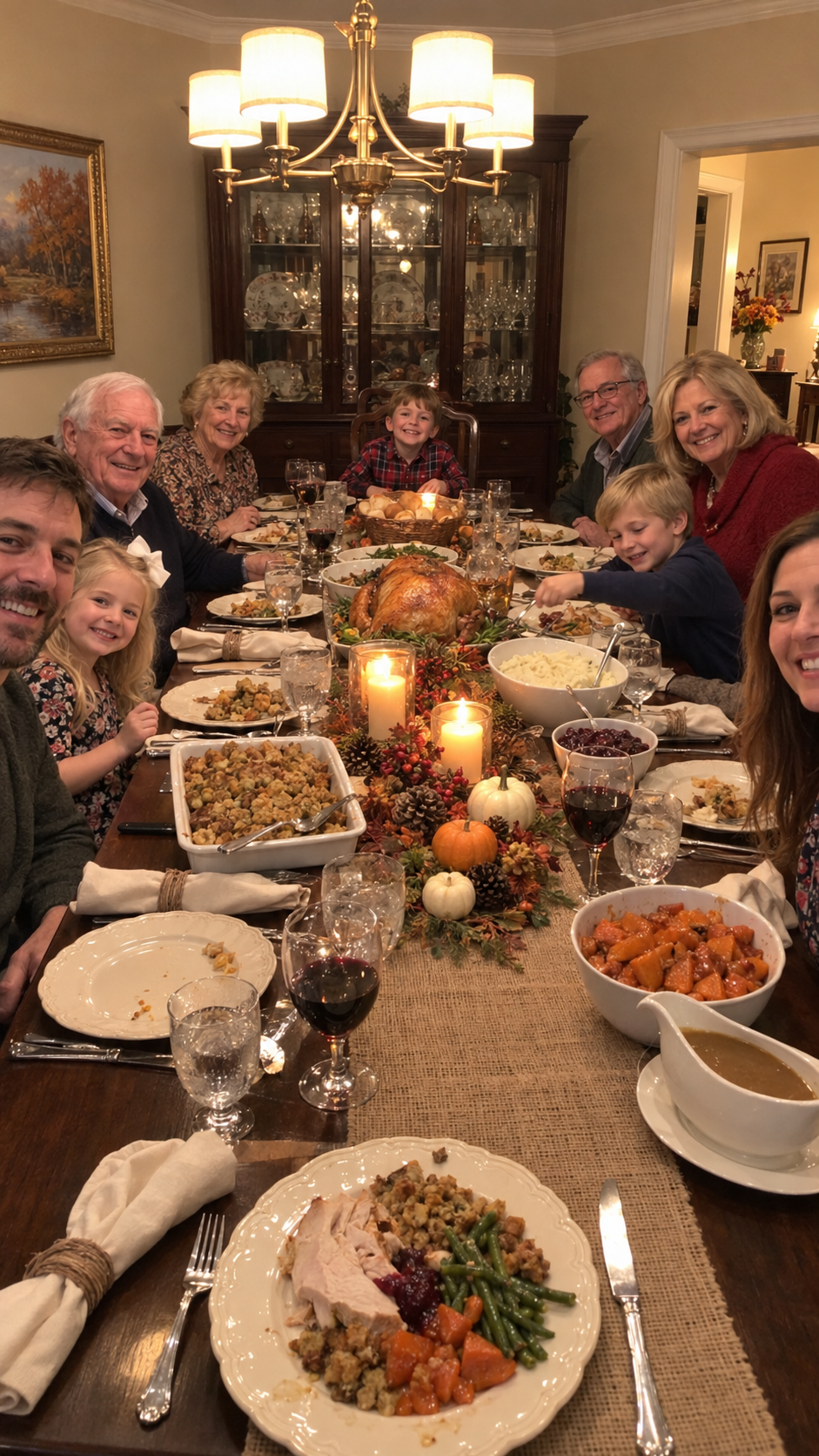
Ran for 16 days, from October 16 to November 1, 2026, the last day Crush saw it.
Run by Lauren Hayes on Facebook. Crush is not the advertiser and does not verify its claims. See this ad in Meta's Ad Library(opens in a new tab)
Make your own version of this ad
Crush makes it, launches it in your own Meta ad account, scales the winners and pauses the losers.
About this ad
- Meta Ad Library ID
- 1430619462355868
- Platforms
- Facebook, Instagram, Audience Network, WhatsApp and Threads
- Relaunches
- 0
- EU reach
- 188
- Niche
- Food & Beverage
Ad text
The afternoon my divorce went through, I skipped the lunch my sisters planned and bought a one-way ticket to Italy. They had booked a table at the restaurant with the cloth napkins. My older sister called it my "fresh start lunch." My younger sister had already bought a card and signed it from both of them. I never went in. I sat in my car in the courthouse parking lot with the papers on the passenger seat and the engine running for the air conditioning, and I bought the ticket on my phone. One seat. Window. One way. I was 59 years old. I had been married for thirty-one years. I had been a wife, a mother, the room mother, the casserole lady and the woman who hosted every single Christmas. I knew everyone's allergies and everyone's shoe size. In all that time I had never bought a plane ticket for myself without asking somebody first. My thumb shook when I pressed the button. Then it stopped shaking. --- The house on the cul-de-sac sold faster than I expected. A young couple with a baby on her hip and a toddler on his shoulders walked through it once and made an offer that night. I liked that. The house was good at being a family house. It just wasn't mine anymore. My ex-husband wanted the recliner and the grill. I let him have both. I kept my grandmother's rolling pin, my good knife, two suitcases of clothes and a box of photos I couldn't stand to sort. I told my sisters in the family group text, because I didn't trust my voice on the phone. Nobody typed for a long time. I watched the little dots appear and disappear. Then my older sister wrote: "Six months. I give it six months." My younger sister wrote: "Countdown starts now!" And she meant it. On the first of every month after that, a message showed up in the group text. "Five months to go!" "Four months to go!" Sometimes with a little airplane. She meant it kindly, mostly. That's what made it sting. --- The first months felt like postcards. I know that sounds like something people say, but it's true. I sent my sisters actual postcards, the paper kind, because it felt like the right thing to do from a place like that. I rented a small apartment on the fourth floor of an old building at the top of a hill town, an hour from the sea. No elevator. Seventy-two stone steps, worn smooth in the middle from a few hundred years of feet. I counted them the first night, dragging my suitcases up one at a time and laughing at myself on every landing. The apartment had a kitchen the size of my old pantry, a bed with a squeaky iron frame and a balcony so narrow I had to turn sideways to get onto it. The first week I bought six pots of basil from the market and lined them up along the railing. I didn't know what I would do with that much basil. I just wanted something alive out there waiting for me. The market was on my corner. Every morning a man with enormous hands sold eggs from a crate and corrected my pronunciation, very seriously, every single time. The tomatoes tasted like the ones my grandmother grew. I bought bread still warm and ate the end of it walking home, which my ex-husband would have hated. I signed up for a language class at the community hall. I was the oldest student by twenty years and the worst by a mile. I mixed up the word for "tired" and the word for "married" for an entire month, which the teacher said was the most honest mistake she had ever heard. I was happy. I want to say that clearly, because of what came next. I was really, truly happy. And then, slowly, I wasn't. --- By month nine the shine was gone. The summer crowds left. The language class broke for the term. The rain came in sideways off the hills, and the stone of my building held the cold like a refrigerator. The other students went back to their jobs and their boyfriends and their lives, and I went back to my four rooms at the top of seventy-two steps. I had left one small life and built myself an even smaller one. That was the loneliness. But there was something else happening too, something I didn't have words for yet. Every evening my ankles swelled up over the straps of my sandals. I'd take them off and there would be deep red lines pressed into my skin. My legs felt heavy, not tired the way they get after a long walk, but heavy, like I'd waded through wet sand all day and some of it had stayed inside me. In the mornings my face looked puffy in the bathroom mirror, my eyes small, my rings tight. And I was drained. Bone drained. I'd sleep nine hours and wake up already wanting to lie back down. The stairs became the enemy. I started stopping on the second landing. Then on the second and the third. I'd stand there holding the iron railing with a bag of groceries, pretending to look at my phone in case anyone came down, waiting for my legs to agree to keep going. So I stopped going out. It was easier. I shopped once a week instead of every morning. The egg man asked the woman next to me if the American lady had gone home. I heard it from the end of the line and didn't say anything. When the class sent around an invitation for a dinner, I said I had a cold. In November my older sister posted a photo in the group text. Thanksgiving at her house. Everyone around her long table, my nieces and nephews, my brothers-in-law, the good gravy boat. At the end of the table there was the chair where I always sat, and somebody else's kid was in it. That night my younger sister wrote: "Countdown's long over! Want me to look at flights?" I typed "yes." I looked at it for a long time. Then I deleted it and turned my phone face down on the bed and cried in a way I hadn't cried since the lawyer's office. I wasn't crying because I missed home. I was crying because I thought they were right. --- A few days later I was sitting on the stone step between the second and third floors with a bag of oranges in my lap, waiting for my legs, when the door below me opened. I knew the woman who lived on the second floor only a little. We had nodded at each other on the stairs for months. She had silver hair cut short as a boy's, a laundry line strung across her balcony and an accent from back home that I'd recognized the first time she said good morning. Someone at the market had told me she was American, too, a retired nurse who'd come over years ago and never left. She stood at the bottom of the flight and looked at me. Not at my face. At my ankles. "How long have they been doing that?" she asked. I started to say I was fine. She raised one eyebrow, and I could see forty years of hospital night shifts in that eyebrow, forty years of people telling her they were fine. "A few months," I said. "Worse at night. My legs feel like they're full of sand. And I'm so tired I could sleep on this step." She came up and sat down beside me, right there on the cold stone, and took one of my oranges without asking. "Let me tell you something nobody told me until I was in nursing school," she said. "You've got two systems doing the heavy lifting. Everybody knows about the heart. It pumps your blood around all day long. But there's a second one, your liver, and it's the filter. It takes everything your blood carries — the toxins, the waste, the old hormones — and clears it out." She peeled the orange with her thumbnail while she talked. "Here's the thing. The heart announces when it's struggling. The liver doesn't. It has no alarm, no way to signal that it's falling behind. When we slow down, and believe me, grief slows you down, that filter gets sluggish. The waste your body was supposed to clear has nowhere to go. And it shows up on you — the heaviness, the puffiness, the exhaustion that sleep doesn't fix." I looked down at my feet. "That heavy feeling isn't you being weak," she said. "It's a traffic jam. And then you feel worse, so you move less, so the traffic gets worse. I've seen it a thousand times. It's especially common in women our age, and especially in women who just turned their whole lives upside down." I laughed, and it came out wet. "Come downstairs," she said. "I'll make coffee. I want to show you what I do." --- Her apartment was full of plants and books and a radio playing quietly in the kitchen. She sat me in a chair, pulled a footstool under my feet without a word and put a tall glass of water in my hand before the coffee. Then she opened a kitchen cupboard and took down what she called her "morning routine." It was Gevilo. Liver support capsules. I must have made a face, because she held up a hand. "I know what you're thinking," she said. "Let me say it first. This is not another detox kit. I spent four decades watching people throw supplements at a sluggish liver and I have strong feelings about that. A detox kit just adds more work for a system that's already behind. That's not the problem here. The problem is the filter itself has gotten lazy. You want to give it what it needs to work again." She turned the bottle over and walked me through it the way I imagine she walked a hundred nervous patients through their discharge papers. The company calls it Gevilo Milk Thistle. Eight ingredients, she said, and each one goes after a different part of the filter, because a backup doesn't have just one cause. Milk thistle, standardized to 80% silymarin — the compound that helps the liver cells rebuild and do their work again. Wormwood extract, one of the oldest cleansing plants in the world, to flush out the buildup the filter couldn't clear on its own. Clove extract, to help sweep it out. Turmeric at 95% curcuminoids, to calm the inflammation that slows everything down. Vitamin C, to support the repair. L-methionine. Pueraria extract, for circulation and liver flow. A little inositol. "One capsule a day with water," she said. "That's it. I take mine with breakfast." "And that's all you do?" "No," she said. "Of course not. I'm a nurse. I'm going to give you homework." The homework was simple. Water, more than I'd been drinking, which was almost none because I hated climbing up from the market with heavy bottles. A walk every afternoon, even a short one, even in the rain, around the square and back. And every evening, before the light went, feet up. Higher than my hips if I could manage it, for a while, every day. "You have that balcony with all the basil," she said. "I've seen it from the street. Put a stool out there." She wrote her number on the back of a market receipt. When I got upstairs, which took two rests instead of three, I saved her in my phone as "Downstairs." That night, a little before nine, my phone buzzed. "It's your downstairs neighbor. Feet up yet?" I was sitting on the balcony in my coat. I wrote back: "Up on the stool. Basil watered." "Good girl. Coffee at mine Saturday?" I looked at that for a while. Nobody had invited me anywhere in weeks, mostly because I had made sure they couldn't. "I'll bring the pastries," I wrote. --- So that became my routine. One capsule of Gevilo in the morning with a full glass of water, standing at my tiny kitchen window watching the egg man set up his crate. A walk in the afternoon, around the square and back, slower than I wanted. And every evening at sunset, out on that narrow balcony with my feet up on a wooden stool I'd found at the flea market, watering the basil and watching the light go orange on the rooftops. I won't pretend it was magic. The first week, honestly, I didn't notice much, except that I was drinking more water and spending a lot of time on the balcony, which wasn't a bad thing on its own. The second week, I took my sandals off one evening and the lines on my ankles weren't as deep. I almost didn't believe it. I pressed my thumb there like a fool. After that it crept up on me the way the heaviness had. My legs felt lighter at the end of the day. The wet sand feeling started to drain out of them. In the mornings I felt less puffy, and my face in the bathroom mirror started to look like my face again. My rings slid on. And the tiredness lifted. That was the part I hadn't expected. I'd wake up before my alarm, and instead of wanting to lie back down, I'd want to go out and see who was at the market. One morning I came up all seventy-two steps with my groceries and got to my door and stood there, confused, trying to remember what I'd forgotten. I hadn't stopped. Not once. The stairs just felt easier. I went downstairs again right away and knocked on her door. She opened it in her bathrobe and I said, "I didn't stop." She knew exactly what I meant. She hugged me in the hallway. --- Here's what I didn't understand until it happened: feeling light again didn't just change my legs. It changed my yes. When you're heavy and drained, every invitation is a staircase. Every plan has a cost. You do the math in your head, how far, how long, how many steps, how tired tomorrow, and the answer is almost always no. When that went away, I started saying yes. The language class had a dinner, the one I'd lied about having a cold for, and they had another one before Christmas. I went. I sat between a young couple who'd moved over for his job and a widower who taught history back home, and I mixed up "tired" and "married" again on purpose, and the whole table laughed. Saturdays became coffee on Downstairs's balcony, under her laundry line, with pastries I carried down instead of up. She told me about her years on the night shift. I told her about thirty-one years of Christmases. We decided we were both too old to be polite about anything. The egg man started saving me the brown eggs. He still corrected my pronunciation. I started correcting his English back. And then the widower from my class told me the little English-speaking church near the old gate did a Christmas Eve supper every year for anyone far from home, and they always needed help in the kitchen. I laughed out loud. I had cooked Christmas dinner for thirty-one years for people who barely said thank you. Now I was going to volunteer to do it for strangers? Yes. I was. Because this time I chose it. I spent the week before Christmas in that church kitchen. I peeled potatoes with the young couple. I taught the widower how to make my grandmother's gravy. I rolled out pie crust with the rolling pin I'd carried across an ocean in my suitcase. I was on my feet for hours, and in the evenings I still went out on the balcony, put my feet up, watered the basil and felt good. Tired, but the good kind. The kind you earn. --- Christmas Eve, the family video call was set for six in the evening my time, middle of the afternoon back home. I ducked into the little hallway off the church kitchen, where it was a bit quieter, and called. There they were, both my sisters squeezed onto my older sister's couch, the Christmas tree blinking behind them, my nieces wandering through the background. They looked so happy to see me, and so sure. We said Merry Christmas. They asked about the weather. My younger sister held up a sweater she'd knit me and said she'd keep it at her house "for when you get back." Then my older sister leaned in close to the screen, the way she did when she was about to win an argument, and said it. "So. When are you coming home?" My younger sister leaned in too. "It's been nine months," she said gently. "We gave you six. I can look at flights tonight." I didn't say anything. I walked back through the kitchen door, past the pots and the steam, into the hall where the supper was. And I turned the camera around. I held the phone up high so they could see all of it: one long, loud table running the length of the room, white paper down the middle, little candles flickering, mismatched chairs from every closet in the building. The widower carving at one end. The young couple pouring wine. The language teacher and three of my classmates. The egg man, who had come in a suit, with his wife and his grandson. And Downstairs, in a red sweater, standing on her chair to wave. Somebody shouted "Merry Christmas, sisters!" and then the whole table shouted it, in two languages, very badly. I turned the camera back around. My older sister had her hand over her mouth. My younger sister was crying. Not sad crying. The other kind. "Who are all those people?" my older sister finally said. "My friends," I said. And then I told them what I'd decided out on the balcony a few nights before. "I'm not coming home," I said. "I am home. You're coming here. I already booked your flights for spring." The basil comes back in the spring. I want them to see it. --- I'm telling you all of this because I know some of you are sitting where I was. Maybe your life just changed shape, and you took a leap, and somewhere along the way the leap turned into a slow sinking. Maybe somebody has a countdown running on you, out loud or in their heads. Maybe your legs feel heavy every evening and you've started saying no to things, quietly, because the stairs, the walk, the whole evening just feel like too much. I thought it was just me. I thought it meant I was too old, or too weak, or that they were right. It wasn't any of that. My body's filter had slowed down along with the rest of me, and nobody had ever explained it to me until a retired nurse sat down beside me on a cold stone step and took one of my oranges. I still take one Gevilo capsule every morning with a glass of water. I still walk around the square. I still put my feet up on that stool every evening and water the basil. And I still feel light enough to say yes. If you want to try what Downstairs showed me, it's Gevilo, and the link is below. Buy 2 Get 1 Free | 90-Day Supply 60 days to feel the difference, or your money back. They gave me six months. I gave myself a life.
Where the ad sends people
gevilo.com
My sisters gave me six months in Italy
Gevilo
Learn more: gevilo.com(opens in a new tab)