
Inactive· since Mar 14, 2026
- 42
- days it ran
- 0
- relaunches
Ad copy
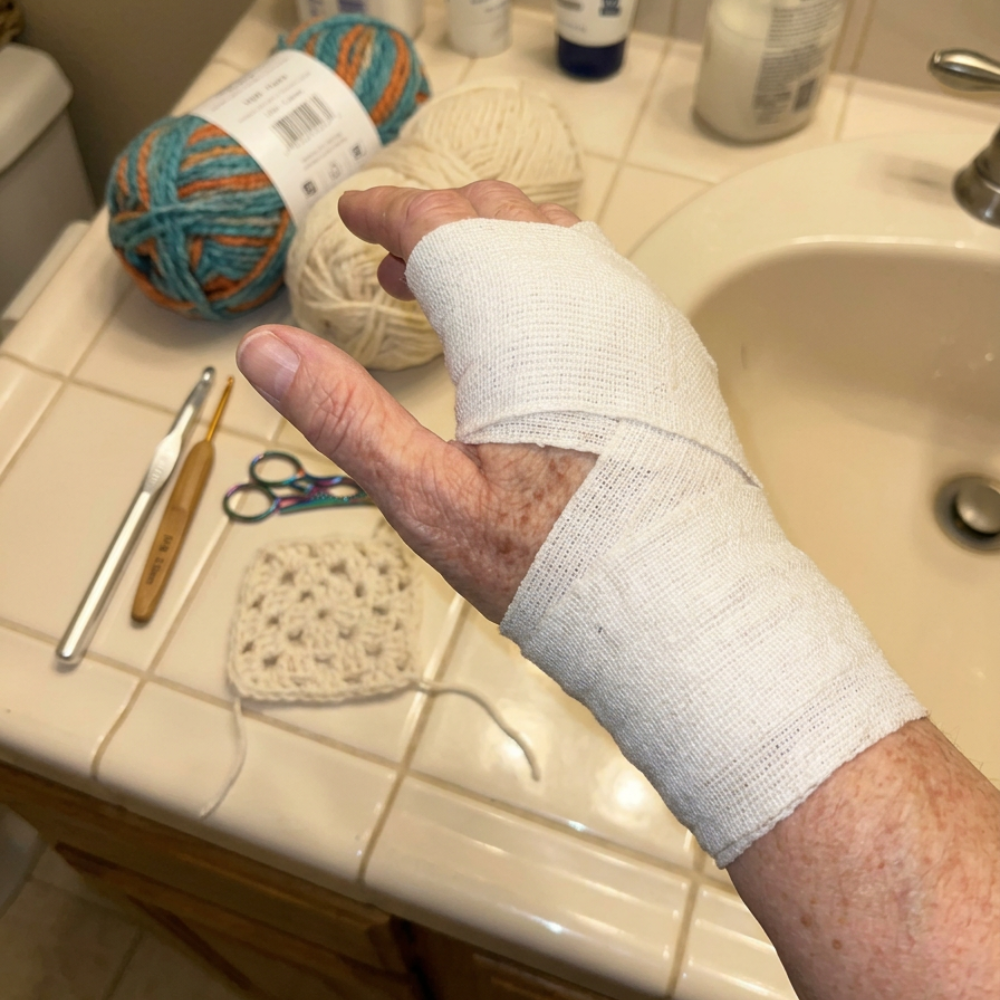
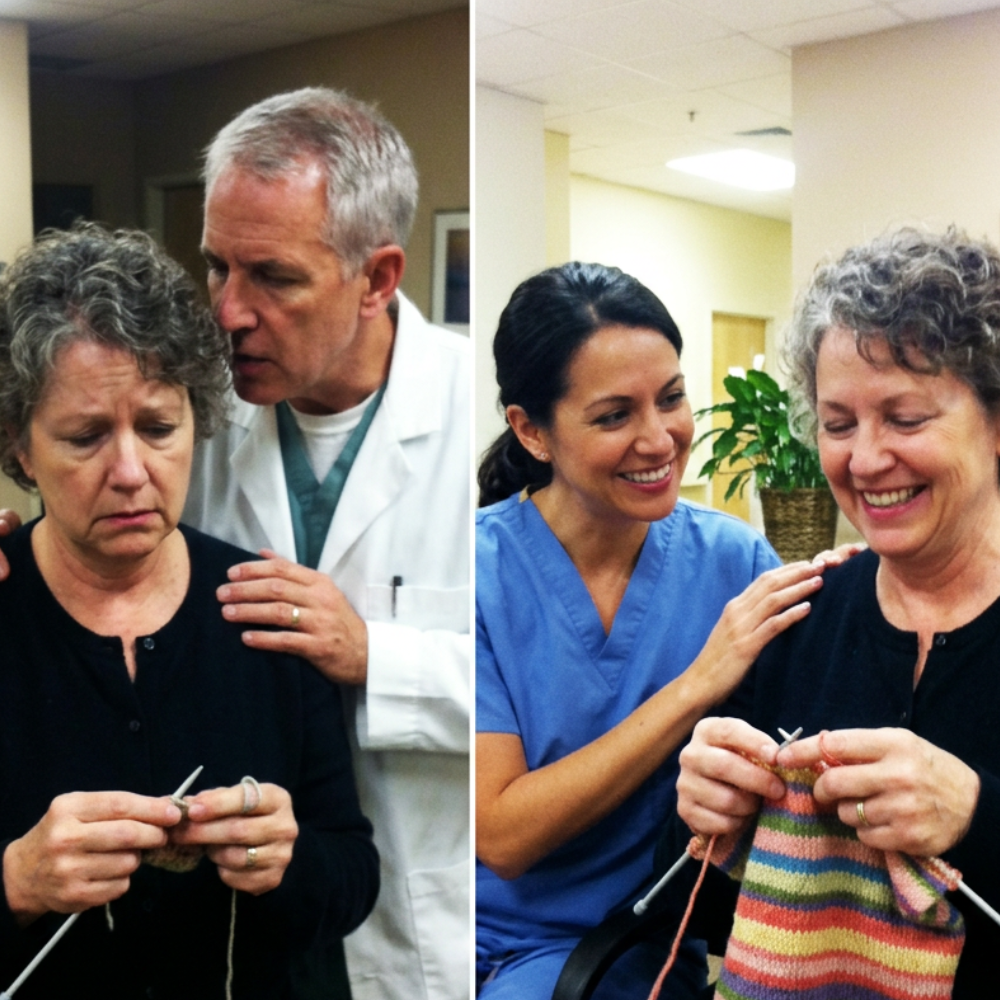
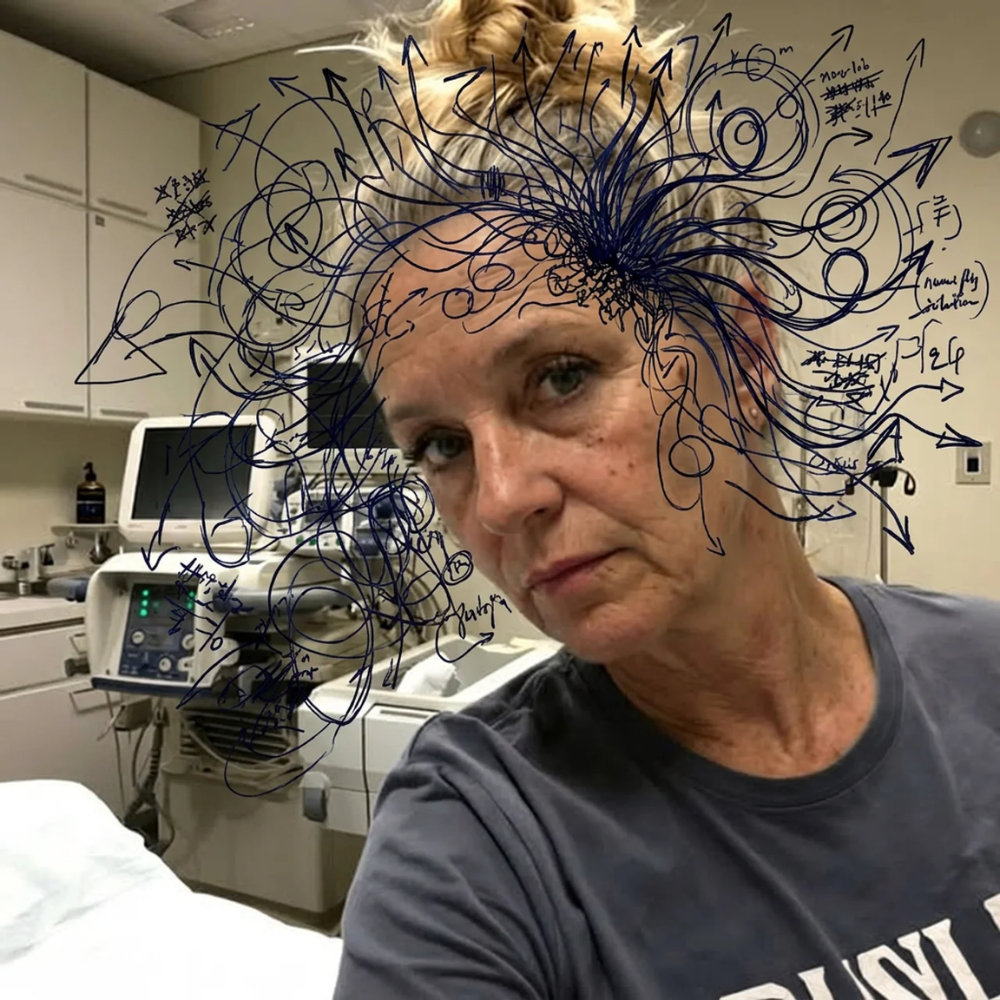
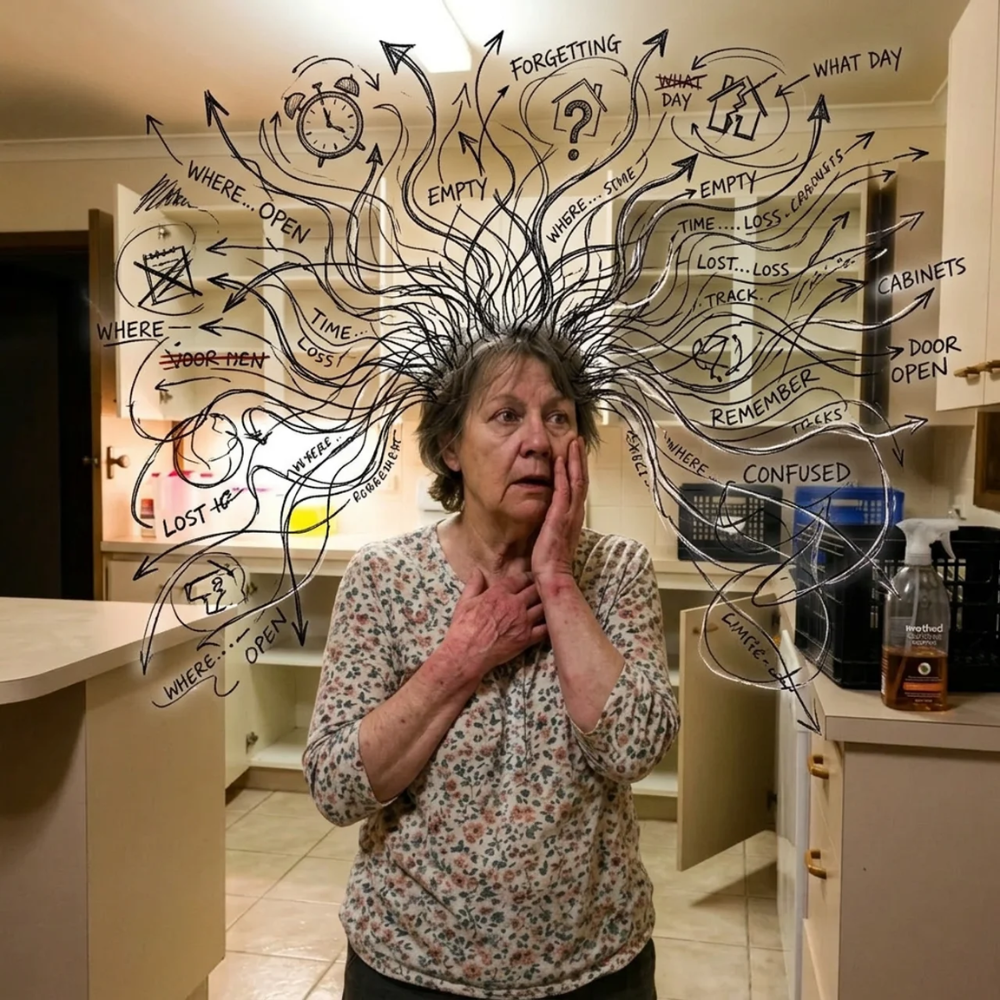
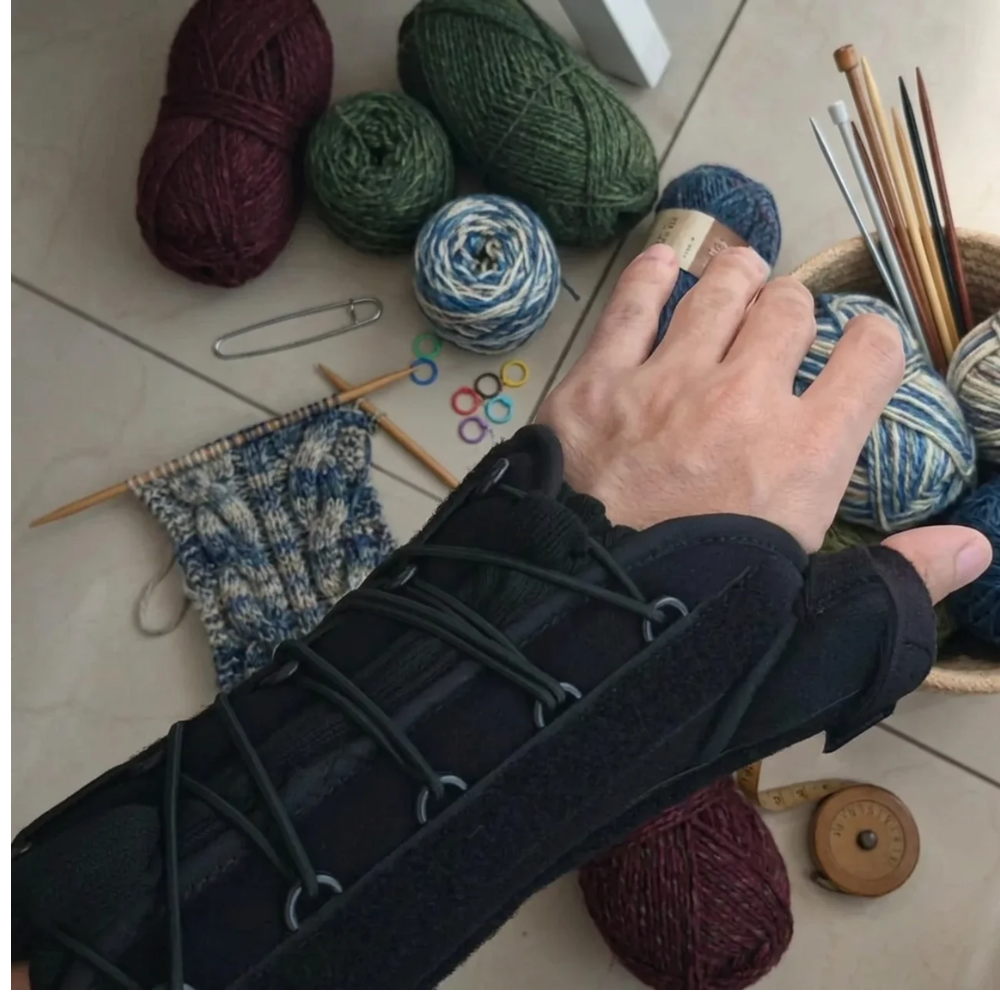
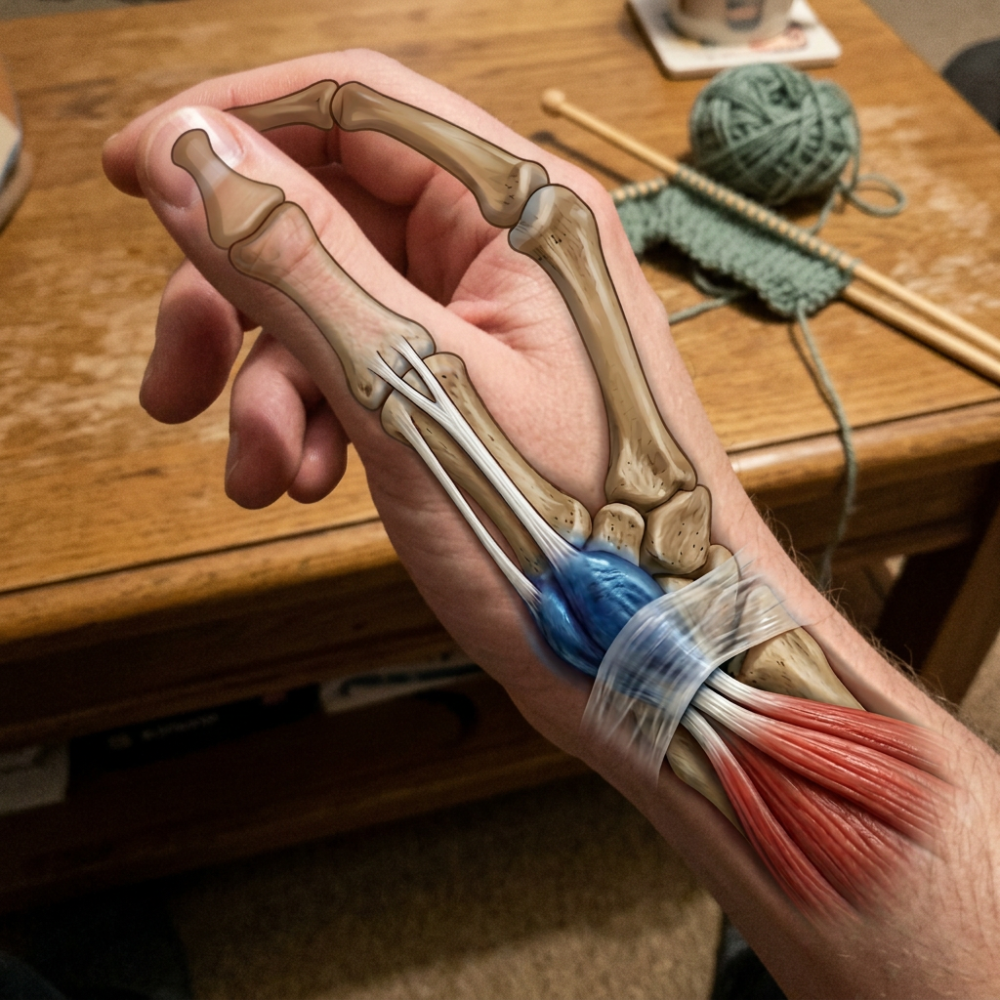
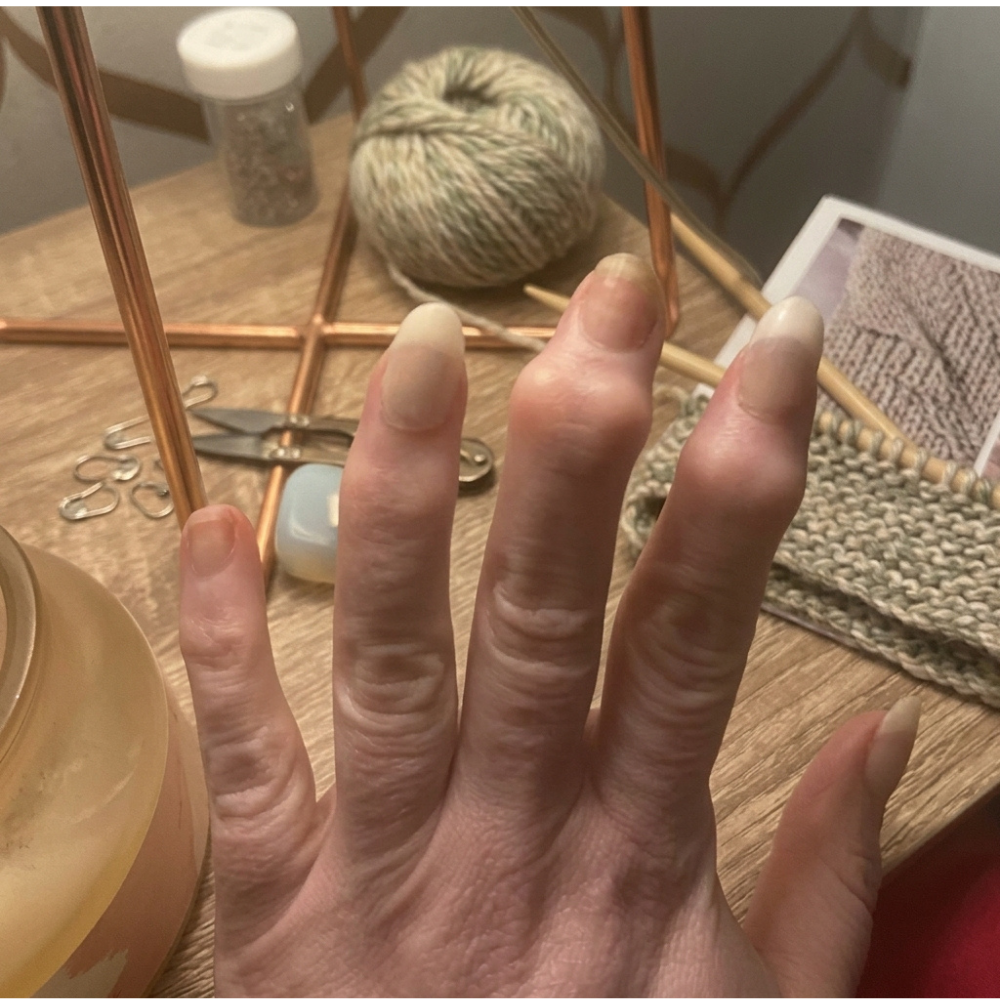
Nine days after my doctor told me to stop knitting, I picked up my needles at 10 PM on a Tuesday like an addict sneaking a cigarette. My husband was already in bed. The house was quiet. And there was a half-finished baby blanket sitting in the basket next to my chair. My niece was due in six weeks. I'd promised my sister I'd have it ready. I told myself I'd just do a few rows. Just to see. Just to check if my hands could handle it. I knew I wasn't supposed to. I knew what the doctor said. She'd looked at my swollen knuckles, watched me try to make a fist, and said the arthritis was getting worse. That the knitting was aggravating it. That I needed to stop — not cut back, not modify, stop — and if I didn't, I was looking at serious joint damage down the road. He said it kindly. He wasn't mean about it. But that almost made it worse. He said it like it was obvious. Like of course you'd stop doing the thing that's hurting you. Like it was just a hobby. Like walking away from twenty-six years of knitting was the same as canceling a gym membership. So for nine days I tried. I really tried. I tried watching TV without knitting. I tried reading. I tried crossword puzzles, which lasted about forty minutes before I wanted to throw the book across the room. I tried sitting with my hands in my lap doing absolutely nothing while my brain screamed at me that something was wrong. Everything felt wrong. My evenings felt hollow. I was restless and irritable and I couldn't fall asleep because I hadn't done the thing that settles me down before bed. My husband noticed. My friends noticed. I was not fun to be around for those nine days. And the whole time, the baby blanket sat there. Unfinished. The yarn still attached. The needles still in place right where I'd left them. Like it was waiting. So on day nine, I caved. I picked it up. Felt the yarn in my fingers. Started a row. And for about fifteen minutes, I felt like myself again. My hands were moving. My brain went quiet. The rhythm came back. That feeling — the one I can't describe to anyone who doesn't knit — it was there. Like exhaling after holding your breath for over a week. Then the pain showed up. Right at the base of my thumb. Deep and hot and familiar. Then my knuckles. Then a stiffness through my wrist that I could feel tightening like a fist closing from the inside. I put the needles down after twenty-two minutes. I counted because I was watching the clock the entire time, hoping the pain wouldn't come. It came. I sat there on the couch in my quiet house and I felt two things at once. Guilt — because I'd done exactly what my doctor told me not to do. And grief — because twenty-two minutes was all my hands could give me before they shut down. That was the lowest point. Not the doctor's appointment. Not the nine days of trying to quit. That night. Alone on the couch. Knowing I couldn't stop and knowing I couldn't keep going. I didn't sleep that night. Around 1 AM I was lying in bed doing what I always do when something's eating at me. Googling. Searching for anything that could explain why my hands were failing me this badly and whether there was anything left to try. I'd already tried the copper compression gloves. Twice. Two different brands. They squeezed my whole hand evenly and felt okay for the first twenty minutes. Then the ache came back like I wasn't wearing them at all. I'd tried stretching before and after every session. Ice. Ibuprofen. Lighter needles. Taking breaks every ten minutes. I tried switching to continental style, which took me three miserable weeks to half-learn and didn't help anyway. None of it worked. Not in any way that lasted. And lying there at 1 AM, I was starting to accept what I'd been fighting for months — that maybe my doctor was right. Maybe I really was done. Maybe twenty-six years was all I was going to get. Then I found something that changed the way I understood everything. It was a write-up from a hand therapist. But not just any hand therapist. Dr. Claire Ashford, a therapist who specialized in treating knitters. Not general hand pain patients. Knitters and crocheters specifically. She explained something I had never once heard in any doctor's office, any product description, or any YouTube stretch routine. She said knitting isn't a still activity. It looks calm from the outside, but your hands are doing something that almost no other activity requires. Your thumb, your index finger, and your wrist are making thousands of “micro-movements” every single session. Looping. Tensioning. Flicking. Pulling. Thousands of tiny, rapid, repetitive motions concentrated in the same three spots. She said knitters produce more micro-movements per session than almost any other group. More than typists. More than dentists. More than professional pianists. And those micro-movements, over time, cause swelling. If you already have arthritis — like me — your joints are already swollen. Add thousands of micro-movements on top of that, and the swelling becomes too intense. Your joints get so inflamed they become stiff. That's the pain. That's why it kicks in twenty minutes into a session. That's why it lingers for hours after you stop. That's why rest helps temporarily but the pain comes right back the second you start knitting again — because nothing has changed about how those three joints are being loaded. Then she explained the part that made me sit up in bed. She said most compression products don't help knitters because they apply even pressure across the entire hand. Same squeeze everywhere. Pinky, index finger, back of the hand, base of the thumb — all the same. But the micro-movements aren't happening across your entire hand. They're concentrated in three specific areas. Your wrist. The base of your thumb. Your index finger. Equal compression across your whole hand does nothing for the three joints doing all the work. I read that and everything clicked. Every product I'd tried. Every glove that "sort of" helped then stopped. None of them were designed for what my hands actually do. They were designed for general hand pain. And knitting pain isn't general. It's unique. It's in three places. And nothing I'd ever tried was supporting those three places. That's why I'd been failing. Not because of my hands. Not because of my arthritis. But because the support was never where the problem was. So I started looking for something different. Not equal compression everywhere. Targeted compression. Something that put pressure specifically around the wrist, the base of the thumb, and the index finger — the three areas that knitting loads the hardest — while leaving the rest of the hand free to move. And I ended up finding a sleeve built exactly that way. Tighter around those three stress points, lighter everywhere else. Designed by people who actually knit everyday. I ordered it at 2 AM. I'm not proud of the impulse purchase. But I was desperate, and for the first time in months, the logic of why something might actually work made sense to me. It arrived two days later. Thursday evening. I pulled the baby blanket back out of the basket. Slid the sleeve on. Picked up my needles. Twenty minutes in — the exact point where the ache usually started — nothing. Thirty minutes. Still nothing. I could feel the compression at my wrist and at the base of my thumb. But it wasn't fighting my hands. It wasn't squeezing everything. It was just… holding the right spots steady while I worked. I knit for an hour and fifteen minutes that night. When I stopped, my hand was tired. But not the swollen, angry, stiff kind of tired I'd been living with. Just normal tired. The kind that fades by morning. I sat there holding the blanket in my lap and I thought about that Tuesday night nine days after the doctor's appointment. How ashamed I felt. How broken. How sure I was that my hands had made the decision for me and the only thing left to do was grieve. I was wrong. My hands weren't done. They just needed support in the right places. And nothing I'd tried — not one single product — had ever given them that. It's been four months now. I finished the baby blanket three weeks before my niece was born. My sister cried when I gave it to her. I've started two more projects since then. I knit most evenings for about an hour. Some nights longer. The arthritis is still there — that's not going anywhere. But the pain is managed in a way it never was before. And I don't feel like a criminal every time I pick up my needles. I think about what would have happened if I'd listened. If I'd accepted that my knitting life was over. If I'd never found out that the problem wasn't knitting — it was knitting without support where it actually matters. That baby blanket wouldn't exist. The projects I'm working on now wouldn't exist. My evenings would still feel hollow. And I'd still be sitting on my couch with empty hands, missing the thing that makes me feel most like myself. If you're where I was — if you've tried the gloves, the braces, the stretches, and nothing's worked — it's probably not your hands. It's probably that nothing you've tried has been designed for the way a knitter's hands actually move. Your wrist, your thumb, your index finger. Those three spots are doing all the work. And until something supports them specifically, nothing else is going to make a real difference. I'll leave the link below. It's the sleeve I've been using. It's not a cure. But it puts compression exactly where knitting needs it. And for me, that was the difference between giving up and getting my knitting life back.
Like this ad? Make it yours.
Crush rebuilds this exact creative around your product — your brand, your colors, your offer — in about a minute.