
Inactive· since May 27, 2026
- 5
- days it ran
- 0
- relaunches
- 51
- EU reach
Ad copy
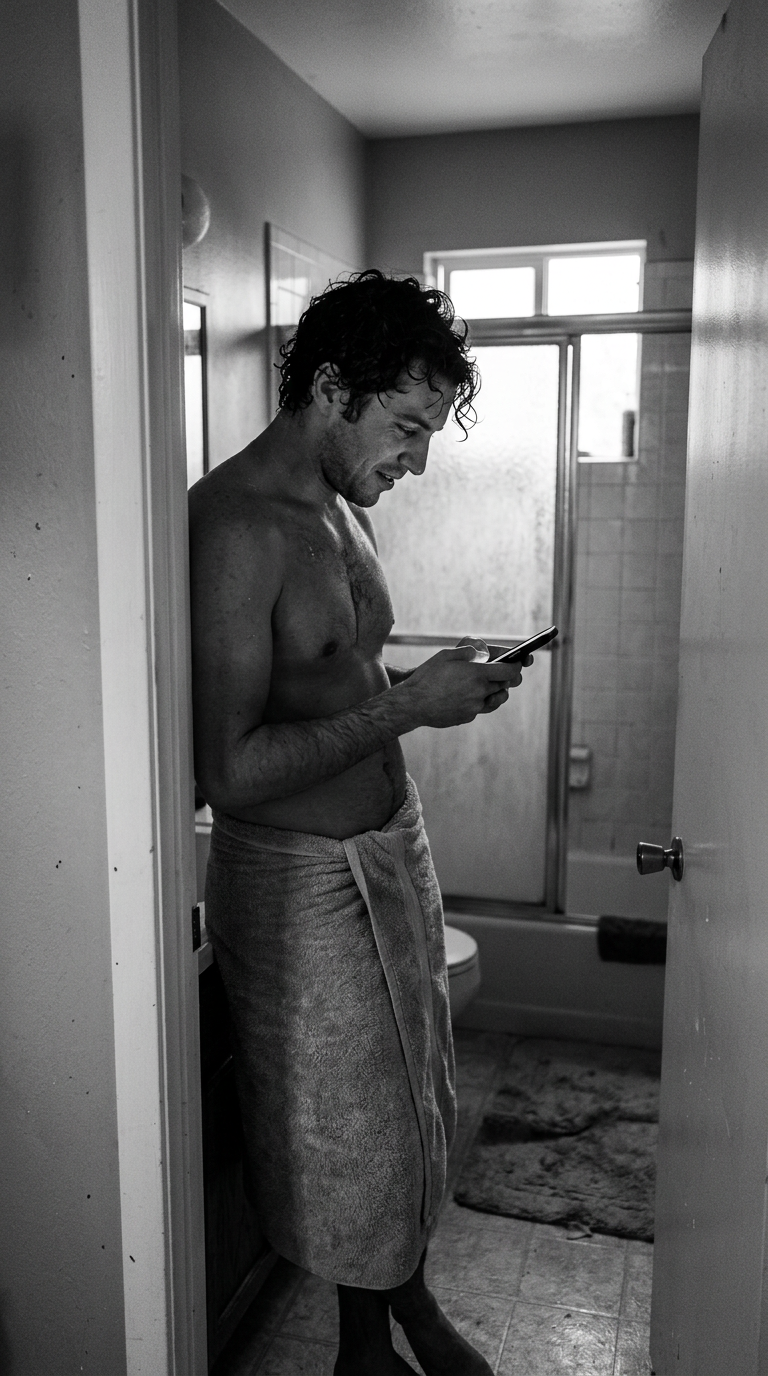
My husband used to fall asleep before me every night. It was a joke between us — I'd still be reading and he'd be gone. Out in minutes. Deeply, completely out. Then somewhere around 44 that stopped. Now it's 2 AM and he's staring at the ceiling. 3 AM and he's in the kitchen. 4 AM and he's back in bed but not sleeping, just lying there in the dark doing something I can't see. Same man. Same bed. Same house. His doctor said it was anxiety. Prescribed something to help him sleep. The pills worked for three weeks. Then they stopped working. That was eighteen months ago. Let me tell you what I watched. Because watching someone you love not sleep for eighteen months is its own kind of exhaustion. At 43, he started waking up at 3 AM. Once or twice a week. He'd be quiet about it — I'd wake up and he'd be gone and I'd find him in the kitchen with a glass of water, standing at the counter in the dark. "Go back to sleep," he'd say. "I'm fine." I'd go back to sleep. At 44, it was every night. He'd fall asleep okay — 10, 10:30 — and then wake up at 2 or 3 and that was it. Done. He'd lie there for an hour trying to go back and then give up and go to the kitchen or the couch. I'd wake up alone at 6 AM and find him already showered and dressed, running on four hours, pretending it was fine. At 45, the falling asleep part stopped working too. He'd lie there next to me — I could feel him awake, that particular stillness of someone trying not to move — for an hour, sometimes two, before he'd drift off. Then 3 AM. Then done. I watched him try everything. No screens after 9. Blackout curtains. A white noise machine. Magnesium. Melatonin — first the low dose, then higher, then he stopped because it gave him strange dreams and he'd wake up more tired than before. He stopped caffeine after noon. Then after 10 AM. He started going to bed at the same time every night, getting up at the same time every morning, even weekends. He read about sleep hygiene and implemented all of it with the same discipline he applied to everything. He still woke up at 3 AM. His doctor tried a different sleep medication. Then a low-dose antidepressant that was supposed to help with sleep architecture. He took it for two months. He slept a little better. He also felt, in his words, "like I'm watching my life through glass." He stopped taking it. "I'd rather be tired and present than rested and not there," he said. I didn't know what to say to that. So I didn't say anything. I want to say something about what eighteen months of bad sleep does to a person. And what it does to the person watching. He was functioning. That was the thing. He was going to work, doing his job, being a father, being a husband. From the outside nothing was wrong. But I lived with him. I saw the 6 AM face — the one that had already been awake for three hours and was bracing for the day. I saw him at 4 PM when the wall hit — that particular grey quality that came over him every afternoon, the effort it took to keep going. I saw him at dinner, present but thin, like he was running on the last of something. He stopped making plans for weekends. Not cancelled — just stopped initiating. Too tired to anticipate anything. Too tired to want things. I watched my husband stop wanting things. That was the part that scared me most. His doctor's explanation: anxiety. Cortisol spikes at night. "Very common." The solution offered: more medication, or therapy for the anxiety. He tried therapy. Six sessions. The therapist was good. The sleep didn't change. "My thoughts aren't the problem," he said after the sixth session. "My thoughts are fine at 3 AM. I'm not anxious. I'm just awake. There's nothing to process. My body just won't stay asleep." Then one night — a Thursday, 3:15 AM — I woke up and he wasn't there. I found him in the kitchen. Not at the counter this time. Sitting at the table. In the dark. Not on his phone. Just sitting. I sat down across from him. We didn't say anything for a while. Then he said: "I'm so tired." Not tired like sleepy. Tired like something deeper than that. Tired in a way that sleep wasn't fixing even on the nights he got some. I didn't have anything useful to say. So I just sat there with him. The next morning I found a post. I wasn't looking for anything — I was just scrolling, early, while he was in the shower. A woman had written about her husband. Same story. Same 3 AM. Same eighteen months. Same everything-tried-nothing-works. She wrote: "His doctor kept treating the symptom. The waking up. Nobody asked why his body was waking him up. Turns out it wasn't anxiety. It was cortisol. His nervous system had been in survival mode for so long that it was running a threat-check at 3 AM every night. Not because anything was wrong. Because it had forgotten that nothing was wrong." I read that twice. She explained: the body has a natural cortisol spike in the early morning hours — it's how we're designed to wake up. But in a nervous system that's been chronically stressed, that spike comes too early and too high. 3 AM instead of 6 AM. The body reads it as a threat signal and pulls the person out of sleep to deal with a threat that isn't there. It's not anxiety. It's not a sleep disorder. It's a nervous system that's been running in threat mode for so long it can't tell the difference between 3 AM on a Tuesday and an actual emergency. No sleep medication addresses that. No sleep hygiene addresses that. Because the problem isn't the sleep. It's the state the nervous system is running in. I showed him the post when he came out of the shower. He read it standing in the bathroom doorway. Towel around his waist. Still wet. He read it once, then scrolled back to the top and read it again. He looked up. "The threat-check thing," he said. "Yeah." "That's exactly what it feels like. Like my body is scanning for something. Every night at the same time. Like it's checking whether everything is okay." "And it keeps deciding it's not." "And it keeps deciding it's not." He sat down on the edge of the bed. "But there's nothing wrong," he said. "That's the thing. I lie there and I go through everything — work, the kids, money, everything — and there's nothing. Nothing is actually wrong. But my body won't believe me." "Because it's not listening to your thoughts. It's running its own program." He was quiet for a long time. "So what do I do about the program?" The post mentioned Liven. Not a sleep app. Not another supplement. Something that works with the nervous system directly — to bring the chronic cortisol down so the body stops running the 3 AM threat-check. So it stops waking up to deal with an emergency that isn't there. He took the quiz that morning. Sitting on the edge of the bed, still in his towel. The quiz didn't ask about sleep. It asked about the state he'd been running in. About the wired-but-exhausted feeling. About never fully recovering no matter how much rest he got. About the weight of being responsible for everything for years without putting it down. About the gap between how tired he was and how impossible it was to actually rest. He clicked yes to almost everything. "This is the first thing that's asked the right questions," he said. He downloaded Liven that morning. Here's what I watched happen. Week 1: He woke up at 3 AM on Tuesday. Same as always. But he did the Liven session on his phone instead of going to the kitchen. Ten minutes. He was asleep by 3:45. He told me in the morning like he was reporting something fragile, something he didn't want to jinx. Week 2: He slept until 5. Then 5:30. I know because I was watching — not obviously, just aware. The way you're aware of something you've been worried about for a long time. Week 3: Sunday morning. I woke up at 6:30. He was still asleep. Next to me. Still asleep at 6:30 on a Sunday. I lay there and didn't move. I didn't want to wake him. Week 4: He made plans. He suggested we take the kids somewhere the following weekend — a day trip, something he'd have been too tired to want three months ago. He was looking things up on his phone. Excited, almost. I watched him and didn't say anything because I didn't trust my voice. Week 5: He came to bed at 10:30. I was reading. He got in, turned off his light, and was asleep in minutes. Like before. I put my book down and just looked at him. Week 8: He told me something over breakfast. "I don't think I realized how much of myself I'd lost. I thought I was just tired. I didn't realize tired had become my whole personality. I didn't realize I'd stopped wanting things." "And now?" "Now I want things again." It's been five months. He sleeps. Not perfectly — nobody sleeps perfectly. But he sleeps through the night most nights. He wakes up and he's there. The 6 AM face is different — not bracing, not already behind. Just awake. He makes plans. He initiates things. He laughs at dinner in a way that doesn't cost him anything. Last month he said: "Eighteen months of doctors and medications and sleep hygiene and nobody once asked what state my nervous system was running in. They kept treating the 3 AM. Nobody asked why my body was waking me up." Eighteen months. Because everyone treated the symptom and nobody asked about the program running underneath it. It wasn't anxiety. It wasn't a sleep disorder. It was a nervous system stuck in survival mode, running a threat-check every night at 3 AM, waking a man up to deal with an emergency that wasn't there. And once he addressed that — five minutes a day, not a pill, not another sleep protocol — his body finally got the message that it was safe to rest. If your husband stares at the ceiling every night — If he's tried everything and nothing touches it — If his doctor keeps treating the sleep and nobody has asked about what's underneath — It might not be what they're calling it. His nervous system might be stuck in something nobody has thought to ask about. Show him this. Not as "try this thing." As: "I think your body is running a program nobody has looked at yet." Liven has a quiz. A few minutes. Free. Link is below. 💙 P.S. Last night I woke up at 3 AM. He was asleep. I lay there in the dark and listened to him breathe. Then I went back to sleep too.
THIS IS what you need to do
LEARN MORELike this ad? Make it yours.
Crush rebuilds this exact creative around your product — your brand, your colors, your offer — in about a minute.