Honest Kitchen Tips
Honest Kitchen Tips Facebook ad: “Read it now.”
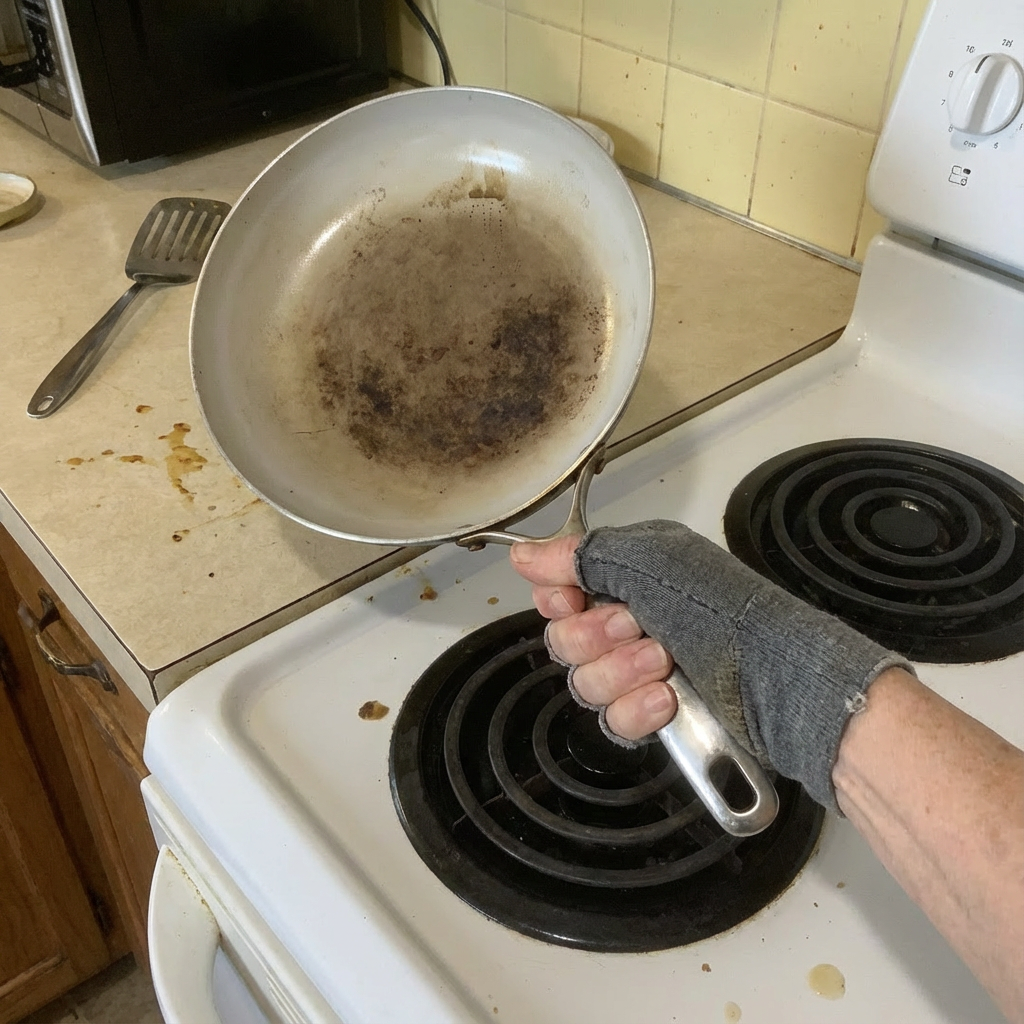
Ran for 1 day, from January 20 to January 21, 2026, the last day Crush saw it.
Run by Honest Kitchen Tips on Facebook. Crush is not the advertiser and does not verify its claims. See this ad in Meta's Ad Library(opens in a new tab)
Want an ad like this for your product?
Crush makes new ad images for your product from this ad: your logo, your product photo, your offer.
Trials from $19.95 USD, then $79.95 USD a month. Cancel anytime.
About this ad
- Meta Ad Library ID
- 1437227897768032
- Platforms
- Facebook, Instagram, Audience Network, Messenger and Threads
- Relaunches
- 0
Ad text
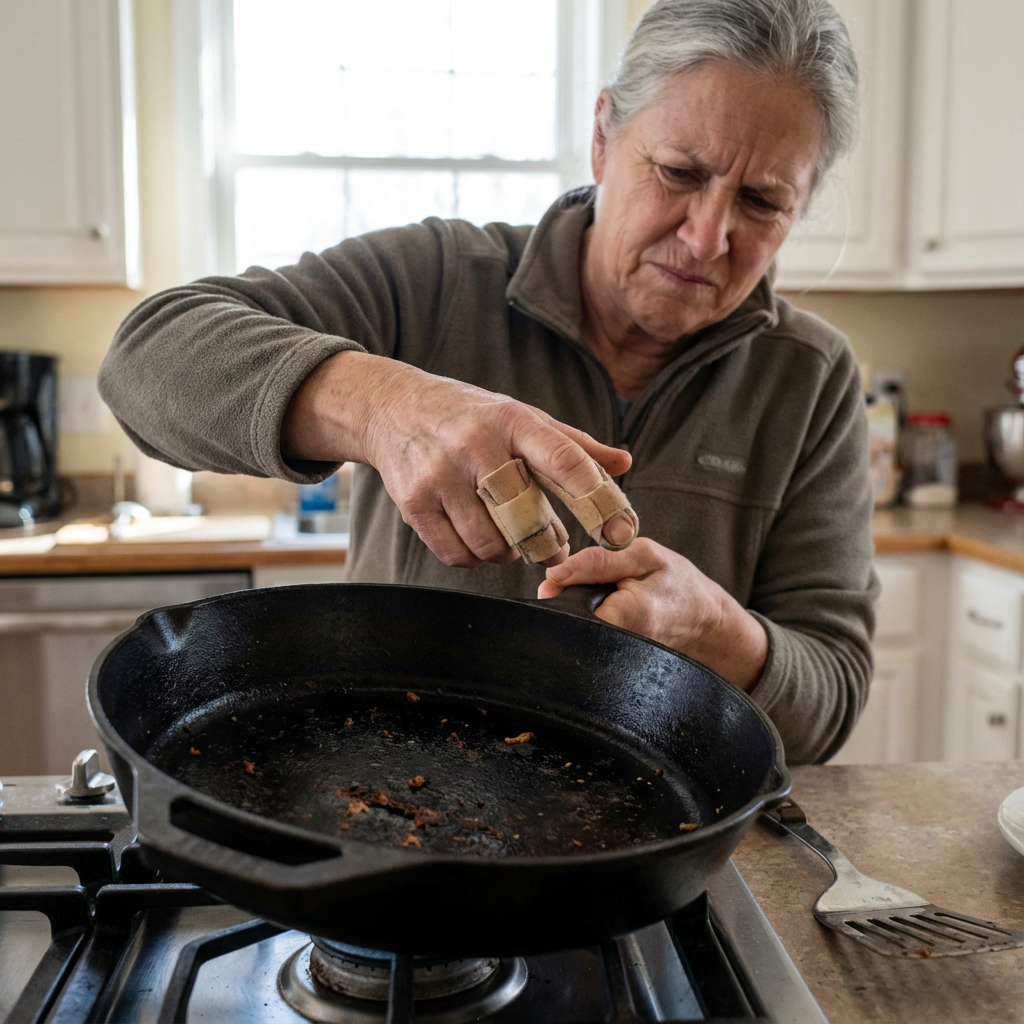
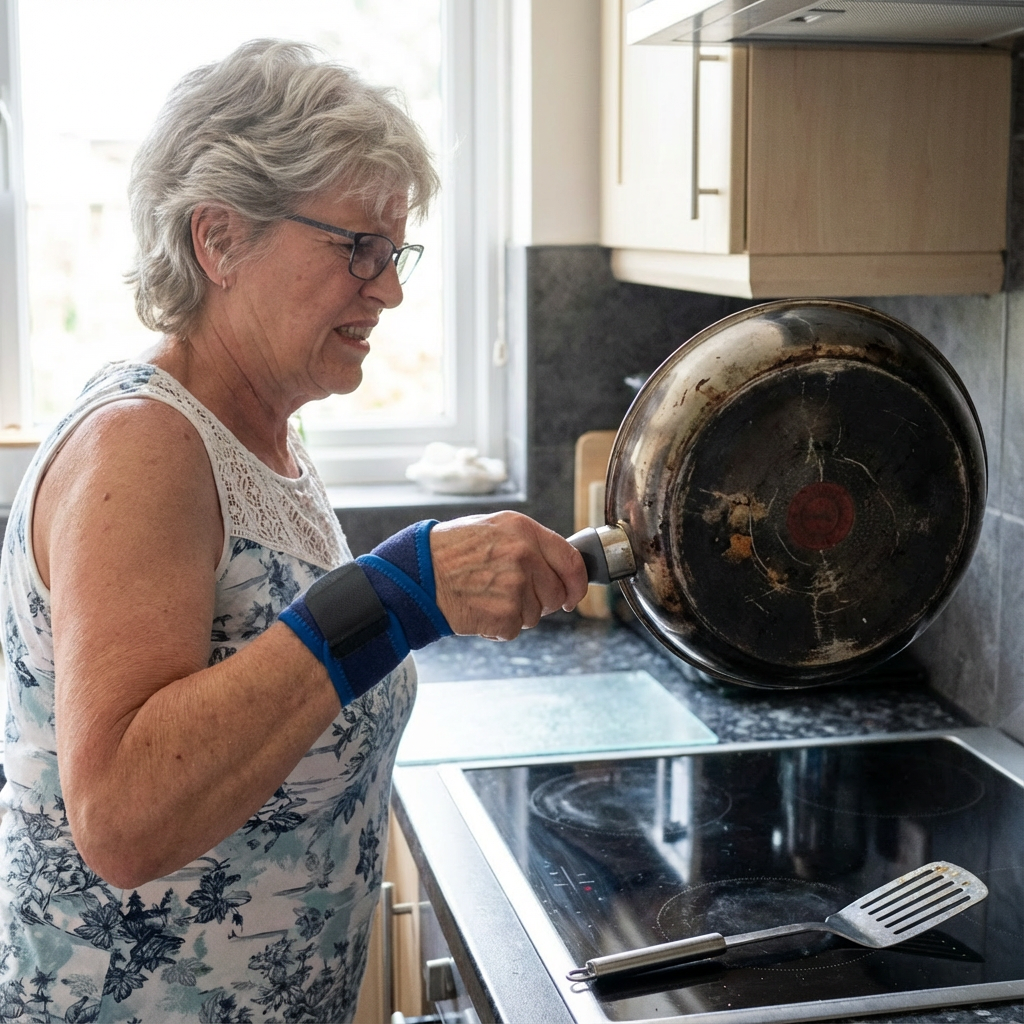
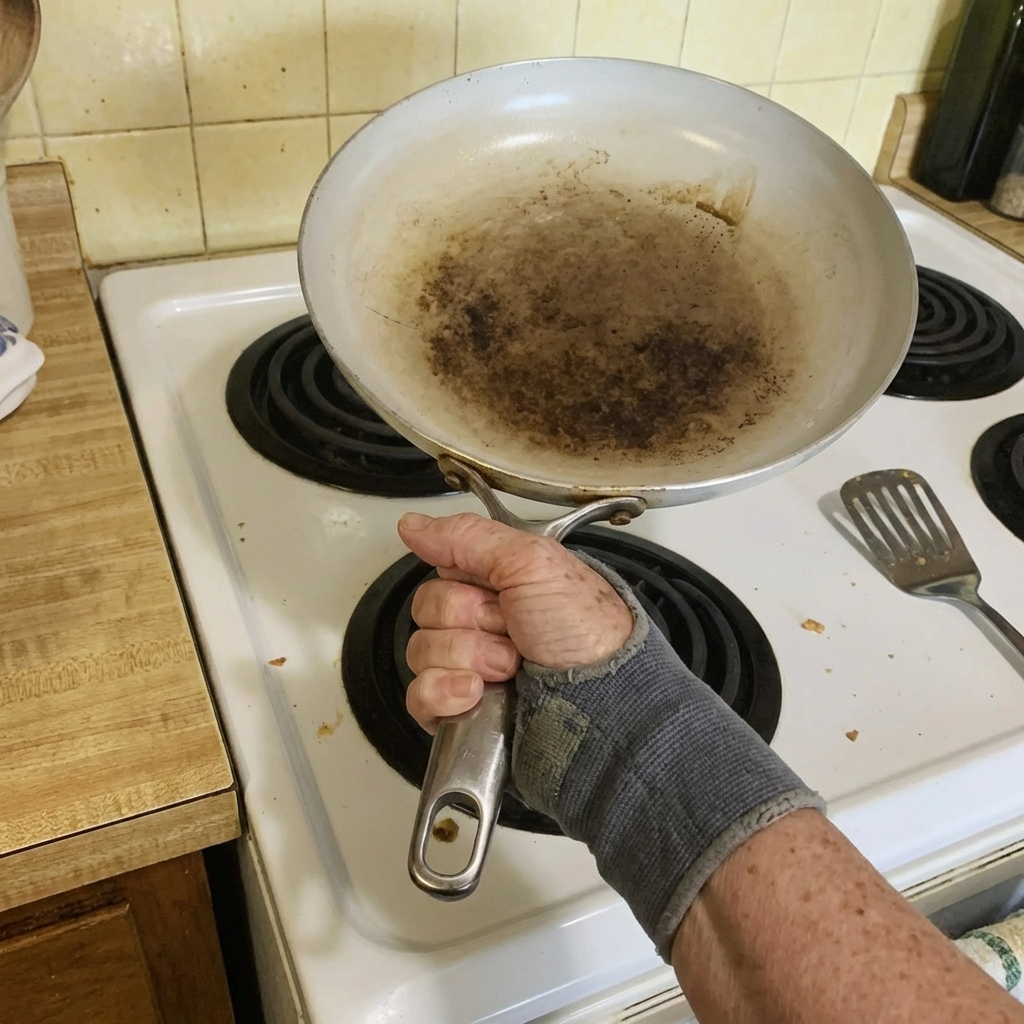
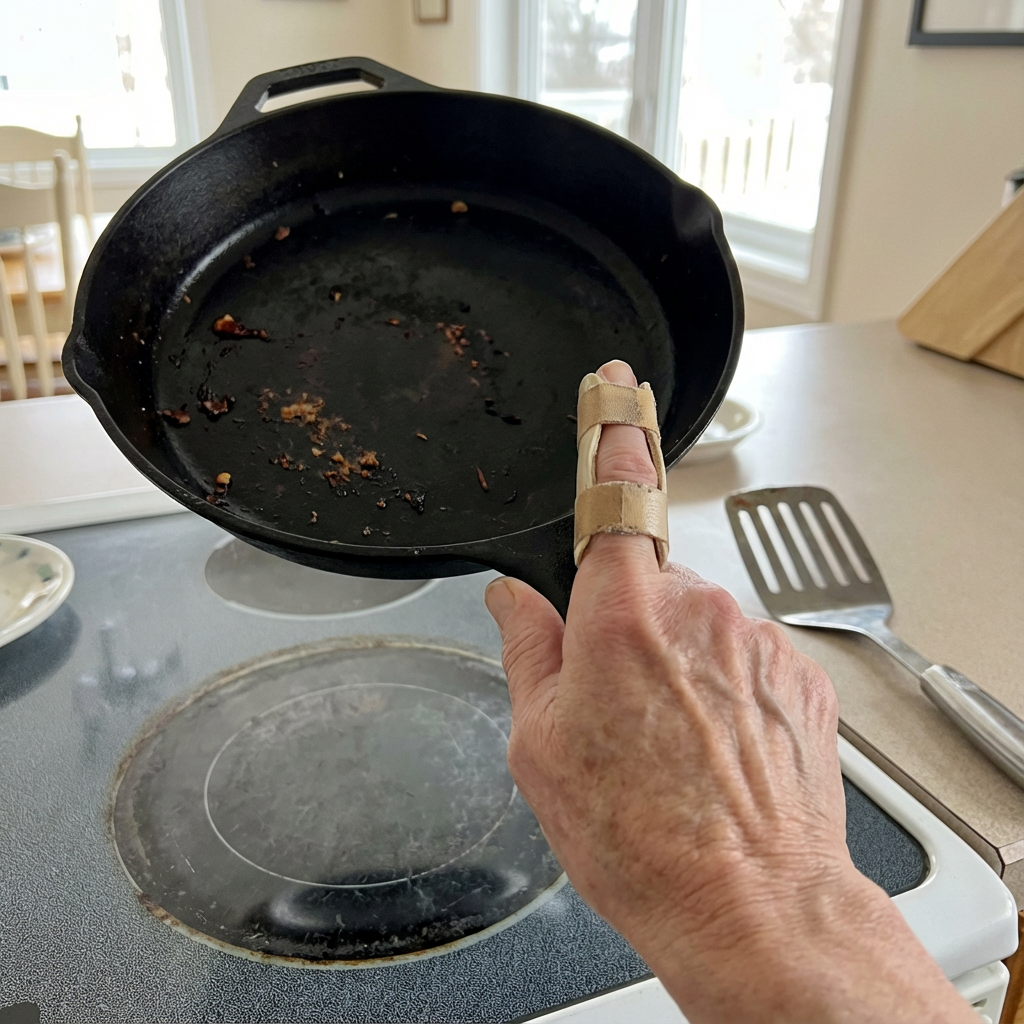
I went to my rheumatologist for an arthritis check-up last month. What she told me about my blood test results left me in true disbelief… I threw away every pan in my kitchen that same night. I'm 63. I've been making Sunday breakfast for my grandchildren for 12 years. Scrambled eggs, pancakes, French toast—always with the same nonstick pan. It was our special tradition. During my appointment, my doctor asked an unusual question: "How long have you been using nonstick cookware?" I thought it was odd. I said, "About 30 years. Why?" She turned her computer screen toward me and showed me my blood test results. My PFOA levels—a chemical from Teflon pans—were 8 times higher than the average range. I didn't even know what PFOA was. She explained that PFOA is a "forever chemical" that can persist in the body. It can accumulate in joints, cartilage, and connective tissue. Once it's in your blood, it can stay there. Building up. Year after year. "That might be connected to why your arthritis keeps getting worse," she said quietly. I felt sick. She continued: "PFOA has been linked to inflammatory arthritis. It can increase C-reactive protein—the inflammation marker—and may affect your cartilage. Every time you heat a nonstick pan, microscopic particles of PFOA can break off. They can get into your food. Into the steam you breathe. And they may accumulate in your joints, potentially making the pain worse." I'd been dealing with wrist pain for 10 years. It started as mild stiffness. Now I could barely lift my cast iron skillet. Eight pounds felt like lifting a lorry. I dropped things constantly. My grip strength was gone. Opening jars was impossible. My wrists throbbed every night. Studies suggest people with high PFOA levels may have significantly higher rates of inflammatory arthritis and elevated C-reactive protein levels compared to those with lower levels. I drove home in a daze. I kept thinking about all those Sunday mornings. All those breakfasts I made with love. The same pan. For 12 years. My daughter has arthritis too. She's only 38. Early-onset. Her hands hurt constantly. I got her tested. Her PFOA levels were 6 times the average range. I sat in my car and cried. Because I realised I'd been potentially affecting her joints her entire childhood. Every breakfast I made with that "convenient" nonstick pan. And now I was doing the same thing to my grandchildren. That night, I couldn't sleep. At 2:47 AM, I was on my phone searching for answers. What I found made me sicker. In 1961, DuPont—the company that makes Teflon—reportedly discovered that PFOA was associated with joint inflammation in laboratory animals. Their scientists documented cartilage damage and elevated inflammatory markers in exposed rats. But DuPont didn't recall the pans. They buried the studies and kept selling Teflon to millions of families for 40 years. The EPA calls PFOA a "forever chemical" because it doesn't break down easily. One study tested 100 random Americans. 99 had PFOA in their blood. You probably have it right now. And it may be contributing to your arthritis every single day. Recent research suggests PFOA may cause joint damage by: Being linked to inflammatory arthritis (potentially affecting cartilage and synovial fluid) Increasing C-reactive protein (the key inflammation marker) Potentially disrupting collagen production (weakening cartilage structure) Being associated with autoimmune joint damage (immune system attacks healthy tissue) Possibly accelerating cartilage breakdown (making arthritis progress faster) A 2024 Johns Hopkins study found people with PFOA levels above 5 ng/mL had significantly higher rates of inflammatory arthritis and C-reactive protein levels considerably higher than people with low PFOA. My levels were 8 times that threshold. The next morning, I threw away every nonstick pan in my house. All six of them. Then I spent £600 trying to find something safe. First, I bought a £130 GreenPan ceramic set. The label said "PFOA-free!" and "100% non-toxic!" It worked for six months. Then everything stuck. I Googled why. The truth made me furious. "PFOA-free" can be misleading. Companies often replace PFOA with GenX and PFBS—other chemicals that haven't been studied as extensively. Early research suggests they may trigger similar inflammatory responses—possibly worse for your joints. A 2024 study found GenX may cause similar joint inflammation as PFOA, with animal studies showing potentially higher C-reactive protein levels in exposed subjects. Next, I tried HexClad for £180—the pan Gordon Ramsay promotes. After three months, food stuck. I read the fine print: it still contains PTFE—the same chemical family as Teflon. Reviews online were 63% negative. People furious about warranty issues. Then I bought All-Clad stainless steel for £160. No chemicals, right? Should be safe for my joints. Eggs cemented to the bottom every time. Burnt. I scrubbed for 20 minutes after every meal. After 30 years of cooking, I felt incompetent. I couldn't make scrambled eggs anymore. Then cast iron. Everyone said it lasts forever. I could barely lift it. Eight pounds. My arthritis flared immediately. My wrist hurt for three days. I had to ice my joints just from cooking one breakfast. Over £600 wasted. I still couldn't cook safely for my joints. I was ready to give up. Then my nephew visited. He's an aerospace engineer who designs parts for spacecraft. I told him everything. The blood test. The PFOA. The failed pans. The wrist pain. The guilt. He said: "Aunt Linda, you need what we use in jet engines. Pure titanium." I'd never heard of titanium cookware. He explained: "NASA uses titanium in spacecraft because it survives extreme temperatures and never breaks down. Surgeons use it for hip replacements and pacemakers because it's one of the only metals safe enough to go inside the human body." "Titanium is completely inert. It can't leach into food. It can't react with anything. It can't trigger inflammation. It can't damage your joints. It's been tested inside human bodies for 50+ years with zero inflammatory response." I asked: "So why isn't everyone using it?" He looked me in the eye: "Because one titanium pan can last 20 to 30 years. If people stop replacing pans every 12 months, the £10 billion nonstick industry collapses. They design pans to fail on purpose. And they know PFOA may cause joint inflammation—they've known since 1961." He showed me microscope images on his phone. Teflon pans: Coating visibly peeling. "Those black flakes? That's PFOA potentially going into your food and accumulating in your joints." Ceramic pans: Thousands of microscopic cracks. "Once it cracks—after about six months—GenX and other chemicals can leach out. Your joints can't tell the difference—they may trigger inflammation the same way." Stainless steel: Tiny pits everywhere. "Proteins bond to these. That's why eggs stick." Then he showed me titanium. It had a hammered texture with a specific pattern. "Titanium naturally repels water and fat," he said. "But this hammered surface creates micro-air pockets. Food floats on air cushions. It can't make full contact. So it slides off." "It's not a coating. It's physics. The titanium IS the surface. There's no coating to wear out. Zero inflammation. Zero joint damage." "And here's the best part: it only weighs 1.1 kilograms. That's 70% lighter than cast iron. Your wrists won't hurt." He sent me a link to TitanCore—pure titanium cookware. I ordered one that night. Sunday morning, my granddaughter came over. I was terrified it would fail. I heated the pan. Medium heat. Added butter. Cracked two eggs. They slid across the surface like skating on ice. Perfect eggs. No sticking. No black flakes. And I lifted the pan with one hand. No pain. No strain. My granddaughter ate both: "Grandma, these taste better! Can I have more?" I cried. Happy tears this time. That was eight months ago. I've cooked over 200 meals with it. Eggs every Sunday. Pancakes. Chicken. Everything. It works exactly the same as day one. And it's light—only 1.1 kilograms. My wrist doesn't hurt anymore. But here's the real proof: Six months after switching, I got another blood test. My PFOA levels dropped 58%. My rheumatologist was stunned. "I've never seen a reduction this significant. What changed?" I told her. She wrote it down. Said she'd start asking her arthritis patients about cookware and environmental toxin exposure. She's now recommending PFAS blood panels for everyone with unexplained joint inflammation. But what shocked me more: My arthritis pain started improving. My C-reactive protein dropped from 8.2 mg/L to 2.1 mg/L—a 74% reduction in inflammation. My grip strength increased from 15 kg to 23 kg. I can open jars again. I can carry shopping. I can cook without pain. For the first time in 10 years, I can make breakfast without my wrists throbbing afterwards. My rheumatologist couldn't explain it. She said: "Inflammatory markers don't usually drop like this without aggressive treatment. Something changed at the cellular level." My daughter got tested too. Her PFOA levels dropped 62%. Her arthritis pain improved. The constant hand weakness disappeared. Her grip strength increased 45%. She can type without pain for the first time in 5 years. Six months after that, she got pregnant naturally. After 3 years of trying. She called me crying. Happy tears. "Mum, my hands don't hurt anymore," she said. "I can cook dinner without needing to ice my wrists afterwards. I feel like I got my life back." Her rheumatologist had told her that chronic inflammation and elevated C-reactive protein may affect fertility. Once her inflammation decreased, her body could conceive. I learned why I'd never heard of TitanCore before. You won't find it at John Lewis or Lakeland. Not because it's unsafe—it's fully certified. Same titanium they put inside human bodies for joint replacements. The reason is that TitanCore applied to those retailers. All rejected it. Leaked emails from one retailer said: "If consumers buy titanium once instead of replacing pans yearly, our profits collapse. We cannot risk the arthritis narrative going mainstream." They banned it to protect profit margins. So TitanCore can only be sold online. I've told every friend about this. Three ordered TitanCore. Two got tested after switching—both saw PFOA levels drop over 50% and reported less joint pain. If you've been cooking with nonstick for years like I did, it might be worth getting your PFOA levels and C-reactive protein checked. Ask for a "PFAS blood panel" and "CRP test." Or at least check what you're actually cooking with. Because I thought I was being a good grandmother. Making breakfast with love every Sunday. I had no idea I was slowly potentially affecting the joints of the people I love most. Now I know better. And now you do too.
Where the ad sends people
get-titancore.com
Read it now....
Most people have no idea their "safe" nonstick cookware is releasing joint-damaging forever chemicals into every meal while heavy cast iron pans are causing permanent wrist damage. I just discovered the horrifying truth after my doctor linked my crippling arthritis to my cookware—and what I foun...
Learn more: get-titancore.com(opens in a new tab)