RestoraDaily
RestoraDaily Facebook ad: “Read this if perimenopause has ruined your sleep”
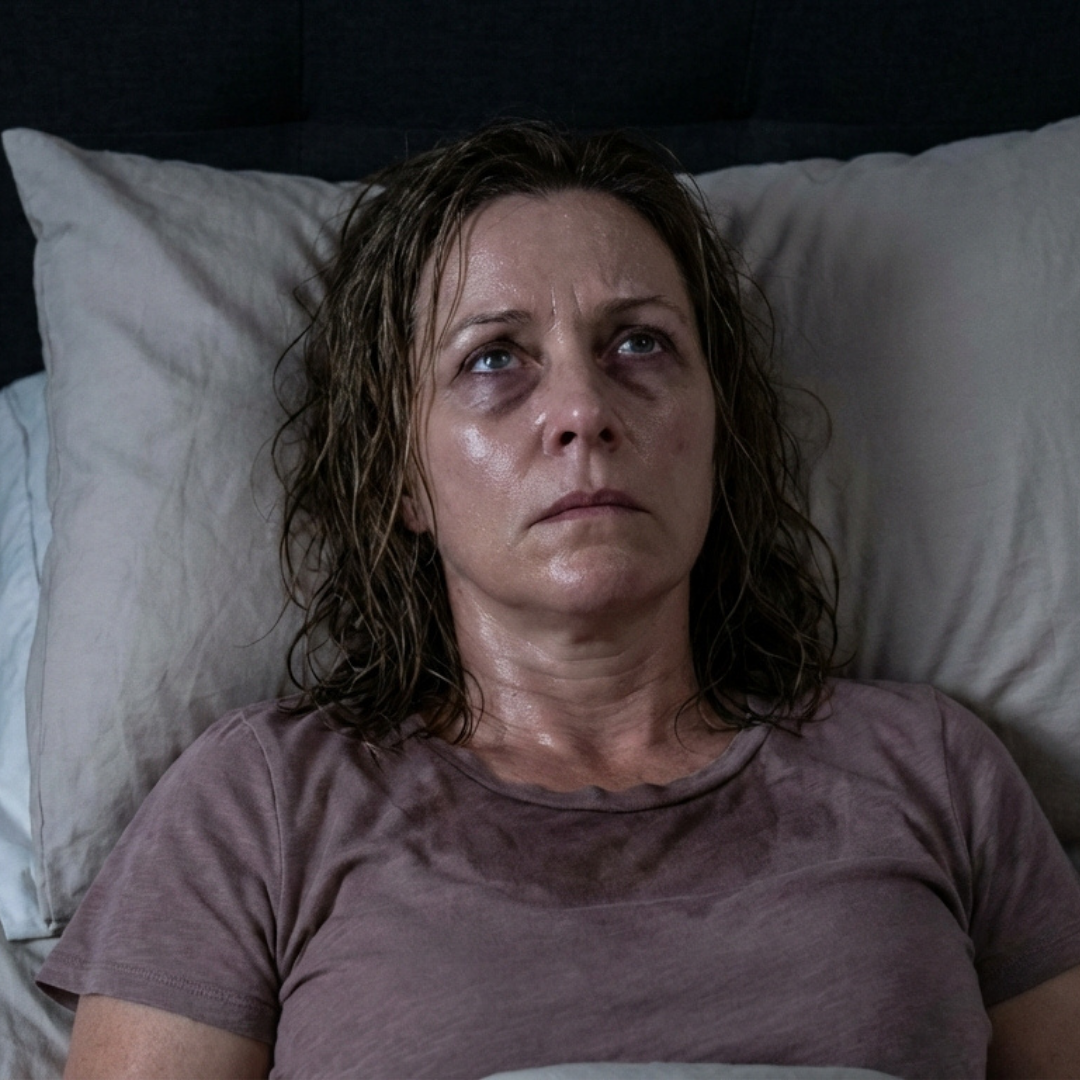
Ran for 5 days, from February 2 to February 7, 2026, the last day Crush saw it.
Run by RestoraDaily on Facebook. Crush is not the advertiser and does not verify its claims. See this ad in Meta's Ad Library(opens in a new tab)
Make your own version of this ad
Crush makes it, launches it in your own Meta ad account, scales the winners and pauses the losers.
About this ad
- Meta Ad Library ID
- 1438081361025248
- Platforms
- Facebook, Instagram, Audience Network, Messenger and Threads
- Relaunches
- 0
- Niche
- Food & Beverage
Ad text
Six months on HRT. Still waking at 3am. Then I learned what nobody tells you. I need to tell you what I finally figured out about HRT and sleep. Because nobody told me this. Not my doctor. Not the perimenopause specialists I follow online. Nobody. And I've been suffering for eight months because of it. I started HRT in March. It was this huge relief. Finally, a doctor who listened. Finally, someone taking my perimenopause symptoms seriously. Finally, a solution. The hot flashes stopped within two weeks. Just... gone. No more peeling off layers in meetings. No more waking up drenched at 2am from the sweats. My mood stabilized. I stopped crying over nothing. My brain fog cleared up a bit. I felt almost human again. But I was still waking up at 3am. Every. Single. Night. At first, I thought maybe I just needed to give the HRT more time. My doctor had said my body would need to adjust. So I waited. One month. Two months. Three months. Still waking at 3am. And I was so tired. Not just tired, destroyed. I'd drag myself out of bed after hitting snooze seven times, look in the mirror, and barely recognize myself. Dark circles so deep they looked like bruises. Eyes bloodshot. Face puffy. My 14-year-old daughter said to me one morning: "Mom, you look really tired." Not mean. Just... observing. And I wanted to scream. YES, I'M TIRED. I'VE BEEN AWAKE SINCE 3AM. I'M ALWAYS TIRED. But I just smiled and said "I'm fine, honey" and made her breakfast while drinking my third cup of coffee before 8am. I went back to my doctor in June. "Everything else is so much better," I told her. "But I'm still not sleeping." She didn't seem surprised. "Let's try increasing your progesterone," she said. "Progesterone has a sedating effect. Take it at bedtime." So I did. I increased from 100mg to 200mg. Took it religiously at 9pm every night. It helped a tiny bit. Maybe I fell back asleep after 40 minutes instead of 90 minutes. But I was still waking up. Still lying there in the dark, watching the minutes tick by on my phone. 3:17am. 3:42am. 4:03am. Do you know what it's like to lie awake at 3am knowing you have a full day ahead of you? Knowing you have to function at work, take care of your kids, be a human being, all on maybe four hours of broken sleep? It's torture. I'd lie there doing the math in my head. "If I fall asleep RIGHT NOW, I can still get two and a half hours." Then twenty minutes later: "Okay, if I fall asleep NOW, I can get two hours and ten minutes." The anxiety about not sleeping was making it worse. I knew that. But I couldn't stop. By 4:30am, I'd finally drift off from pure exhaustion. Then my alarm would go off at 6:30am and I'd feel worse than when I went to bed. The exhaustion seeped into everything. I'd be sitting in a meeting at work and realize I had no idea what anyone had just said. I'd read the same email three times and still not comprehend it. I'd forget words mid-sentence. Important words. Normal words. One day I couldn't remember the word "stapler." I stood at my desk, holding it in my hand, trying to describe it to my coworker. "The... the thing that... you know... puts papers together with the metal..." She looked at me with this mix of concern and confusion. "A stapler?" I wanted to cry. By 3pm every day, I'd hit a wall so hard I could barely keep my eyes open. I'd sit at my desk literally fighting to stay awake. Going to the bathroom just to splash cold water on my face. Walking around the building. Anything to make it to 5pm. Then I'd drive home, terrified the whole time that I was too exhausted to be safe, and the second I walked in the door, my kids needed things. Homework help. Dinner. Listening to their day. Being present. And I had nothing left to give. I'd snap at them over the smallest things. "Can you just PLEASE put your dishes in the dishwasher without me asking?" But it would come out harsh. Angry. And I'd see their faces change. See them pull back a little. Then I'd go to my room and cry. Because I was becoming someone I didn't recognise. Someone who yelled at her kids over dishes because she was so exhausted she couldn't cope with one more thing. This wasn't me. This wasn't who I wanted to be. I started wondering if I was doing something wrong. Maybe my HRT dose was off. Maybe I needed a different type, pills instead of patches, or patches instead of pills. Maybe I needed to take my estrogen at a different time. I spent hours researching. Watched every video about HRT and sleep. Read studies about progesterone's effects on GABA receptors. Tried timing my doses differently. Nothing changed. And I was so angry. Angry at my body for betraying me. Angry at my doctor for not having answers. Angry at myself for not being able to handle this. I'd done everything right. I'd advocated for myself. I'd gotten on HRT. I'd fixed my sleep hygiene: blackout curtains, cold room, no screens, perfect bedtime routine. I'd taken all the supplements. Tried all the things. And I was STILL waking up at 3am. One night in late July, I was lying awake at 3:42am. Again. My husband was sleeping peacefully next to me. Completely peaceful. And I felt this surge of rage. How dare he sleep? How dare anyone sleep when I can't? I grabbed my phone. I know you're not supposed to, but I didn't care anymore. I typed: "on HRT still waking up at 3am" And I started reading. Article after article. Medical studies. Sleep science research. Desperately searching for something, anything, that would explain why I was failing at this. That's when I found something that made me sit up in bed. A study about cortisol patterns during perimenopause. It explained that around 3-4am, your body naturally releases cortisol to help regulate your blood sugar after the overnight fast. It's a normal process. Everyone's body does this. But here's the part that made my hands shake: HRT regulates estrogen and progesterone. That's what it's designed to do. It replaces the hormones you're not making consistently during perimenopause. But HRT doesn't regulate your cortisol response. That's a completely different hormonal pathway. So when your body releases that cortisol spike at 3am, HRT isn't doing anything to help you sleep through it. I sat there at 4:03am, staring at my phone screen. All these months, I'd been waiting for HRT to fix my sleep. Because everyone said HRT would fix my perimenopause symptoms. And sleep problems are a perimenopause symptom. But the 3am wake-up wasn't just about estrogen and progesterone. It was about cortisol. And cortisol was doing exactly what it was supposed to do. It just happened to be waking me up in the process. No amount of progesterone was going to stop that cortisol spike from happening. I wasn't broken. The HRT wasn't failing. I just needed something that addressed a different problem. The next morning, I was exhausted but buzzing with this weird clarity. I started researching what actually helps people stay asleep through cortisol fluctuations. Not what helps you fall asleep. Not what replaces hormones. But what supports sleep maintenance when your body's normal stress response kicks in. I learned about sleep onset versus sleep maintenance. I learned that melatonin, which I'd also tried, has a half-life of 2-4 hours. So taking it at 10pm means it's mostly gone by midnight, long before the 3am cortisol spike. I learned that most sleep supplements work the same way. They help you fall asleep. Then they wear off. What I needed was something that lasted all night. Something that was still active at 3am when my cortisol spiked. Something that worked alongside my HRT, not instead of it. That's when I found research on transdermal sustained-release delivery. The same technology as the HRT patch I was already using. But for sleep support instead of hormones. Patches that deliver ingredients steadily for 8-12 hours. Not pills that spike and crash. Not melatonin that's gone by midnight. But consistent support through the entire sleep cycle. And they were non-hormonal. Which meant they wouldn't interfere with my HRT at all. I ordered them that day, thinking: this is probably just another thing that won't work. I'd spent so much money already. So many supplements. So many failed attempts. But something about the mechanism made sense to me. HRT was handling the hormones. These would handle the sleep maintenance. They'd work together. That first night, I was so nervous I almost didn't try them. What if they made me groggy? What if they interacted badly with my HRT? What if they just... didn't work, like everything else? But I applied one to my shoulder at 10pm. Took my progesterone like usual. Did my normal routine. At 3:08am, my eyes opened. And I felt... tired. Not wide awake with my mind racing. Just tired. I rolled onto my side. Pulled my blanket up. And within maybe ten minutes, I was asleep again. When I woke up at 6:34am, I just lay there for a minute. Trying to figure out if I'd dreamed it. I checked my sleep tracker. 13% deep sleep. Not great, but better than the 6-8% I'd been getting. And I'd only been awake for about fifteen minutes total instead of two hours. I used the patch again that night. And the next night. And the next. By the end of the first week, I slept completely through 3am twice. Just... didn't wake up at all. That was ten weeks ago. Now I'm sleeping through most nights. Five or six nights a week, I don't wake up at all. On the nights I do wake up, I fall back asleep in 10-20 minutes. My sleep tracker shows 17-19% deep sleep now. I wake up actually rested. The 3pm crash is gone. The brain fog is clearing. I can be present with my kids again instead of just surviving. Last week, my daughter said: "Mom, you seem happier." And I realised, I am. Because I'm not exhausted anymore. I'm not dragging myself through every day. I'm not snapping at everyone. I'm not crying in my bedroom. I'm sleeping. Finally. I'm still on my HRT. Same dose. Same schedule. And it's still working beautifully for what it's designed to do: regulating my hormones, preventing hot flashes, stabilising my mood. But the patches are doing what HRT was never designed to do. They're supporting my sleep through that cortisol spike. They're active at 3am when I need them. They work with my HRT, not against it. This is what I wish my doctor had told me. That HRT might fix so many things but not necessarily sleep. That I might need additional support specifically for staying asleep. That there was a missing piece. But I know now. If you're on HRT and still waking up at 3am, if you're exhausted and angry and so sick of being told to "give it time," I need you to know: it's not your fault. Your HRT is working. It's just solving a different problem than the one that's waking you up. The patches I use are called Restora Sleep Patches. They're designed for sleep maintenance, not just falling asleep. They're sustained-release for 8-12 hours, so they're active during that 2-4am cortisol window. Non-hormonal, so they work perfectly with HRT. They have a 30-night guarantee. You can try them risk-free. I wish I'd found them eight months ago when I started HRT. I wish someone had explained this to me instead of me figuring it out at 4am on Google while crying in bed. But I found them. And I'm sleeping now. Finally. If HRT fixed your hot flashes but not your sleep, this is your missing piece.
Where the ad sends people
restoradaily.com
Read this if perimenopause has ruined your sleep
RestoraDaily
Shop now: restoradaily.com(opens in a new tab)