Heart Health Tips
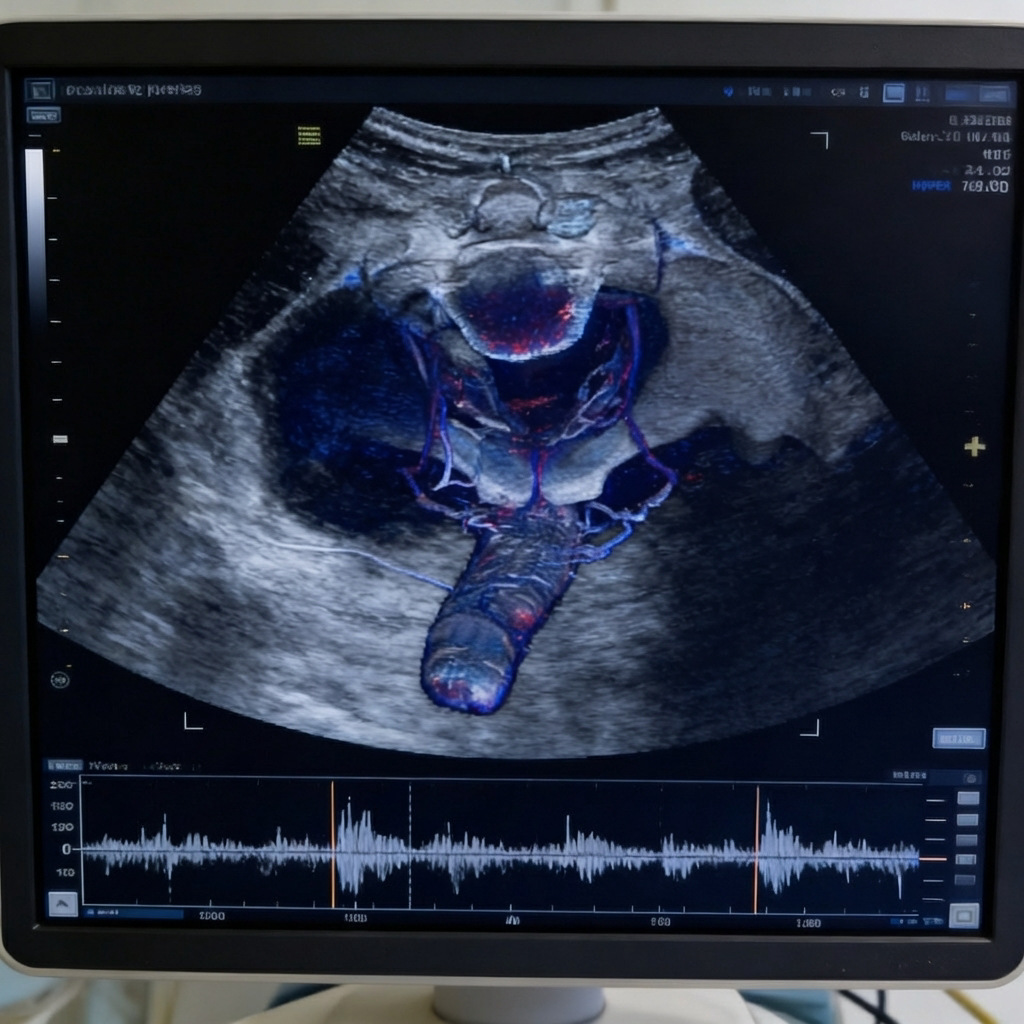
Heart Health Tips Facebook ad: “Low calcium score. Wrong plaque.”
Ran for 77 days, from March 10 to May 26, 2026, the last day Crush saw it.
Run by Heart Health Tips on Facebook. Crush is not the advertiser and does not verify its claims. See this ad in Meta's Ad Library(opens in a new tab)
Want an ad like this for your product?
Crush makes new ad images for your product from this ad: your logo, your product photo, your offer.
Trials from $19.95 USD, then $79.95 USD a month. Cancel anytime.
About this ad
- Meta Ad Library ID
- 1438142811127993
- Platforms
- Facebook, Instagram, Audience Network, Messenger and Threads
- Relaunches
- 0
- Niche
- Marketing & Agencies
Ad text
Most men who have a heart attack in the next five years have already had a calcium scan. Their score came back low. Their cardiologist told them they were not high risk. The scan was not wrong. It was measuring the wrong thing. (Libby et al., Nature Reviews Disease Primers, 2019) ======== I got my calcium score at 54. My GP had been nudging me toward it for two years. High-normal blood pressure. Cholesterol creeping up. Family history I didn't like to think about. I finally booked it. Lay still for eleven minutes. Got a number back. Eighteen. My doctor called it reassuring. Low risk by every guideline. He said to keep doing what I was doing and come back in three years. I went home feeling like I'd been given something. A clearance. A verdict. What I didn't know — what he didn't tell me, possibly because he didn't know either — is that a calcium score of eighteen means something specific and limited. It means the plaque already inside my arterial walls has not yet calcified. It does not mean there is no plaque. It means the plaque that is there is still soft. And soft plaque is the kind that kills people suddenly. Calcified plaque is stable. It has hardened over years and is unlikely to rupture. Soft plaque is lipid-rich, unstable, and invisible on a standard calcium scan. When it ruptures, it triggers a clot. Soft plaque rupture is responsible for the majority of acute coronary events in men who had no prior cardiovascular diagnosis (Libby et al., Nature Reviews Disease Primers, 2019). My score of eighteen was not reassuring. It was a measurement of the stable deposits. It said nothing about what was building silently in the same walls. I kept that number in my wallet for two years like it was a hall pass. It wasn't. ======== The other thing my doctor never connected was what had been happening in the bedroom. Not dramatically. Not suddenly. A slow decline that I had been quietly normalising for three years by the time I got that scan result. The reliability was gone. The spontaneity was gone. I had started planning around it — or avoiding the situation entirely and telling myself I was tired, that it was stress, that this was just what 54 felt like. I didn't connect it to my arteries. Why would I. They felt like two separate problems. One was embarrassing. One was medical. They were the same problem. The penile arteries are 1 to 2 millimetres in diameter. The coronary arteries are 3 to 4 millimetres. When endothelial dysfunction begins — when the inner lining of the blood vessels starts losing its ability to regulate blood flow — the smallest arteries show the signal first. Research published in the European Urology found that smaller artery symptoms precede larger artery symptoms by two to five years, and in some men by up to a decade (Montorsi et al., European Urology, 2006). What I had been quietly managing in the bedroom was not a bedroom problem. It was the first readable signal of the same vascular failure my calcium scan had told me I didn't have. My doctor saw a low score and called it reassuring. My body had been sending a different signal for three years. Neither of us had the language to connect them. ======== The tissue responsible for both is called the endothelium. It is a single layer of cells lining every blood vessel in the body. When it is healthy, it produces a molecule called nitric oxide — the signal that tells the smooth muscle surrounding your arteries to relax and expand, allowing blood to flow freely. When it is damaged or suppressed, that signal weakens. Vessels stiffen. Blood flow drops. The smallest arteries feel it first. This is endothelial dysfunction. It does not appear on a lipid panel. It does not appear on a calcium scan. It produces no chest pain, no flagged blood result, no warning on any routine test your GP orders. It progresses silently, in the tissue itself, while every number your doctor is watching stays inside the normal range. Every supplement I had tried by that point worked around this problem. L-citrulline supplies raw material to the enzyme that makes nitric oxide — but if the enzyme is suppressed, the raw material has nowhere to go. Nitrate supplements from beetroot bypass the endothelium entirely through a separate pathway. They route around the dysfunction. They do not repair it. Antioxidants slow the deterioration. They do not restart the production pathway. Every other approach was electrical tape over the warning light. The engine was still failing. ======== What I found in the research, late on a Tuesday night that I remember clearly, was a study published in Cell Metabolism in 2010 by Zhen-Yu Chen and colleagues. They found that capsaicin — the active compound in cayenne pepper — activates TRPV1 receptors directly on endothelial cells. Those receptors trigger phosphorylation of eNOS — the enzyme responsible for nitric oxide production. Not a temporary override. Not a chemical workaround. A direct reactivation of the production pathway inside the tissue itself. In TRPV1-deficient subjects, the effect disappeared entirely, confirming the mechanism was receptor-dependent (Zhen-Yu Chen et al., Cell Metabolism, 2010). Sildenafil blocks the enzyme that breaks nitric oxide down. It produces a four to six hour window of forced vasodilation. When it wears off, the endothelium is no healthier than before. The dysfunction continues. The soft plaque continues building. The calcium scan next year will show a higher number. The bedroom problem will require a higher dose. Capsaicin restarts the enzyme that makes nitric oxide. One is a temporary override of a failing system. The other is a reactivation of it. I had been treating the symptom. This was the first thing I had found that addressed the tissue causing it. ======== There was one more thing I needed to understand before I trusted the mechanism. I had tried cayenne before. Capsules from a health food store. Noticed nothing. Assumed the research was overstated. It wasn't. The delivery format was wrong. Capsaicin is fat soluble. In a dry powder capsule, it cannot dissolve. The active compound passes through the digestive tract largely unabsorbed and reaches the bloodstream at a fraction of therapeutic concentration. Research by Rollyson and colleagues found that capsaicin delivered in pharmaceutical-grade oil suspension achieved 9.4 times higher plasma concentration than the same dose in powder capsule format (Rollyson et al., European Journal of Nutrition, 2017). If you tried cheap cayenne capsules and felt nothing, that is why. The compound works. The capsule didn't deliver it. ======== I didn't tell my wife what I was trying. I wanted to know if my body would show results before I said anything. Three weeks in, something shifted in the morning that I had stopped expecting. Six weeks in, she looked at me one evening and said something she hadn't said in longer than I want to admit. She said I seemed more like myself. I hadn't told her anything. She had no reference point for what had changed. She just noticed that the version of me she had been missing had quietly come back. I showed her the research the following weekend. She read the Montorsi paper. She read the Chen study. She sat with it for a moment and then said: why didn't the cardiologist mention any of this. I didn't have a good answer. I still don't. ======== Here is what I know now that I wish someone had told me when I was carrying that calcium score in my wallet like a hall pass. A low score means the plaque has not yet calcified. It does not mean the tissue is healthy. The endothelium can be failing while every number stays inside the normal range. The signal your body sends years before the coronary arteries are involved is specific and measurable — and most men who receive it are handed something that silences it for four to six hours at a time while the underlying dysfunction continues. Men who manage the symptom while the endothelial damage progresses do not stay at a calcium score of eighteen. They come back three years later with a score of ninety, or one hundred and forty, or they do not make it to the next scan. The vascular biology does not pause while the pill is working. There is no neutral state in the tissue. It is either healing or it is deteriorating. ======== The product I used is called Aurivita Capsaicin Power. 3mg capsaicin per serving in pharmaceutical-grade oil suspension. 240 softgels per bag, 80 servings. The oil suspension is not a marketing claim — it is the delivery mechanism that determines whether the compound reaches therapeutic plasma concentration or passes through unabsorbed. aurivita.co. 120-day money back guarantee, no conditions. You do not have to stop any current medication. You do not have to commit to replacing anything. You can always return to what you were doing. But the endothelium is either healing or deteriorating. That is not a supplement claim. It is vascular biology. The guarantee means the only thing you are risking is the time. ======== P.S. The calcium scan measures the plaque that has already stabilised. It says nothing about the soft plaque still building in the same walls — the kind that causes most sudden cardiac events in men with no prior diagnosis (Libby et al., Nature Reviews Disease Primers, 2019). The mechanism that governs both the bedroom signal and the arterial health is the same tissue. Capsaicin is the only compound shown in peer reviewed research to directly reactivate it. 120 days. Full refund if it does nothing. aurivita.co. --- Sources Libby P et al. Atherosclerosis. Nature Reviews Disease Primers. 2019. Montorsi P et al. Association between erectile dysfunction and coronary artery disease. European Urology. 49(3):417-424. 2006. Zhen-Yu Chen et al. Capsaicin, a spicy component of hot pepper, induces angiogenesis and inhibits angiogenesis through TRPV1 receptor. Cell Metabolism. 12(2):130-141. 2010. DOI 10.1016/j.cmet.2010.05.015. Rollyson et al. Bioavailability of capsaicin and its implications for drug delivery. European Journal of Nutrition. 2017.
Where the ad sends people
aurivita.co
Low calcium score. Wrong plaque.
Support your cardiovascular health with our capsaicin softgels, a premium supplement meticulously formulated for those who prioritize long-term heart vitality.
Learn more: aurivita.co(opens in a new tab)