
Active· since Mar 1, 2026
- 196
- days running
- 0
- relaunches
Ad copy
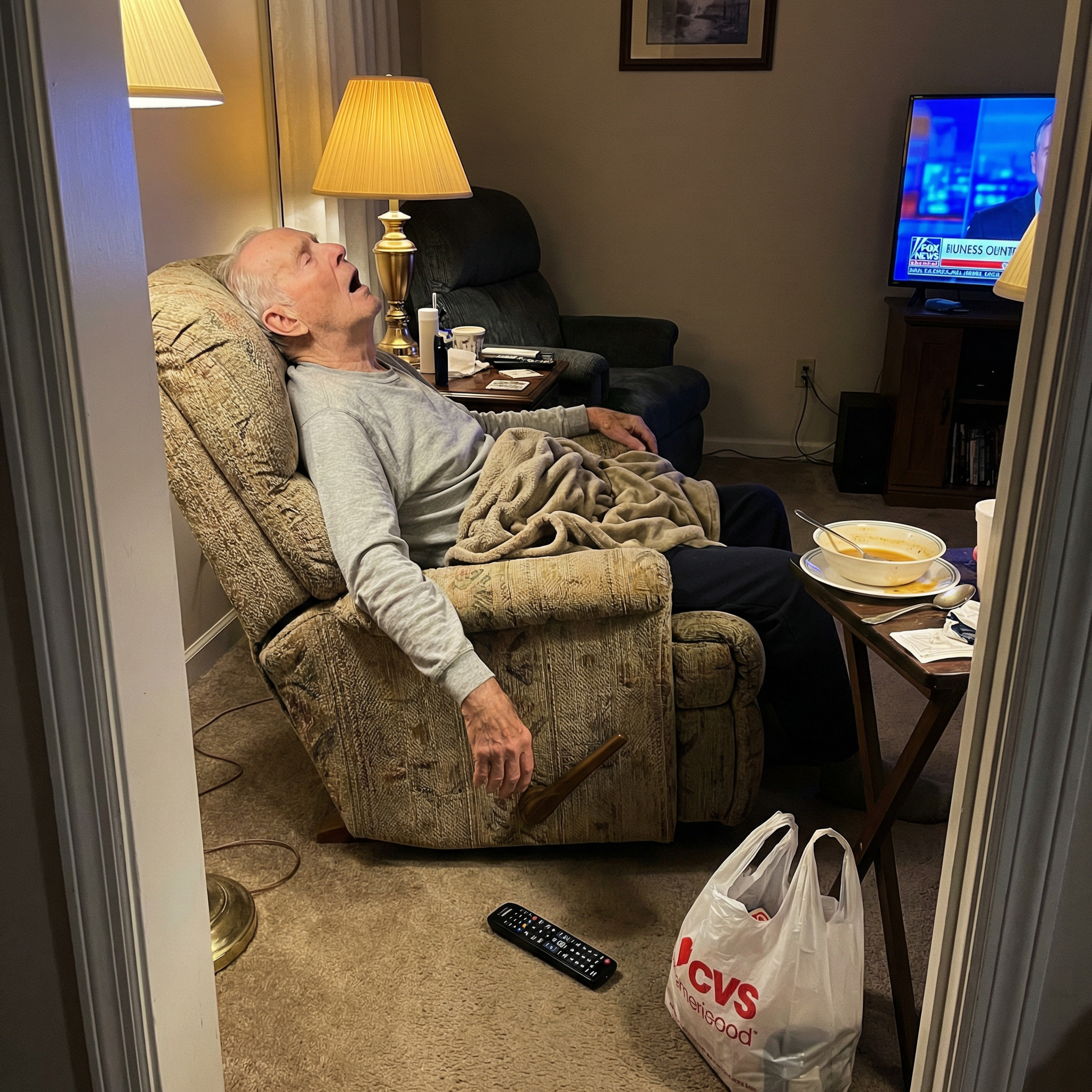
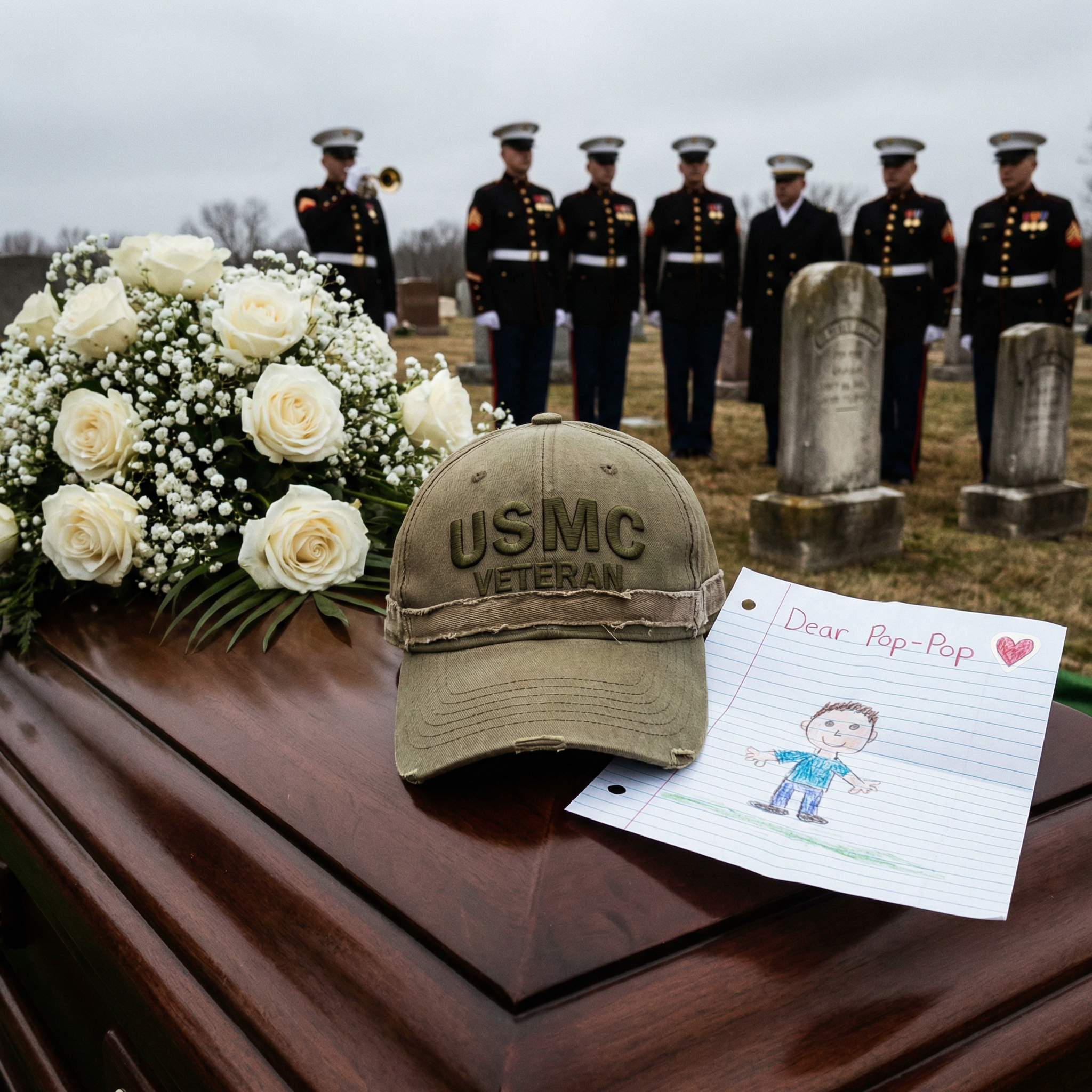
I've thought about k*lling myself every day for 37 days. I won't. Because my granddaughter still asks when Pop-Pop is coming home and someone has to be there when she stops asking. But I think about it. Every morning I wake up in his recliner and the house is quiet and I think about it. The flu killed my husband. That was 37 days ago. I haven't slept in our bed since. I sleep in his workshop on a folding chair next to the bench where he built our granddaughter a jewelry box with a note inside that she'll never be able to read to him. His name was Thomas James Baker. Tommy to everyone else. Tom to me. Because on our first date in 1978 I told him Tommy sounded like a little boy and he was not a little boy. He said "yes ma'am" and that was that for 46 years. He died at 4:32 AM on January 15th in the ICU at St. Joseph's while I held his hand and whispered "you're dismissed, Marine" because I didn't know what else to say to a man who survived a war but couldn't survive the flu. I need to tell you what happened. Because I'm watching people my age post on Facebook right now — "my husband has the worst cold, any remedies?" — and I want to reach through the screen and grab them by the shoulders. Because that was me. On January 7th. That was my post. Word for word. And nobody told me. If you're over 55 — or if someone you love is — I am begging you. Don't scroll past this. I know it's long. I know you have things to do. I know you think the flu is just the flu. Tom thought that too. Tom survived the Tet Offensive. He thought the flu was a joke. The flu is not a joke. The flu is what's sitting in my husband's recliner right now instead of him. Nothing. Nothing is sitting there. For 37 days. Tom was a United States Marine. Three tours. 1969 to 1973. He carried a piece of shrapnel in his left leg for 52 years that set off every metal detector from here to Honolulu. He had a Purple Heart in a shadow box in our living room that he never once talked about unless someone asked, and even then he'd change the subject to the men who didn't come home. He was the toughest man I have ever known and I don't say that the way wives say it. I say it as a fact. I watched him pull shrapnel splinters out of his own leg with pliers and a bottle of bourbon because "the VA's an hour drive, Carolyn, I'm not wasting a Saturday for this." I watched him walk on a broken hip for three days before he mentioned it. I watched him do 30 push-ups on his knuckles every single morning for 52 years — on his knuckles, the way the Marines taught him — the morning of his heart scare at 58, the morning after his mother's funeral, the morning he turned 71. The flu did not care about any of that. January 6th. Tom drove to Walgreens because he'd had a scratchy throat since the day before. I asked if he wanted me to drive. He gave me the look. 46 years of marriage teaches you what the look means. This one meant: "Carolyn, I flew helicopters into combat zones, I can drive to Walgreens." He came home with cough drops, a bottle of orange juice, and a receipt for $11.47. I found that receipt in his jacket pocket three weeks later when I was trying to figure out how to donate a dead man's clothes. $11.47. The last thing my husband ever purchased. Cough drops. For a sore throat that was already killing him. "Probably just a cold. I'll shake it by Monday." Tom shook everything. He shook malaria in Da Nang in 1971. He shook pneumonia in 2016. He shook a broken hip at 67 and was walking in six weeks when the doctor said twelve. Monday came. He did not shake it. Fever of 102.8. Sitting in his recliner — the brown leather one he's had since 1998 — wrapped in the quilt his mother made. Shivering. A man who slept on the ground in the Vietnamese jungle for two winters was shivering under a quilt in a 72-degree living room. "Tom, I'm calling Dr. Pham." "It's a cold, Carolyn." "Your fever is almost 103." "I had malaria with a 105 fever in a rice paddy at 19 and I'm still here. Stop worrying." Everything was measured against Vietnam. That was Tom. Nothing civilian could be worse than what he'd already survived. Nothing in this soft comfortable American life could touch him. He was wrong. And I was too afraid of his stubborn Marine pride to push harder. I told him to give it another day. I will never forgive myself for that sentence for as long as I live. By Wednesday his fever was 103.7. The cough started. Not a normal cough. Something I'd never heard from him — and I heard him cough through bronchitis, through pneumonia, through 30 years of Marlboros before he quit in 2002. This was different. Deep. Wet. Like something was tearing inside his chest. Like wet cardboard ripping apart behind his ribs. He'd cough so hard his whole body would seize and then he'd just sit there — eyes closed, hand on his ribs, breathing in these tiny sips of air like he was rationing oxygen. And then I saw it. I saw something on his face I had only seen once in 46 years. Fear. Tom Baker did not show fear. Not when they medevaced him out of Khe Sanh with shrapnel in his leg and blood filling his boot. Not when the doctor told him about his heart at 58. Not when our daughter was born premature at 4 pounds and spent three weeks in the NICU. Once. I saw it once. In 1983. He woke up screaming. Vietnam nightmare. The ambush. His best friend Danny who bled out in his arms in a helicopter at 21 years old. Tom sat up in bed with wild eyes and shaking hands and for 10 seconds he didn't know where he was. That was the only time I ever saw fear on Tom Baker's face. Until Wednesday. He was sitting in the recliner between coughing fits. He looked at me. And his eyes said what his mouth would never say: Something is wrong, Carolyn. This is different than anything before. "I'm calling 911." "The hell you are." "Thomas." "I said no. I am not going to the hospital for the goddamn flu." The Marine voice. The voice that means the conversation is over. But I knew that voice. I knew all his voices. The command voice. The joking voice. The quiet voice he only used with our grandkids when he thought no one was listening. And the scared voice disguised as the command voice. This was that one. Thursday morning. 6:15 AM. I heard a sound from the bedroom that I will hear for the rest of my life. Not a cough. Not a word. A sound. Like a gasp that got stuck halfway. Like someone trying to breathe through a wet towel. I ran. Tom was on his back. Eyes open. Staring at the ceiling. His chest rising and falling in these rapid shallow movements — like a bird's chest. Too fast. His hands flat on the mattress gripping the sheets. His lips were gray. I volunteered in hospice for 11 years. I've sat with dying people. I know what the color change means. His lips were the color of the concrete floor in his workshop. "Tom. Can you hear me?" His eyes moved to me. Slowly. Like it cost him everything. "Carolyn." A whisper. "I think I need help." Tom Baker asked me for help. The man who pulled his own shrapnel. Who refused pain medication after hip surgery. Who drove himself to the ER with a broken wrist and told the nurse "take the kid first, sweetheart, I'm fine." He asked for help. I called 911 at 6:22 AM. Paramedics arrived in 7 minutes. They clipped a sensor to his finger. Oxygen saturation: 78%. Normal is 95-100%. The older paramedic — name tag said Reeves — looked at me. "How long has he been sick?" "Five days. We thought it was a cold." He nodded. The slow nod. The nod that means I know something you don't and I'm sorry. "We need to go now." They lifted Tom onto the stretcher. He tried to help — tried to push himself up. The Marine in him. Oxygen at 78, lungs full of fluid, and he tried to help the people carrying him. He couldn't. His arms gave out. He fell back. As they wheeled him through the living room — past the recliner, past the flag in the shadow box, past our wedding photo on the wall, past 46 years — he looked up at me. "Carolyn." "I'm here." "Tell Danny I'm sorry I didn't get there faster." Danny. His best friend. Who died in a helicopter in Vietnam in 1971. Who Tom hadn't spoken about out loud in 20 years. He was talking to a dead man on the stretcher in our living room. I followed the ambulance doing 85 in a 45. I didn't care. At the ER they took him straight back. No waiting room. When they skip the waiting room you know. The doctor came out 90 minutes later. Male. 50s. Tired. N95 marks still on his face. "Mrs. Baker, your husband has Influenza A. H3N2. The subclade K mutation. Both lungs are severely compromised." "He got his flu shot. At the VA. In October. Every year. He never misses." The doctor looked at me. "This year's H3N2 strain mutated after the vaccine was manufactured. The shot your husband received was designed for a version of the virus that no longer exists. His immune system was fighting a war with the wrong weapons." Fighting a war with the wrong weapons. He said that to a Marine's wife. Tom spent 9 days in the ICU. I was there every morning at 7 when the doors opened. I stayed every night until 9 when they made me leave. I ate in the cafeteria because at home the kitchen table has two chairs and I couldn't sit across from the empty one. Day 1 they put him on high-flow oxygen. A mask strapped to his face. He hated it. Kept reaching up to pull it off — claustrophobia. The same man who couldn't stand anything over his face since Vietnam when a piece of canvas fell on him during a mortar attack. A nurse held one hand down. I held the other. Day 3 the doctor talked about the ventilator. Tube down the throat. Sedation. A machine breathes for you. Tom was conscious. He looked at the doctor: "I've been intubated before. Field hospital. Khe Sanh. '71. I know what it is." "This would be longer. Days. Maybe weeks." Tom looked at me. "Carolyn, don't let them keep me on that thing if I'm not coming back. You know what I want." I knew. We'd talked about it. After his mother spent three months on a ventilator before she died. I signed the consent form. My hand was steady. 46 years with a Marine teaches you how to hold steady when it matters. I cried on the bathroom floor after. Sat on the cold tile of the ICU bathroom until a nurse knocked on the door. Day 5 his kidneys started failing. The doctor said his body was mounting a cytokine storm — his immune system destroying his own organs trying to fight the virus. The cruelest irony. The strongest immune system. The man who never got sick. His own body's strength was killing him because there was too much virus to fight. His face swelled. His hands swelled. The wedding ring I put on his finger in 1978 disappeared into his flesh. The nurses mentioned cutting it off. "Don't you dare cut that ring off his hand." They didn't. Day 7. I held his hand. Swollen and hot and hard. Nothing like the hand that held mine for 46 years. Nothing like the hand that could field-strip a rifle or build a jewelry box or cup our granddaughter's face when she was crying. I held it anyway. Because somewhere inside that swollen body — behind the tubes and the machines and the failing organs — Tom was still there. The 18-year-old kid from Marion, Ohio who enlisted the day he turned 18 because his father was a Marine and his grandfather was a Marine. The 25-year-old who came home with a limp and a Purple Heart and nightmares he never talked about. The 32-year-old who held our daughter for the first time and cried — the only time I saw him cry until the ICU. The 71-year-old who still did push-ups on his knuckles and called me ma'am when he was being funny and wrote me a note in a jewelry box because he couldn't say "I love you" out loud. He was in there. Day 8 he opened his eyes. Clear. Present. Tom. "Hey, Lynnie." He hadn't called me that in years. That was his name for me when we were dating. Because Carolyn became Lynnie became "the only person on earth allowed to call me that." "Hey, Tom." "I messed up." "Stop." "I should've gone to the doctor. You told me. You've been right about everything for 46 years and I've been stubborn about everything for 46 years and I'm sorry it took this to say it." I squeezed his swollen hand. "You're going to be fine. You survived Vietnam." He looked at me. And his eyes did the thing — the thing where he was about to say something real. Something he'd normally lock inside. "This is harder than Vietnam, Carolyn. Over there I could fight. I could do something. Here I just lie here and my body fights without me and I can't do a damn thing about it." "Tom—" "If I don't make it—" "Stop it." "The flag. In the shadow box. I want David to have it." David. Our grandson. 14 years old. Wants to be a Marine. Tom's been teaching him push-ups on his knuckles. "And the jewelry box stays with you. Don't give it away. Read the note." "Tom, please—" "Read the note, Carolyn. Every night. Promise me." "I promise." He closed his eyes. That was the last real conversation I had with my husband. That's the one that wakes me up at 2 AM and puts me in his workshop staring at the bench where he carved our granddaughter's name into the underside of the treehouse railing so she'd always know Pop-Pop built it for her. Day 9. January 15th. I was in the family waiting area. 3:47 AM. Not sleeping. Sitting with my eyes closed listening to every sound in the hallway. The long beep. You know the beeps if you've been in an ICU. Steady means stable. Fast means something changed. Long means people are about to run. I heard the long one. I heard shoes on linoleum. A nurse came in. Young. Couldn't look at me. "Mrs. Baker, the team is with your husband." I stood in that room for 45 minutes. At 4:32 AM a doctor walked in. His face said it before his mouth did. "I'm so sorry. We did everything we could." I asked to see him. They'd removed everything. Tubes. Mask. IV. Monitors off. The room was quiet for the first time in 9 days. Tom was lying there. Still. His face was relaxed — the pain was gone. The swelling was down. He almost looked like himself. Almost. I sat on the edge of the bed. I took his hand. It was cooling. The swelling had gone down enough that I could see the wedding ring again. Still there. Still on his finger. Where I put it 46 years ago. I leaned down and whispered: "I'm going to read the note. Every night. I promise." Then I said: "You're dismissed, Marine." A nurse behind me made a sound. I didn't turn around. I drove home at 6 AM. His truck in the driveway. The American flag on the porch at full staff — I didn't know how to lower it. He always did that. His boots by the door. His jacket on the hook with the $11.47 Walgreens receipt in the pocket. His reading glasses on the kitchen table. The crossword puzzle from January 4th. 14 across was blank. The clue: "Steadfast." Five letters. Loyal. I filled it in with his pen. Then I walked to his workshop and I sat in the folding chair next to his bench and I didn't move until dark. The funeral was January 20th. Full military honors. Seven Marines in dress blues. White gloves. The flag folded — thirteen folds. They handed it to me. "On behalf of the President of the United States, the United States Marine Corps, and a grateful nation..." A grateful nation. This nation sent him to war at 18 and couldn't protect him from the flu at 71. Our grandson David — 14, jaw clenched, fists at his sides — stood at attention during taps. Tom taught him the stance. They practiced in the backyard. David would stand there and Tom would walk around him correcting his posture. "Chin up. Shoulders back. A Marine doesn't slouch, son." When the last note faded, David broke. He fell into me. This boy who wants to be a Marine. Sobbing into my coat. "Grandma, he said he'd be at my graduation. He promised. He said he'd pin my bars on." Tom promised that when David was 10. He said: "When you graduate boot camp, I'll be there. I'll pin your insignia on myself. That's a promise, Marine." Tom Baker did not break promises. The flu broke it for him. Our granddaughter Lily — she's 8 — put a folded piece of paper on the casket after everyone left. I found out later what it said. "Dear Pop-Pop. I hope heaven has a workshop. I love you. Please come home if you can." I walked to the parking lot and threw up behind our car. After the funeral I couldn't function. I couldn't cook because every recipe serves two. I couldn't watch TV because the remote was on the arm of his chair where he left it. I couldn't sleep in our bed because his pillow still smelled like sawdust and Old Spice and I'd breathe it in and for one second I'd forget and then I'd remember and it was like he died all over again. Every night. He dies again. Every single night. But I couldn't sit still either. Because every time I opened my phone I saw people posting: "This flu is no joke." "My husband's been sick for a week." "Does anyone have home remedies?" And I wanted to scream through the screen. Because that was me on January 7th. That was my post. And nobody told me what I'm about to tell you. Tom would've wanted me to do something. He was a man of action. Even in grief he would've said: "Stop feeling sorry for yourself, Carolyn. Fix the problem." So I tried to fix the problem. I read everything. CDC data. Medical journals. H3N2 subclade K. 22 million Americans sick this season. 280,000 hospitalized. Over 12,000 dead. 70-85% of flu deaths are people over 65. Tom was 71. He's a statistic now. My husband — Purple Heart, three tours, 52 years of shrapnel — is a number on a chart. The flu shot is 30-40% effective this year against H3N2 subclade K. Tom got his at the VA in October. Like always. Like a good Marine following orders. The shot was already obsolete before flu season started. Tamiflu only works within 48 hours. Tom got to the hospital on day 5. Useless. And I kept reading the same thing over and over: The virus enters through the nose. Every respiratory virus. Flu. COVID. RSV. They land in the nasal cavity. Attach to the tissue. Start replicating. Millions of copies within hours. By the time you feel the sore throat — the fever — the cough — the virus has already been winning for days. Tom's scratchy throat on January 5th wasn't the start. It was the sign the virus had already won. Once it's in your lungs you're not preventing anything. You're surviving. Tom Baker survived three tours in Vietnam. He did not survive H3N2 subclade K. Because nobody stopped it at the door. I went to CVS. Bought everything. Saline spray. Flonase. Zicam. Zinc. Vitamin C. Saline — salt water. Doesn't kill anything. Flonase — bled my nose by day 3. Zicam — tingled wrong. Found out later they recalled a version for destroying smell. Vitamin C — Tom would've said "that's like bringing a sidearm to an artillery fight, Carolyn." $67. An entire aisle of cold and flu products. Not one of them kills the virus where it enters. They manage symptoms. They make you comfortable while the virus does whatever it wants inside you. That's not medicine. That's decoration. Then I found something. A woman in a Facebook health group posted that her husband was an ICU nurse. Working with H3N2 patients every single day. Twelve-hour shifts. Coughed on. Sneezed on. Surrounded by the sickest of the sick. He hadn't been sick once all season. How? Nasal iodine spray. Twice a day. Before and after every shift. Iodine. In the nose. Betadine. The brown stuff. Burns on a cut. In your NOSE? But that woman's husband was surrounded by H3N2 every day and wasn't getting sick. Tom walked into a Walgreens and was dead 9 days later. What was the difference? I kept reading. And what I found made me walk laps around the block at 2 AM in my bathrobe because I couldn't sit still. Iodine is the oldest proven antiseptic in medicine. Over a hundred years. Before every surgery. Every wound. Kills bacteria, viruses, fungi — everything. It doesn't care what strain. H3N2. Subclade K. COVID. RSV. It destroys them all through oxidation. Tears the virus apart at the molecular level. The virus can't develop resistance. Can't adapt. Iodine just kills it. Research shows it eliminates 99% of viruses in 90 seconds. 90 seconds. Tom was in the ICU for 9 days because the virus replicated for 5 days before anyone did anything. What if someone had killed it in 90 seconds? What if we'd known? I went to his workshop. Sat in the dark. In the chair next to the bench where he carved Lily's name into the underside of the treehouse railing so she'd always know Pop-Pop built it. And I thought: this man survived a war. Survived malaria. Survived shrapnel and a helicopter and 52 years carrying metal in his body. And he might be alive right now if someone had told us about something hospitals have used for a century. I wasn't going to spray Betadine up my nose. I'm 61, not foolish. Traditional iodine burns. Too harsh for nasal tissue. That's why nobody uses it at home. But a company figured out how to combine iodine with fulvic acid. Buffers it. Gentle enough for daily use. No burn. No dryness. NutraMD. Skeptical. God, I was skeptical. After Flonase bled me. After Afrin gave me rebound so bad I thought I was suffocating. After Sudafed made my heart race at 2 AM. After every nasal product I've ever tried burned me or dried me or scared me. So I called Tom's pulmonologist. The ICU doctor. The man who was there at 4:32 AM. "Is this real? Or am I losing my mind because I can't accept he's gone?" Long silence. "Carolyn, povidone-iodine has been used safely in nasal applications for decades. Hospitals. Sinus surgeries. ICU protocols. The daily-use formulations are well-tolerated. Minimal absorption." Then he paused. "Tom was the strongest patient I've had in that ICU in years. His body fought harder than most 40-year-olds. If the viral load had been reduced before it reached his lungs — even partially — there is a real possibility he would have survived." I hung up. I went to the workshop. Opened the jewelry box — the one on our dresser. Read the note. "For my Lynnie. 40 years and I'd do it all again. Even the hard parts. Especially the hard parts." I cried until my body physically couldn't anymore. Because a doctor — THE doctor — just told me the toughest man I've ever known might still be alive if we'd known about a nasal spray that costs less than the cough drops Tom bought at Walgreens on January 6th. $11.47 for cough drops. $30 for the spray that might have saved his life. I ordered NutraMD that night. First spray: slight warmth. Like breathing through your nose after tea. Faint iodine smell. Familiar. My mother's medicine cabinet. Gone in seconds. No sting. No dryness. No burn. Nothing like Flonase. Nothing like Betadine. Twice a day. Morning and night. Five weeks now. Three weeks in, our grandson David came over. 14. His school had been ravaged by H3N2. Half the football team was out. He walked in coughing. Sniffling. Hugged me — arms all the way around, the way Tom taught him. "Like you mean it, son." My daughter said: "Mom, maybe he should—" "He's here. I'm holding him. I lost Tom. I'm not losing a single minute with David or Lily." Tom lost every minute. Every hug. Every push-up lesson. Every promise. David went home Sunday. Monday — nothing. Tuesday — nothing. Wednesday, Thursday, Friday — nothing. David tested positive for H3N2 the following Tuesday. I had it on my face. On my hands. In my nose. All weekend. I didn't get sick. I called my daughter. Couldn't speak for 30 seconds. "Mom? What's wrong?" "Nothing's wrong. For the first time since January, nothing is wrong." Silence. Because we were both thinking the same thing. If Tom had this. If we'd known. Tom's brother Mike — 69, diabetic, Marine veteran — ordered it at the funeral. Spent two weeks with sick grandkids. Fine. Called me: "Carolyn, Tom would want you to tell people. You know he would. He'd make it an order." He would have. He would've hated this post — the most private man alive — but he would've said: "If it saves one guy, you write it." So I'm writing it. I don't work for NutraMD. I don't get paid. I'm not a doctor or a scientist. I'm a 61-year-old widow who reads a note in a jewelry box every night and walks out to the workshop to smell the sawdust because it's the closest thing I have left to him. Here's what I know because I lived it: The flu shot doesn't match this year's strain. Tom got his at the VA. Like a good Marine. It didn't save him. 22 million sick. 280,000 hospitalized. 12,000 dead. February isn't over. 70-85% of flu deaths are over 65. Tom was 71. Tamiflu only works in 48 hours. Tom got to the hospital on day 5. Once the virus is in your lungs, you're surviving, not preventing. Tom survived Vietnam. He did not survive H3N2. The entry point is the nose. That's where it starts. That's where it stops. 90 seconds. I wish someone had told me before January 6th. Before Walgreens. Before the cough drops. Before "I'll shake it by Monday." Before the gray lips. Before 78%. Before "tell Danny I'm sorry." Before the long beep. Before 4:32 AM. Before "you're dismissed, Marine." Before I started sleeping in a workshop because the bed smells like him and the house is too quiet and I can't stop reading a note in a jewelry box. I can't go back. Tom can't come back. But you can still go forward. The article that explains everything — the science, the research, what ER doctors and nurses are doing right now — is why I found NutraMD. It's why my grandkids still have one grandparent. Read it. Not for me. For whoever you'd leave behind. 👇 https://nutramdhealth.com/pages/article Tom used to say: "The best time to dig a foxhole is before the shooting starts." The shooting started. — Carolyn Baker, age 61 Marion, Ohio P.S. His jewelry box is on the dresser. I read the note every night. "For my Lynnie. 40 years and I'd do it all again. Even the hard parts. Especially the hard parts." $47,000 in hospital bills. $11,200 funeral with military honors. $11.47 for cough drops at Walgreens. A spray that his ICU doctor said might have saved him costs $30. He survived a war. He didn't survive the flu. Please. Don't end up reading a note in a jewelry box in an empty house. Don't let someone you love end up in a folded flag. P.P.S. I don't work for NutraMD. I'm writing this from his workshop at 2 AM because I can't sleep in our bed and the sawdust still smells like him and our granddaughter wrote "please come home if you can" on a piece of paper and put it on his casket and if this saves one husband — one Marine — one Pop-Pop — just one — then at least Tom didn't die for nothing. Marines don't die for nothing. Share this with anyone you love over 55. Please. Before it's too late.
I Watched My Husband Die Because I Told Him to "Give It Another Day"
I Watched My Husband Die Because I Told Him to "Give It Another Day"
LEARN MORELike this ad? Make it yours.
Crush rebuilds this exact creative around your product — your brand, your colors, your offer — in about a minute.