Rachel Smith
 Facebook ad: “My Identical Twin And I Hadn't Seen Each Other In 29…”
Ran for 6 days, from October 29 to November 4, 2026, the last day Crush saw it.
Run by Rachel Smith on Facebook. Crush is not the advertiser and does not verify its claims. See this ad in Meta's Ad Library(opens in a new tab)
Make your own version of this ad
Crush makes it, launches it in your own Meta ad account, scales the winners and pauses the losers.
About this ad
- Meta Ad Library ID
- 1446440461876994
- Platforms
- Facebook, Instagram, Audience Network, WhatsApp and Threads
- Relaunches
- 1
- Niche
- Fashion & Apparel
Ad text
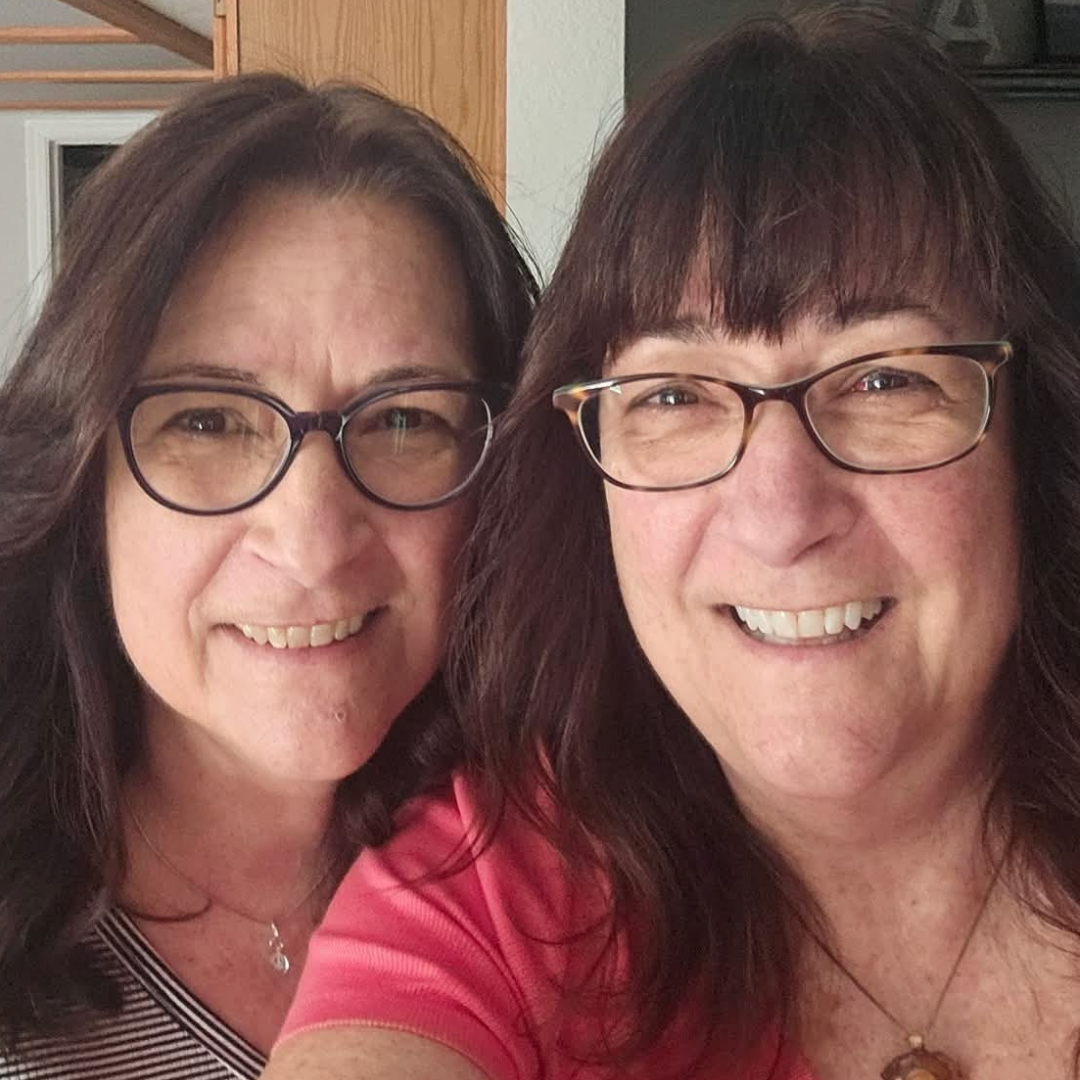
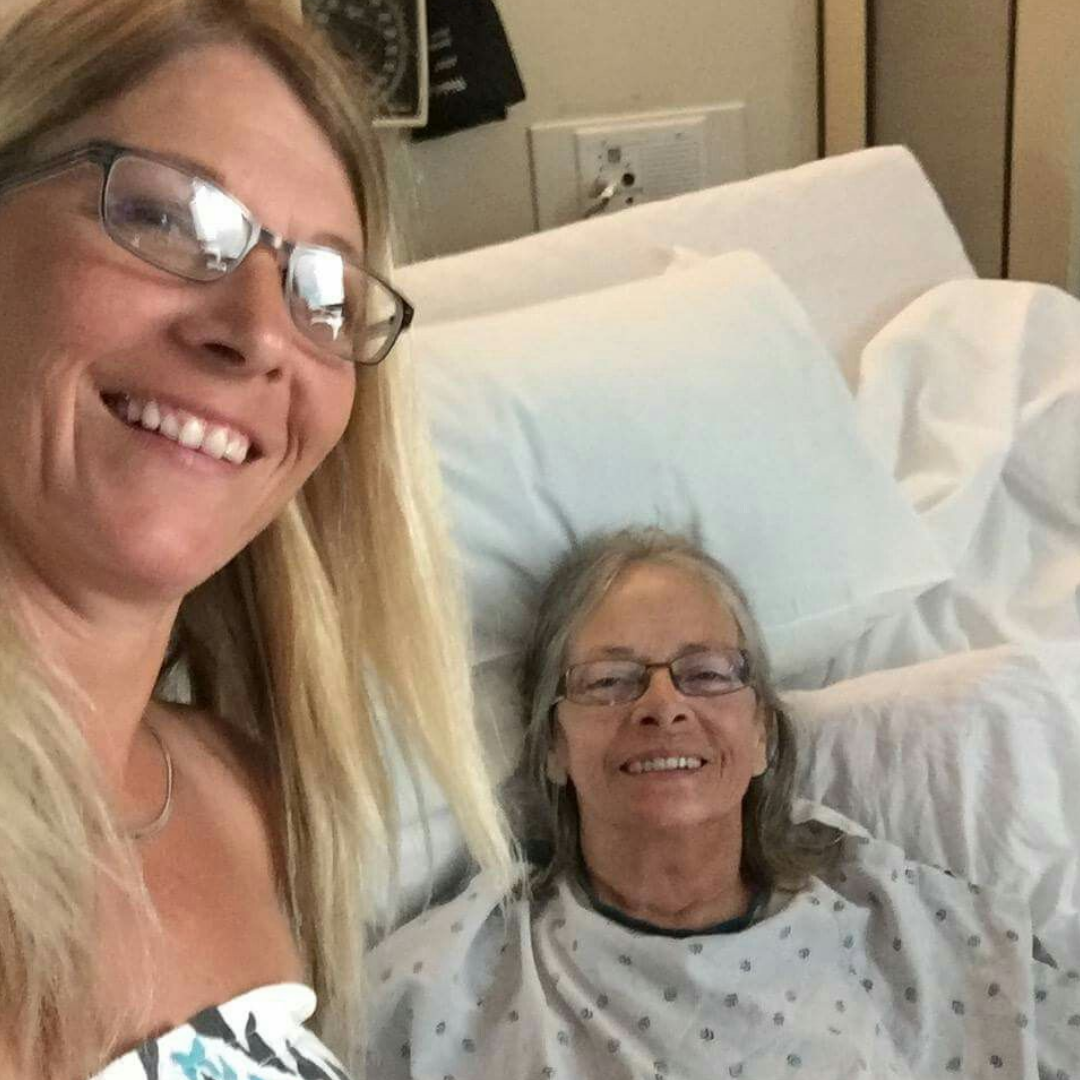
My twin sister and I were born fourteen minutes apart in a Mennonite farmhouse outside Lititz, Pennsylvania. Same blood. Same face. Same everything. At 48, after I collapsed in my own kitchen for the fourth time in a month from what every doctor in Philadelphia would not call mold illness, a resident walked into the ER cubicle my sister and I were standing in, and asked me a question I have not slept right on since. The first thing you need to know is that I was the one on the gurney. Thomas Jefferson University Hospital, Center City, Philadelphia. IV in the back of my hand, saline running cold up my arm, a monitor ticking off my pulse like it was keeping score. I had been there eighteen hours. How I got there is the middle of this story, and I'll get to it, all of it — but this part you need to see first. The door opened, and my sister walked in. She had come ninety miles in her son-in-law's car because the message had to travel through three farms and a Mennonite neighbor with a landline. Cape dress. Black stockings. White covering pinned over gray hair that had been dark the last time most people in her kitchen had seen me. She had crossed the Schuylkill River maybe four times since the Reagan administration. She stood in the doorway of that cubicle and the triage nurse behind her stopped walking mid-chart. Because here is the thing about my twin and me. Twenty-nine years apart. Different food, different buildings, different lives. And we still have the same face. The same hands. The same way of standing when we're reading a room. The nurse looked at her, then at me on the bed with wires taped to my chest, then back at her, the way people have been doing since we were little — except now there was something underneath it that was not funny, and nobody in the room said what they were seeing. She sat down next to the gurney. She did not say much. Mennonite women don't, and my sister especially doesn't. She set her covering straight and she looked at the monitor, and then she looked at me — level, patient, the way our mother used to look at a batch of bread that had been let too long — and we sat there, two copies of the same woman, born fourteen minutes apart, on two very different sides of the mold line. That is when the resident came in with my chart. He got three steps into the cubicle and stopped. Looked at my sister. Looked at me. Looked down at the chart like it might explain it, and then back up. I watched him do the math — twins, identical, one of them on his gurney. And then he asked the question. I'm not going to give it to you yet. It was ten words, and it was not a resident's question — it came out of him before the medical part of his brain could catch it, and the room went so quiet I could hear the saline drip. My sister answered it, not me. Four words back, in that flat Pennsylvania Dutch cadence of hers. And what she said is the reason I am sitting at my own kitchen table in Philadelphia tonight writing this, and the reason you are reading it. You will have both — her answer and the question — before this is done. But not yet. Because you cannot hear them right until you know what put me on that gurney while the woman with my exact face was finishing a canning weekend at 48 like a woman twenty years younger. Let me back up. All the way. My name is Rebecca Weaver. I was born Ruth Horst. I picked Rebecca off a magazine cover my second year in Philadelphia and Weaver came with the husband who stayed. My twin is Anna Horst — Anna Zimmerman since she married at twenty-one — and she is the last person on this earth who still calls me Ruth. If you know anything about Old Order Mennonites in Lancaster County, you could walk down the Horst line of any phone book in Lititz and be somebody's cousin. That is the family I was born into: a dairy farm outside Lititz, Pennsylvania, third and fourth of six, born in an upstairs room with a kerosene lamp on the dresser, fourteen minutes apart. Anna first. She has not once let me forget it. These days I am about as English as a woman can get. I have run a graphic design studio out of a row house in Chestnut Hill for twenty-two years. Macbook. Mortgage. Two kids grown. One marriage I kept. And until September of last year, I had not seen my sister's face — except in my own mirror getting older — in twenty-nine years. I want to say the thing plainly, right here, because the whole story turns on it. There is not one ounce of difference between my sister and me that either of us was born with. Same parents. Same blood. Same genes — the doctors who ran my panels made a point of it, more than once, like they were handing me a receipt. Whatever you are about to read, you cannot write off to luck of the draw. We drew the same card. She is me. I am her. One of us was canning tomatoes at 48 and one of us was wired to a monitor at 48, and the fourteen minutes between us had nothing to do with it. The twenty-nine years did. I have to show you the farm first, briefly, because if I don't you'll think I ran from something bad. I didn't. I ran from something plain that I could not breathe in. Dairy. Chickens. A kitchen garden my mother ran like a sergeant. She put up five hundred jars a summer and counting them into the pantry was Anna's job and mine every October, side by side on the step stool like a two-woman line. And in that pantry, behind the baking powder, on the shelf eye-level to my mother and nobody else, a small brown bottle. No label. Dark liquid. Half full. Refilled twice a year by my grandmother before she died, and after her by my mother, and after her by Anna. I never saw either of them take it. You took it in the dark before bed, standing at the kitchen sink, two drops under the tongue, and you did not announce it, because what you did under your tongue in the dark was between you and God. Nobody ever told me what was in it. Nobody ever told me I would need it either. Both of those are a part of why this story has to be written. I left on a June night in 1996. Duffel over my shoulder, down the back stairs I had been counting jars on my whole life. My cousin Loretta had gone English three years ahead of me, and she had her Chevy at the end of the lane with the headlights off. And when I came out to the lane, Anna was standing at the fence. Twenty years old, in her nightgown, in the dark. The only person on this earth I have never once been able to fool. She did not try to stop me. She did not say a word. That is the thing I carried all those years — that she did not say anything at all. She just stood at the rail and watched me put the duffel in the car, and when I looked back from the open door, my own face looked back at me from the fence line, and it was not angry. It was doing the arithmetic. Even then, I think. Loretta pulled out slow with the lights off, and I watched my sister in the mirror until the dark took her, and I did not see her again for twenty-nine years. Until the September I just told you about. But I am getting ahead. Now the English years. I'll be honest about them the way I would want a woman to be honest with me. The first ones were good. Money in my pocket. An apartment I did not share with five people. A kind of air that had nothing in it that anybody expected me to answer for. I was good at design, I turned out. By twenty-eight I had my own clients. By thirty-two I had my studio in Chestnut Hill. Married at thirty, divorced at thirty-four, married right at thirty-eight. David. He is the reason there is a rest of this story. And the food. People ask what is really different out here from a Mennonite dairy and they expect me to say the electricity. It is the food. I went from a table where every single thing had been alive on our own ground that year to a halal cart on the sidewalk at noon and takeout from the Thai place at seven. For twenty-nine years. And for the first fifteen, I'll say it plain, I loved it. It tastes like freedom. It is engineered to. Somewhere in my mid-forties, something shifted. No single day it happened. But I started losing words first. Little ones. Trellis. Spatula. Thursday. I would stand in my kitchen holding something and have no name for it, and I would put it down and walk away and tell myself I had just forgotten what I came in for. Then 3am started. Every night, like someone was setting a clock on me. Heart hammering, pillow soaked, wired but exhausted. The feeling my grandmother would have called "the devil at the door." I would lie there until 5 doing arithmetic on the ceiling. Then the bloat. My face was not my face. The pants that fit in May were cutting me by September and I had done nothing to earn that weight. The mirror turned into a stranger. I stopped getting in photos. I missed my daughter's bridal shower because I could not make myself put on a dress. Then the giving up. Of the walks I used to take before sunrise along Wissahickon Creek. Of the book club. Of calling my English girlfriends back. I became the woman everyone had stopped asking what was wrong because I had stopped having an answer that did not bore both of us. My doctor at Penn ran the bloodwork. Everything normal. "Probably stress, Rebecca. Probably perimenopause. We'll monitor it." Another doctor. Normal. "Try HRT." Another. Normal. "Could be fibromyalgia." Twelve months of this and I had not improved by one honest inch, and I had started to understand two things my grandmother would have understood in a week. The first: that western medicine was not going to find whatever was eating me. The second: that I was starting to recognize the sentences on the Reddit page I was reading at 3am. That is where I found Linda. Linda Novak. Fifty-one. Flint, Michigan. Posted on r/ToxicMoldExposure a photo of a stain behind her refrigerator with the caption, "I have been sleeping ten feet from this for seven years." I messaged her because I had the same stain behind my washer in Chestnut Hill, and I had been sleeping fifteen feet from mine for three. We talked every single day for the next twenty months. Linda was a public high school math teacher. She had a laugh you could hear across a parking lot. Her oldest was in his second year at Michigan State. Her youngest was a sophomore at Flint Northwestern and she drove him to robotics club every Tuesday night, when she could make the drive without pulling over to breathe. And Linda knew what she was looking at, because Linda had read everything. We swapped protocols the way other women swap recipes. CellCore binder kit. Microbe Formulas. Quicksilver. Beam Minerals. Charcoal. Chlorella. We did the practitioner stacks. We did the Shoemaker. We spent the money. We herxed. We crashed. I am going to pause here before I tell you what happened to Linda, because you need to understand what was growing in both our walls — mine behind the washer in Chestnut Hill, hers behind the fridge in Flint — before I describe what it did to her. Linda and I did not understand it either. Not until the week she died. And every day since has been me wishing I had known in time to be the one to call her instead of her being the one to call me. Most people, including the three doctors I saw in those twelve months, have no idea what a wet building is actually growing. There are three organisms that matter, and they are growing in one American house in two. The first is Stachybotrys chartarum. Black mold. It grows on wet drywall, on soaked ceiling tile, on anything cellulose that stays damp more than forty-eight hours. You breathe in its spores and its broken-off fragments, and they lodge in your sinuses and your lungs, and they release a class of toxin called trichothecenes. Trichothecenes are among the most potent biological toxins known to science — governments have studied them as biological weapons. They cross from your airway into your bloodstream, shut down protein production inside your cells, suppress your immune system, inflame your brain. They do not pass through and leave. They settle into your tissue and keep poisoning your body for years after the exposure ends. The second is Aspergillus. It grows in your HVAC system, in household dust, in stored grain, in coffee, in nuts. And it has a dual threat the other molds do not have: Aspergillus can actually colonize you. It can anchor in your sinuses and your lungs and grow inside human tissue. On top of that, it releases two toxins: aflatoxin, which hammers the liver, and ochratoxin, which attacks the kidneys and crosses straight into the brain. A single colony in your sinuses can feed toxins into your system for years while every standard blood panel at Penn tells you you are perfectly fine. The third category is Penicillium and Chaetomium. These are the molds that take over after a flood or a slow leak — behind baseboards, under floors, inside the exhaust fan over the stove. They produce their own toxins that, like Aspergillus, cross into brain tissue and change how the brain works. Chronic mycotoxin exposure is linked in published research to measurable changes in memory, processing speed, and mood. Here is the part nobody at the ER had told me yet. One in two American households has mold. Under floors. Inside air ducts. In homes that look perfectly clean. Most of the people living in them have no idea what is growing in the wall behind their bed. And here is what it does on the inside, on a timeline, so you can see what was happening to Linda and me every single night for years. The first seventy-two hours of exposure, nothing. Spores settling. Toxins beginning to cross into the blood. Not enough load yet to feel anything. Day five to seven, the first subtle signs. A heaviness in the head. Pressure behind the eyes. Sleep going shallow. Small changes nobody notices unless they are tracking. By day ten to fourteen, the biofilm forms. The colonies seal themselves under a sticky shield your immune system cannot cross. Your lymphatic drainage, the system that is supposed to carry waste out of your tissue, starts backing up. Your liver burns through its stores of glutathione — the molecule it uses to destroy poison — faster than your body can manufacture it. And here is the single most important sentence in anything I will tell you tonight. Every drop of glutathione your body spends on mold toxins is a drop it cannot spend on your brain. Your brain does not crash. It dims. One function at a time. Names, then words, then focus, then your face in the mirror. By week three, four, five, the fatigue that does not match sleep. The sugar cravings. The brain fog. The skin that will not calm down. The sleep in fragments. The 3am wake-up you have been blaming on hormones. The 3am wake-up is not hormones. The 3am wake-up is your overloaded body reacting to a poison it can sense but cannot finish clearing. I did not understand any of that in time to help Linda. I did not understand any of it until a Mennonite woman handed me a seed envelope at the kitchen sink in Lititz three months after Linda was in the ground. Back to the twelve months. My doctor at Penn, the one who kept telling me my bloodwork was normal, finally agreed to let me try something. She put me on a low-dose SSRI "for the sleep." I slept like a stone and could not wake up before 11am, and when I did, my face had puffed out around my eyes like a doll's. I called her. She added a thyroid medication because my TSH had drifted. The thyroid medication made my hands shake. She added a beta blocker for the shake. The beta blocker crashed my blood pressure to the floor and I nearly passed out walking up the stairs to my own studio. I went to a pulmonologist in June because my chest had started feeling tight. He prescribed a steroid inhaler. My face swelled further. I could not get my wedding ring off. He added a daily prednisone for a flare. I gained eleven pounds in nine days. The 3am wake-ups got worse. A rheumatologist in July. "Possibly early autoimmune. We'll monitor. Here is a methotrexate script if we need it." A gastroenterologist in August. "IBS-C. Try this." I was swallowing nine prescriptions by the end of that summer. Every single one of them was treating a side effect of the one above it. Not one of them was aimed at what was growing in the laundry room wall. Linda was five months ahead of me on the exact same stack. The call came on a Tuesday morning in September. Her husband, Marcus. He did not have my phone number. He had scrolled through her Facebook messages at 2am looking for the Rebecca she had been talking to every day for two years. "She has pneumonia. Both lungs. She is at Hurley Medical in Flint. Can you come." I was in Flint by nightfall. Day one and day two, I watched them pull thick yellow sludge out of her lungs with a suction tube. Over and over. She looked at me from the bed with her eyes huge and she whispered that she was drowning. Marcus held her hand on one side and I held it on the other and I counted her breaths and I prayed in a cadence I had not used since I was a girl. Day three, the infection reached her blood. Sepsis. Her kidneys stopped making urine. Her fingertips went cold and mottled purple as her body pulled the blood out of them to protect her heart. The nurses came in every twenty minutes to check her mean arterial pressure. Marcus went to the chapel. I did not leave her bedside. Day four, the poison crossed into her brain. She looked at me, and she said, in a perfectly clear voice: "Rebecca. When is my mother coming to pick me up." Her mother had been dead for eleven years. I put my face in the sheets beside her hand and I made a sound I did not know I could make. Day six, her heart started to fail from the strain. They moved her to a different unit and they put her on a ventilator and they stopped talking about when she would come home. Day seven, I finally got the senior intensivist alone in the hallway. Dr. Ewing. I was shaking. I said: "Her house. There was mold in her house. We both have mold in our houses. Could this be from the mold." He shook his head. He was kind about it. "No, ma'am. This is bacterial pneumonia. Mold had nothing to do with it." She died at 3:47am on September 17th. The long beep. A chaplain I had never seen walked into the family room with Marcus and me and said, "I'm so sorry. We did everything we could." I need you to understand what I understood two months later. Linda's lungs had been colonized by Aspergillus for six years. The bacterial pneumonia had grown on top of a mold-weakened immune system that had been running on empty for a decade. The 3am wake-ups she had posted about every single night in our DMs were her body telling her in the only way it had left that the poison was still in there. Dr. Ewing was not lying. He was reading his chart, which does not have a line for what grows in a wall. The funeral was in Flint. I flew back for it. I was a pallbearer. I had the back right corner of her casket in my hand and I will tell you what I was thinking under the weight of it, because this story does not work if I lie to you. I was thinking — this is Linda. Linda is three years ahead of me. Three years is nothing. Three years is a slow leak and a Reddit page and a doctor who keeps telling me my bloodwork is normal. Three years is the amount of time it took her to go from where I am to this box. I came home. I did not tell David what I was thinking. I made it eleven days. On the eleventh day I was standing at my own kitchen sink filling a glass of water from the tap, and the floor came up and hit me, and when I woke up my husband was on his knees beside me and the ambulance was already in the drive. Fourth kitchen collapse in a month. First one he had seen. That is how I ended up at Thomas Jefferson. That is how my sister ended up in a cape dress ninety miles from the farm she had not left since the nineties — because David found a phone number for the horse-barn landline two farms over from hers. Now you are caught up. Now you are standing where this story started — an ER cubicle at Jefferson, a monitor counting me, a door opening, a gray-haired Mennonite woman with my face crossing ninety miles and a river she had no easy way to cross, because David found a landline. Even after twenty-nine years. Even for the one who looked away at Linda's funeral and could not cross the aisle to the sister she was convinced had come. A funeral is not about the choices you made, and neither, it turns out, is a hospital room. She sat with her covering straight. And the resident walked in, and stopped, and looked between us, and asked the ten words. I am still not giving them to you. We are close now. But the question only means what it means if you know what Anna knew when she answered it. And I did not learn that until December, in a cellar outside Lititz, standing in front of my grandmother's cupboard. They sent me home with a stack of referrals and a new prescription I did not fill. The resident held up a list of specialists like it was a solution. I took the list and said thank you and put it in the recycling bin in the hospital lobby. The person I was not going home as was the person who swallows another prescription to mask the side effect of the one above it. Anna stayed three nights. David put her in the guest room, and my Mennonite twin slept under a ceiling fan she would not use, and in the mornings she was up before our coffee pot, standing in my little back garden at first light like a woman inspecting a field nobody had planted. The last morning, at the door, covering on, her son-in-law idling at the curb, she finally said more than four words at a time. "When you can drive again, come home. Come before Christmas. And Rebecca — come hungry." Forty-eight years old, and my big sister — fourteen minutes is fourteen minutes — told me to come home and come hungry, and I stood in my doorway in a robe and I cried the way the girl at the fence should have. I drove up the first week of December. David rode with me. Three hours, and I sat at the mouth of the lane with the engine ticking for a minute — some things you do at the edge of, like cold water — and then I drove up it, twenty-nine years and one ambulance ride late. The farm is Anna's now, hers and her husband Jacob's. Our parents are gone. Her sons run the dairy. Her grandchildren came off the porch in a wave to see the English great-aunt who looked exactly, exactly, like their grossmammi. One of the little girls stood in front of me a full minute, looking back and forth between us, doing the math the nurse at Jefferson had done. Anna said something in Pennsylvania Dutch that cracked the porch up. She would not translate it. There was supper at the long table — I could name the field every single thing on it had come from, a sentence I had not said about a meal since 1996 — and there was pie, and there was the old kind of quiet I had forgotten rooms could hold. And then Anna lit a kerosene lamp and said, "Komm. Keller." Same stairs we counted jars on. Same cool dirt-and-vinegar smell. Her daughters-in-law's canning now, filling the shelves her mother and grandmother had filled. And on the top shelf in the corner, behind the cardamom and the baking powder, right where my mother and my grandmother had kept it: a small brown bottle. Half full. No label. Dark liquid. My sister held up the lantern and she set her hand on the shelf next to it, and then my 48-year-old twin — a woman with an eighth-grade education and a face identical to mine — explained to me in two minutes what twelve months of specialists and seventeen thousand dollars had not. "The mold gets into the body, Rebecca. Not the kind on a loaf of bread. The kind that gets into the wet wood of a wall and then into you. And when it gets in, it builds a little skin over itself, down inside you — the way the mold on a potato in the root cellar grows a shield around itself before the whole potato is gone. You cannot scrub it off from the outside. You have to break the shield first." Break the shield. I inner-translated as she said it. Biofilm. The sticky armor the colonies hide behind that no capsule on my counter had ever cracked. She tapped the shelf. "Then — second — you have to move it out. The body has its own drain for poison. The bile. The lymph. When you have been sick for years the drain is sitting in waste. It stops moving. The things you were poisoned with are stuck inside you going nowhere, and whatever you shook loose when you broke the shield has no exit. You have to open the drain." Drain the waste. The lymphatic system. The bile pathway. The whole gut-bile recirculation loop that had been crashing me at week two for a year. She looked at me over the lantern. "Then — third — the liver has to kill it. Dead. Because mold that is loose in you and not dead will crawl right back into the wall it came from. God gave the liver the little weapon it uses for that. Grossmammi called it the shepherd. The English call it something else. Whatever you call it, your body has been running out of it. The drops put it back." Neutralize it. Glutathione. The master detox molecule the research page on Reddit kept naming and the capsules on my counter kept failing to deliver. "Three jobs, Rebecca. All at the same time. Your charcoal did one job. Your chlorella did half of one. Your fancy practitioner stack — a hundred-dollar bottle for each piece and none of them did all three, I would bet you my own bottom pie on it." She said it the way our mother would have. Factual. Unargued. "A real mold cleaner has to do all three at the same time. Not three bottles. One." I asked her the question I had to ask. "And this. The drops. What is in it that none of mine had." Anna picked up the bottle and set it in my hand. It was warmer than I remembered. Or I was weaker than I thought. "Grossmammi's was milk thistle and bitter herbs she tinctured and put under the tongue. The one the women in the family use now has what she had and the three other things she did not know the names for. The reason it is under the tongue is because the stomach kills it, Rebecca. The way it kills everything you swallowed for a year. The tissue under the tongue goes straight to the blood. Like the little pill your husband keeps in his pocket for his heart. The one he puts under his tongue when his chest tightens. Same door." Nitroglycerin. She did not use the word. She did not have to. I knew what she meant. "Three jobs, all at the same time, delivered through the door that works," she said. "Not swallowed. Under the tongue. That is the whole thing. Grossmammi knew half of it in 1912 and the English with the laboratories figured out the other half, and now a small company in the States has put all four pieces in one bottle the way our grandmothers would have, if they had the chemistry." She reached into her apron pocket and pulled out a seed envelope. On the back, in her careful pencil, was a word. Cerise. "That is what the women use now," she said. "Jacob's cousin's daughter in Ephrata showed me. Two drops at night. Thirty seconds. Buy it from them. Not off the English shelf, Rebecca. The English shelf is where you came from. Look where it put you in September." I sat on the cellar floor and I cried for the second time in three months. I cried for Linda. I cried for the woman I had been at the fence line in 1996. I cried for my mother, who had never once told me what was in the cupboard, maybe because she thought I would come home for it, maybe because she thought I never would. I drove home three days later with four cases of jarred preserves in the back of the van and a seed envelope in my glove box. And now I have to tell you the stupidest thing I did that whole year, because if I don't it will happen to you too. I decided that drops are drops, and I could do it cheaper. The jars came home. David rationed them like medicine, which is what they were. But when they ran out, I did not pull the seed envelope out of the glove box. I pulled out my phone. Amazon, first result, four and a half stars. "Liposomal glutathione, sublingual, high absorption." $19.99. Two days. And a bottle of NAC capsules from a brand that looked professional. $14. I took them every morning for ten weeks. And here is the devil in this — I felt something. A little lift in the afternoons. A little more in the tank between two and four. I told David it was working. I told my daughter it was working. I was a woman with an answer. Ten weeks in I did a mycotoxin panel on my own dime at my functional-med doctor's lab. Great Plains. I knew what I was looking at from the Reddit page. My ochratoxin was exactly where it had been in July. My aflatoxin was exactly where it had been in July. My glutathione was still bottomed out. I sat in the car in the lab parking lot and I called the horse-barn landline and I left word for my sister. Two days later Anna called me back from a phone I could hear a cow through, and when I told her what I had done she was quiet a long moment and then she said the whole biography of my cheap bottle in one sentence. "You bought the capsule, Rebecca. Of course your stomach killed it." The capsule. I had been so proud of myself for figuring out it had to be glutathione and NAC that I had completely missed what she had told me by the lantern. The whole mechanism of my grandmother's drops was not the compound. The whole mechanism was the door. The tissue under the tongue. The capsule I bought was labeled "sublingual" on the front and said in tiny print on the back, "swallow with water." I had swallowed ten weeks of brown dust. So let me put down, now, what I understood the night I finally opened the bottle my sister had actually named for me — because this is the part the vitamin aisle has never put on a label, and it is the part I promised Anna I would put plain so no woman I write to goes through what I went through. A real mold detox has to do three jobs, all at the same time, in one dose, delivered through the one door that actually works. Job one. Dissolve the shield. The ingredient is N-acetyl cysteine, NAC. It goes straight after the sticky armor the mold is hiding under in your tissue, dissolving the biofilm so everything underneath is finally exposed to your immune system and to the next two jobs. Job two. Drain the waste. The ingredients are TUDCA and the fulvic and humic acid pair. TUDCA opens the bile pathway so the mobilized toxin has an exit. Fulvic and humic bind it and carry it out the back door through your stool so it does not loop back around and re-embed. For twelve months of my life every protocol I tried was popping the shield and then had nothing to walk the waste out. That is the two-week crash the Reddit page calls herx. It is not healing. It is mobilization without evacuation. Job three. Neutralize what is loose. Liposomal glutathione. Glutathione is the ammunition your liver uses to disarm toxins. Mold burns through it faster than you can make it. When the waste finally arrives at the liver and glutathione is empty — nothing happens. The toxin walks out alive. Milk thistle in the formula is there to protect the liver cells doing the work. Dissolve. Drain. Neutralize. Miss even one of those steps and the loop keeps running. Miss two and you are not just stuck, you are being poisoned on a schedule by a cycle you are paying forty dollars a bottle to feed. That is what every bottle on my counter had been doing. Charcoal did one piece — binding, maybe, if it got that far. CellCore did one and a half. Microbe Formulas did two pieces for two weeks and then crashed me because the second piece did not catch everything the first piece released. Not one of them was a liquid. Not one of them was delivered through the door Anna's grandmother knew about in 1912. Every single one was a capsule, and my stomach acid destroyed up to ninety percent of every one of them before a single molecule reached the blood. The small US company that figured this out is called Cerise. Dissolve. Drain. Neutralize. All five pieces — NAC, liposomal glutathione, milk thistle, TUDCA, fulvic and humic acid — in one dropper, calibrated to clinical dose, no fillers, taken as two drops under the tongue at night when your liver is running its detox window anyway. Thirty seconds. One bottle. Ninety-day money-back guarantee. If nothing shifts, every penny back and no return shipping. I ordered a bottle from Anna's seed envelope the night I got off the phone with her. It came in a cardboard sleeve with no stamps on it. Amber dropper, dark liquid, the color exactly like the bottle in the Lititz cupboard. The first time I put it under my tongue I understood what my grandmother would have felt the first time her mother put her first drop under her tongue in 1912. A warm, slightly bitter spread across the floor of my mouth, and about twenty minutes later a clearing behind my eyes like a shade going up in a room I had stopped noticing was dim. That twenty-minute feeling is not the mold cleared. That is the live compound in your blood. It is the only test you have at home that it arrived. The real test is on paper, at the lab, in weeks. Write that down. It cost me ten weeks to learn it and it almost cost me a lot more. Night three, I slept five hours without waking. First time since 2022. Week two, my rings were loose again. I did not tell anyone. Week four, I remembered the word "trellis" mid-sentence, on my own, in real time, in a conversation with my daughter-in-law. She did not notice. I noticed. Week six, I woke up before my alarm on purpose. My body's purpose. The way I had not since my thirties. And I lay there in the dark doing an inventory of myself the way my father used to walk a fence line, and I could not find the dread I had been living inside since Linda called from Hurley. Week eight, the mycotoxin panel came back. Ochratoxin A down thirty-four percent. Aflatoxin down forty-one percent. Glutathione back to the middle of normal range. My functional-med doctor read it twice and said, "I don't know what you're taking on top of what I gave you, Rebecca, but whatever it is, keep doing it. It's working." Month four, I went back to Lititz for canning weekend in June. My daughter rode with me, and we got there Friday night and we got off the porch Saturday morning in aprons my sister had set out, and I filled jars for ten hours next to my twin and three nieces, breaking a sweat for the first time since 2022 and holding my end of it from breakfast through the lamps. Anna did not say one word about my endurance. She paid me four times over anyway — level looks, steady, all afternoon, the way our father used to read a fence line. At supper that night at the long table — twenty Zimmermans and three Weavers under the gas lamps — the same little granddaughter who had stood in front of me at Christmas looked back and forth between us one more time. And she gave up. She said something in Dutch that broke the table up, and this time Anna translated for me. "She says now there's two of you, and one is plenty." Now there's two of us. On the porch after the lamps, I asked my sister the thing I had been carrying for nine months. "That day in the ER. The resident. Did you know what you were going to say when he asked, or did it just come." Anna rocked once, twice, thinking it over, because she does not spend words she has not counted. "It just came," she said. "True things do." So here it is. An ER cubicle at Thomas Jefferson, September, a resident holding a clipboard with my numbers on it, standing between two women with one face — and it came out of him before the medical part of his brain could catch it, ten words: "What is she doing that you're not — for twenty-nine years?" And my sister, covering straight on her head, not even looking up, four words: "She kept the drops." That is all she said. The resident waited for more and there wasn't any more, because there did not need to be. Twenty-nine years of halal carts and takeout and a laundry room with a stain in the drywall where a brown bottle in a cupboard should have been. Same blood. Same card. One of us kept the drops. One of us left them in a cupboard she was never once told to open — and thought she had only left a room. On the porch, nine months and one lab panel and one canning weekend later, I told my sister I finally understood her four words. And Anna looked out at the dark where the fields were and gave me three more. The three I had driven twenty-nine years and a Flint ICU to earn. "Cupboard did not leave." It did not. That is the mercy at the bottom of this whole story, the part that is true for you too, tonight, wherever you are reading this. The cupboard does not leave. The small US company that figured out what my grandmother was doing in the dark in 1912 is still making it right now. Cold-processed. Third-party tested in the United States. One dropper. All five ingredients at clinical dose. Four point nine stars across one thousand seven hundred and forty-six verified reviews. One hundred thirty-four thousand adults have already done what Anna sent me home from the lantern to do. You do not need the farm, or the twin, or the ninety-mile drive. Two drops. Under the tongue. Thirty seconds. The ingredients go where the mold actually is — not through a stomach that will kill them, but through the one door that puts them straight into your blood on the way to the toxins that have been eating your 3am, your mirror, your words, your laugh. If you have been Googling "early onset dementia at 46" at 3am; if your bloodwork keeps coming back normal while you keep coming back lower; if there is a brown-dust bottle on your windowsill and a Reddit page open on your phone and a Linda in your DMs who you check on every morning because you are both tracking the same crash — I was you in every particular, and I am writing you because I got to see mine itemized. The ache is half the story. The mold is the ending. And the mold can be cleared. Mine was, by Christmas, two drops at a time, standing at my own kitchen sink in Chestnut Hill. Which means yours can be cleared wherever you are standing — and standing is the word I am going to make you underline, because the people in your life who are watching are not watching for you to be happy. They are watching for you to still be here. Order one bottle. Try it ninety days. If nothing shifts — the sleep, the fog, the bloat, the laugh, the panel — every dollar back. You risk thirty seconds a night and the postage you do not pay. But do it before they sell out again. Cerise is a small company and they go out of stock most weeks. If the link below is live, they still have some. One bottle is $29.95. Right now they are running Buy 2 Get 1 Free at $59.90 — three months of yourself for the price of two. 👉 https://trycerise.com/pages/cerise-lp3 — Rebecca Weaver (née Horst) Chestnut Hill, Philadelphia P.S. — Let me say the guarantee part like a human, because that is how Anna said it to me. You try it for ninety days. If your sleep does not come back, if your rings do not come loose, if your words do not come back, if your panel does not move — you contact them, empty bottle is fine, and they return every dollar you paid. No return shipping. No argument. That is the whole arrangement. I was handed thirty-one prescriptions in the twelve months before Linda called me from Hurley. Not one of them came with those terms. The only people in this whole story who offered to carry the risk for me were the small company that put my grandmother's four other pieces in a bottle with hers — and my sister, who carried twenty-nine years of it for free. P.P.S. — What to expect, plainly, so nobody fools you in either direction. First night, within twenty minutes: a warm, slightly bitter spread under your tongue, and a clearing behind the eyes. That is the compound alive and in your blood. It is NOT your fog gone by lunch. The real clearance happens on a schedule your liver has been waiting years to run again — day three the sleep, week two the bloat, week four the words, week six the laugh, week eight the paper. And the reverse: if you buy a cheaper bottle and feel a little lift, that lift proves nothing. I whistled through ten weeks of brown dust while my ochratoxin number sat exactly where it started. The twenty-minute tingle is proof the live compound arrived. The lab panel is proof the mold is leaving. Feelings in between are placebo. Write that down. Underline it. P.P.P.S. — Now the prescription part, plainly, because I promised Anna I would put it the way she said it. If you are taking a prescription from a cardiologist, a pulmonologist, a rheumatologist, a psychiatrist — I am not telling you to throw it in the trash. A bad day is a bad day and that is between you and your doctor. But understand what the stack is doing. The SSRI is quieting the alarm. The steroid is quieting the inflammation. The thyroid pill is quieting the drift the steroid caused. The beta blocker is quieting the shake the thyroid pill caused. None of them is touching the Aspergillus in your sinuses or the biofilm in your tissue. Mine was taken off me by the ND who read my paper at week eight — not by me, in a kitchen, in secret. Bring the bottle of Cerise to your next appointment. Label out. Mine went in a sandwich bag the way I was taught to carry things to school. When your paper is good, let your doctor be the one to subtract from your chart, in writing, watching the whole time. P.P.P.P.S. — For the daughter. It took David a landline and three farms to reach my sister, and he did not ask my permission to do it. But the person who had been watching the longest in my house was my daughter — the one who called every Sunday and heard the chair in my voice, the one who watched me take the stairs one at a time at Easter and said nothing. Watching is a kind of knowing that does not need a lab. If you have been watching your mother like that — the mirror she stopped looking into, the dress she skipped the shower for, the nap that does not fix anything, the Reddit page open on her phone — you are the only gauge in her house that is reading the mold instead of the ache. Do not ask her if she would maybe consider trying something. I am a stubborn woman from a family of stubborn women, and I will tell you what my own people already know. Put the bottle in her hand. "Take it, Mom. For me." It works on us. And the drops do not check whose name is on the panel — my daughter takes it now at her own sink in Fishtown, where this whole thing was always going to end up. Order for the house. P.P.P.P.P.S. — Last thing, and it is farm arithmetic, not marketing. Cerise is a small company. Each run is cold-processed and third-party tested in the United States, and when a run sells through, the next one takes a few weeks to batch, and in those few weeks the page shows out of stock and nobody can order one at any price. Buy 2 Get 1 Free is active on their own page right now at $59.90 — three months of yourself for the price of two. If you have a panel on your calendar inside the next sixty days, order while the current run is standing, and put the retest on the calendar the same morning. The ninety-day guarantee carries the risk either way. My grandmother's cupboard waited twenty-nine years for me. Yours is sitting on a page tonight. 👉 https://trycerise.com/pages/cerise-lp3 p.p.s. This story is based on experiences commonly reported. The information presented in this dramatization is based on published research and is for educational purposes. Individual results may vary.
Where the ad sends people
trycerise.com
My Identical Twin And I Hadn't Seen Each Other In 29 Years. She Found Me In A Hospital Bed😭💔
I'm Rebecca Weaver, 48, from Philadelphia. My twin sister Anna and I were born fourteen minutes apart on a Mennonite farm. I left home in 1996, and we spent twenty-nine years living completely different lives. Then I collapsed in my kitchen, and my husband found a way to reach her. When she walked i...
Learn more: trycerise.com(opens in a new tab)