
Active· since Apr 3, 2026
- 115
- days running
- 0
- relaunches
Ad copy
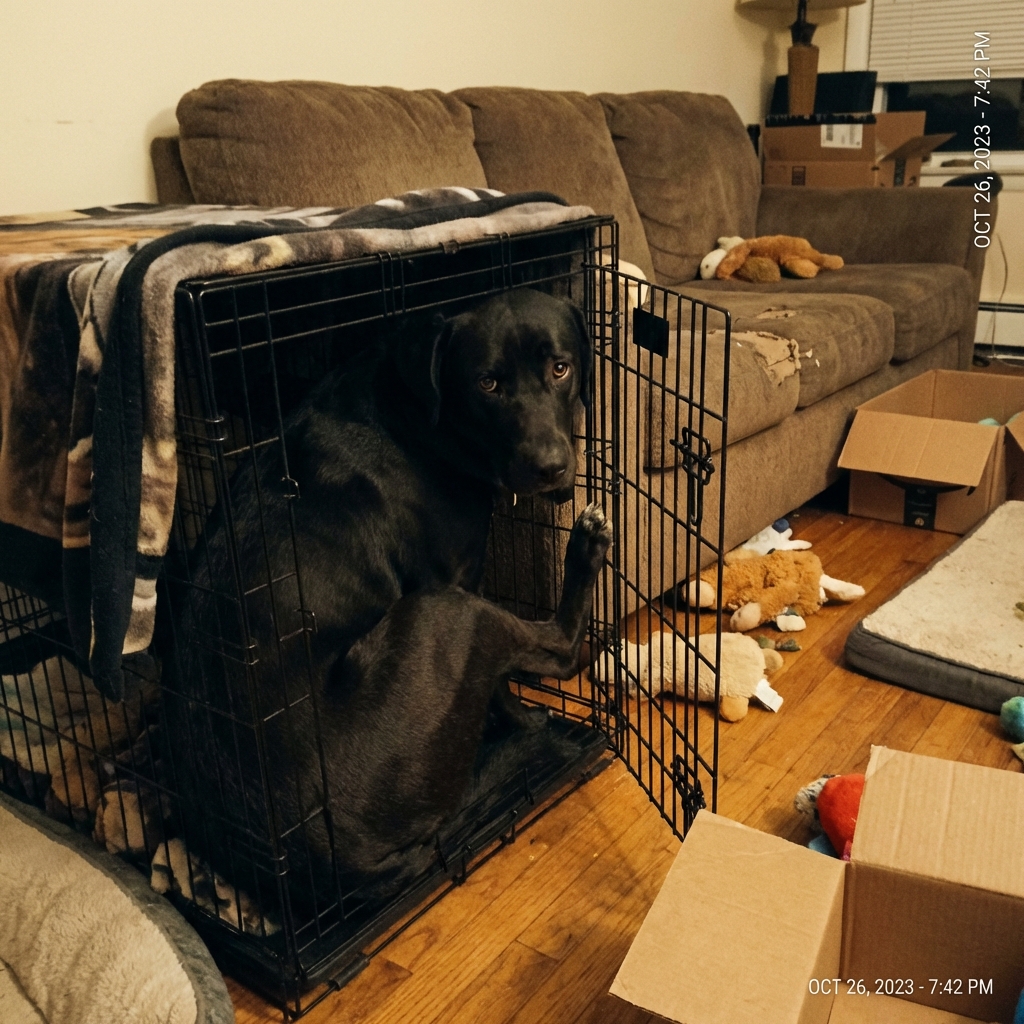
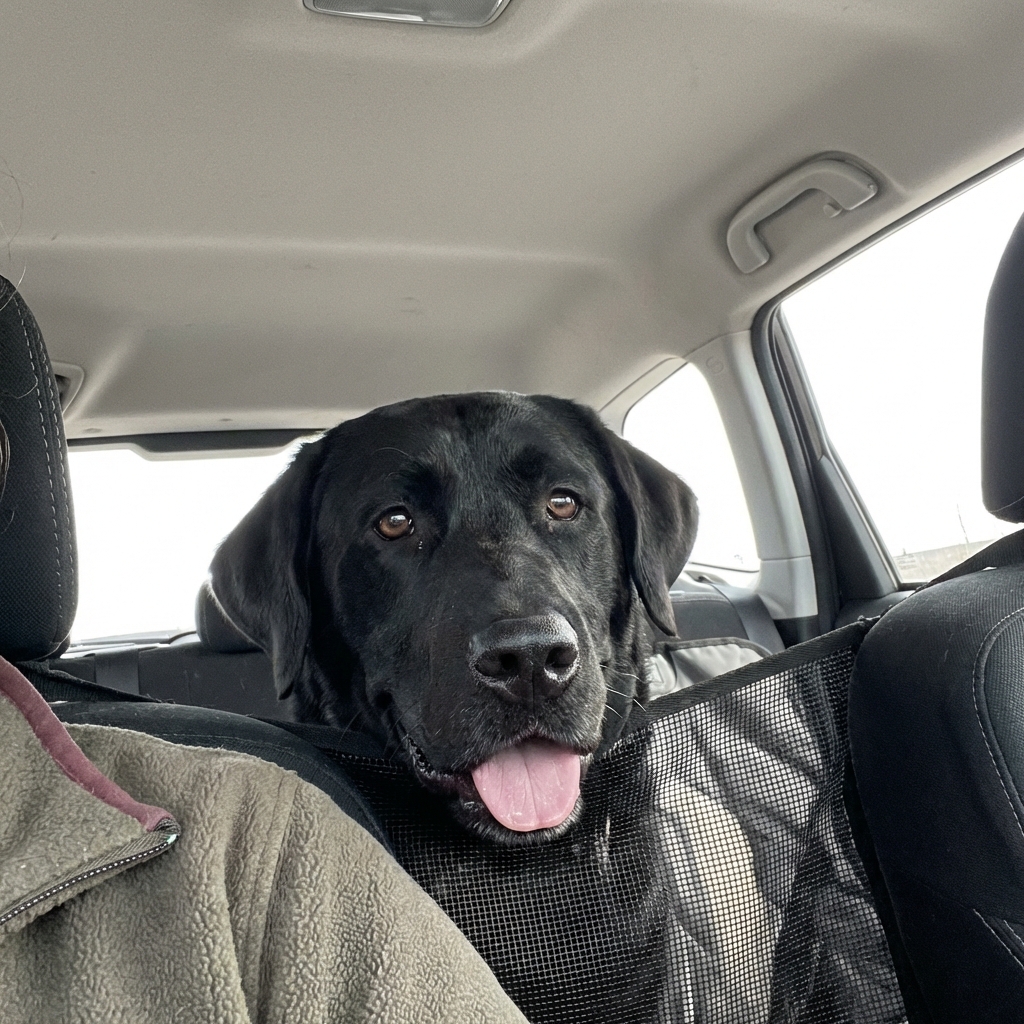
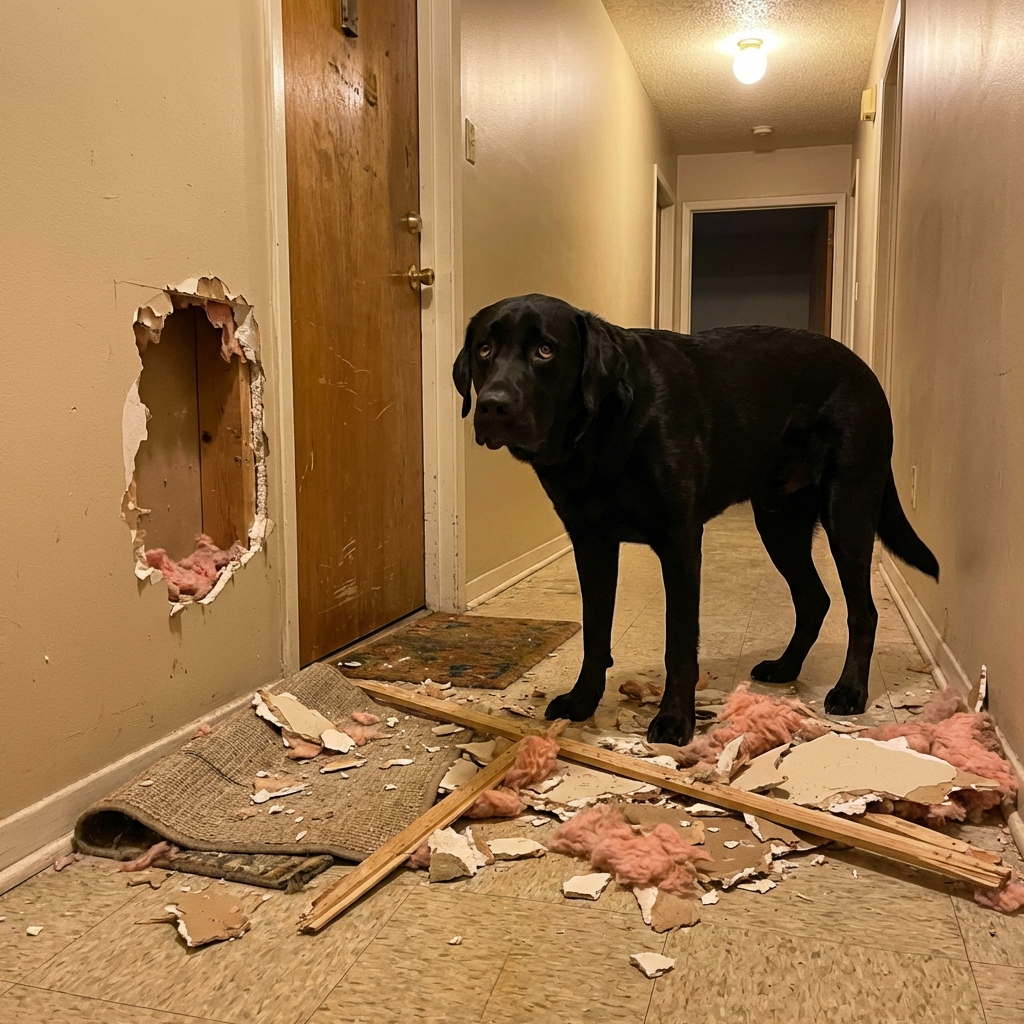
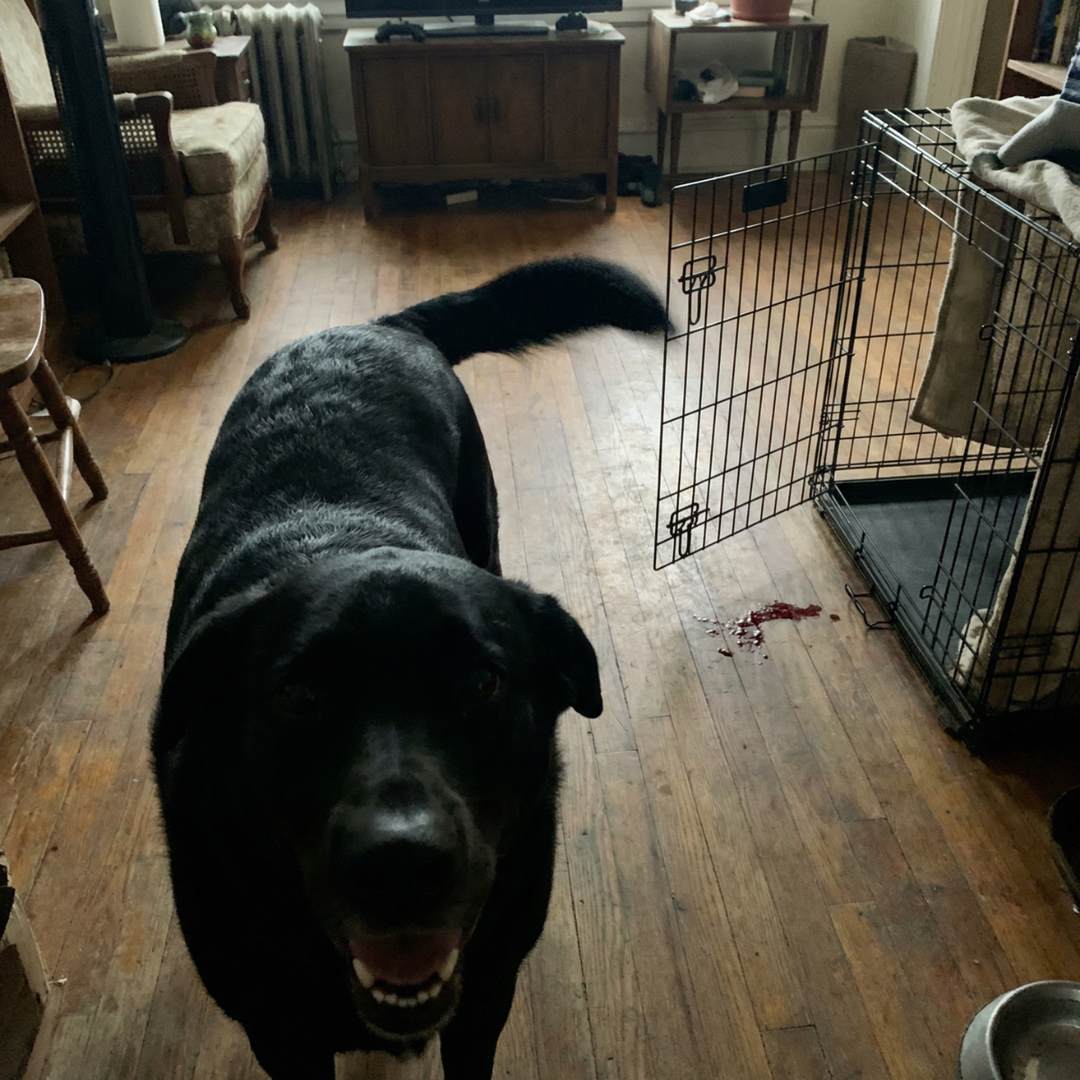
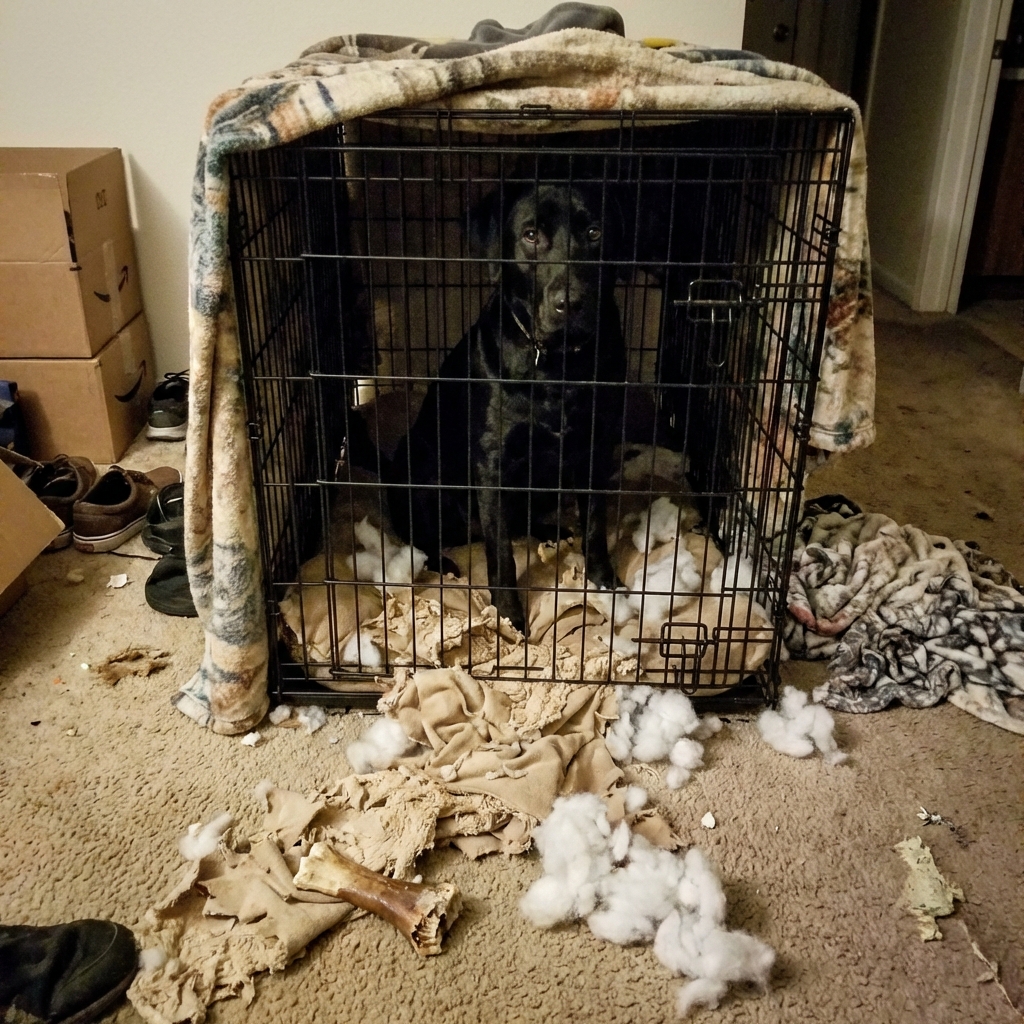
Last April I drove to the shelter to give Bear back. I sat in the parking lot for forty minutes with the engine running and the surrender paperwork on the passenger seat and my hands shaking on the steering wheel. Bear was in the back seat. He had his chin on my shoulder the way he always does in the car, and his tail was going because he thought we were going somewhere fun. He had no idea what I was about to do. If you have a dog who barks when you leave, or destroys things when you're gone, or loses his mind every time someone knocks on the door, I need to tell you what happened next. Because I was about to give up the best dog I've ever had. And the woman at the shelter counter is the reason I didn't. -- I adopted Bear in March of 2021. Right in the middle of COVID, when I was working from home and had all the time in the world and thought this is it, this is the perfect time to get a dog. He was a two-year-old lab mix at a rescue outside Richmond. Black fur, brown eyes, the kind of face that makes strangers stop you on the street. The rescue said he'd been returned twice before. They were honest about it. They said he had some anxiety but he was sweet and trainable and just needed someone with patience and consistency. I thought I was that person. And for a while, I was. -- For the first year and a half, Bear was perfect. He slept at the foot of my bed and followed me from room to room and curled up under my desk while I worked. He was calm on walks, friendly with other dogs, and so gentle with kids that my neighbor's daughter would walk him around the block by herself. I loved this dog so much it scared me a little because I knew that feeling was the kind you can't take back. But the whole time I had Bear, I was home. Every single day. For eighteen months he was never alone for more than an hour because my office was my kitchen table and my commute was twelve steps down the hallway. I didn't realize I was building a bomb. -- My company called everyone back in September of 2022. Three days a week in the office. No exceptions. Bear's first day alone was a Tuesday. I left at 7:30 AM and came home at 5:15 PM and the apartment looked like someone had broken in. The couch cushions were on the floor. The blinds were shredded. There was a puddle of drool the size of a dinner plate by the front door. And Bear was sitting in the middle of it, shaking, and when he saw me he climbed into my lap and wouldn't let go for twenty minutes. I thought it was a one-time thing. I thought he'd adjust. He didn't adjust. -- The next six months were the worst six months of my life. Every day I left for work knowing what was coming. And every day I came home to the evidence. The drool puddle by the door got bigger. Then it became two puddles, one by the door and one by the window. Then I started finding wet spots on the couch where he'd panted and drooled for so long the fabric was soaked through. He chewed the baseboards along the front hallway down to the drywall. He scratched the paint off the inside of the front door so badly that the bare wood was showing through. I bought a crate. He bent the bars with his jaw trying to get out and cut his gums in the process. I came home to blood on the metal and blood on the floor and Bear standing in the middle of the living room with his mouth bleeding and his tail wagging because he was so happy to see me he'd already forgotten what he'd just done to himself. That was the first time I cried. It would not be the last. -- I tried everything. I need you to understand what "everything" means because I know you've probably tried a lot of things too and you think your situation is different. I bought calming treats from three different brands. They did nothing. I bought a ThunderShirt and it helped for about two days and then he figured out how to pull it off with his teeth. I bought CBD oil that cost forty dollars a bottle and I put it on his food every morning for six weeks and there was zero change. I left the TV on. I left music on. I bought a diffuser that plugged into the wall and was supposed to release calming scents and I don't even know if it worked because the apartment still looked like a disaster zone every time I got home. I hired a trainer for $200 a session. She was wonderful and Bear was wonderful with her and the minute she left he was the same dog who clawed the door when I went to work. I spent over $1,100 in four months on things that didn't work. And every morning I'd leave for the office and pull up the webcam app on my phone and watch Bear pace back and forth in front of the door for eight hours straight. That webcam was the cruelest thing I did to myself. Because I couldn't stop checking it. Every hour, sometimes every thirty minutes, I'd open the app and watch my dog suffer and there was absolutely nothing I could do about it from my desk. I'd sit there watching him pace and pant and drool and whine and I'd think: I did this to him. He was fine when I was home. I'm the reason he's like this. -- The complaints started in January. My neighbor in 4B left a note on my door. Polite but firm. He said the barking started within minutes of me leaving every morning and went on for hours. I apologized and bought him a bottle of wine and told him I was working on it. Two weeks later my landlord emailed me. He'd received two complaints from separate units. He said if it continued he'd have to consider whether Bear violated the lease. I read that email at my desk and my stomach dropped through the floor because I knew exactly what "consider whether Bear violated the lease" meant. It meant I could lose my apartment. And I live in a city where finding a dog-friendly apartment I can afford took me four months the first time. I didn't sleep that night. I lay in bed with Bear curled against my legs, this sweet, warm, trusting animal who had no idea that the world was closing in on both of us, and I stared at the ceiling and did the math on how many months I had before one more complaint turned into an eviction notice. -- The vet appointment was in February. I'd been dreading it because I already knew what she was going to say. She examined Bear and asked me to describe what was happening and I told her all of it. The pacing, the drool, the destruction, the self-injury, the crate, the bleeding gums, the complaints, the landlord email. She listened and she nodded and then she said the word I'd been running from. "I think we should talk about medication. Something like fluoxetine." Prozac. She was talking about putting my dog on Prozac. I sat there in that exam room with Bear on the floor between my feet and I felt something close in my chest. "Is there anything else I can try first?" She looked at me with this expression that was kind but also tired, the face of someone who has this conversation six times a week and knows that the owner sitting across from her is going to push back no matter what she says. "You've tried a lot already. At this point, I think medication is the responsible next step." I said I'd think about it. I went home and I Googled "fluoxetine side effects dogs" and I read about lethargy and appetite changes and personality shifts and the possibility that my sweet, goofy, tail-wagging Bear would become a different dog. And I know medication helps a lot of dogs and I'm not judging anyone who goes that route because everyone is doing the best they can. But I wasn't ready. I just wasn't ready to do that to him yet. -- Two more months of the same. The complaints kept coming. The landlord sent a second email. My savings account was empty from trainer sessions and products and vet visits and replacing everything Bear destroyed. And then one night in April I was lying on the floor next to Bear, rubbing his belly while he slept, and I realized I couldn't remember the last time I'd gone out to dinner or seen a friend or done anything that required me to leave the apartment for more than an hour. I realized I'd been rearranging my entire life around this dog's anxiety for eight months and it was getting worse, not better, and I was running out of money and running out of options and running out of whatever it is inside you that keeps you going when nothing is working. I'd cried more in those eight months than I had in the previous five years combined. I called the shelter the next morning. -- The drive was twenty minutes. Bear sat in the back seat with his chin on my shoulder and his tail going. I pulled into the parking lot and turned off the engine and sat there. I had the surrender paperwork printed out. A friend had told me to fill it out at home so I wouldn't have to do it there, because doing it there would break me. She was right. I couldn't get out of the car. I sat there with the windows up and Bear's breath on my neck and I thought about the day I brought him home and how he'd walked into my apartment and sniffed every corner and then crawled onto the couch and put his head in my lap and looked up at me like he'd been waiting for me his whole life. He'd been returned twice before I got him. If I walked in there and handed over that paperwork, it would be three times. Three times this dog would watch someone he loved walk away. I sat in that parking lot for forty minutes. Then I wiped my face and got out and walked inside. -- The intake coordinator's name was Diane. She was maybe late fifties, short hair, reading glasses on a chain around her neck, and she had the kind of face that told you she'd been doing this work for a very long time and had seen every version of the person standing in front of her. I handed her the paperwork and she looked at it and looked at Bear and looked at me. "How long have you had him?" "Two years." "And the anxiety started when you went back to work?" "Yes." She nodded like she'd heard this exact story a hundred times because she had. "Have you tried medication?" "My vet recommended it. I'm not... I wasn't ready for that." She looked at me for a long time. Then she put the paperwork down on the counter and said something I didn't expect. "Can I ask you to do one thing before I process this?" I stared at her. "I've been running intake here for fifteen years," she said. "And I've watched hundreds of dogs come back through those doors for exactly this reason. Separation anxiety, destruction, barking, landlord problems. It's the number one reason people surrender." She reached under the counter and pulled out a collar. It was soft, flexible, the kind of thing that looked like it belonged on a dog. "This is a pheromone collar. And before you tell me you've tried calming products, I need you to hear me out, because this is not the same thing as those treats or that plug-in diffuser or that lavender spray." I must have made a face because she smiled a little. "I know. I know you've tried everything. That's what everyone says when they get to my counter. But I need to explain something about why none of those things worked, because once you understand that, this will make a lot more sense." -- She came around the counter and sat down across from me in the lobby. Bear was lying at my feet, calm as always when I was right next to him, which was part of what made this whole thing so heartbreaking. He was the best dog in the world as long as I was in the room. "Your dog's problem isn't that he's badly behaved," Diane said. "His problem is chemical. Every time you leave, his body floods with stress hormones. Adrenaline, cortisol. Those are the same chemicals that would fire if he was being chased by a predator. His brain can't tell the difference between you going to work and you disappearing forever." She looked at Bear. "And those chemicals don't just vanish when you walk back through the door. They take a couple of days to fully clear out of his system. So a dog who gets triggered every single morning when his owner leaves for work never truly comes back down. His stress baseline just stays elevated all the time. And a dog running on high stress hormones all the time is a dog for whom everything feels too loud and too fast and too much." That hit me hard. Because it explained something I'd been noticing for months. Bear wasn't just anxious when I left anymore. He was anxious all the time. Startling at sounds he used to ignore. Pacing in the evenings. Following me to the bathroom like he was afraid I'd disappear if he lost sight of me for ten seconds. His whole nervous system was stuck in overdrive and it had been stuck there for months and nothing I'd thrown at it had touched the actual problem. "The calming treats you bought work on a completely different pathway," Diane said. "They're basically mild sedatives. They make the dog drowsy. But drowsy doesn't mean calm. A drowsy dog who's still flooded with cortisol is just a tired, anxious dog. The ThunderShirt is pressure, which helps some dogs in the moment but doesn't do anything about the chemical cascade happening in his brain. The diffuser only works in whatever room it's plugged into, so the second Bear walks away from it, the effect is gone." She held up the collar. "This works on his brain directly. There are two specific pheromones in here. One is called DAP, the Dog Appeasing Pheromone. It targets the emotional processing centers in the brain and dials the stress response down before it has a chance to build. The other is called MAP, the Maternal Appeasing Pheromone. It mimics the exact scent of a mother dog. It's the oldest safety signal your dog's brain knows. Every puppy in every litter has been wired since birth to recognize that scent as safe." "And the collar releases them constantly?" "It does. But here's the part that makes it different from anything else on the market. It uses thermal activation. When your dog's body temperature rises, which happens the moment he starts getting stressed, the collar detects that and releases a higher concentration of pheromones automatically. So it responds to his anxiety in real time, without you doing anything, without you even being in the room." She looked at me. "Give me seven days. Put this on Bear and go to work and live your life for seven days. If nothing changes, bring him back and I'll process the surrender paperwork myself. But give him seven days." I looked at Bear. He was asleep at my feet. I took the collar. -- Day one. I clipped the collar on Bear that morning before I left for work. He sniffed it for about ten seconds and then forgot about it. I drove to the office and pulled up the webcam at my desk. He was pacing. Same as always. Back and forth in front of the door, whining, panting, stopping to stare at the door and then pacing again. My stomach sank. I watched for another twenty minutes and nothing changed and I closed the app and put my phone in my drawer and told myself this was just another thing that doesn't work and I'd be back at the shelter by Saturday. When I got home the apartment wasn't destroyed. Bear had chewed a corner of the couch cushion, which was minor compared to what he usually did. But the baseboards were untouched. The door was untouched. No drool puddle. I didn't think much of it. Maybe it was just a better day. -- Day three. I opened the webcam at lunch and Bear was lying down. He was on the couch, not pacing, not at the door. He lifted his head when a car horn honked outside and then put it back down. I stared at my phone. In eight months of checking that webcam I had never once seen him lying down during the day. He was still getting up every few minutes to pace for a bit and then lying back down, so it wasn't like he was completely calm. But the baseline was different. The frantic, nonstop, eight-hours-of-pacing pattern was broken. Something was happening. -- Day five. I got home from work and Bear was at the door. Tail wagging. Not frantic. Not panting. Not covered in drool. Just happy to see me. I walked through the apartment. No chewing. No scratching. No destruction. No drool on the couch or the floor. I stood in my living room and looked around at my clean, undamaged apartment and I felt this weird disorientation, like I'd walked into the wrong unit. I'd been living in crisis mode for so long that normal felt unfamiliar. -- Day seven. I opened the webcam at work. Bear was asleep on the couch. I watched for a long time. He shifted once, curled tighter, and went back to sleep. Just a dog, sleeping on a couch, in a quiet apartment, in the middle of a Tuesday. I sat at my desk and cried so hard my coworker asked if I was okay. I called Diane at the shelter. "I'm not bringing him back." She laughed softly. "I know you're not." -- The weeks after that were like watching someone come back to life. By the end of the second week, the walks had changed. Bear used to lunge at other dogs on the leash, pulling so hard I'd lose my grip sometimes. Not anymore. He still noticed other dogs and he still tensed up, but the explosions were shorter and he'd recover in seconds instead of being wired for the rest of the walk. By week three, my apartment was quiet. I don't mean quiet when I was home. I mean quiet when I wasn't home. My neighbor in 4B stopped me in the hallway and said "I don't know what you did but I haven't heard a thing in weeks." I almost hugged him. By week four, I realized something that made me sit down on my kitchen floor and just breathe. I hadn't checked the webcam in four days. Not because I'd been busy. Because I'd forgotten. Because for the first time in almost a year, I wasn't afraid of what I'd see. -- I went back to the vet for Bear's annual check-up in May. She looked at his gums, which had fully healed from the crate incident. Checked his teeth. Checked his weight. Asked how things were going. I told her about the collar and the seven days and the webcam and the neighbor. She looked at Bear lying on the floor of the exam room, calm, relaxed, tail doing a lazy wag. "So we're not talking about medication?" "We're not talking about medication." She wrote down the name of the collar. "I'm going to start recommending this to other owners," she said. "Because most of them are sitting where you were sitting four months ago and they need something before they're willing to try the next step." -- I need to explain what this collar is because the name alone won't mean anything to you and I don't want you to think it's just another calming product. It's called a CalmiCollar. It contains both DAP and MAP, the two pheromones that veterinary researchers have been studying for over twenty years. Most calming products on the market contain one of these at best, and a lot of them use synthetic copies that don't work the same way. The CalmiCollar uses both, together, which the research shows produces results that are in a completely different category than either one alone. Nine out of ten dogs in the studies showed a significant reduction in reactive behaviors when both pheromones were combined. And because it's a collar, it goes everywhere your dog goes. On a walk, in the car, at the vet, in every room of the house. A diffuser only works in the room it's sitting in. The moment your dog moves, the diffuser stays behind. The CalmiCollar doesn't stay behind. It's right there against his neck, close to his nose, where those pheromones reach him at full concentration. The thermal activation is what makes it work in a way I've never seen from anything else. The collar detects when your dog's body temperature rises, which happens automatically the moment he starts getting agitated, and it responds by releasing a higher dose of pheromones in real time. So it's not a static, one-speed product. It actually reacts to your dog's stress as it's happening. You clip it on and forget about it. That's it. It works in the background while you live your life. -- I bought a three-pack the morning after I called Diane. One collar lasts about thirty days, and Diane told me the most important thing is not to leave a gap between collars because the calming effect builds over time and you don't want to let the stress hormones creep back up to where they were. Month one was the shift. Month two was when it stopped feeling like something I was managing and started feeling like it was just... gone. Month three was when my friend came over for dinner, the first time I'd had anyone over in almost a year, and she looked at Bear sleeping on the couch while we ate and said "Is this the same dog you were crying about in January?" Same dog. Same apartment. Same owner. Different collar. -- I told Diane's story to my friend Laura because Laura has a rescue with the exact same problem. A German Shepherd mix who destroyed the blinds and the baseboards and screamed for hours when she left and caused so many complaints that her landlord threatened to evict her. Laura was three weeks away from surrendering him when I gave her a CalmiCollar. She texted me on day four. Just a screenshot of her webcam. Her dog was lying on his bed. In the middle of the afternoon. She added one line: "Is this real." It was real. She texted me again at the end of week two and said "I didn't realize how bad I felt every day until I stopped feeling it." That's what living with an anxious dog does to you. The stress creeps up so slowly that you forget what normal feels like. You forget what it's like to leave your apartment without your stomach tightening. You forget what it's like to come home without bracing yourself for destruction. You forget what it's like to just... have a dog. A normal, happy, calm dog who sleeps on the couch and wags his tail when you come home and doesn't destroy your life the moment you walk out the door. -- I need to tell you about one more person because it's the part of this story that still keeps me up at night. There was a woman at the shelter the day I went to surrender Bear. She was in the lobby when I walked in. She had a pit mix on a leash and she was signing the paperwork and she was crying. I didn't talk to her. I was too wrapped up in my own panic to talk to anyone. But I think about her all the time. Because she walked in and signed and walked out without her dog. And I walked in and Diane stopped me and gave me seven days and now Bear is asleep on my couch right now as I'm typing this. The only difference between that woman's story and my story is that someone intervened at the counter. Diane told me later that the woman had tried calming treats and a thunder shirt and CBD and nothing had worked and she'd run out of money and run out of patience and she surrendered the dog and the dog was back in the shelter system. I don't know what happened to that dog. I don't know if someone adopted him or if he's still there or if he was one of the ones who doesn't get adopted a fourth time. But I know that if Diane had talked to that woman the way she talked to me and pulled a collar from under the counter and said "give me seven days," there's a real chance that woman would still have her dog. That's why I'm writing this. -- Now here's what a CalmiCollar costs compared to what you've probably already spent. If you're anything like me, you've burned through $300 to $1,000 on calming treats and thunder shirts and CBD oils and diffusers and trainer sessions that didn't fix the problem. I spent $1,100 in four months. A single session with a certified veterinary behaviorist starts at $150 to $300 just for the initial consultation. Follow-up sessions run $100 to $200 each. And for separation anxiety they typically recommend a minimum of eight to twelve weeks of structured work. By the time you're done, you're looking at over $1,500. Prozac or fluoxetine runs $30 to $100 a month plus the vet visits to monitor it, and your dog stays on it indefinitely. Replacing the things your dog destroys, the doors, the blinds, the baseboards, the crates, that can run into the thousands. A CalmiCollar costs about what you'd spend on a bag of good dog food. The three-pack, which is what I'd recommend because you don't want gaps between collars, brings it down even further per collar and gets you through the critical first three months where the real transformation happens. Every order comes with a sixty-day guarantee. If you don't see a real difference in how your dog behaves when you leave, when someone knocks on the door, when he's on the leash, you get every penny back. But I'll tell you right now, you're not going to ask for it back. You're going to clip that collar on and live your life and on day three or four or five you're going to open your webcam or walk through your front door and see something you haven't seen in months and you're going to feel what I felt standing in my clean apartment on day five not knowing what to do with the relief. -- These sell out. I know that sounds like a sales line but I'm telling you as someone who's bought them multiple times now, the production process is slow because of the way the pheromones are infused and the thermal activation technology is manufactured. They can't just restock overnight. Diane told me the shelter ran out of their supply twice last spring because so many owners were coming through her intake line with the same story and she kept handing them out. If the link below this is still active, they're in stock right now. If it's not, you missed this batch and you'll have to wait, and the wait can stretch to weeks. -- It's been eleven months since I sat in that shelter parking lot with the surrender paperwork on my passenger seat. Bear is lying on the couch right now with his chin on the armrest and his eyes closed. He's been like this since I got home from work three hours ago. No pacing. No panting. No drool. No destruction. No barking. No complaints. No landlord emails. No shaking hands on the steering wheel in the shelter parking lot. Just a dog on a couch. Just a normal, calm, happy dog who sleeps when I leave and wags his tail when I come home and doesn't destroy my apartment or my life or my heart anymore. I almost gave him up. I was standing at that counter with the paperwork in my hand and I was about to sign it and a woman I'd never met said "give me seven days" and pulled a collar from under the counter and everything changed. Not everyone gets a Diane. But everyone can get the collar. The link is right below. If your dog is struggling and you're running out of options and you're not ready for medication and you're not ready to give up, try this first. Seven days. That's all I'm asking. https://try.calmicollar.com/ccl-dog-adv-rev03-26 https://try.calmicollar.com/ccl-dog-adv-rev03-26 https://try.calmicollar.com/ccl-dog-adv-rev03-26
I Almost Surrendered My Dog
YES! My border collie was allergic to everything. Started Inno Dog 2 months ago and she's a different dog. No more ear infections, no more hot spots. Even my skeptical husband is amazed.
LEARN MORELike this ad? Make it yours.
Crush rebuilds this exact creative around your product — your brand, your colors, your offer — in about a minute.