Amelaine
Amelaine Facebook ad: “Ages 8-15 is the most critical window of your child's…”
Ran for 2 days, from May 3 to May 5, 2026, the last day Crush saw it.
Run by Amelaine on Facebook. Crush is not the advertiser and does not verify its claims. See this ad in Meta's Ad Library(opens in a new tab)
Want an ad like this for your product?
Crush makes new ad images for your product from this ad: your logo, your product photo, your offer.
Trials from $19.95 USD, then $79.95 USD a month. Cancel anytime.
About this ad
- Meta Ad Library ID
- 1452061586696787
- Platforms
- Facebook, Instagram, Audience Network, Messenger and Threads
- Relaunches
- 0
Ad text
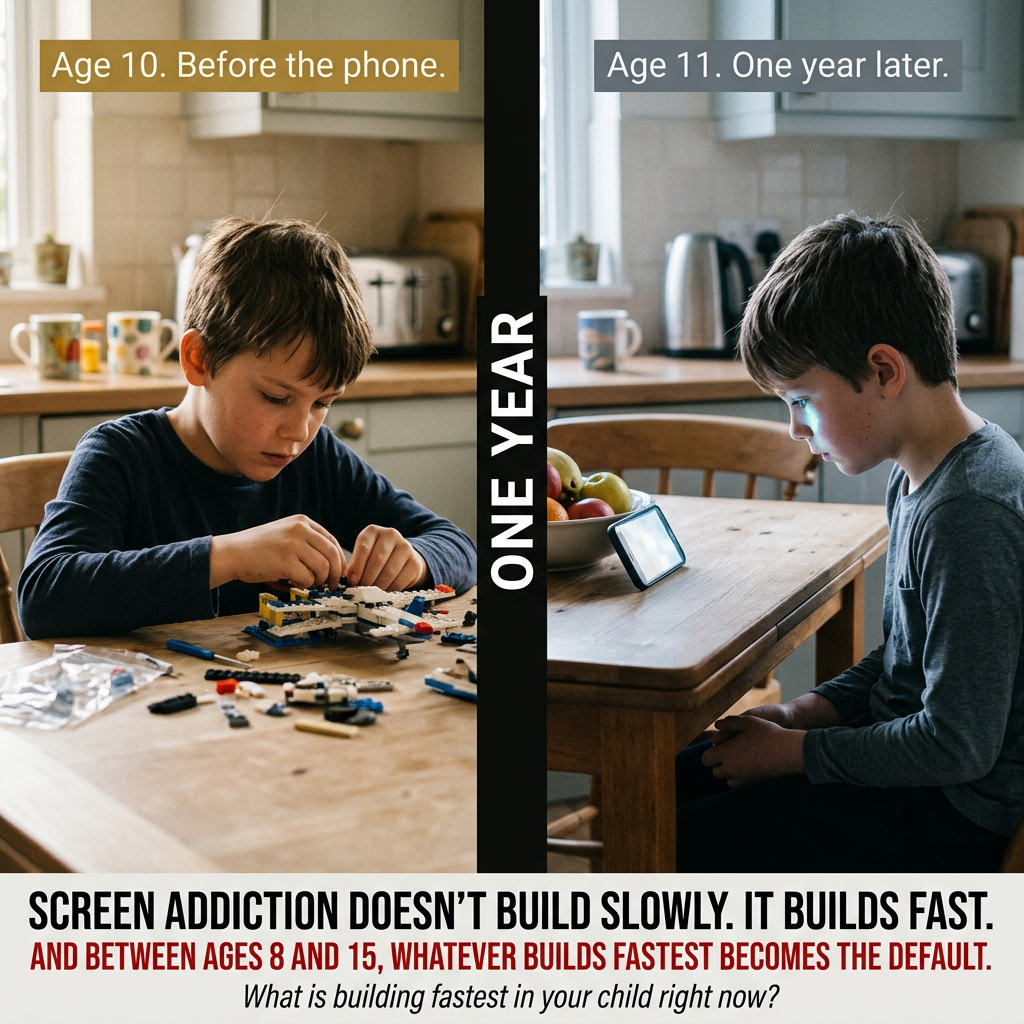
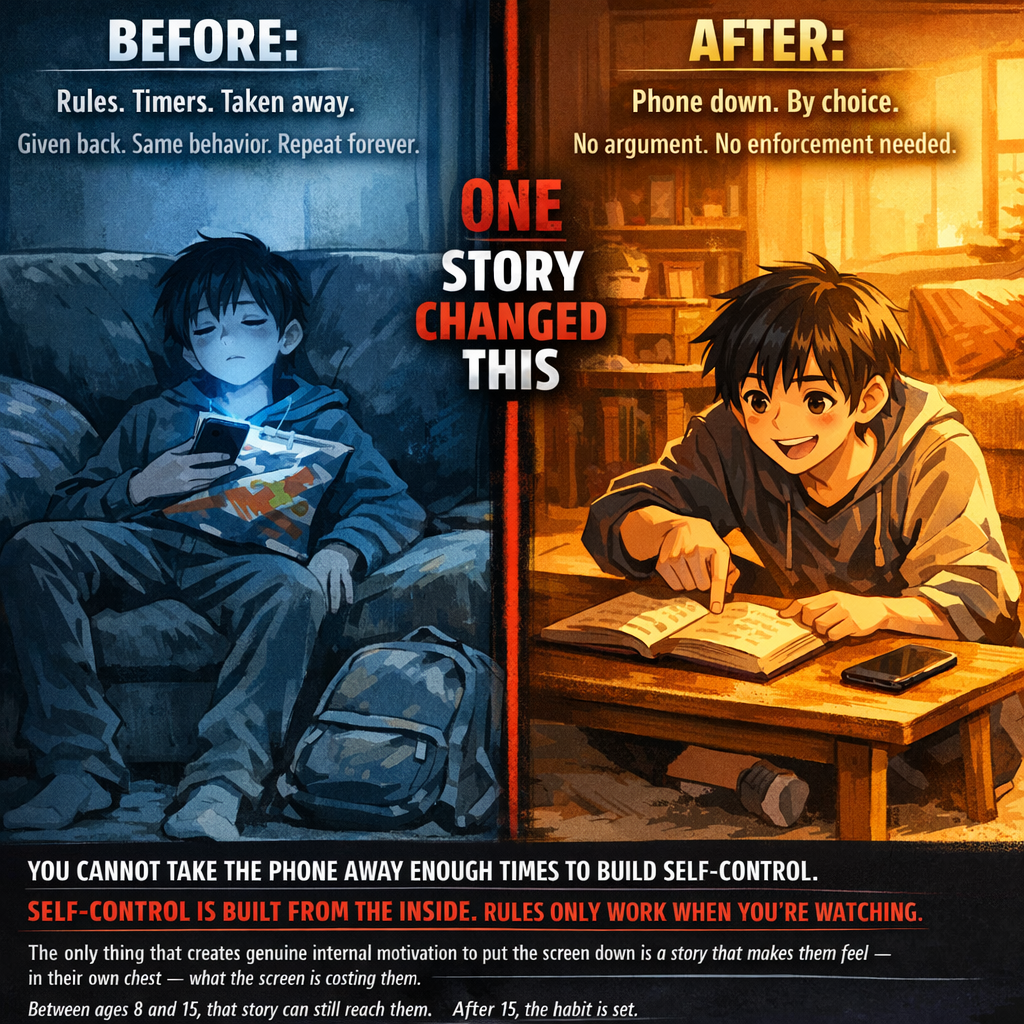
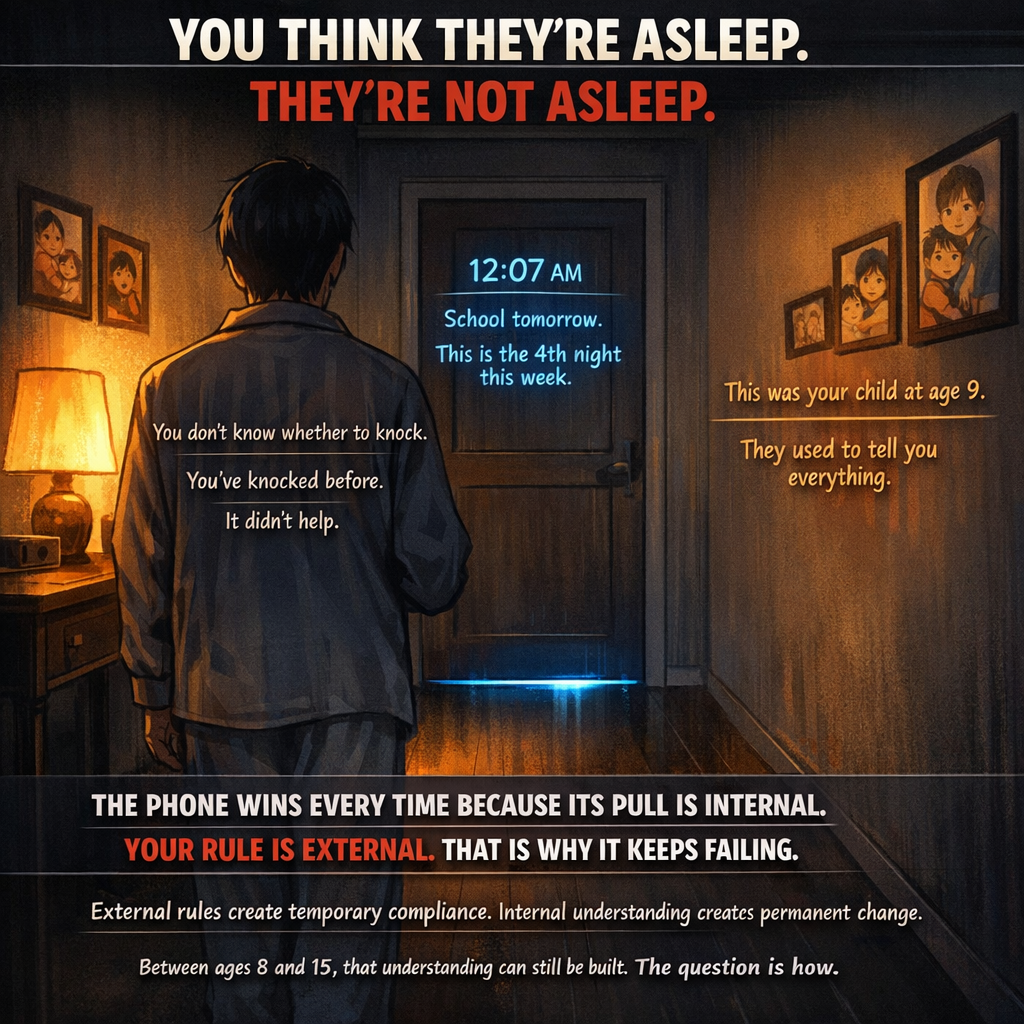
Your family is at the dinner table. Your child is also at the dinner table — in the same sense that a coat hanging on a chair is also at the dinner table. Physically present. Completely elsewhere. You have tried screen time limits. The limit works until it doesn't, which is approximately two days after you set it. You have tried taking the phone away entirely, which produced the most unpleasant week of both your lives and solved nothing the moment you gave it back. You have tried conversations — calm ones, firm ones, emotional ones — and watched every single one evaporate without trace by the next morning. Here is why nothing has worked: You have been trying to solve an internal problem with external tools. Screen addiction at ages 8–15 is not a defiance problem. It is not a technology problem. It is the complete absence of an internal reason to choose presence over stimulation — a reason that lives inside the child rather than on a timer you set, a rule you enforce, or a consequence you apply. That internal reason cannot be installed through instruction. It can only be grown through a story — one close enough to your child's own experience that they feel, in their own chest, what the screen is costing them. A story they arrive at themselves, not one you hand them. Addicted to Discipline by Doris Walton has an entire chapter called "Don't Be Addicted to Your Mobile Phone." Your child reads it not as a lesson but as entertainment — and walks away having felt something no lecture ever made them feel. That feeling is what permanently changes behavior. Not the rule. The feeling. Over 100 lessons in comic format. Ages 8–15. Click now and see why so many parents are getting this before these patterns become harder to change.
Where the ad sends people
amelaine.com
Ages 8–15 is the most critical window of your child's development. Most parents waste it without realizing. Don't be one of them.
Comic-style lessons that help kids build better habits, emotional control, and self-discipline.
Shop now: amelaine.com(opens in a new tab)