
Inactive· since Mar 31, 2026
- 64
- days it ran
- 0
- relaunches
Ad copy
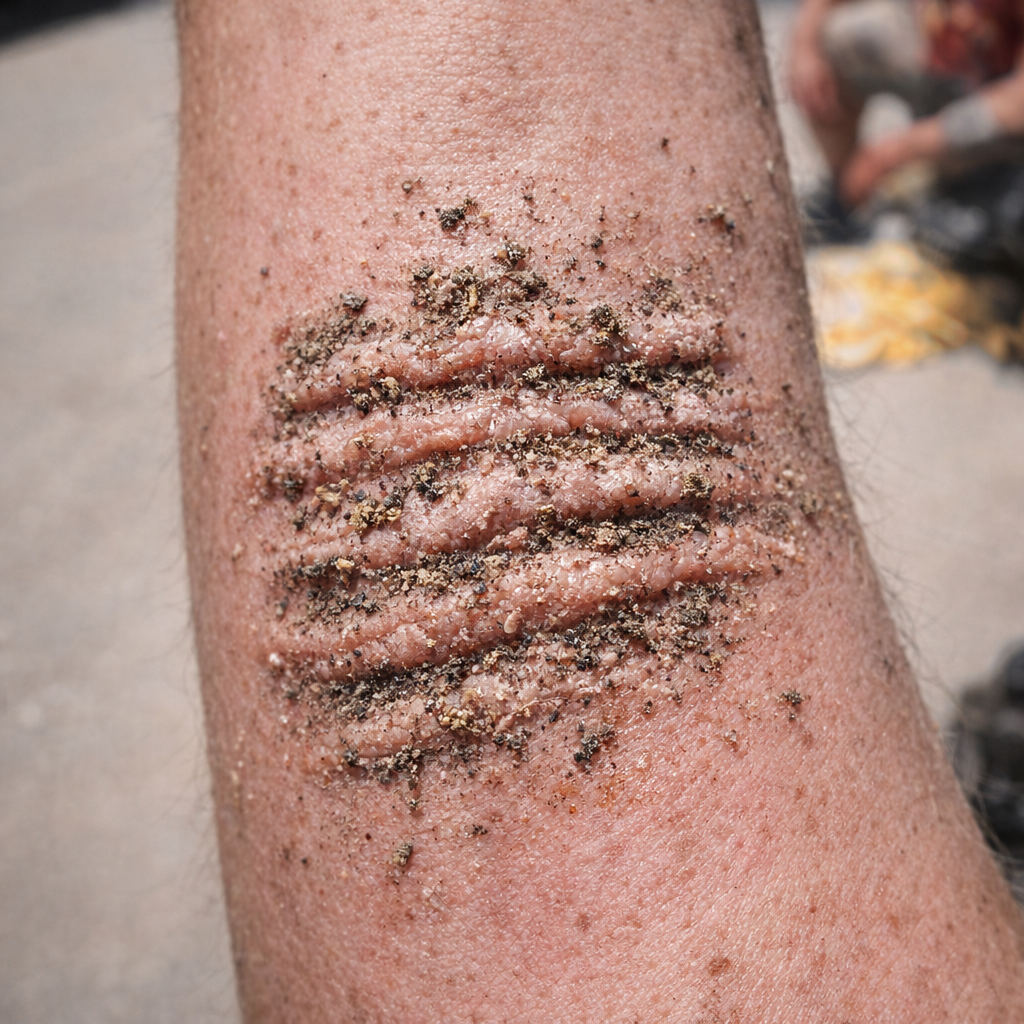
The paramedic pulled a strange bandage from my neighbor's wound and said, "Who applied this? This is Israeli military gear - it's the only reason he's still breathing." I raised my hand like a kid in school. "I did." He looked at me differently then. Not like a civilian. Like someone who knew. "Where'd you learn that?" "YouTube," I said. "Two weeks ago." He laughed. But it wasn't a mocking laugh. It was the laugh of someone who's seen too many people bleed out while neighbors stood around holding dish towels. "Well," he said, checking the bandage one more time. "You probably saved his life. We're still twenty minutes from trauma center." My neighbor - Dave, the guy who always waves when he's mowing his lawn - was gray. Conscious, but gray. His hand was wrapped in what looked like a white elastic bandage with a built-in pressure cup. The thing that the paramedic called "Israeli military gear." Three hours earlier, it was sitting in a red pouch in my garage. Three hours earlier, I wasn't sure I'd ever actually need it. I stood there in Dave's driveway, watching the ambulance pull away, and my hands wouldn't stop shaking. Not from the blood. From the realization of what almost happened. Let me back up. Two weeks before that Saturday morning, I was at my brother-in-law's house for a barbecue. His kid - sixteen years old - was showing off some knife trick he learned online. It went exactly how you'd expect. The blade slipped. Caught his palm. Deep. There was a lot of screaming. A lot of blood. My brother-in-law ran inside for their first aid kit. He came back with a white plastic box covered in dust. Inside: band-aids. Lots of them. Some alcohol wipes. Tiny packets of antibiotic ointment. And gauze pads the size of Post-it notes. He pressed one against his son's hand. It was soaked through in seconds. He added another. Another. By the time the ambulance arrived - eleven minutes, felt like an hour - he'd used the entire box. His kid was fine. Fourteen stitches. Missed a major tendon by millimeters. But that night, I couldn't stop thinking about it. Eleven minutes. And all we had were tiny squares of gauze. I went home and dumped out my own first aid kit on my kitchen table. I counted. One hundred and sixty-four pieces. Seventy-eight were adhesive bandages. Twenty-six were alcohol wipes. Fifteen were sting relief pads. I had three gauze pads. Total. Each one was two inches by two inches. I sat there staring at this pile of stuff, and I felt something I hadn't felt in a long time. Stupid. Not unprepared. Stupid. Because I'd bought this kit. I'd put it in my bathroom. I'd told myself I was being responsible. But the truth - the truth that was now impossible to ignore - was that I'd bought a box of comfort. Not capability. If someone in my house had a real injury, I had nothing. I started searching. "What to do severe bleeding" "How to stop bleeding fast" "Emergency first aid serious cuts" And that's when I found it. A video. Some former Army medic in his garage. Title: "Why Your First Aid Kit Will Get Someone Killed" I almost didn't click it. Seemed dramatic. But something made me watch. He held up a standard drugstore first aid kit. "This," he said, "is designed for boo-boos. Scraped knees. Paper cuts. Bee stings." Then he held up a black pouch. "This is designed to keep someone alive until the ambulance gets there." He opened it. Inside was stuff I'd never seen before in a first aid context. A tourniquet. Bright orange, with a windlass and velcro. A pressure bandage with some kind of plastic dome on it. Gauze that looked thick, substantial. Not flimsy. "This is an IFAK," he said. "Individual First Aid Kit. This is what soldiers carry. What cops carry. What firefighters keep in their trucks." He held up the pressure bandage. "This is called an Israeli bandage. Developed after the Yom Kippur War. It's a pressure dressing that actually creates focused pressure on a wound. Not just covering it. Actually stopping the bleeding." He demonstrated on his own arm. The way it wrapped. The way the plastic pressure applicator focused force directly on the wound site. It was so simple. And so obvious. And I'd never seen one in my life. "Here's what people don't understand," he said. "When someone has severe bleeding - from a car accident, a workshop injury, a bad fall - you've got about three to five minutes before they go into hemorrhagic shock." He paused. "Average ambulance response time in the US is eight to ten minutes." He let that sink in. "You see the problem?" I did. For the first time, I actually did. I'd been living under this assumption - this comfortable lie - that if something bad happened, I'd call 911 and help would come. But the math didn't work. The math had never worked. I spent the next four hours watching videos. Learning about tourniquets. About hemostatic gauze. About the difference between civilian first aid and tactical medicine. I learned that everything this guy was showing me wasn't secret. Wasn't restricted. It was just... not talked about. The Red Cross teaches CPR and basic first aid. The Boy Scouts teach bandaging and splints. But the stuff that actually stops someone from bleeding out? That was in a different world. A world I didn't even know existed. I ordered a trauma kit that night. Spent $120. When it arrived, I opened it on my kitchen table and just looked at it. The Israeli bandage was wrapped in plastic. Instructions printed on the package. The tourniquet was heavier than I expected. Solid. The hemostatic gauze was vacuum-sealed. It felt serious. Not cheerful. Not decorated with cartoon first aid symbols. Serious. I watched the training videos. Practiced the tourniquet application on my own leg. Felt ridiculous doing it. But I did it anyway. Because I couldn't unsee what I'd learned. I couldn't go back to believing that my box of band-aids was enough. Two weeks later, on a Saturday morning, I was in my garage when I heard the scream. That sound - you know it when you hear it. Not surprise. Not pain from a stub toe. Terror. I ran outside. Dave was in his driveway. His hand was inside his lawn mower. He was trying to clear wet grass from the blade. While it was running. I don't know what he hit. The blade. Something sharp inside. But when he pulled his hand out, there was blood pulsing out of his palm. Not flowing. Pulsing. His wife was screaming. He was white. Already going into shock. And I had maybe two minutes before this got bad. I ran to my garage. Grabbed the red pouch. Ripped it open. My hands were shaking but my brain was clear. Israeli bandage. I tore open the package. "Dave, sit down. Right now." I wrapped the bandage around his hand. Positioned the pressure cup directly over the wound. Pulled it tight. Reversed the wrap like the video showed me. The bleeding slowed. Then stopped. I kept pressure on it. Told his wife to call 911. And we waited. Dave kept looking at me. "What is that thing?" "Military bandage," I said. "Just hold still." When the paramedic said what he said - about it being the only reason Dave was still breathing - I felt something I hadn't expected. Not pride. Relief. Because I'd almost been the guy standing there with a handful of tiny gauze pads. Almost been the guy watching my neighbor bleed out because I had the wrong equipment. Almost been the guy who thought he was prepared but wasn't. Dave recovered. Tendon damage, but they saved the hand. His wife brings me cookies now. Won't let me mow my own lawn. But that's not why I'm telling you this. I'm telling you because of what happened three days after the ambulance left. My brother-in-law called. "Hey, what was that bandage thing you used on Dave?" "Israeli bandage. Pressure dressing." Silence. "Could that have... would that have worked on Jake? When he cut his hand?" "Yeah," I said. "That's exactly what it's for." More silence. "I need to get one." "You need to get a full trauma kit." "What's in it?" I told him. Then I told my sister. My parents. My neighbor on the other side. I started carrying one in my car. Not because I'm paranoid. Because I finally understand something I wish someone had told me years ago: The stuff in your bathroom cabinet is for the 99% of injuries that aren't serious. But it's the 1% that kill people. And the 1% don't wait for you to figure it out. Dave's accident was on a Saturday morning. Sunshine. Normal day. The difference between him being fine and him bleeding out in his driveway was thirty seconds and $40 worth of equipment. That's it. Not luck. Not fate. Equipment I almost didn't buy. If you have a first aid kit in your house - and you should - ask yourself one question: Is it designed for band-aids, or for bleeding? Because there's a paramedic somewhere who's going to pull whatever you applied off a wound. And what he says next will depend on what you had. "This is why he didn't make it." Or: "This is why he's still breathing." You get to choose. But you only get to choose now.
Save A Life For $49
Prepare for emergencies with the Tacright Trauma First Aid Kit, designed for rapid response in critical situations. This compact and durable kit includes all the essential tools needed for trauma care, making it perfect for outdoor enthusiasts, tactical professionals, and anyone who values safety an...
LEARN MORELike this ad? Make it yours.
Crush rebuilds this exact creative around your product — your brand, your colors, your offer — in about a minute.