Swollen Legs Relief
Swollen Legs Relief Facebook ad: “Relieve Swelling Naturally”
Ran for 106 days, from April 2 to July 17, 2026, the last day Crush saw it.
Run by Swollen Legs Relief on Facebook. Crush is not the advertiser and does not verify its claims. See this ad in Meta's Ad Library(opens in a new tab)
Want an ad like this for your product?
Crush makes new ad images for your product from this ad: your logo, your product photo, your offer.
Trials from $19.95 USD, then $79.95 USD a month. Cancel anytime.
About this ad
- Meta Ad Library ID
- 1454193419494577
- Platforms
- Facebook, Instagram, Audience Network, Messenger and Threads
- Relaunches
- 0
Ad text
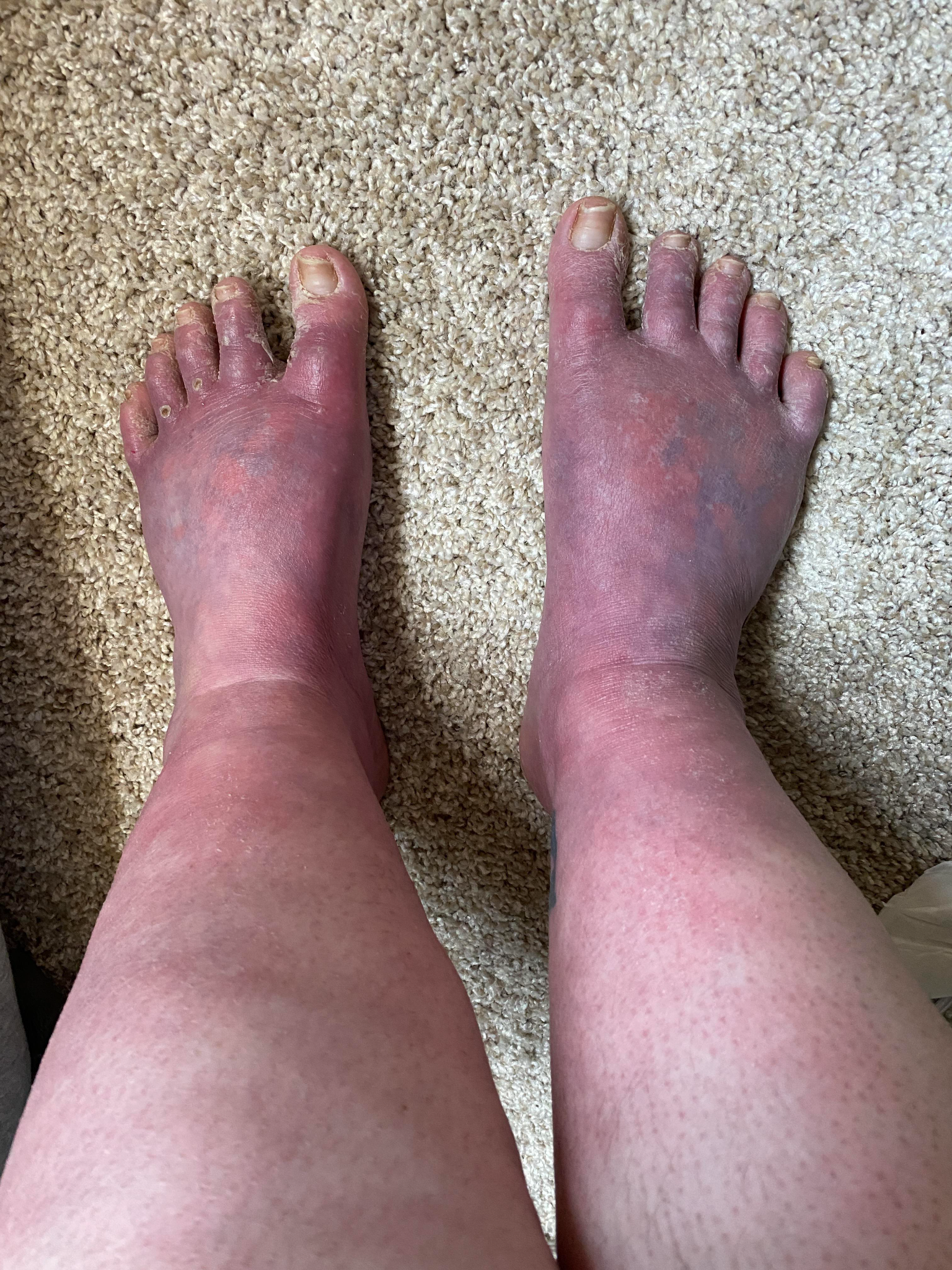
Swollen ankles. Legs like cement blocks. Shoes I can't get on by noon. Doctor says this is just my age. My sister has been hearing the same thing for six years. Her legs are worse now than when she started treatment. I'm done accepting that. My name is Margaret Callahan. I'm 59 years old. Eight months ago, my doctor put me on furosemide after my ankles came back visibly swollen at my annual check-up. 40mg daily. Within three weeks, the swelling dropped noticeably in the mornings. By month two my doctor was pleased. "Good response. This is exactly what we want to see." That same month, the problems started. Not one problem. A collection. All arriving quietly, one after another, until I couldn't ignore them. The bathroom. Not a cough like some medications cause. Something different and in some ways worse. Running to the bathroom every 20 minutes. Mapping restrooms before leaving the house. Timing every outing around the medication schedule. Carrying spare pads because I never knew when the urgency would hit. By month three I was declining invitations. Not because of my legs. Because of the medication managing my legs. Month four, the potassium crash. My husband found me on the kitchen floor at 11 PM trying to ride out a calf cramp that had locked my leg for eight minutes. Screaming into a tea towel so I didn't wake the neighbours. Electrolytes wiped out by the diuretic pulling potassium along with the fluid. Doctor added a potassium supplement. Then a second supplement when the first caused digestive upset. Month five, the dehydration. Headaches every afternoon despite drinking water constantly. Lips cracking. Skin dry even in the heat of summer. The medication pulling fluid from places it shouldn't have been pulling from. Doctor adjusted the dose. Added electrolyte sachets. Month six, the fatigue. Not tiredness. Something heavier. Like my body had run out of something it needed to function. I sat on the couch to rest my eyes at 2 PM and woke up at 5 with dinner unmade and the sky dark outside. I used to walk my neighbourhood every evening. I stopped. Month eight, I sat in Dr. Patel's exam room for my follow-up. She looked at my chart. "Swelling is managed well. The furosemide is doing its job." I stared at her. "I haven't left the house without a bathroom plan in six months. I've been on the floor with leg cramps at midnight. I can't stay awake past 2 PM. I'm dehydrated every afternoon despite drinking constantly. The swelling in my ankles goes down overnight and is back by noon." She nodded. Typed something. "Diuretic side effects are common. If the potassium management isn't working, we can try a potassium-sparing option. Spironolactone perhaps. And the fatigue sometimes settles as the body adjusts." "And the ankle swelling coming back every afternoon?" "Furosemide has a shorter half-life. The swelling will return as the medication clears. That is expected." I felt something break inside me. Not sadness. Anger. "Expected? I'm taking a medication every single day and the symptom it's treating comes back every single afternoon as the medication wears off?" "The goal is management, Margaret. Chronic edema doesn't cure. We manage it." "My sister has been managed for six years. Her legs are worse." "Everyone responds differently —" "She started on furosemide. Switched to spironolactone when the potassium crashed. Added amlodipine when her blood pressure changed. Now she's on three things and still swollen by dinner." Dr. Patel didn't answer that. She handed me a new prescription. I took it. Walked to my car. Sat there for fifteen minutes. Then I called my sister Barbara. "Barb. When did you last have a day where your ankles weren't swollen by evening?" Silence. "I don't know. Before the medication started maybe. Five years ago." "But you're still on medication." "Three of them now. And a potassium supplement. And electrolyte sachets." "And your legs?" A long pause. "About the same as when I started. Some days worse." I hung up and stared at the prescription in my hand. Six years. Three medications. A potassium supplement. Electrolyte sachets. And the same ankles she started with. I wasn't going to follow that path. I drove home and sat at the kitchen table with my laptop. Not searching for a different medication. Searching for why. Why wasn't the medication actually fixing the swelling? Not just "side effects happen." Why specifically? What was furosemide doing that made it work in the morning and fail by afternoon? And more than that — what was actually causing the swelling in the first place? What I found changed everything. Furosemide is a loop diuretic. It forces the kidneys to expel more fluid through urine. Blood volume drops temporarily. Fluid that has accumulated in the tissue gets drawn back into circulation and excreted. Simple enough. And it works. For a few hours. But here is what nobody explains. If the reason fluid is pooling in your legs is not because your kidneys are retaining too much water — but because your blood vessel walls are leaking — then draining the blood changes nothing. The capillary walls are still leaking. Fluid keeps seeping out into the tissue. As fast as the pill drains it through the kidneys, new fluid leaks back into the legs from the blood. You drain the pool. The leak keeps running. And here is the research that stopped me cold. A 2024 human RCT published in MDPI. 59 participants. 10 weeks. Researchers were tracking intestinal permeability markers — specifically zonulin, a protein that indicates how leaky the gut wall is. They found that when gut bacteria fall out of balance, gram-negative bacterial strains release lipopolysaccharide endotoxin — LPS — that crosses the leaky gut wall into the bloodstream. When that LPS reaches the tiny capillary walls in the legs, it activates TLR4 receptors that trigger breakdown of the tight junction proteins holding those walls sealed. The walls become porous. Fluid leaks from inside the vessels into the surrounding tissue. Gravity pools it in the ankles. That is the edema. Not a kidney retention problem. A gut-driven capillary leakage problem. And a diuretic that targets the kidneys does nothing to seal a capillary wall that is leaking because of a gut-derived inflammatory signal. I sat back in my chair and stayed there for a long time. That was not what I had been told. Not once in eight months. Not by Dr. Patel. Not by the pharmacist. Not on the medication leaflet. And the meal connection. I found another study. University of Sydney 2023. Every meal triggers a postprandial LPS surge — a fresh burst of gut-derived endotoxins entering the bloodstream as gut bacteria release toxins during digestion. This spike temporarily increases capillary wall permeability. My ankles are always worse an hour after lunch. I had mentioned it to Dr. Patel. She said it was probably the sodium in my food. It was never the sodium. It was an LPS surge from my gut making my capillary walls temporarily more porous after every single meal. Three meals a day. Three surges. Progressive daily accumulation. I kept reading. Not looking for another medication. Looking for what actually sealed the gut wall and stopped the signal. The research kept pointing to one category of compounds. Kombucha fermentation. Specifically the organic acids and polyphenols produced during the fermentation process. Not the bacteria in a standard probiotic capsule. The fermentation compounds themselves. A standard probiotic capsule delivers bacterial strains. It does not deliver the organic acids that directly reduce gut wall permeability. It does not deliver the fermentation polyphenols that inhibit the inflammatory cascade breaking down capillary wall integrity. It does not deliver the glucuronic acid that supports the liver in clearing the circulating LPS driving the whole chain. You need the full fermentation matrix. I started looking for a product built around that. Most of what I found was either standard probiotic capsules dressed up with marketing language, or bottled kombucha with unpredictable fermentation quality and high sugar content. Then I found Jevawell. A daily probiotic kombucha gummy built specifically around the gut-vascular permeability mechanism. The full fermentation matrix. Kombucha powder as the hero ingredient. Lactobacillus Plantarum for tight junction reinforcement. Slippery Elm mucilage to reduce postprandial LPS absorption directly. Dandelion Root for potassium-sparing fluid clearance without electrolyte depletion. The formulation cited the same studies I had been reading at midnight. I ordered it that night. Did not tell my sister yet. Did not want to raise her hopes. Did not want to admit I was trying something after eight months of accepting this is just what managing chronic edema looks like. The first week I noticed nothing visible. But the bathroom urgency that had been constant with furosemide was gone. One gummy a day and no medication meant I could leave the house without a bathroom plan. Week two, the morning heaviness was lighter. Not gone. But lighter. The cement block feeling when I first swung my legs off the bed was less. Week three, I pressed my thumb into my shin in the morning out of habit. The dent faded faster than it had in months. Week four, my husband sat across from me at dinner. "Margaret." "What?" He nodded at my feet. I looked down. My ankles had shape. At dinner. Not in the morning after the medication, but at dinner, the time when they had always been worst. I pressed my thumb in. The dent disappeared in 4 seconds. It had been staying for 14 when I started. I called my daughter. "Something is changing." Week six, I tried on the flats I hadn't been able to wear since spring. They fit. Not a struggle. Not with a shoehorn and a prayer. They just fit. I stood in the bedroom in normal shoes and cried. My husband appeared in the doorway. "Why are you crying?" I held up one foot. "My shoes fit." He sat on the bed. Did not say anything for a moment. Then: "Margaret, your ankles." "I know." "I can see the bones." "I know." I called my sister that night. "I need to tell you something about why the pills don't actually fix it." I explained the gut permeability mechanism. The LPS chain. Why draining fluid from the blood does not seal capillary walls that are leaking because of a gut-driven inflammatory signal. Why the swelling returns every afternoon regardless of how faithfully she takes the medication. She was quiet for a long time. "So six years on pills. And nobody ever looked at the cause." "No." "Because the cause isn't in the vascular system. It starts in the gut." "Yes." Another silence. Then: "What did you use?" I told her. She ordered it that night. Three weeks later she sent me a photo. Her ankles in sandals she had not worn in four years. I have now been on Jevawell for twelve weeks and off furosemide for ten. My ankles this morning: normal. The pitting test I do every Sunday: 2 seconds. It was 13 seconds when I started. My blood pressure monitoring: no concerning changes. No bathroom urgency. No midnight cramps. No afternoon dehydration headaches. No electrolyte supplementation. No medication carousel. Last week, I went for an evening walk for the first time in eight months. Two miles around the neighbourhood. My husband walked beside me and said nothing for a long time. Then: "I missed this." "The walk?" "You. I missed you." I know what it is to spend eight months on medication that treats the fluid and ignores the cause. To have a doctor tell you the side effects are the price of management. To watch your sister cycle through prescription after prescription and end up six years later with the same legs and a longer medication list. If you are reading this and you have been told the swelling is just something you manage — if you have been on water pills that work in the morning and fail by afternoon — if you have accepted the bathroom urgency and the potassium crashes as the price of controlled edema — The science now points to something your doctor has almost certainly never mentioned. Your capillary walls are not failing because your kidneys are retaining too much water. They are leaking because your gut is sending them a signal to leak. And until that signal is addressed, the pills drain the pool while the pipe keeps running. Jevawell has a 60-day money-back guarantee. Every dollar back if you do not see a real difference. No questions asked. I risked nothing. And I got my evenings back. — Margaret Callahan P.S. I felt the difference within two weeks. The bathroom urgency I had accepted as the price of managed edema disappeared with the medication. The heaviness shifted around week two. The ankle definition returned by week four. My sister's sandal photo arrived three weeks after she started. Your timeline will be your own. But you will know within the first month if something is changing. P.P.S. Every day on a diuretic that targets the kidneys while gut-derived endotoxins keep making your capillary walls porous is another day of managing a downstream symptom while the upstream cause keeps running. The swelling is not going away. The pills work and then stop working as the day goes on. That is not a dose problem. That is a mechanism problem. P.P.P.S. My sister asked me last week: "Why didn't anyone tell me about this six years ago?" I didn't have an answer. Because there isn't one. The treatment model is built around managing the fluid. Not sealing the walls. Not stopping the signal. Six years. She does not have to go back to Year 7.
Where the ad sends people
jevawell.com
Relieve Swelling Naturally
The first probiotic kombucha gummy formulated specifically for swollen legs. One gummy daily seals the gut wall, reduces the bacterial toxins driving fluid leakage, and gently clears accumulated swelling — without water pills, compression, or electrolyte crashes.
Learn more: jevawell.com(opens in a new tab)