Joseph Brennan
Joseph Brennan Facebook ad: “My wife is dead because nobody told us the flu shot didn't…”
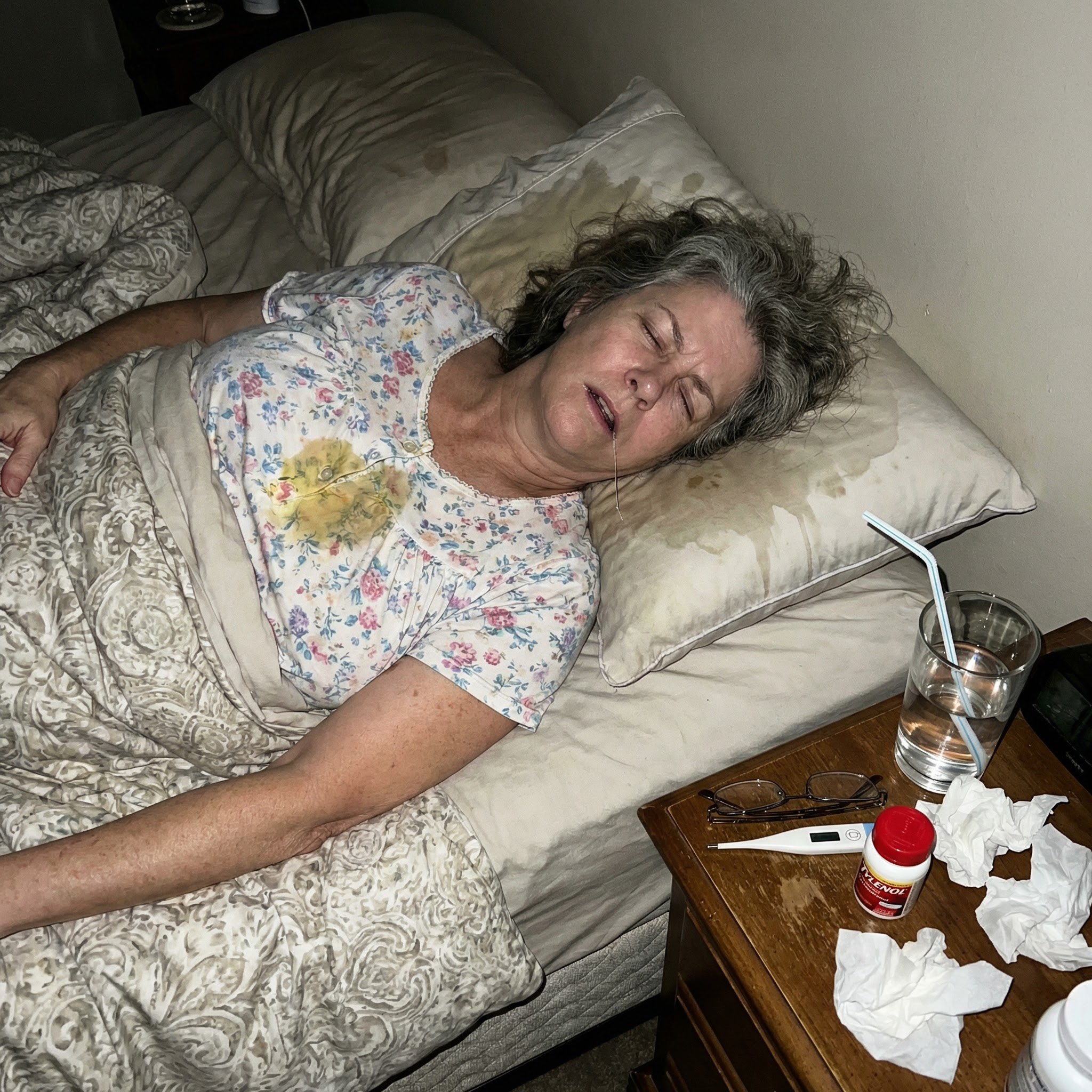
Ran for 37 days, from February 17 to March 26, 2026, the last day Crush saw it.
Run by Joseph Brennan on Facebook. Crush is not the advertiser and does not verify its claims. See this ad in Meta's Ad Library(opens in a new tab)
Want an ad like this for your product?
Crush makes new ad images for your product from this ad: your logo, your product photo, your offer.
Trials from $19.95 USD, then $79.95 USD a month. Cancel anytime.
About this ad
- Meta Ad Library ID
- 1454740226274363
- Platforms
- Facebook, Instagram, Audience Network, Messenger and Threads
- Relaunches
- 0
Ad text
My wife died from the flu on January 14th at 2:38 AM. She was 61 years old. Got her flu shot in October. Washed her hands constantly. Took her vitamins every morning. Walked three miles a day, rain or shine. The hospital bill was $47,000. The funeral was $9,400. Her reading glasses are still on the nightstand. I can't move them. If I move them, she's really gone. I need to tell you what happened to Denice. Because I'm seeing the same posts on Facebook that I was making three weeks before she died — "my wife has a terrible cold, any tips?" — and it makes me physically ill. If you're over 55, or someone you love is, please read this entire thing. I know it's long. I know you're scrolling. I know you have things to do. Three weeks ago I would have given anything — everything — for someone to tell me what I'm about to tell you. Denice came home from the grocery store on January 3rd with a sore throat. "Probably picked something up," she said. "I'll be fine by Monday." I didn't think twice about it. Denice never got sick. In 36 years of marriage, I could count on one hand the number of times she stayed in bed. She was proud of that. It was part of who she was. By Monday she wasn't fine. Fever of 102.6. Coughing. But still walking around the house, still making dinner, still telling me "stop worrying, Joe, it's just the flu, I've had worse." I called our doctor's office. Tylenol. Fluids. Rest. "If it's not better in a few days, bring her in." So we waited. By Wednesday her fever was 103.4. She was drenched in sweat. Shaking under two blankets. Coughing so hard she pulled a muscle in her ribs. I could hear this wet, crackling sound every time she breathed — like cellophane crinkling inside her chest. I'd never heard anything like it. "Denice, I'm taking you to the doctor." "I'm fine." "You're not fine. I can hear your lungs from across the room." "Joe. I'm FINE." 36 years of marriage. I knew every version of that woman. The stubborn version. The scared version pretending to be the stubborn version. This was the second one. By Thursday morning she couldn't get out of bed. Not wouldn't. Couldn't. I brought her a glass of water and her hand was shaking so badly she spilled half of it on her chest. She didn't even react. Just lay there. Staring at the ceiling. Breathing in these short, shallow little gasps that sounded like the air was being squeezed through a straw. I sat on the edge of our bed — the bed we've shared for 33 years — and I looked at her face. Her lips were gray. Not blue like they show in the movies. Gray. Like the color had just drained out of her. That's when I knew. I called 911 at 7:14 AM. The paramedics were there in 8 minutes. Two of them. A young guy — couldn't have been older than 28 — and a woman about my age. They clipped something to Denice's finger. Oxygen saturation: 79%. Normal is 95-100%. The young paramedic looked at the woman. She looked back at him. Neither of them said anything, but I saw it. I saw the look. "Sir, we need to transport her now." They lifted Denice onto a stretcher. She was so weak she couldn't help them. Just lay there. As they wheeled her through the living room — past her chair, past her bookshelf, past 36 years of our life — she looked at me and said: "Don't forget to feed the dog. And call Katie." That was the last thing my wife said to me in our home. The dog. And our daughter. I stood in the driveway and watched the ambulance pull away. Stood there in my slippers and a sweatshirt in 22-degree weather. Didn't feel the cold. Then I got in my truck and followed them. Ran every red light. Didn't care. At the ER, they wouldn't let me back. "We're stabilizing her, someone will update you." I sat in that waiting room for two hours and thirteen minutes. I counted every single minute. The chairs were hard plastic. The TV was playing some morning talk show with the sound too low to hear. An old man across from me was coughing into his elbow. A woman next to me was crying into her phone in Spanish. And I sat there. In the fluorescent light. Smelling that hospital smell — that mixture of bleach and recycled air and fear — and I prayed. I don't pray often. But I prayed. When the doctor came out — a man about 45, tired eyes, stethoscope still around his neck — I knew before he opened his mouth. I knew from the way he was walking. "Mr. Brennan, your wife has Influenza A. The H3N2 strain. Her lungs are severely compromised. We're moving her to the ICU." "But she got her flu shot," I said. "In October. She does it every year. She never misses." He looked at me. And then he said something that will be burned into my brain until the day I die: "This year's vaccine wasn't designed for the strain your wife has. H3N2 mutated into what's called subclade K — it happened after the vaccine was already manufactured. The flu shot she got in October was built for a virus that doesn't exist anymore." "So the shot didn't protect her?" "It may have slowed things down. But it didn't prevent infection. And she waited six days before coming in. By now, the virus has done significant damage. We're going to do everything we can." We're going to do everything we can. That's what they say when they don't know if they can save her. Denice spent 10 days in the ICU. I was there every morning at 7 when they opened the doors. I stayed until they made me leave at 9 PM. Every single day. I learned things about the ICU that I never wanted to know. I learned that the machines don't just beep — they have different beeps. A steady beep means things are okay. A fast beep means something changed. A long, sustained beep means you need to leave the room because people are about to rush in. I learned that sound. I heard it four times. Day 2, they put her on high-flow oxygen. A mask strapped to her face pushing air into her lungs because they couldn't do it alone anymore. She couldn't talk with it on. Just looked at me with these eyes that were Denice but also weren't Denice. Day 4, they talked about the ventilator. A doctor I hadn't seen before came in with a clipboard and started explaining what it meant. Tube down the throat. Sedation. The machine breathes for her. He handed me a consent form. I signed it with a hand so shaky my signature didn't look like mine. They didn't end up intubating her that day. Her oxygen stabilized just enough. But the form sat on the table next to her bed for the rest of the time. I saw it every day. A reminder of how close we were. Day 6, her kidneys started struggling. They said the virus put so much strain on her body that her organs were starting to feel it. Her hands and feet swelled. Her face puffed up. She didn't look like Denice anymore. I held her hand anyway. Even though it was swollen and hot and didn't feel like her hand. I held it because it was still her in there somewhere. Day 8. She opened her eyes. Looked right at me. Clear. Present. Like the Denice I married. "I'm sorry, Joe." "For what?" "For not going to the doctor sooner. You told me to go. I should have listened." I squeezed her hand and said "Don't you dare apologize to me, Denice Brennan. You just focus on getting better." But my face was doing something I couldn't control. And she saw it. She saw it. Day 10. January 14th. I was in the family waiting area. They'd asked me to step out while they repositioned her. At 1:15 AM, I heard the long beep. I heard running in the hallway. I stood up. A nurse came to the door. "Mr. Brennan, please stay here. The team is with her." I stood in that room for an hour and twenty-three minutes. At 2:38 AM, a doctor I'd never seen before walked in. I knew. "I'm so sorry. We did everything we could." I drove home at 4 AM. Her car was in the driveway. The porch light was on because I'd left it on ten days ago when the ambulance took her, and nobody had turned it off. I walked inside. Her reading glasses were on the nightstand. Her cardigan was draped over the back of her chair. Her coffee mug was in the sink — she always rinsed hers right away. But her book. On the arm of the couch. Bookmark on page 214. She'll never finish it. I sat in my chair across from hers. I didn't move for six hours. The house was so quiet I could hear the refrigerator hum. 36 years. And now the only sound in my house was the refrigerator. The funeral was January 19th. My brother flew in from Arizona. Our daughter drove up from Bloomington. The grandkids wore dresses that Denice had picked out for them last fall. My five-year-old granddaughter asked me: "Papa, when is Nana coming home?" I told her Nana was in heaven now. She said: "Can we call her there?" I had to walk out of the room. After the funeral, I tried to go back to normal. I don't know what "normal" is anymore, but I tried. I couldn't. Because every time I opened my phone, I saw people — people my age, people Denice's age — posting about being sick. Coughing. Fevers. "This flu is no joke." "Worst cold I've ever had." And I knew — I KNEW — some of them were going to end up where Denice ended up. And some of them were going to end up where I am now. I couldn't just sit in this chair and watch it happen. So I started researching. Not because I wanted to. Because I had to. Because if Denice died for nothing — if I can't save even one person from what happened to her — then I can't live with that. I spent weeks reading. CDC data. Medical journals I barely understood. News articles about H3N2 subclade K. I read an article that said 22 million Americans have been sick this season. 280,000 hospitalized. 12,000 dead. That 70-85% of flu deaths are people over 65. Denice was 61. Close enough. I read that the flu shot this year is maybe 30-40% effective for adults against H3N2 subclade K. Thirty to forty percent. That's a coin flip. Less than a coin flip. Denice was on the wrong side of the coin. I read that Tamiflu — the antiviral drug — only works within the first 48 hours of infection. Denice didn't get to the hospital until day 6. By then, Tamiflu was useless. And I kept reading one thing over and over, in study after study, article after article: The virus enters through the nose. Every respiratory virus. Flu. COVID. RSV. They all enter the same way. They land in the nasal cavity, attach to the tissue, and start replicating. Millions of copies within hours. By the time you feel sick — the sore throat, the cough, the fever — the virus has been multiplying in your body for two or three days. The war is lost before you know it started. That's what happened to Denice. The sore throat on January 3rd wasn't the beginning. It was the sign that the virus had already been winning for days. And once it's in your lungs, there's nothing anyone can do except try to keep you alive. So I started asking a different question. Not "how do you treat the flu?" "How do you stop it at the door?" The first thing I tried was what I already knew. I went to CVS and bought everything on the shelf. Saline spray. Flonase. Zicam. Vitamin C lozenges. Those zinc nasal swabs. I started using the saline spray every few hours. It felt fine — a little moisture, nothing special. But I'd used saline before. It doesn't DO anything except wet your nose. It doesn't kill anything. It's just salt water. Then I tried the Flonase. First day: fine. Second day: my nose felt drier than before I started. Third day: I woke up with blood on my pillowcase. Not a lot. Just a streak. But I know that streak. I've gotten it before. Flonase dries out your nasal tissue until it cracks and bleeds. My doctor told me years ago "that's a common side effect." Like that makes it okay. I threw the Flonase in the trash. The Zicam made my nose tingle in a way that felt wrong. I read later that they actually recalled a version of Zicam years ago because it was damaging people's sense of smell. Maybe this version is fine. I didn't want to find out. The zinc swabs did nothing I could feel. The vitamin C — I mean, I'll take it, but let's be honest. Vitamin C isn't stopping H3N2 subclade K. That's like bringing a water pistol to a forest fire. After a week and $67 worth of CVS products, I was exactly where I started. Nothing was guarding the entry point. Nothing was actually killing the virus. And I was furious. Because why is there an entire AISLE of cold and flu products and not a single one of them actually prevents infection? They all just manage symptoms. Make you comfortable while the virus does whatever it wants inside your body. That's when I found something different. I was reading a thread on Facebook — one of those health groups for people over 50 — and a woman posted something that stopped me cold. She said her husband was an ICU nurse. Had been working with H3N2 patients all season. Twelve-hour shifts. Surrounded by the sickest of the sick. Coughed on, sneezed on, breathed on. He hadn't been sick once. Someone asked how. She said: "He uses a nasal iodine spray. Twice a day. Before and after every shift. A bunch of the nurses on his floor are doing it." I almost scrolled past it. Iodine? In the nose? That sounded insane. Because I know iodine. Betadine. That brown liquid my mother put on every scrape and cut when I was growing up. The stuff that burned so bad you'd pull your hand away. In your NOSE? But I couldn't stop thinking about it. Because that woman's husband was surrounded by H3N2 every single day. And he wasn't getting sick. Denice walked into a grocery store and was dead 11 days later. What was the difference? So I kept reading. And what I found made me so angry I had to put my phone down and walk outside. Iodine is one of the oldest, most proven antiseptics in medicine. It's been used in hospitals for over a hundred years. They use it before every surgery. Every wound cleaning. It kills bacteria, viruses, fungi — everything. And unlike the flu vaccine, it doesn't matter what strain the virus is. H3N2. Subclade K. COVID. RSV. The next variant that hasn't been named yet. Iodine doesn't care. It destroys the virus through something called oxidation — basically a chemical reaction that tears the virus apart. The virus can't develop resistance to it. It's not like antibiotics where the bug adapts. Iodine just destroys it. I learned that research shows it eliminates 99% of viruses in 90 seconds. I put my phone down when I read that. 90 seconds. Denice was in the ICU for 10 days because the virus replicated in her body for 6 days before anyone did anything. What if someone had killed it in the first 90 seconds? What if I'd known? I had to leave the house. I walked around the block three times. I was shaking. Not from cold. From anger. From grief. From the realization that my wife might be alive right now if we'd known about something that hospitals have used for a century. But I wasn't going to just spray Betadine up my nose. I'm 64, not stupid. So I kept researching. And I found out that the reason nobody puts iodine in their nose is because traditional iodine burns. It dries out the tissue. It's too harsh for the delicate lining inside your nasal passages. But recently — and this is the part that mattered — a company figured out how to combine iodine with something called fulvic acid, which buffers it. Makes it gentle enough for daily use. No burn. No dryness. No irritation. I found the company. NutraMD. And I was skeptical. God, I was skeptical. After Flonase bled my nose. After Afrin made my congestion WORSE with rebound. After Sudafed made my heart race at 2 AM. After every nasal product I've ever tried either burned me, dried me, or scared me. I was not about to trust something new just because the internet said so. So I called Denice's pulmonologist. The doctor who was there. In the ICU. Trying to save my wife. I told him what I'd found. I asked him straight: "Is this real? Is this safe? Or am I grasping at straws because I can't accept that Denice is gone?" He was quiet for a long time. Then he said: "Joe, povidone-iodine has been used safely in nasal applications for decades. It's used in hospitals. In sinus surgeries. In ICU decontamination protocols. The formulations designed for home daily use are well-tolerated. Minimal absorption. No systemic effects." Then he paused. "If Denice had been using something like this before she got exposed, there is a real possibility we never would have seen her in the ICU." I had to hang up the phone. I sat on the edge of the bed — Denice's side — and I cried harder than I cried at the funeral. Because a doctor — THE doctor — just told me that my wife might still be alive if we'd known. If anyone had told us. If we'd just known. I ordered NutraMD that night. When it arrived two days later, I stood in the bathroom holding the bottle, staring at it, terrified to use it. Not because I thought it would hurt me. Because if it worked — if this was real — then Denice's death was preventable. And I don't know how to live with that. But I couldn't NOT try it. Because I have a daughter. A son. Grandchildren. Friends my age. And I'll be damned if I let what happened to Denice happen to anyone I can reach. First spray: a slight warmth. Not a burn — more like when you drink tea and breathe through your nose after. A faint iodine smell — familiar, almost comforting, like my mother's medicine cabinet. Gone in seconds. No sting. No dryness. No burning. Nothing like Flonase. Nothing like Afrin. Nothing like the Betadine I was afraid of. I've been using it twice a day — morning and before bed — for five weeks now. Two sprays per nostril. Ten seconds total. Less time than brushing my teeth. Three weeks after I started, my grandkids came over. Both of them. Ages 5 and 7. Runny noses. Coughing. Their school had been devastated by H3N2. Half the kids in my granddaughter's class were out sick. They climbed on my lap. They hugged me. They breathed right in my face because that's what children do. My daughter looked at me nervous. "Dad, are you sure? Maybe we should—" "They're here. I'm holding them. I'm not missing any more time." Because I already missed enough. Denice missed everything. She'll never hold them again. She'll never hear "Nana" again. I was NOT going to let fear keep me from them too. The kids went home Sunday night. Monday — nothing. Tuesday — nothing. Wednesday, Thursday, Friday — nothing. A week later — nothing. I didn't get sick. Both of my grandkids had tested positive for H3N2 at their pediatrician the following Monday. I had it on my face. On my hands. In my nose. For an entire weekend. And I didn't get sick. I called my daughter that night and I didn't say anything for about 30 seconds because I couldn't talk. She said: "Dad? Are you okay?" I said: "I think it works." And then we both just cried. Because we were both thinking the same thing. If Denice had this. If we'd known. I've told everyone I know. My brother — he's 68, on blood pressure medication, can't take Sudafed, can't use Flonase — he's been using NutraMD for three weeks now. No side effects. No issues with his meds. He called me last Thursday and said: "Joe, everyone at the lodge is sick. I sat right next to Phil and he was coughing the whole meeting. I'm fine. I'm completely fine." My neighbor Carl — he lost his wife to H3N2 two weeks before I lost Denice. Two widowers on the same street in the same month. He started using it the day I told him. He grabbed my arm last week and said: "It's the first time since December that I'm not afraid to leave the house." My daughter and son-in-law. Both using it. Both work in schools. Both were sick three times last winter. Neither of them has been sick this season. Denice's sister in Florida — 66, diabetic, high risk — she ordered it the day of the funeral. She emailed me last week: "Joe, I just spent two weeks with my grandkids who were sick the whole time. I'm fine. I think Denice would want me to tell you this is real." I had to close my laptop when I read that. I'm not a doctor. I'm not a scientist. I'm not selling anything. I'm a 64-year-old widower sitting in my chair across from my dead wife's empty chair at 3 in the morning because I can't sleep and I can't stop thinking about whether anyone will read this in time. Here's what I know because I lived it: The flu shot doesn't match this year's strain. Denice got hers. It didn't save her. 22 million Americans have been sick this season. 280,000 hospitalized. 12,000 dead. And February isn't over. 70 to 85% of flu deaths are people over 65. Denice was 61. Tamiflu only works in the first 48 hours. Denice didn't get to the hospital until day 6. Once the virus is in your lungs, you're not preventing anything. You're surviving. Denice didn't survive. The entry point is the nose. That's where it starts. That's where it can be stopped. 90 seconds. That's all it takes to kill the virus before it kills you. I wish someone had told me this before January 3rd. Before the grocery store. Before the sore throat. Before "I'll be fine by Monday." Before 2:38 AM. I can't go back. Denice can't come back. Her reading glasses are on the nightstand and they're going to stay there. But you can still go forward. The article that explained everything I just told you — the science, the research, what ER doctors and nurses are doing right now to protect themselves and their families — it's the reason I found NutraMD. It's the reason my grandkids still have one grandparent left. I want you to read it. Not for me. For whoever you'd leave behind. 👇 https://nutramdhealth.com/pages/article Denice used to say: "Take care of the small things before they become big things." This is a small thing. Two sprays. Ten seconds. Don't let it become a big thing. — Joseph Brennan, age 64 Naperville, IL P.S. Her reading glasses are still on the nightstand. 33 days now. I still can't move them. Every morning I wake up and for one second I forget. For one second I reach over to her side of the bed. She's not there. $47,000 in hospital bills. $9,400 for the funeral. And a $30 nasal spray that her own doctor said might have kept her out of the ICU. Please. Don't end up here. Don't let someone you love end up here. P.P.S. I don't work for NutraMD. I don't get a penny from this. I'm writing this at 3:17 AM because I can't sleep and Denice's side of the bed is cold and if putting this on the internet saves one person — just one — then at least something good came from the worst thing that's ever happened to me. Share this with anyone you love over 55. Please.
Where the ad sends people
nutramdhealth.com
My wife is dead because nobody told us the flu shot didn't work this year.
My wife is dead because nobody told us the flu shot didn't work this year.
Learn more: nutramdhealth.com(opens in a new tab)