Dr. Allison M. Blake
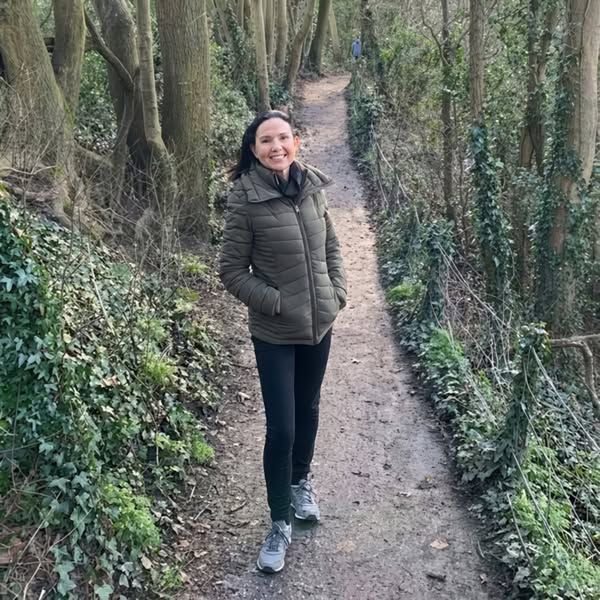
Dr. Allison M. Blake Facebook ad: “Feel Like Yourself Again”
Ran for 45 days, from March 26 to May 10, 2026, the last day Crush saw it.
Run by Dr. Allison M. Blake on Facebook. Crush is not the advertiser and does not verify its claims. See this ad in Meta's Ad Library(opens in a new tab)
Want an ad like this for your product?
Crush makes new ad images for your product from this ad: your logo, your product photo, your offer.
Trials from $19.95 USD, then $79.95 USD a month. Cancel anytime.
About this ad
- Meta Ad Library ID
- 1460465518806902
- Platforms
- Facebook, Instagram, Audience Network, Messenger and Threads
- Relaunches
- 36
- Niche
- Food & Beverage
Ad text
A 58 year old woman died in my ICU last night. She'd been on Lisinopril for 9 years. Her blood pressure was "controlled." 128 over 82. Numbers any doctor would be satisfied with. She did everything right. I've been an ICU nurse for 24 years and I've watched this happen hundreds of times. Patients come into my unit on blood pressure medication with "controlled" numbers and still end up on a ventilator after a stroke or a heart attack. I've read their charts. I've seen the numbers. Systolic right around 130. Diastolic in the low 80s. Textbook management. And I've sat beside the bed at 2 AM watching the monitor alarm while their family falls apart in the hallway. For years I kept my mouth shut. I'm a nurse, not a doctor. It's not my place to question the protocol. But when MY blood pressure hit 154 over 96 and MY doctor handed me a prescription for the same class of drug I'd watched fail hundreds of times, I couldn't keep quiet anymore. I refused the prescription. My coworkers thought I'd lost my mind. "You're a NURSE and you won't take blood pressure medication?" 12 weeks later my blood pressure dropped from 154/96 to 122/78. Without Lisinopril. Without any prescription. Without a single pharmaceutical side effect. And what I found instead is something I wish I'd known 20 years ago. Because for 20 years I watched patients do everything right and still end up in my unit, and I never had an answer for why. Now I do. If your doctor is pushing Lisinopril, Metoprolol, or Losartan and you're looking for a reason to say no, keep reading. If you're already on blood pressure medication and the dry cough, the brain fog, the exhaustion, and the dead sex drive are making you miserable, keep reading. If your numbers keep climbing no matter what you eat, what supplements you take, or how hard you try, keep reading. Because after 24 years and thousands of patients, I finally understand why blood pressure medications fail the people who need them most. And what I found instead has more clinical proof behind it than most of the supplements sitting in your medicine cabinet right now. In the ICU, we see the worst outcomes. The codes at midnight. The husband sitting alone in a plastic chair at 3 AM staring at the floor. The daughter asking me the same question three times because her brain won't accept the answer. But the cases that haunted me, the ones I'd think about on the drive home, were the blood pressure patients. Not the ones you'd expect. Not the overweight smoker who never saw a doctor. Those are tragic, but they're not surprising. The ones that haunted me were the GOOD patients. The 58 year old elementary school principal who'd been on Lisinopril for 9 years. Blood pressure 128 over 82 at her last checkup. Numbers any doctor would be proud of. Collapsed in the school hallway during morning announcements. Her students watched. She never spoke again. The 55 year old firefighter. Metoprolol for 6 years. Blood pressure beautifully controlled. A man in better shape than most 30 year olds. Came in at 2 AM with a massive stroke. His wife was still in her pajamas when she got to the hospital. The 66 year old grandmother. Losartan for 12 years. Never missed a dose. Numbers always in range. Found by her 10 year old grandson slumped over the kitchen table on a Sunday morning. He called 911 himself. She didn't make it. I started keeping a mental count. Not officially, just in my head. Every time a stroke or cardiac patient came into my unit who was already on blood pressure medication with controlled numbers. After 5 years I stopped counting. There were too many. And every single time, the attending physician would look at the chart, see the blood pressure readings, and say some version of the same thing: "I don't understand. The numbers were right where we wanted them." After the 50th time I heard "I don't understand," I realized something that changed everything for me. High blood pressure is dangerous. Nobody in medicine disputes that. The higher your blood pressure, the more at risk you are for stroke, heart attack, and kidney failure. That's real. But if the drug that's supposed to lower it is doing its job, and patients are still ending up in my ICU with strokes and failing hearts, then lowering the number alone isn't enough. Something else is happening that nobody is addressing. I carried that question with me for years. But I never acted on it. I'm a nurse. I follow protocol. I chart. I administer. I don't question the cardiologist. Then last March, I was between patients during a slow shift when the hospital ran its annual wellness screening for staff. Quick blood draw. Vitals check. Routine panel. I almost skipped it. Busy night. But the tech caught me in the hallway and I figured why not. She strapped the cuff on my arm. Pumped it up. Waited. 154 over 96. She frowned. Did it again on the other arm. 152 over 94. I was sitting at the nurses' station in my scrubs, surrounded by patients I was supposed to be helping. And my own numbers were telling me I was becoming one of them. The doctor on duty that night, Dr. Reeves, a man I respected but barely knew outside of shift handoffs, pulled me aside after he saw the results in the system. "Allison, you know the protocol. I'm recommending Lisinopril. 10mg. We'll recheck in 90 days." He wrote the prescription. Handed it to me. I folded it. Put it in my scrub pocket. And never filled it. Because I knew something he didn't. I knew that prescription was the same class of drug sitting in the medical history of every stroke patient I'd watched lose their speech, their mobility, or their life in my ICU with "controlled" numbers. Their blood pressure was brought down. And they still ended up in my unit. That told me something important: the drug was doing part of the job. But it was leaving the most dangerous part completely untouched. I wasn't going to become one of my own patients. Instead, I did what I should have done years ago. I stopped following protocol and started following the research. What I found in 3 weeks of reading made 24 years of ICU shifts suddenly make sense. And it made me furious. Because the research wasn't hidden. It wasn't classified. It was sitting right there in medical journals, published and peer reviewed, and not a single protocol in my hospital reflected any of it. Here's what they taught us in nursing school: High blood pressure is dangerous. It leads to strokes and heart attacks. Blood pressure medication lowers the number. Lower number means lower risk. Simple. And that first part is true. High blood pressure is dangerous. Your numbers matter. But here's what they DIDN'T teach us about why your blood pressure is high in the first place, and it changes everything. Your blood vessels aren't just tubes. They're living tissue. And the inside of every blood vessel in your body is lined with a thin inner wall, a layer of living cells that controls everything about how your blood flows. When that inner wall is healthy, it does something your body depends on every second of every day. It produces a molecule called nitric oxide. Nitric oxide is your body's natural signal that tells your blood vessels to relax and open up. When the wall is healthy and producing nitric oxide, your vessels expand and contract smoothly with every heartbeat. Blood flows through without resistance. Pressure stays balanced. You don't think about it the same way you don't think about breathing. It just works. Your body has been doing this on its own your entire life. You don't need a pill for it. You don't need a supplement for it. The system works perfectly, as long as that inner wall is intact. But that inner wall is directly exposed to everything in your blood. Every bit of processed food you've eaten. Every blood sugar spike. Every stress hormone. Every chemical, every toxin, every year of inflammation. It all flows right across that wall, scraping against it, hour after hour, day after day, year after year. And over time, it wears that wall down. Roughens it. Damages it. Think of the inside of an old pipe that's been corroding for decades. The surface that was once smooth is now raw, pitted, and breaking apart. That's what's happening inside your blood vessels right now. Once that inner wall is damaged, it stops producing nitric oxide. The molecule your body depends on to keep your vessels relaxed, the supply gets cut off at the source. Without nitric oxide, your vessels can't relax. They stay tight. Blood doesn't flow through the way it should. It has to force its way through. Your heart has to push harder with every single beat. That's high blood pressure. Not a mystery. Not genetics you can't control. A damaged inner wall that stopped producing the one molecule your body needs to keep your vessels open. But here's the part that explains why it keeps getting worse and never gets better on its own. The harder blood pushes through a damaged vessel, the more it tears up that inner wall. Every beat of your heart is pushing blood across a surface that's already raw and breaking down, and the force shreds it further. More damage means less nitric oxide. Less nitric oxide means the vessels tighten more. Tighter vessels mean blood pushes harder. Harder pushing means more damage to the wall. Even less nitric oxide. Even tighter. Even more pressure. It's a cycle that feeds itself. And it's been running inside you for years. That's why your blood pressure was "a little high" five years ago, higher last year, and higher again at your last checkup. That's not aging. That's a cycle accelerating. Every year the wall gets worse, produces less nitric oxide, the vessels get tighter, and the pressure climbs another notch. And if that cycle keeps running, if that inner wall keeps getting destroyed and nothing repairs it, the damage doesn't stay contained inside your blood vessels. It reaches your kidneys. Your heart. Your brain. That damaged wall is the starting point for the stroke. The heart attack. The kidney failure. The dialysis chair three times a week. The slow, terrifying decline that everyone in your family prays they won't have to watch you go through. This isn't something that might happen someday. The cycle is running right now. Every day it goes unrepaired, the wall gets worse and the risk gets higher. Now here's why nothing you've tried has stopped it. Your medication forces your blood vessels open. It pries them apart with chemicals, blocking enzymes, overriding signals, muscling the vessels wider regardless of what condition they're in. And yes, the number on the cuff goes down. Your doctor sees 128 over 82 and says "great, the medication is working." But that inner wall? Still damaged. Still corroding. Still not producing nitric oxide. Still getting shredded by every beat of your heart pushing blood across a raw, broken surface. The drug didn't fix the wall. It didn't restore nitric oxide production. It just forced the pipe open wider while the inside keeps falling apart. That's why you need the medication forever. That's why the dose goes up. That's why your doctor adds a second pill, then a third. And that's why you get the side effects. The dry cough that wakes you up at 3 AM. The brain fog that makes you forget words mid-sentence. The exhaustion that hits by 2 PM and never lifts. The swollen ankles. The dizziness when you stand up too fast. The dead sex drive your doctor calls "a minor trade-off." Those aren't random. That's the price your body pays when a drug forces open a system that was designed to regulate itself. You're overriding your body's controls, and everything else connected to those controls breaks down as collateral damage. The medication is managing the number. It was never fixing the wall. And it's not just prescription drugs. I looked into everything else patients try. Beetroot gives you a burst of nitric oxide from the outside. And it works for a few hours. Your vessels relax a little. The number might dip. But by the next morning, it's right back where it was. Because the wall that's supposed to produce nitric oxide on its own, around the clock, is still damaged. Still not functioning. You gave your body a few hours of what it needed, but you didn't fix the thing that's supposed to make it permanent. You're topping off a tank with a hole in the bottom. You can keep pouring, but you'll never fill it. Garlic thins the blood so it flows with slightly less resistance. Helpful. But it doesn't touch the wall. Doesn't repair it. Doesn't restore nitric oxide production. Magnesium relaxes the smooth muscle around your blood vessels. It can ease a little tension. But it doesn't reach the inner wall. The wall stays damaged. Nitric oxide stays depleted. Fish oil reduces inflammation floating in your blood. But it can't repair the structural damage that's already been done to the wall itself. It's cleaning the water while the pipe keeps corroding from the inside. Every single thing you've tried has either forced the vessel open, added more nitric oxide from the outside, or worked on the blood itself. Nothing has repaired the inner wall, the surface that produces nitric oxide, the surface that controls whether your vessels open or stay tight, the surface that decides everything. That's why nothing has worked long-term. You've been treating everything around the wall. Nobody fixed the wall. That's the gap. That's the blind spot. That's what I watched hurt people for 24 years. The answer came from a cardiologist I've worked with for years. Dr. Pham. Interventional cardiologist. Not the kind who writes prescriptions from behind a desk. The kind who physically opens clogged arteries for a living. He places stents, performs catheterizations, and sees firsthand what damaged blood vessels look like when they fail. He's held a human heart in his hands. He knows what arterial damage looks like up close, in real time, in ways most doctors never will. After I got my numbers, I mentioned to him casually during a slow shift that I'd refused the Lisinopril. He didn't lecture me. He didn't tell me I was being irresponsible. He was quiet for a second. Then he said: "Do you know why patients with controlled blood pressure still end up in your unit?" I looked at him. "I've been wondering that for years." "Because the number on the cuff isn't the only number that matters. There's something happening to the blood vessel wall itself. The inner wall damage. Nobody tests for it. Nobody addresses it." He paused. "Look into Amla. The clinical data on what it does to that wall is real. I take it myself." Let me say that again so it lands. An interventional cardiologist. A man who opens clogged arteries with his own hands. Who has spent his career seeing what damaged blood vessels actually do to the human heart and brain. Telling me, quietly, between cases, that he takes Amla himself. I'd never heard of it. I went home that night and typed "Amla" into my laptop. The first results told me it was a fruit. A gooseberry. Used in traditional medicine for thousands of years. My first reaction was skepticism. I'm a nurse. I've watched patients waste money on every superfood trend that comes along. Acai. Turmeric lattes. Pomegranate juice. I wasn't about to fall for another one just because a colleague mentioned it between cases. But I kept reading. Because Dr. Pham doesn't say things casually. If he told me the clinical data was real, there was clinical data. The first thing I found was the history. Healers in the Himalayas used this fruit for thousands of years. They called it "the nurse," the one remedy they reached for when someone's body was breaking down from the inside. When a person's circulation was failing. When their body was corroding from within. When nothing else was working. That detail stuck with me. They gave this fruit my job title. But ancient history doesn't move my needle. I needed studies. I needed data. So I went to PubMed. Started pulling actual clinical research. And that's where everything changed. Amla contains specific compounds called emblicanins. Powerful antioxidants found only in this fruit. When scientists tested the antioxidant strength of over 3,000 foods, Amla ranked number one. Not blueberries. Not turmeric. Not green tea. Amla. And it wasn't close. Here's what emblicanins do. They repair the damaged inner wall of your blood vessels. Remember the free radicals? The unstable molecules that have been corroding your inner wall for years, the ones created by stress, processed food, sugar, and just getting older? Emblicanins find them and neutralize them. Not in your gut like garlic. Not in the muscles around the vessel like magnesium. Not floating loosely in your blood like fish oil. Directly on the inner wall itself. Where the actual damage is happening. When the assault stops, the wall starts to heal. The raw, corroded surface that hadn't been able to do its job in years begins to rebuild. The same way a cut on your skin heals once you stop picking at it, the inner wall repairs itself once the thing destroying it is neutralized. And when the wall heals, something happens that no medication and no supplement has ever been able to do. It starts producing nitric oxide again. On its own. The way it did when you were younger. The way it did before the damage shut it down. Your body's own natural signal that tells your blood vessels to relax, the same molecule that beetroot tried to replace from the outside, your wall starts making it again from the inside. You didn't need more nitric oxide from a bottle. You needed to fix the wall that produces it. When nitric oxide production comes back, your vessels relax on their own. Not because a drug is forcing them open. Not because a supplement is flooding the system with a signal that has nowhere to land. Your vessels open because the wall is working again and telling them to open. The way the system was designed. When vessels relax, blood flows through without forcing. Your heart doesn't have to push as hard. The pressure on the walls drops. And when the pressure drops, the wall stops getting shredded. The cycle that's been running for years, damage, less nitric oxide, tighter vessels, more pressure, more damage, finally breaks. Pressure comes down. Not because something overrode your body. Because your body is doing what it already knows how to do. It always knew. You just had to fix the wall first. I found a clinical study. Researchers tested standardized Amla extract against one of the most widely prescribed cardiovascular drugs in the world. The Amla matched it. Blood pressure dropped. LDL cholesterol came down. Inflammation markers declined. Without the dry cough. Without the brain fog. Without the swollen ankles. Without the exhaustion. Without your body paying the price for a chemical override it was never designed to sustain. A fruit extract. Going head to head with a pharmaceutical drug. In a controlled clinical setting. And matching it on blood pressure while improving cholesterol, inflammation, and blood vessel health across the board. I sat at my kitchen table staring at my screen thinking about every patient who came through my ICU on blood pressure medication that lowered their number while the wall kept corroding underneath. There was something that lowered the number AND fixed the wall this entire time. And nobody told them. Nobody. Dr. Pham told me the specific product he uses. Alevia's Amla. Organic Amla Superfruit Extract. But before I ordered it, I did what any nurse would do. I looked into the product. Not all Amla supplements are the same. Most of what you'll find online is low quality powder with degraded nutrient content and no third party testing. Some are contaminated with heavy metals. Some use fillers to cut costs. Some deliver a dose so low it won't move the needle on anything. And most use heat during processing, which destroys the very emblicanins that make Amla work in the first place. The difference between raw Amla powder and a properly standardized extract is like the difference between chewing on willow bark and taking an aspirin. One is the plant. The other is the precise, concentrated compound that actually produces results. Alevia's Amla checked every box I needed. Organic. Third party tested for purity and potency. Made in the USA. They produce in small batches to preserve potency, which means they run out of stock regularly and you have to wait until the next batch is ready. I was lucky to get mine before they sold out. I ordered it that night. I didn't tell anyone at work. Didn't tell my doctor. Just added it to my morning routine with a glass of water before my shift. I want to be honest about what the first few days felt like. It wasn't a caffeine jolt. It wasn't some dramatic shift 20 minutes after swallowing a capsule. Amla isn't a stimulant. It doesn't give you a buzz and call it progress. What it does is repair the inner wall of your blood vessels at the cellular level, and that kind of change takes time to show up on the cuff. But what I noticed was quieter than that. And more real. Within the first week, my head was clearer. Sharper. I'd been blaming the brain fog on 12 hour shifts and age. It wasn't age. It was years of damage building up inside my blood vessels, the same inner wall damage I'd just spent three weeks reading about. And it was lifting. By week 2 my energy was different. Not jittery. Not caffeine energy. Just stable. Like my body was finally getting proper blood flow to every cell instead of fighting through constricted vessels every hour of every shift. By week 3 I was sleeping through the night for the first time in years. Waking up without that heaviness. Nurses know that feeling, the bone deep fatigue that never fully goes away no matter how much you sleep. It went away. If you've taken supplements before and felt nothing for months, this is different. You'll notice something is changing. Not a fireworks show. Just your body working the way it's supposed to again. I checked my blood pressure at 12 weeks. Used the unit's monitor during a quiet moment. The same cuff I've strapped on thousands of patients. I wrapped it around my own arm. Hit the button. Watched the numbers climb and then settle. 122 over 78. I stared at that reading for a full minute. Down from 154/96. Without a single milligram of medication. I checked it again. 120 over 76. I sat there in the nurses' station looking at numbers I hadn't seen since my 30s. I printed the reading log. Took it to Dr. Reeves, the same hospitalist who'd written my Lisinopril prescription 12 weeks earlier. Caught him between rounds. I put the printout in front of him. He looked at the numbers. Looked at me. Looked at the numbers again. "You never filled the prescription, did you." "No." "What did you do?" I told him everything. The inner wall research. The emblicanins. The clinical study. The nitric oxide mechanism. I talked for 20 minutes. He listened. When I finished, he was quiet for a long time. Then he said: "I need to read these studies. But Allison, don't stop what you're doing." I'm not stopping. I told 3 nurses on my floor. Quietly. Privately. Just showed them my readings and explained the research. Within 2 months, 6 nurses in my department were taking Alevia's Amla. I didn't recruit anyone. I just showed them the mechanism and my numbers. Nurses understand vascular damage. We studied it. When you show a nurse WHY something works at the cellular level, they don't need convincing. They need the link. And the fact that most of them noticed a difference in energy and mental clarity within the first 2 weeks made it easy. These are 12 hour shift nurses who know what real fatigue feels like, and they could tell something had changed. One of them, Angela, 51. A charge nurse who'd been on Metoprolol for 7 years. She described it as carrying around 50 pounds of sandbags every shift. The exhaustion. The feeling that she couldn't exercise without her body shutting down. The feeling that the medication was keeping her alive but draining the life out of her. She added Alevia's Amla. Within 6 weeks, working with her doctor, her blood pressure had come down enough that they cut her Metoprolol dose in half. She told me by grabbing both my hands in the break room and saying, "I feel like I got 10 years of my life back." The look on her face said everything. Another, Diane, 63. Her Lisinopril cough was so bad her ribs ached. She'd been coughing for 4 years straight. Every shift. Every night. She started Alevia's Amla alongside her medication and worked with her physician. 8 weeks later, her numbers had improved enough that her doctor agreed to taper the Lisinopril. The cough stopped within days of the taper. She told me she'd forgotten what it felt like to take a deep breath without bracing for the cough that always followed. I'm not telling anyone to stop their medications. That's not my place and that's not my advice. I'm telling you what I saw. What I experienced. What the research supports. And I'm telling you what I wish someone had told me, and every patient who ended up in my ICU, 20 years ago. That 66 year old grandmother had controlled numbers for 12 years. Her grandson still had to call 911 on a Sunday morning. He was 10. Her medication lowered the number. Nothing fixed the wall. If you're on blood pressure medication right now and you're wondering whether it's actually giving you the full protection you need, I hear you. I've spent 24 years watching the answer to that question play out in real time. If your blood pressure is climbing and your doctor is reaching for the prescription pad, I hear you. I was standing at that same nurses' station 12 weeks ago staring at my own numbers. If you've tried everything, beetroot, garlic, magnesium, diet changes, exercise, and nothing is moving your numbers, I hear you. Because nothing you tried was fixing the wall that controls your blood pressure from the inside. Alevia's Amla. 2 capsules every morning. Repairs the inner wall your medication ignores and breaks the vicious cycle nothing else can reach. I'm a nurse. I don't sell supplements. I don't get paid for this. I'm writing this because after 24 years of watching the same blind spot hurt the same people, I can't stay quiet anymore. Alevia has a 90 day money back guarantee. If your numbers don't improve, you get a full refund. No questions asked. In 24 years of nursing I've never seen a pharmaceutical company offer to give your money back if their drug doesn't work. Think about that. Alevia is a small company and they sell out regularly. If you've got a doctor's appointment coming up in the next 30 to 60 days and you want to give your body a real shot at better numbers before that visit, check availability now. Don't wait. Every day that inner wall stays damaged is another day the vicious cycle keeps running, and another day closer to the prescription your doctor is already planning to write, or the dose increase they're already considering. 👉 https://getalevia.com/amla/8 You still have time. Don't wait until someone you love has to make the call that 10 year old boy had to make on a Sunday morning. ~ Allison M. Blake, RN, ICU 24 years
Where the ad sends people
getalevia.com
Feel Like Yourself Again
"This actually worked, thank you so much." - Emily T.
Learn more: getalevia.com(opens in a new tab)