The Mental Reset Circle
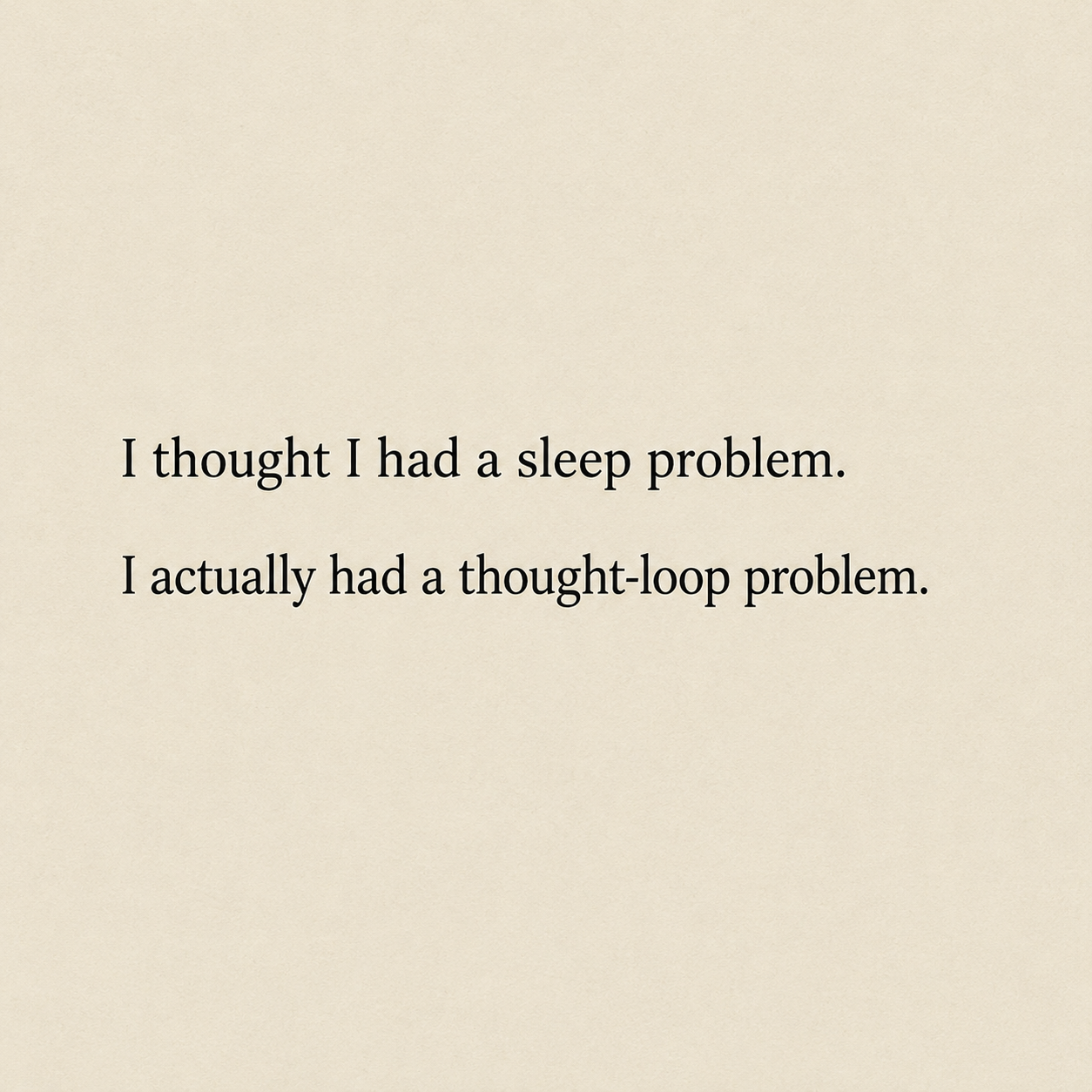
The Mental Reset Circle Facebook ad: “I thought I had a sleep problem”
Ran for 1 day, from July 13 to July 14, 2026, the last day Crush saw it.
Run by The Mental Reset Circle on Facebook. Crush is not the advertiser and does not verify its claims. See this ad in Meta's Ad Library(opens in a new tab)
Want an ad like this for your product?
Crush makes new ad images for your product from this ad: your logo, your product photo, your offer.
Trials from $19.95 USD, then $79.95 USD a month. Cancel anytime.
About this ad
- Meta Ad Library ID
- 1461348518930727
- Platforms
- Relaunches
- 5
Ad text
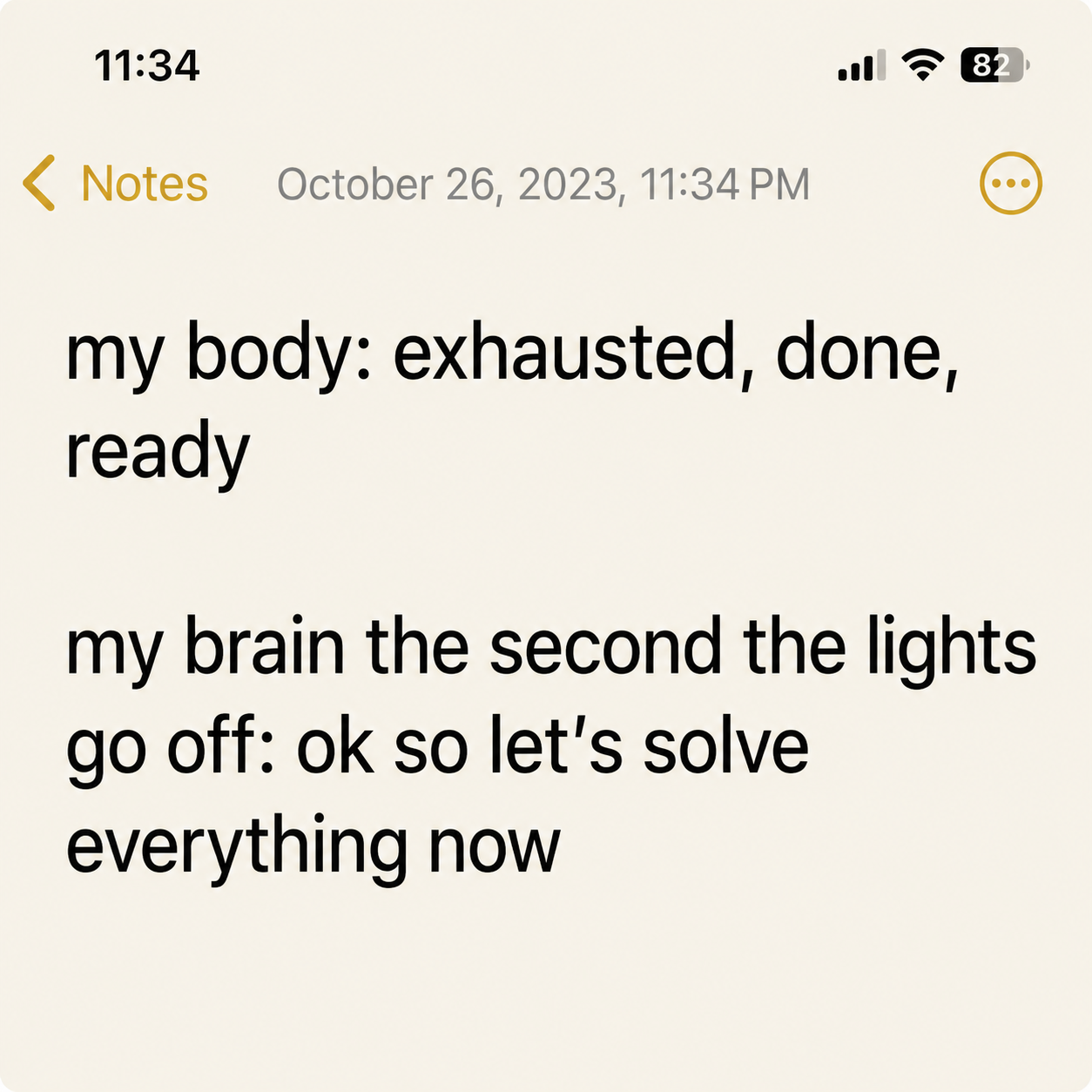
How I finally got quiet at night, not by fixing my sleep, but by understanding what my brain was actually doing and why it wouldn’t stop. I had been correctly identifying the problem for years. I just didn’t know there was something specifically built to address it. I had known for a long time that the problem wasn’t really sleep. Not in a vague “I have a lot on my mind” way. In a very specific way. My brain would be fine all day. I could function. I could get through things. I could be tired. But the second I lay down, something switched on. And whatever was switching on had nothing to do with my room temperature, my caffeine intake, or whether I looked at my phone after 8 PM. I had already named the problem. The thinking. That was the thing. Racing through tomorrow. Replaying today. Running every possible scenario for everything that could go wrong. My body would be completely done, but my brain would act like the night was the perfect time to start solving my entire life. The frustrating part wasn’t just being awake. The frustrating part was knowing exactly what was happening and still having no idea what to actually do about it. Everything I found seemed aimed somewhere else. At the sleep. At the symptoms. At the surface. And I kept thinking: Someone must have built something for the actual problem. So I tried things. Not because I fully believed they would work, but because I didn’t know what else to do while I kept looking. I tried sleep apps first. I gave them a fair chance. Probably longer than they deserved. Sleep sounds. Guided breathing. Calm voices. Body scans. And every time, some part of me hoped maybe I had misread the problem and maybe it really was simpler than I thought. But it wasn’t. Guided breathing does not stop a brain that isn’t activated by stress. It just gives it something to be quietly impatient about while it waits to get back to the real business of the night. Then came the sleep tips. Put your phone away. Make the room cooler. Keep a consistent bedtime. Don’t drink caffeine late. I did all of it. But I did it with that feeling you get when you’re following directions you already know lead somewhere you’ve been before. None of it was aimed at what I had identified. Not really. And there is a specific kind of tired that comes from correctly naming something for years and watching every available solution walk straight past the thing you pointed at. That was where I was. I don’t remember exactly what I searched that night. Probably some version of: “why does my brain not stop at night” or “why do my thoughts get louder when I try to sleep” Something I had probably typed before in slightly different words. But what came up was framed in a way I hadn’t seen before. It wasn’t about the content of the thoughts. That was the first thing that caught me. Everything I had read before was about the thoughts themselves. Challenge them. Reframe them. Write them down. Prove they aren’t true. Replace them with something better. This was pointing somewhere else entirely. It was pointing at what happens the second a thought shows up. The explanation was simple enough that I almost dismissed it. When a thought comes in and you try to work it out, answer it, follow it, figure out if it’s valid, or reason your way through it, you may not actually be processing it. You may be feeding it. The brain reads engagement as confirmation that the thought matters. So the loop keeps running. Then the loop creates more thoughts. Then those thoughts feel like they need answers too. Then the whole thing starts over. The thinking doesn’t stop because you keep telling your brain the thinking is necessary. That hit me in a way I wasn’t expecting. Because I started doing a mental inventory of everything I had tried. The breathing where I monitored whether it was working. The journaling where I analyzed the thought until it made sense. The lying still while mentally rehearsing tomorrow. Even the frustrated bargaining with myself to “just stop thinking.” Every single one was engagement. I had been correctly identifying the problem for years. But I had also been feeding it every night without realizing that was what I was doing. So I kept reading. Further than I usually do when something shows up in a late-night search. And what I wanted to find next was something built around that idea. Not a technique for sleeping better. Not another breathing exercise. Not another list of sleep hygiene tips. Something that treated the engagement itself as the problem. Something that gave me somewhere else to point my attention when a thought came in. What I eventually found was a structured set of prompts built around one idea: You can acknowledge a thought without chasing it. Not suppressing it. Not arguing with it. Not pretending it isn’t there. Just not feeding it. That was the part I had never learned how to do. The first night I used it, I tried it on one thought. Just one. The thought came in right on schedule, the same way it always did. And instead of following it, I did what the prompts suggested. The loop started. But it didn’t finish the way it usually did. I didn’t make a huge deal out of it that night. One data point is not a pattern, and I had been disappointed before by things that worked once. But I had spent a long time watching loops finish. The fact that this one didn’t was something I noticed. So I went back to it the next night. And it happened again. Not dramatically. Not in the way where I lay down and everything was suddenly silent. The thoughts still came in. Same timing. Same subjects. Same branch of tomorrow I had already rehearsed enough times. What changed was what happened after. I used the prompts again. The loop started, and then it sort of ran out of road. Not because I had resolved anything. I hadn’t. The thing I was thinking about was still technically unfinished. Still available to spiral on. Still there if I chose to engage it. I just didn’t engage it the same way. And without the engagement, the loop had less to run on. By the end of the first week, I started noticing something I didn’t really have words for yet. The thoughts were still arriving. But I wasn’t meeting them the same way. There was a small gap between me and the thought. And inside that gap, I finally had something to do that wasn’t arguing, analyzing, solving, or spiraling. That was the whole shift. Not silence. Not a brain that magically stopped working. Just a gap where the loop used to close automatically. And something in that gap that gave me somewhere else to go. If you look for help with racing thoughts at night, most of what you find will be sleep things. Sleep sounds. Sleep meditations. Apps. Supplements. Bedtime routines. Some of those things may help some people. But that wasn’t what helped me. What helped was something built around the engagement side of the problem, not the symptom side. That distinction matters more than it sounds. Because if the thing keeping you awake is the loop, and the loop runs on engagement, then something designed only to make sleep feel more inviting may be solving for the wrong variable. You can have the most optimized sleep environment in the world and still lie in it wide awake because the loop has not been given any reason to stop. What I needed was something aimed at the exact moment the thought arrived. Before I answered it. Before I chased it. Before I gave it the microphone. That is what finally made the difference for me. I’m not saying this is a miracle fix. I’m not saying one guide makes every difficult thought disappear. But I am saying this was the first thing I found that felt like it understood the actual problem I had been trying to explain for years. Not just the fact that I couldn’t sleep. The reason my brain kept trying to solve everything the second the lights went off. I’ll leave the link here for anyone who wants to see what helped me finally understand what the loop was actually running on: https://clearpathguides.co/ And if you have spent years thinking the problem was you, your discipline, or the way your brain is wired, this may be worth looking at.
Where the ad sends people
clearpathguides.co
I thought I had a sleep problem
ClearPath Guides
Learn more: clearpathguides.co(opens in a new tab)