
Inactive· since Apr 10, 2026
- 101
- days it ran
- 2
- relaunches
Ad copy
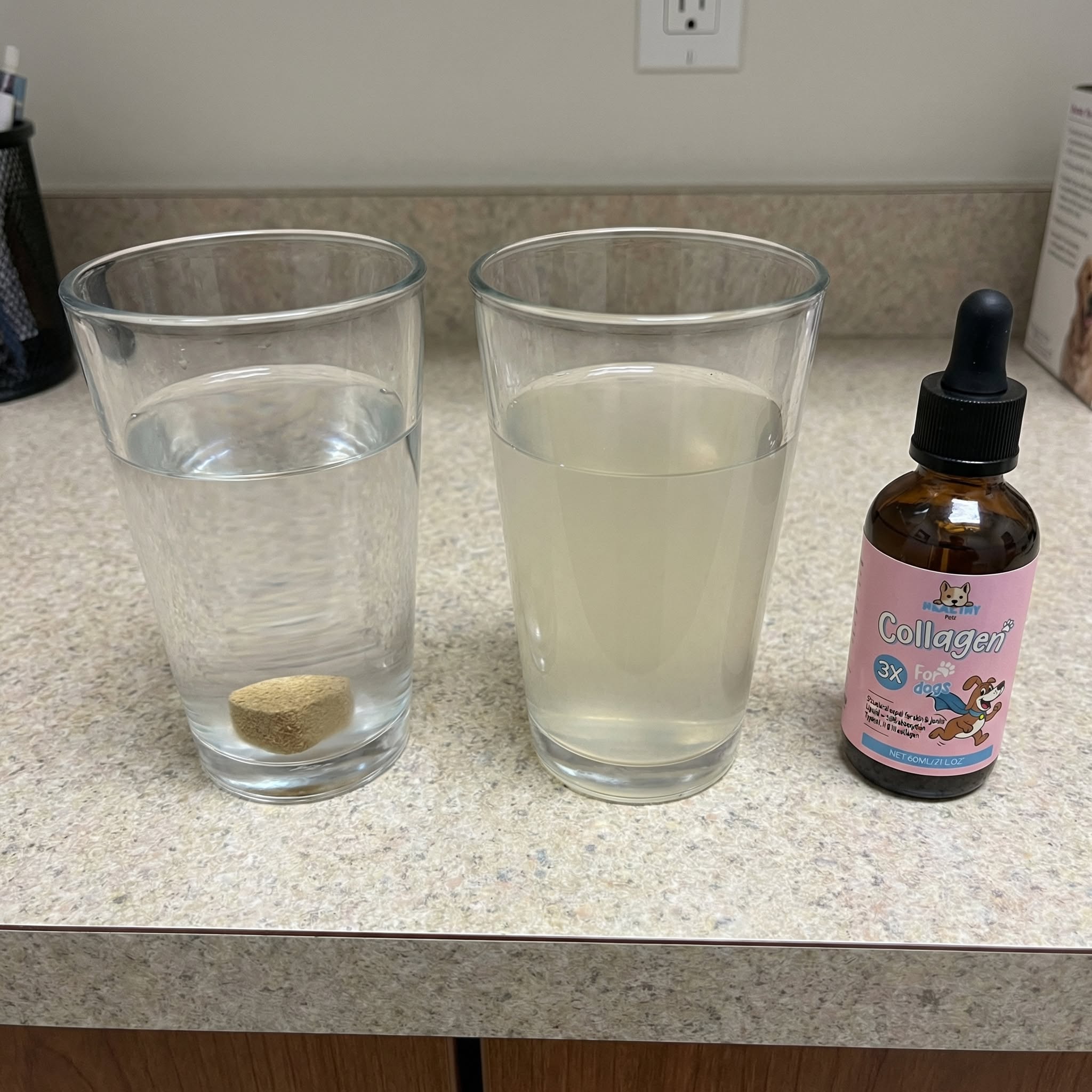
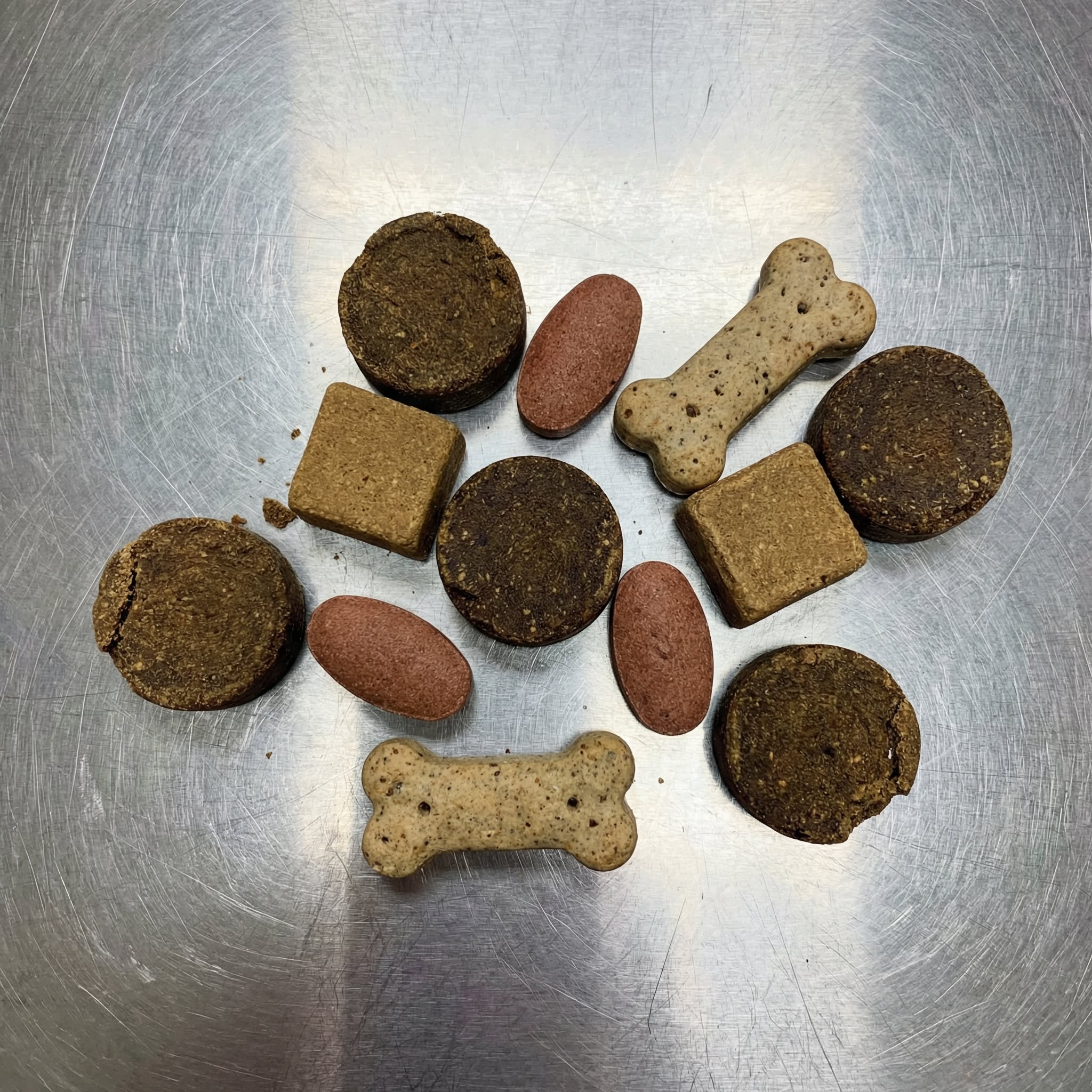
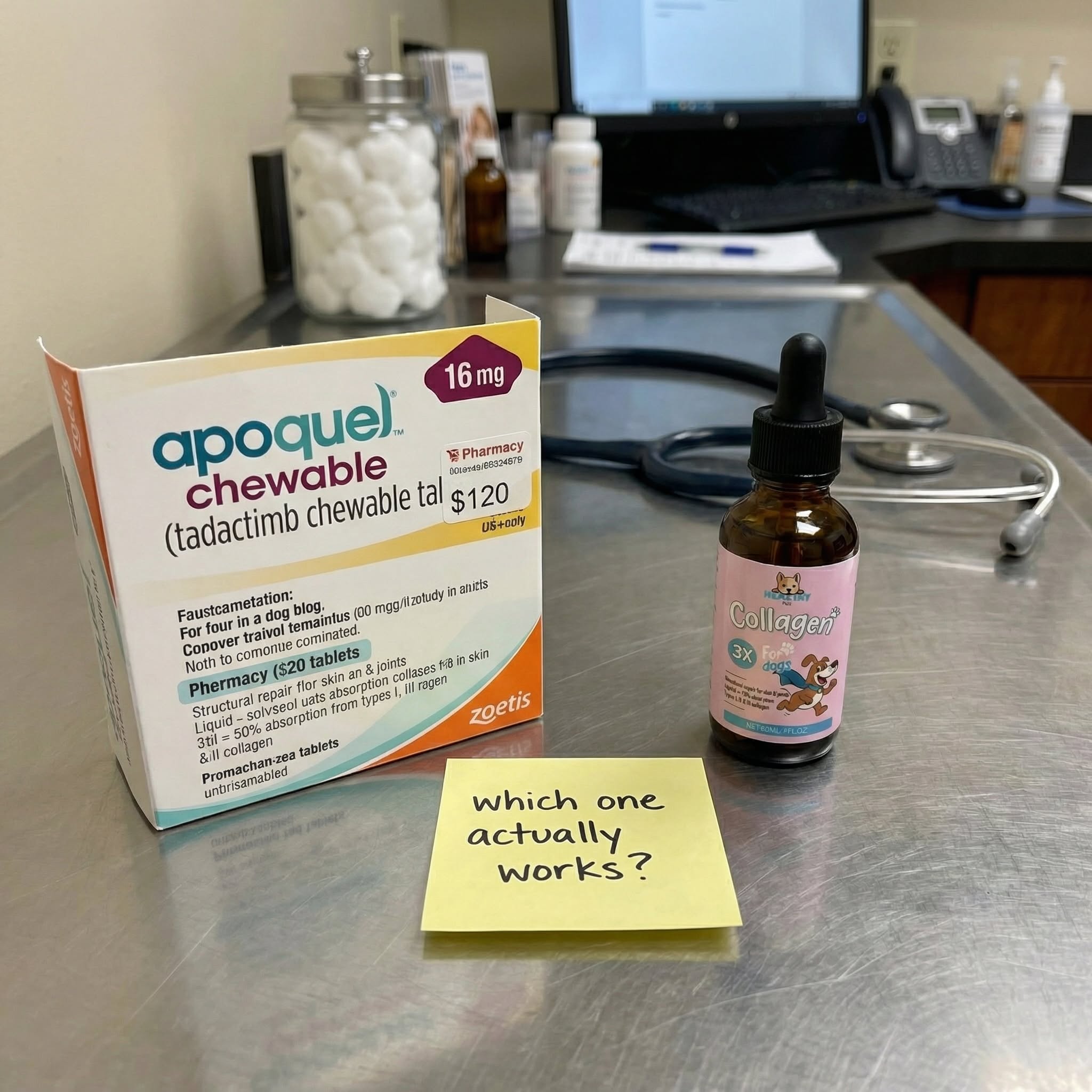
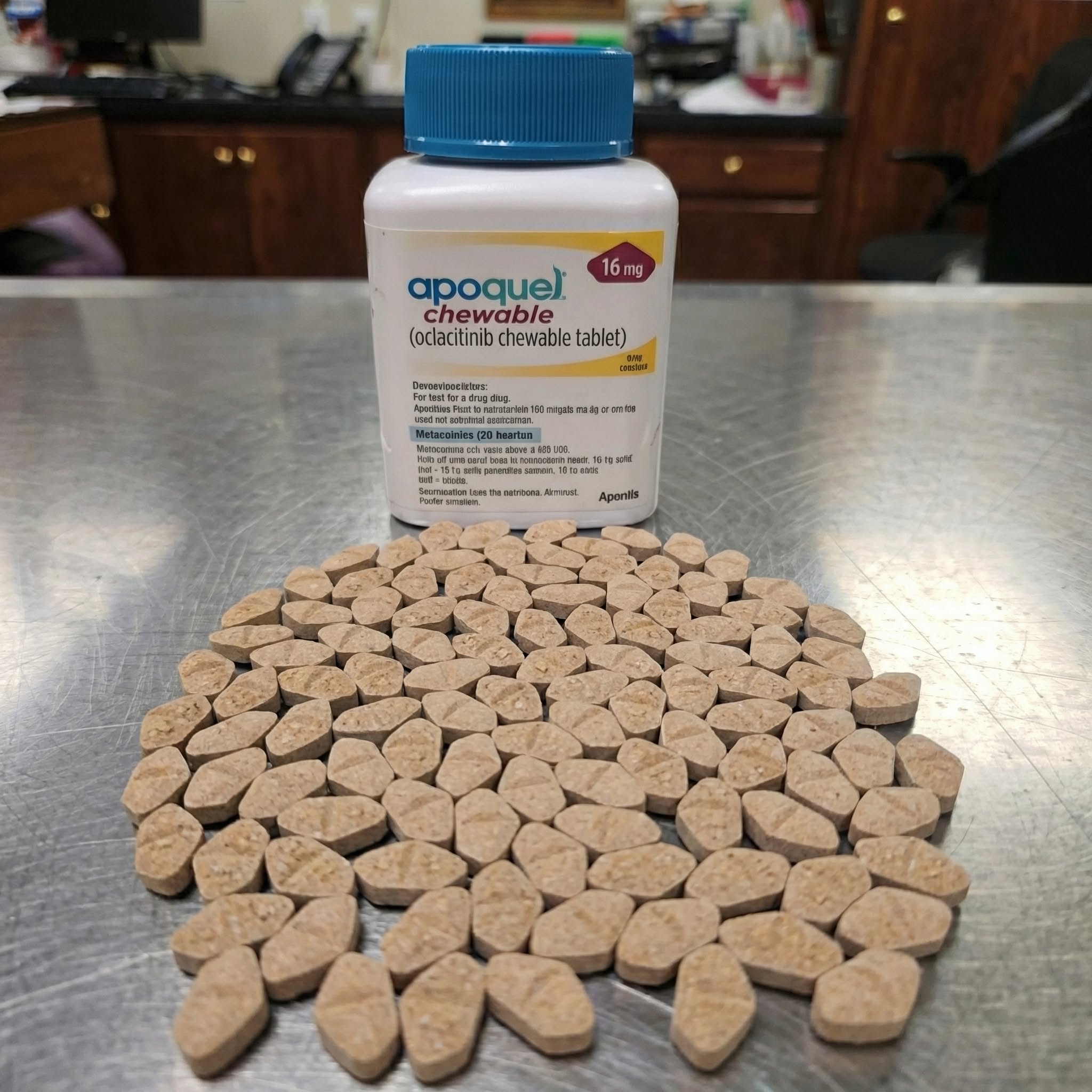
I'm going to lose my f*cking mind if one more dog owner refills their apoquel prescription without knowing what I'm about to tell you. That box of apoquel sitting on your kitchen counter right now. $120 a month. Your vet prescribed it. Your dog takes it every morning. And for a while it was a miracle. The scratching stopped. The ears calmed down. The paw chewing slowed. You slept through the night. Your dog slept through the night. Everything was better. For a while. Then it started fading. The scratching crept back. Not all at once. Slowly. A little more each week. By month 6 the scratching was almost back to where it started. Your vet increased the dose. $120 became $140. It worked again. The scratching stopped. You breathed. For a while. Then that dose started fading too. Month 9. Month 10. The scratching breaking through again. Your vet added cytopoint. $200 every 6 weeks. On top of the apoquel. $340 a month now. Both together worked. Beautifully. Like the first week on apoquel all over again. For a while. Then both started fading. Simultaneously. Month 14. Month 15. The scratching returning through two medications running at the same time at maximum dose. Your vet tried prescription food. $110 a bag. On top of the apoquel and cytopoint. Brief improvement. 2-3 weeks. Then back to scratching. Through three treatments. Your vet added medicated shampoo. Twice a week. $35 a bottle. Surface relief for about 48 hours after each bath. Then back. $400+ a month. Four treatments. All running simultaneously. And your dog is still scratching every night. Still getting ear infections every month. Still chewing paws. Still waking you up at 2 AM. And your vet's next suggestion: "We might want to consider adding a low-dose steroid." A FIFTH medication. On top of four that are already failing. This is the moment I need you to stop and ask the question that nobody in 15 months and $5,000+ has asked. WHY do they keep fading? Not "what should we add next." Not "should we increase the dose again." Not "is there a newer medication." WHY. DO. THEY. KEEP. FADING. Because once you understand WHY you'll never refill that apoquel prescription without also fixing the actual problem. My name is Dr. Sarah Mitchell. I'm a holistic veterinarian. 18 years in practice. And I prescribed apoquel to hundreds of dogs before I understood what I'm about to tell you. I watched it fade in almost every single one. And for 15 years I responded the same way your vet is responding right now. Increase the dose. Add cytopoint. Stack prescription food. Add shampoo. Consider steroids. I never asked WHY it was fading. I just kept adding. Then I pulled 247 patient files and went through them one by one. And the pattern was so obvious I wanted to punch myself for not seeing it for 15 years. Every single dog on apoquel followed the same trajectory. Worked great. Faded. Dose increase. Worked. Faded. Add cytopoint. Worked. Faded. Add food. Worked briefly. Faded. Add shampoo. Barely helped. Vet suggests steroids. 247 dogs. Same trajectory. Same timeline. Same fading pattern. And the answer to WHY was sitting right there in the data. I just had to stop adding medications long enough to look at it. Here's what's happening inside your dog right now. Right now. While you're reading this. While the apoquel is in their bloodstream supposedly helping. Your dog has a protective barrier in their skin. A physical structural wall made of collagen — types I and III. This barrier keeps environmental allergens — pollen dust grass mold — on the surface of the skin where they can't cause reactions. When this barrier is intact your dog can roll in grass all day. Walk through clouds of pollen. Sleep in dusty rooms. Nothing happens. Because the allergens land on the surface and can't penetrate through the wall to the tissue underneath where immune cells live. After age 2 dogs lose collagen from this barrier every year. The wall thins. Gaps form. By age 4-5 the gaps are wide enough for allergens to start getting through. Pollen penetrates. Dust gets in. Grass proteins reach tissue they should never touch. The immune system detects foreign invaders in deep tissue and launches an inflammatory response. That's the scratching. That's the beginning of everything. Now here's what apoquel does. Apoquel suppresses JAK enzymes. These enzymes are part of the immune signaling chain. When you suppress them the immune system's ability to respond to the allergens is reduced. Less response. Less inflammation. Less scratching. The dog is comfortable. You're happy. The vet is satisfied. Everyone celebrates. But the barrier is still broken. The collagen is still depleting. Every single day on apoquel the barrier loses a little more structure. More gaps form. More allergens get through. Month 1 on apoquel: the barrier has X gaps. Y allergens getting through per day. The current dose suppresses the immune response to Y allergens. Dog is comfortable. Month 3: the barrier has lost more collagen. X+5 gaps now. Y+Z allergens getting through. The current dose can still suppress Y+Z. Dog is still comfortable. Barely. Month 6: more collagen lost. X+12 gaps. Y+Z+W allergens. The current dose was calibrated for Y allergens. It can't fully suppress Y+Z+W. The extra W allergens break through the suppression. Scratching returns. That's not the medication "wearing off." That's not your dog "building tolerance." That's not the apoquel "losing effectiveness." That's the barrier deteriorating faster than the medication can keep up. The fire is getting bigger while the fire extinguisher stays the same size. So your vet hands you a bigger fire extinguisher. Higher dose. It handles Y+Z+W. Comfortable again. For a while. Then the barrier loses MORE collagen. Y+Z+W+V allergens now. Bigger fire. Same size extinguisher. Scratching breaks through the higher dose. So they add a SECOND fire extinguisher. Cytopoint. Two extinguishers handling Y+Z+W+V. Comfortable again. For a while. Then MORE barrier loss. Even more allergens. Two extinguishers struggling. Add a third — prescription food. Brief relief as the immune load shifts. Then the barrier loses more collagen and the three extinguishers can't keep up. Add a fourth. Medicated shampoo. Surface relief for 48 hours. Then the fire underneath overwhelms the surface treatment. FOUR fire extinguishers. The fire is now bigger than all four combined. Because the fire keeps growing. Because the barrier keeps collapsing. Because nobody is stopping the collapse. You can keep adding fire extinguishers. A fifth. A sixth. You can spend $600 a month on fire suppression. But the fire is fed by allergens coming through the barrier. And the barrier is losing collagen every month. The fire will ALWAYS outgrow the suppression. Always. It's mathematically inevitable. Unless you stop the barrier from collapsing. That's the piece your vet doesn't have. Not because your vet doesn't care. Not because your vet is incompetent. Because this isn't taught. The barrier mechanism isn't in the standard allergy protocol. Vet schools teach immune suppression. The pharmaceutical companies that fund veterinary education sell immune suppressors. The continuing education courses are designed by pharmaceutical companies. The entire knowledge pipeline flows from companies that profit from lifelong medication. A dog on apoquel for life generates $1,000-1,500 per year in medication revenue. Add cytopoint and that's $3,000-4,000. Add prescription food and it's $4,000-5,000. A dog whose barrier is rebuilt generates $0 in medication revenue. The protocol is designed by the companies that sell what the protocol prescribes. Of course barrier repair isn't in there. I'm not a conspiracy theorist. I'm a vet who followed the protocol for 15 years and watched 247 dogs fail on it. When I finally looked outside the protocol I found the answer in about three weeks of reading published dermatology research. Three weeks. After 15 years. The barrier needs collagen. The specific types — I II and III — that the barrier is made of. In liquid form because chews and pills absorb 20-30% at best. Most of the collagen in a chew passes through the gut unused. The barrier never gets the building blocks. Liquid hydrolyzed collagen absorbs at 98%. Almost everything reaches the barrier. I started adding liquid collagen alongside apoquel in my patients 3 years ago. I didn't stop the apoquel. I didn't change the dose. I didn't remove anything. I just added one pump of liquid collagen on food every morning alongside whatever the dog was already taking. Here's what happened. And this is the part I need every dog owner on apoquel to hear. Because this is the part that changes everything. Within 2-3 weeks the barrier started rebuilding. The collagen was being absorbed and used by the body to repair the structural gaps. Slowly. Invisibly. You couldn't see it happening yet. But the allergen load was beginning to decrease. Fewer gaps meant fewer allergens getting through. The fire was getting smaller. The apoquel — the same dose that had been failing — started working better. Not because the medication got stronger. Because the fire got smaller. The same extinguisher that couldn't handle a 7 was now handling a 5. Then a 4. Then a 3. Week 3-4: owners noticed. "The scratching is less than it's been in months. We didn't change the dose. What's happening?" The barrier is rebuilding. The workload is shrinking. The medication that was losing the race against the growing fire is now winning the race against a shrinking fire. Week 5-6: ears that had been infected every 4-5 weeks didn't cycle on schedule. Clean. Dry. No smell. Because the barrier in the ear canals was rebuilding and the environment that supported infection was normalizing. Week 6-8: dramatic visible changes. Coat thickening. Fur growing back in bald patches. Paw staining fading as licking decreased. Hot spots healing and not returning. The skin that had been chronically inflamed for years was calming down. Not because of stronger suppression. Because there was less to suppress. Month 2-3: the conversation I'd waited 15 years to have. "Dr. Mitchell — can we REDUCE the apoquel?" Not increase. REDUCE. For the first time in the history of their dog's treatment. Yes. Yes we can. Because the barrier is doing the job the apoquel was covering for. The wall is rebuilt. The allergens are staying on the surface. The immune system has less and less to respond to. We tapered. Reduced by 25%. Two weeks. No flare. The barrier held. Reduced again. No flare. The barrier held. The fire kept shrinking as the barrier kept strengthening. The extinguishers became more than needed. We removed them one at a time. Month 3: apoquel reduced by 50%. Month 4: apoquel discontinued. Cytopoint discontinued. Month 5: off everything. One pump of collagen on regular food. No scratching. No ear infections. No hot spots. No paw chewing. No 2 AM collar jingling. Not suppressed. Not managed. Not controlled. Gone. Because the wall is rebuilt. The allergens stay on the surface. The immune system has nothing to fight. There's no fire. You don't need extinguishers when there's no fire. I've now done this with over 200 dogs. Same protocol every time. Add collagen alongside existing medications. The barrier rebuilds. The fire shrinks. The medications become unnecessary. Taper. Remove. Done. 88% show measurable improvement within 4-6 weeks. Most are off all medication within 3-4 months. The 200th dog looks just like the 1st dog did. The trajectory is the same every time. Because the mechanism is the same every time. Broken barrier → collagen repair → barrier rebuilds → allergens blocked → immune system calms → medications unnecessary. It's not complicated. It's not experimental. It's structural biology applied to a problem that the pharmaceutical industry would rather you manage with medication for the rest of your dog's life. After I saw this work in 200 dogs I did something else. I ordered the top 6 collagen supplements for dogs available online. Chews. Pills. Powders. Sent them all to an independent lab. Because if collagen was the answer I needed to know which products actually deliver. The results made me furious. Product 1: wrong collagen types. Types IV and V. These don't exist in the skin barrier. Useless for barrier repair. The label didn't specify types. Just said "collagen peptides." Product 2: chew form. Lab estimated bioavailability at 22%. Meaning 78% passed through the gut unused. The dog gets about 110mg from a 500mg chew. Not enough to rebuild anything. Product 3: right types but cut with rice flour filler. Not disclosed on label. The filler interfered with absorption. Already-low chew bioavailability reduced even further by a hidden ingredient. Product 4: label claimed 500mg. Lab found 230mg. Less than half. Either lying or incompetent manufacturing. Product 5: right types. Close to labeled dose. But not hydrolyzed. Peptides too large for efficient absorption. 25-30% bioavailability. Five products. All available right now. All with positive reviews. All sold to dog owners who believe they're helping their dogs. None of them deliver enough of the right collagen in an absorbable form to meaningfully rebuild the barrier. The sixth product passed everything. Healthy Petz liquid collagen. All three types — I II and III. The actual types found in the skin barrier. Liquid form. Hydrolyzed peptides small enough for direct absorption. 98% bioavailability. Properly dosed. Verified by independent lab. Every batch tested. No fillers. No rice flour. No undisclosed ingredients. The only product that contained what it claimed in a form the body could actually use. This is the one I recommend. This is the one I've been using in my practice for 3 years. This is the one that produced results in 200+ dogs. Not because I have a deal with them. Because I tested six products and five were garbage and this one worked. Now here's what I want you to do. Look at your kitchen counter right now. There's a box of apoquel sitting on it. Or maybe it's in the cabinet. Or the bathroom. Wherever you keep it. Don't throw it away. Not today. But put a bottle of Healthy Petz liquid collagen NEXT to it. Tomorrow morning give your dog the apoquel like normal. And add one pump of collagen on the food. Both. Together. Every morning. The apoquel keeps your dog comfortable while the barrier rebuilds underneath. The collagen repairs the structural damage that's making the apoquel necessary in the first place. Within 6-8 weeks you'll notice the apoquel working better than it has in months. Not because the medication changed. Because the fire shrank. The barrier is rebuilding. Fewer allergens getting through. Less for the apoquel to suppress. That's your signal. The barrier is strengthening. The wall is coming back. Call your vet. Say "the scratching has decreased significantly. I'd like to try reducing the apoquel." Watch their face. Because they've never heard a client ask to REDUCE. Only increase. Only add. Only stack. Reduce by 25%. Monitor for two weeks. No flare? Reduce again. Monitor. No flare? Keep going. Within 3-4 months one of those products on your counter will be unnecessary. And it won't be the collagen. The apoquel box will end up in the trash. The collagen bottle will stay on the counter. That's how this ends. Every time. Over 200 times. Same ending. Apoquel in the trash. Collagen on the counter. Dog comfortable. I'll leave the link below. Healthy Petz liquid collagen. All three types. Liquid — 98% absorption. They have a spring sale right now and a 60-day money back guarantee. The multipack brings it down to about $17 a bottle. shophealthypetz.com/products/liquidcollagen $120/month for apoquel that was fading. $17/month for collagen that fixes why it was fading. $120 manages the symptom while the cause gets worse. $17 fixes the cause and makes the symptom disappear. Both on the counter tomorrow morning. One pump of collagen alongside the apoquel. Within 3-4 months one goes in the trash. Over 200 dogs. Same ending. Every single time. The apoquel was never supposed to be permanent. It was supposed to be the emergency response while someone fixed the barrier underneath. Nobody fixed the barrier. So the emergency became permanent. At $120/month. With fading effectiveness. And increasing doses. And stacking medications. And climbing costs. Until now. Now you know about the barrier. Now you know about the collagen. Now you know why the apoquel keeps fading and how to fix it. Put them both on the counter. Start tomorrow. And within 3-4 months tell your vet you want to reduce for the first time ever. That conversation — "can we reduce?" instead of "what should we add?" — is the most important conversation you'll have about your dog's allergies. And it starts with one pump of collagen next to the apoquel on your kitchen counter. Feel free to comment if you're on apoquel right now and want to know how to start collagen alongside it. This is what I help owners navigate every single week. The transition from suppression to structural repair. From managing to fixing. From the $120 box to the $17 bottle. Every owner who's made the transition says the same thing. "I wish I'd known about this before I spent $5,000 on medications that were never going to fix the barrier." Now you know. Don't wait 15 months and $5,000 to do what you can start tomorrow for $17. Your dog's barrier is losing collagen right now. Today. While you read this. The apoquel is suppressing the consequences. But the cause is getting worse underneath. One pump. Tomorrow morning. Next to the apoquel. The beginning of the end of the medication cycle. Over 200 dogs already got there. Your dog is next.
Holistic Vet Exposes The $4,800 Allergy Protocol...
LEARN MORELike this ad? Make it yours.
Crush rebuilds this exact creative around your product — your brand, your colors, your offer — in about a minute.