
Active· since Jun 6, 2026
- 99
- days running
- 1
- relaunches
Ad copy
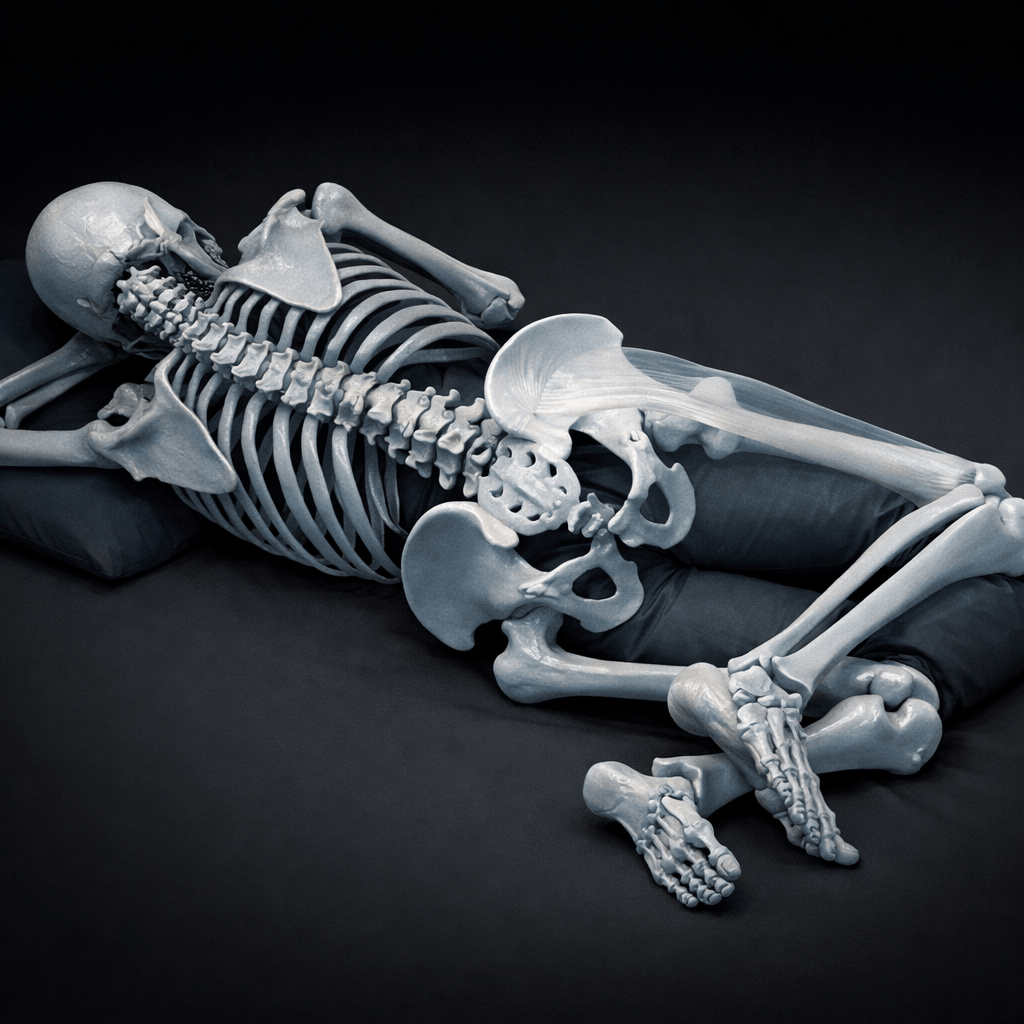
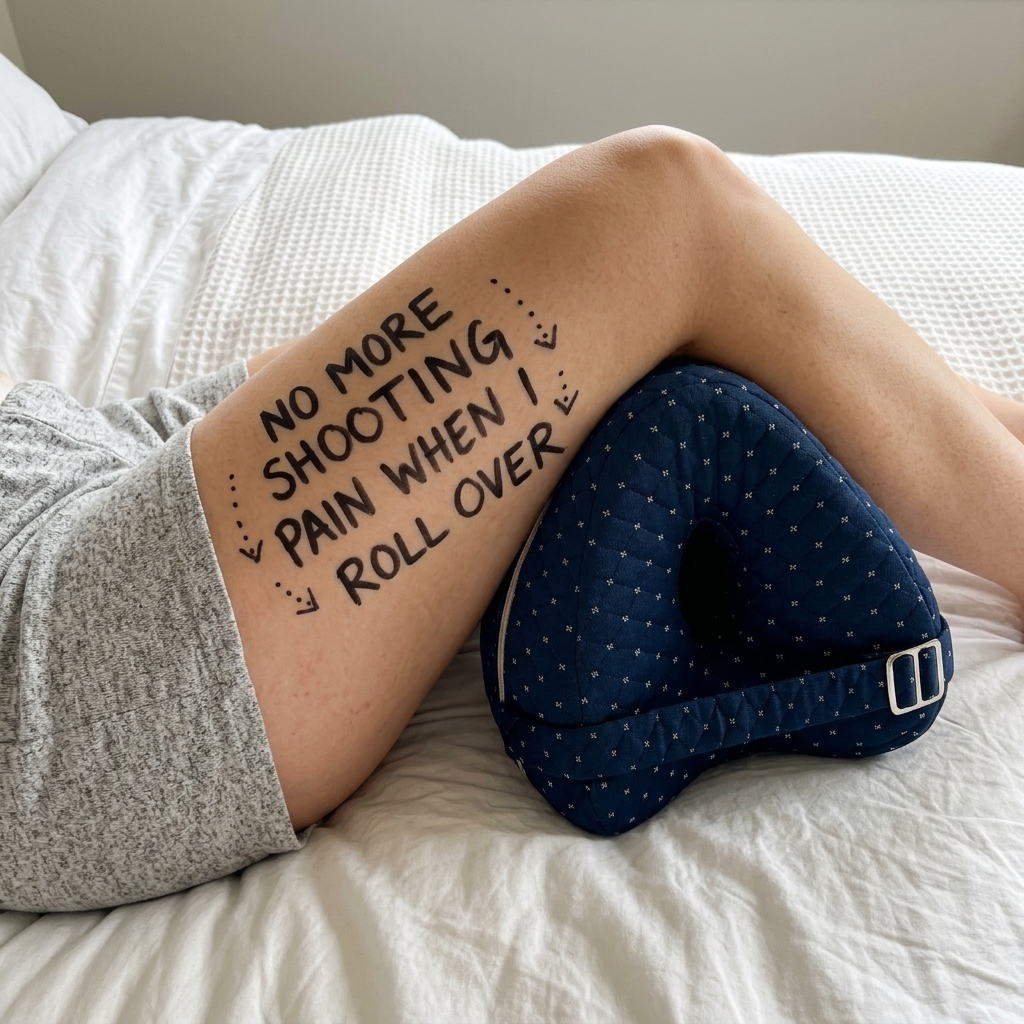
Physical therapists use this positioning technique on every patient with lower back pain, but I discovered it fixes the reason I'd been waking up every 2 hours for six years. I wasn't supposed to figure this out. I was at physical therapy for my lower back. Third session. She was working on my hip flexors when she asked her standard question: "How are you sleeping?" "Terrible," I said. "I have insomnia. Wake up every two hours like clockwork." She stopped mid-adjustment. "What happens when you wake up?" "My hip hurts. So I roll to the other side." She looked at me for a long moment. "Your hip hurts BEFORE you wake up?" "Yeah. That's why I flip over." "That's not insomnia," she said quietly. "Your pain is waking you up. This is biomechanical stress." I'd spent six years treating insomnia. I didn't have insomnia. Let me back up, because this realization changed everything. For six years, I woke up every night at the same intervals. 1 AM. 3 AM. 5 AM. Then my alarm at 7 AM. I tried sleep medications. Ambien knocked me out—but I still woke up every two hours, just groggier. I tried sleep hygiene. Blue light blockers. Blackout curtains. White noise machine. Lavender spray. I fell asleep faster, but still woke up every two hours. I bought three different mattresses in two years. Spent over $4,000. Firm. Plush. Medium. Still woke up every two hours. My doctor said it was stress. My therapist said it was anxiety. A sleep specialist told me my "sleep architecture" was disrupted and recommended another expensive mattress. Everyone was treating my insomnia. Nobody was asking WHY I kept waking up. Then, during that physical therapy session, my therapist asked me to describe exactly what happens when I wake up. "My hip hurts. I roll to the other side. The fresh hip feels better. I fall back asleep." "And two hours later?" "Same thing. Other hip." She nodded slowly. "Can I show you something?" She had me lie on my side on the exam table. "When you sleep on your side, your top leg wants to drop down toward the mattress. Gravity pulls it down. Watch." She let my leg drop naturally. "See how your pelvis rotates? That twisting motion creates torque through your entire lower spine. It compresses nerves. Creates pressure on your hip joint. Rotates your SI joint out of alignment." I could feel it immediately. A pulling sensation in my lower back. "Your brain registers this—not always as conscious pain, but as stress signals. After about two hours, those signals hit a threshold. Your brain triggers a wake-up response so you'll move and relieve the pressure." I stared at the ceiling. Six years. Six YEARS I'd been treating insomnia. "This isn't psychological," she continued. "This isn't sleep architecture. This is a mechanical problem creating a response in your brain." She placed a specialized cushion between my knees. The pulling sensation disappeared. "When we keep your legs properly aligned, there's no rotation. No torque. No pressure buildup. No reason for your brain to wake you up." Everything suddenly made sense. That's why the sleep medications didn't work. They knocked me out, but they didn't stop the biomechanical stress. My hip was still rotating. My pelvis was still torquing. The pressure was still building up. I still woke up—just groggier. That's why the expensive mattresses didn't help. The mattress supports what's on TOP of it. It can't control what happens BETWEEN your legs. My top leg still dropped. The rotation still happened. That's why sleep hygiene failed. It helped me fall asleep faster, but it did nothing about gravity pulling my leg down and twisting my spine for eight hours. "So... I just need a pillow between my knees?" I asked. "Not just any pillow," she said. "Regular pillows flatten by midnight. Body pillows shift around and take up half the bed. And those cheap knee pillows from Amazon? They slip out by 2 AM." She pulled out a pamphlet. "You need something that maintains the exact spacing for eight hours straight. High-density foam that doesn't compress. And a system to keep it locked in position." I actually laughed. A bitter laugh. "I've tried knee pillows. Two of them. The $15 Amazon one ended up on the floor every night by 2 AM. The $45 'premium' memory foam one? Compressed flat after three weeks." "Exactly," she said. "The problem isn't the concept. It's cheap foam that flattens and no way to keep it in place. If your pillow shifts even 2 inches during the night, you lose alignment. Your hips rotate again. Without a lock system, you only get proper positioning for maybe 20 minutes before it shifts." She wrote something down. "There's one company that makes these specifically for this problem. Medical-grade density foam. Has a strap system to keep it positioned. Physical therapists actually recommend it because it's the only one that stays in place for a full sleep cycle." I left that appointment with a name written on a piece of paper: Nourial. That night, lying in bed while my hip screamed at me at 1 AM, I couldn't stop thinking about it. I got up. Went to my laptop. Started searching. I didn't search for "insomnia cures" this time. I searched for "biomechanical sleep disruption" and "leg alignment side sleeping." I fell down a rabbit hole of orthopedic research and sleep biomechanics studies. I learned that when you sleep on your side without proper leg support, your pelvis can rotate up to 15 degrees. That rotation creates a chain reaction: → Compresses the sciatic nerve → Restricts blood flow to the hip joint → Rotates the sacroiliac joint out of alignment → Creates tension through the entire posterior chain Your body experiences this as a threat. A stress signal. After approximately 90-120 minutes (one full sleep cycle), the accumulated stress crosses a threshold. Your brain wakes you up. Not because you have insomnia. Because your body is trying to prevent damage. I felt anger rising in my chest. Six years I'd been told it was stress, anxiety, poor sleep hygiene. Six years I'd spent thousands on mattresses and medications. The solution wasn't pharmaceutical. It wasn't psychological. It was mechanical. And it required a $50 pillow that maintains proper positioning. I found the Nourial website. Read through their specs. Here's what made it different from the failed knee pillows I'd wasted money on: The Alignment Lock. A velcro strap system that wraps around your leg. Not just a feature—the entire reason this works when others fail. Other knee pillows slip out. This one stays locked for 8 hours straight. High-density memory foam. Not the cheap 2lb foam that compresses under weight. Medical-grade density engineered to hold its shape for 1,000+ nights. Maintains the exact spacing between your legs all night. Heart-shaped ergonomic design. Contours around your legs naturally AND works with the strap to prevent shifting. Regular pillows are just rectangles. This was designed specifically for leg anatomy. Calibrated thickness. Not too thick to be uncomfortable. Not too thin to be useless. The exact height validated by physical therapists to keep hips level and spine straight. I ordered it that night. 2 AM. Couldn't sleep anyway. It arrived three days later. Felt like three years. I didn't wait for bedtime. I opened the package on my couch and just held it. It came with a removable, washable cover and the velcro adjustment strap. The foam was firm. Not squishy like the cheap ones I'd tried. When I pressed my thumb into it, it slowly returned to shape. Good sign. That night, I followed the setup instructions. Placed it between my knees. Wrapped the strap around my thigh. Secured it. Adjusted until it felt right. It felt a little weird at first. Like wearing a watch on a new wrist. But when I relaxed into it, I could feel what my physical therapist had described. No pulling sensation in my lower back. My hips felt... level. Stacked. I fell asleep around 11 PM. I woke up at 7 AM. Same side. Pillow still locked in place between my knees. Zero shifting. Hip didn't hurt. I sat up in bed and just stared at my alarm clock. Seven hours. Straight through. No wake-ups. I couldn't remember the last time that happened. Night 3: Slept straight through again. Woke up naturally at 6:30 AM. Not from pain. Not from discomfort. Just... woke up. Felt rested. Didn't even know what "rested" felt like anymore. Week 1: Seven nights. Five of them I slept completely through. The two I woke up? Bathroom. Not pain. My wife said I stopped thrashing around. I didn't realize I'd been doing it for years. Week 2: Eight straight nights. Full sleep. No wake-ups. I had energy in the afternoon. Wasn't snapping at my kids. Could focus in meetings at work. One of my coworkers asked if I'd lost weight. I hadn't. I just didn't look exhausted anymore. Week 3: I stopped taking my sleep medication. Didn't need it anymore. The blackout curtains came down. The white noise machine went in a drawer. Week 4: My wife got one. She'd been waking up with hip pain for a year. "Just part of getting older," she'd said. First night with the pillow: Slept straight through. She looked at me that morning and said, "I can't believe it was this simple." Three months later, I had a follow-up with my physical therapist. She asked how I was sleeping. "Eight hours. Every night. Straight through." She smiled. "You got the Nourial?" "First week I had it," I said. "I can't believe this was the answer the whole time." She nodded. "Most people treat the symptoms. Sleep medications. New mattresses. Therapy. But if you don't fix the biomechanical cause, nothing changes." "Why doesn't anyone tell people this?" I asked. She paused. Chose her words carefully. "Because there's no prescription for it. No follow-up appointments. No recurring revenue. It's a one-time purchase that solves the problem. The system isn't built to recommend simple solutions." I left that appointment with a strange mix of relief and frustration. Relief that I'd found it. Frustration that it took six years and thousands of wasted dollars. Here's what I learned: If you sleep on your side and wake up every few hours, ask yourself: Do you flip sides when you wake up? If yes—it's not insomnia. It's biomechanical stress from poor leg positioning. Your hip hurts. Your brain wakes you up. You flip. Repeat. You can take all the Ambien in the world. You can buy a $5,000 mattress. You can meditate and use blue light blockers and spray lavender on your pillow. None of that will stop the wake-ups if you're not addressing the leg positioning. I spent six years and thousands of dollars treating insomnia I didn't have. I fixed it in three nights with a pillow that keeps my legs aligned with high-density foam that doesn't flatten and an alignment lock that keeps it positioned all night. Why other knee pillows failed me: ✗ They slipped out by 2 AM → Nourial LOCKS IN PLACE with velcro strap ✗ They flattened after weeks → Nourial maintains shape for 1,000+ nights ✗ Wrong thickness → Nourial is calibrated for proper hip stacking Look, I'm not a doctor or any kind of specialist. I'm just someone who couldn't sleep through a single night and found something that actually worked. And if my story helps even one person get their sleep back, it'll have been worth writing this. The Nourial Knee Alignment Pillow has a 50% OFF promotion for new customers right now. It comes with a 60-day money-back guarantee. If it doesn't work, you get every penny back. Either you sleep through the night for the first time in years, or you return it and lose nothing. I've left the link in the button below so you can check if they still have stock and secure yours. You deserve a night of uninterrupted sleep. P.S. — If you've tried knee pillows before and they didn't work: I get it. I tried two before this. They failed because cheap foam compressed and they slipped out during sleep. The difference is the Alignment Lock system. Without it, you only get 20 minutes of proper positioning. With it, you get 8 hours. That's why this works when others fail.
If you're a side sleeper, read this 👆
Physical Therapist Reveals: The Real Reason Side Sleepers Wake Up Every Hour in Pain (And the Simple Fix Most Doctors Miss)
SEE DETAILSLike this ad? Make it yours.
Crush rebuilds this exact creative around your product — your brand, your colors, your offer — in about a minute.