
Inactive· since Apr 24, 2026
- 4
- days it ran
- 0
- relaunches
Ad copy
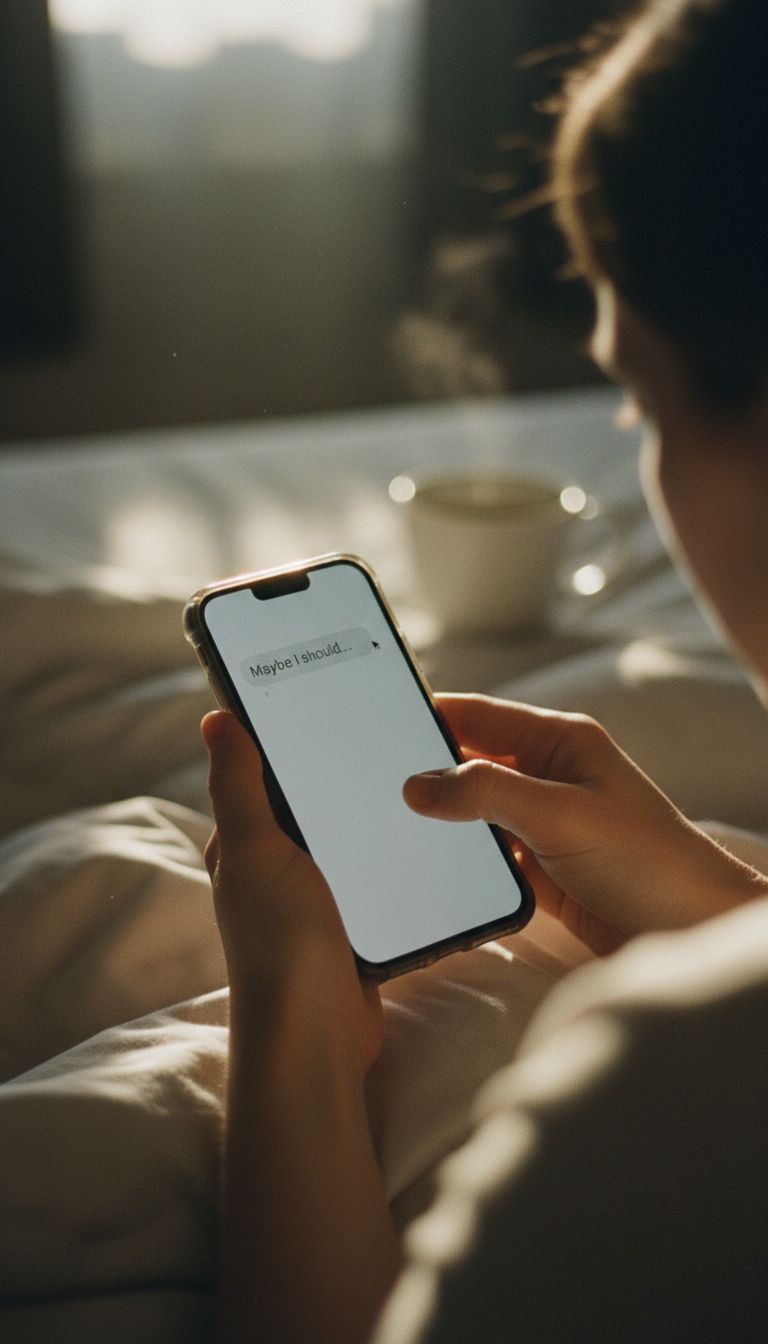
My best friend became someone I was afraid to text. I started checking her mood the way you check weather — before deciding if it's safe to go outside. The warmest woman I know became the one I tiptoed around. I started checking my best friend's mood before texting her. I want you to sit with that sentence. Because I've known this woman for eighteen years. We've been through pregnancies and miscarriages and divorces and job losses and funerals and drunk Tuesdays and 3 AM phone calls. There is no version of our friendship that should require me to check the weather before sending a text. But that's where we were. I'd pick up my phone. Start typing. Stop. Think: is she in a good mood today? Did she post anything? Did she reply to the group chat? Is it safe? Is it SAFE. To text my best friend. The way you check if it's going to rain before you leave without an umbrella. That's how I was treating Lauren. Lauren used to be the warm one. Every group has a warm one. She wasn't the funny one or the loud one or the organized one. She was the one you called when you were sad. The one whose voice on the phone made your shoulders drop. The one who said "tell me everything" and actually meant it and actually had the capacity to hold it. That woman — the holding woman, the warm one, the safe one — became the one I was afraid of. It happened gradually. The way warmth leaves a house when the heating breaks. You don't notice the first degree. Or the second. You notice when you're sitting in your coat. First sign: she started snapping over text. Not at me directly. At everything around her. Her kids. Her husband. The school. The traffic. The grocery store. Every text had an edge. "Ugh." "I can't." "This is ridiculous." "I'm going to lose it." I thought: bad week. Everyone has bad weeks. But the bad week became a bad month. Then a bad season. Then a bad year. Second sign: she started biting at me. Little ones. I'd say something normal — "want to grab lunch?" — and she'd reply: "Must be nice to have time for lunch." I'd text a photo of my kid doing something cute and she'd reply: "Mine won't stop screaming." I'd share good news about work and she'd say nothing. Or "cool." Every text I sent was a gamble. Would I get warm Lauren or cold Lauren? Would my innocent question trigger a sharp reply that would ruin my afternoon? I started composing texts and deleting them. Multiple times. Editing for safety. Removing anything that might sound too happy, too carefree, too much like I was having a life she wasn't. I started making myself smaller in my own texts so I wouldn't trigger the edge. That's when I realized: I was walking on eggshells around my best friend. The same way you walk on eggshells around someone volatile. The same way her kids were probably walking around her. The same way her husband was probably breathing carefully near her. I was afraid of my best friend. And she had no idea. Third sign: the blowup. Over nothing. A text about a group dinner. I suggested a restaurant. She wrote back — and I'm quoting because I screenshot it and still have it: "Can you just decide without needing everyone's input for once? Not everything needs to be a group project." Over a restaurant suggestion. For a dinner she would later cancel anyway. I stared at that text for twenty minutes. Then I put my phone down and cried. Not because it was harsh — I've been through worse. Because it was LAUREN. The warm one. The one whose voice used to make my shoulders drop. Writing sentences that made my shoulders go up. Something was very wrong. And I'd been too busy protecting myself from the shrapnel to see what was producing it. I didn't text her back that night. I called her. She picked up on the third ring. Her voice was flat. The edge was there before she even said hello. "Hey." "Hey. Can I say something?" "Sure." "I'm afraid to text you." Silence. Long silence. "What?" "I check your mood before I send you things. I edit my texts so they don't trigger you. I delete messages because I'm not sure if today is a safe day. I'm afraid of you, Lauren. And I've known you for eighteen years and I've never been afraid of you before." She didn't say anything for what felt like a full minute. I could hear her breathing change. Then she said: "I know." She KNEW. "I know I'm doing it. I can feel myself doing it. I hear the words come out and I know they're wrong and I can't stop them. It's like — the sharpness is already out before I decide to be sharp. I'm not choosing this." "How long?" "A year? Maybe more. I'm like this with everyone. Matt. The kids. My mom. You. Everyone gets the edge. And I hate it. I go to bed every night replaying the things I said and hating myself." "Have you talked to anyone?" "My doctor said it's perimenopause. Mood shifts. She put me on something. Didn't change the edge. Just made me tired AND edgy." I went home that night and did what I do. I read. Not about perimenopause. About what causes a person — a warm person, a soft person, a person who used to be everyone's safe place — to become someone everyone tiptoes around. What I found was this: when the nervous system has been running in survival mode for years — cortisol stuck on, stress response locked — the body goes into a permanent state of high alert. And in high alert, every incoming stimulus gets processed as a potential threat. A text. A question. A child's voice. A restaurant suggestion. The system doesn't distinguish between a real threat and a benign input. Everything hits the same alarm. The edge isn't a personality change. It's a nervous system on a hair trigger. The warm woman is still in there. She's just behind a system that's treating every incoming message — every text, every touch, every "mom" — as something to defend against. Lauren wasn't becoming a mean person. Her body was interpreting the world as hostile because that's what a nervous system in survival mode does. It turns the volume up on everything until a restaurant suggestion sounds like an attack. I found Liven that night. Micro-Cycle Method. Five minutes a day. Not an anger app. Not a mood app. Something that works with the nervous system — to bring it down from the state that was turning Lauren's warmth into weapons. I texted her the link at 1 AM. I said: "This isn't about your personality. It's about what your body has been doing. Take the quiz." She took it the next morning. Texted me: "Every question is yes. Every single one." She downloaded Liven before noon. What I watched from the outside: Week two: I texted her something normal — a meme, nothing loaded. She replied: "😂😂 dead." Not an edge reply. A NORMAL reply. I stared at it. Tested it again the next day. Normal again. Week three: She called me. Voluntarily. She hadn't called me voluntarily in months. She talked for thirty minutes. No edge. No sharpness. Just — Lauren. Telling me about her day the way she used to. Without turning every sentence into a complaint. Week four: Group chat. Someone suggested a dinner. Lauren replied: "Yes! What about that Thai place?" I looked at the text. "Yes!" With an exclamation point. Not "must be nice to have time for dinner." Not sarcasm. Enthusiasm. Actual enthusiasm. Week six: We had dinner. All four of us. Lauren was soft. Her voice had dropped back to the register I remembered — the warm one, the one that used to make your shoulders relax. She laughed. She asked questions. She didn't snap. Not once. I watched her across the table and thought: she's back. The warm one is back. Week eight: I texted her without checking the weather first. Just sent it. No editing. No deleting. No calculating. I just texted my best friend the way you're supposed to text your best friend — without fear. She replied in 30 seconds. Warm. Open. Lauren. It's been about five months. She's not perfect — nobody is. She has sharp moments. But the edge — the permanent, ambient, everyone-tiptoes edge — is gone. The hair trigger has come down. Her body stopped interpreting every input as a threat. And the warm woman behind the weapons came back. Her husband noticed first. Then her kids. Then us. Everyone stopped tiptoeing at roughly the same time because there was nothing to tiptoe around anymore. If you have a Lauren. If your warmest friend has become your sharpest. If you edit your texts before you send them. If you check the weather before reaching out. She's not becoming a mean person. Her body is in a state where everything incoming reads as a threat. The edge is a nervous system on a hair trigger. The warmth is still in there. She just can't access it from behind the alarm system that's running 24/7. Don't pull away from her. She needs you. Even though she's making it hard to stay. Text her the Liven quiz. Tonight. A few minutes. Doesn't cost anything. Tell her: "This isn't about your personality. It's about what your body has been doing." She'll say yes to every question. And the yes might be the beginning of getting the warm one back. Link is below. 💙 P.S. — I texted Lauren yesterday. No weather check. Just sent it. She replied in under a minute. Warm. Easy. Lauren. That's worth everything. 💙
THIS IS what you need to do
LEARN MORELike this ad? Make it yours.
Crush rebuilds this exact creative around your product — your brand, your colors, your offer — in about a minute.