Dog Health Insider
Dog Health Insider Facebook ad: “I’ve written 4,000 prescriptions for dog anxiety-and I’m…”
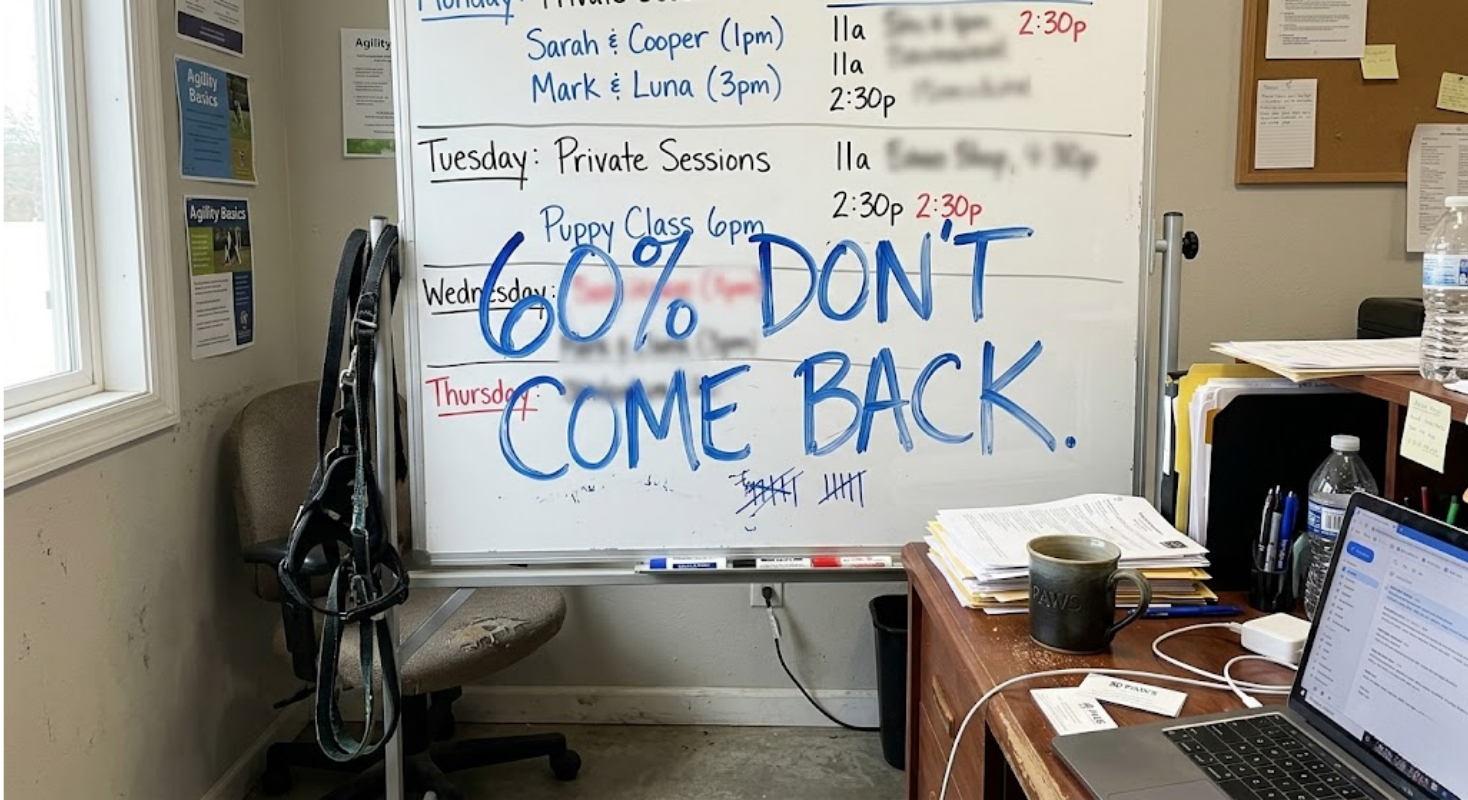
Ran for 1 day, from March 2 to March 3, 2026, the last day Crush saw it.
Run by Dog Health Insider on Facebook. Crush is not the advertiser and does not verify its claims. See this ad in Meta's Ad Library(opens in a new tab)
Want an ad like this for your product?
Crush makes new ad images for your product from this ad: your logo, your product photo, your offer.
Trials from $19.95 USD, then $79.95 USD a month. Cancel anytime.
About this ad
- Meta Ad Library ID
- 1478085970418404
- Platforms
- Facebook, Instagram, Audience Network, Messenger and Threads
- Relaunches
- 2
Ad text
My name is Dr. Emily Stroud. I've been a veterinarian for 16 years. And I need to tell you about the biggest mistake I've made in my career. I've written over 4,000 prescriptions for canine anxiety and behavioral medication. Trazodone. Fluoxetine. Gabapentin. Clomipramine. Alprazolam. Heavy drugs. Drugs that alter brain chemistry. Drugs with side effects that include sedation, loss of appetite, lethargy, GI distress, liver toxicity, and personality changes so profound that owners tell me "she's not herself anymore." I've prescribed these drugs to dogs that were pacing. Dogs that were destructive. Dogs that couldn't settle. Dogs that barked for hours. Dogs that destroyed furniture, shredded blinds, scratched through doors, and generally made their owners' lives miserable. The owners came to me desperate. They'd tried training. They'd tried exercise. They'd tried calming treats from the pet store. Nothing worked. And they came to me — their vet — because they trusted that I would identify the problem and prescribe the right solution. And I did prescribe. Thousands of times. Because that's what I was trained to do. Veterinary school teaches a very specific framework for behavioral issues: assess the behavior, rule out medical causes, diagnose the condition, prescribe medication if indicated, refer to a veterinary behaviorist if severe. Nowhere in that framework — nowhere in four years of veterinary education, nowhere in 16 years of continuing education, nowhere in the clinical guidelines I follow — does anyone say: "Before you prescribe anything, look at how the dog eats." Nobody mentions the food bowl. Not once. I graduated from one of the best veterinary programs in the country. I've attended over 100 continuing education seminars. I've read thousands of journal articles. And until five years ago, I had never once considered the possibility that the majority of the behavioral problems I was medicating were being CAUSED by a 30-second meal. Let me say that again, because I need you to understand the magnitude of what I'm telling you. The dogs I was prescribing Trazodone and Fluoxetine for — the dogs whose brain chemistry I was altering with pharmaceutical compounds — most of them didn't have a brain chemistry problem. They had a feeding problem. And the feeding problem was creating the brain chemistry problem that I was then treating with drugs. Here's how it works. And this is so simple it should embarrass every veterinarian in this country, myself included. A dog eats from a regular bowl. The meal lasts 30 seconds. Pour. Inhale. Done. For the next 8-12 hours, that dog's brain has no meaningful cognitive engagement. The most important mental activity of the day — the activity that in a natural environment would consume hours and provide the sustained focus that regulates the nervous system — lasted half a minute. The brain responds to this cognitive vacuum the same way any unstimulated system responds: it ramps up. Cortisol rises. Adrenaline rises. The baseline arousal level climbs from a 3 or 4 — where a dog can rest — to a 7, 8, 9 — where the dog paces, barks, chews, destroys, and can't settle. The dog isn't anxious. The dog is UNSTIMULATED. But it looks like anxiety. It presents as anxiety. It matches every clinical criterion for generalized anxiety or separation anxiety in the behavioral diagnostic guidelines. And when an owner brings that dog to me and describes the pacing, the destruction, the inability to settle — I reach for the prescription pad. Because that's what the framework tells me to do. And the medication works. Sort of. Trazodone suppresses arousal. The cortisol goes down. The pacing decreases. The dog is calmer. But the dog isn't calm because the problem is solved. The dog is calm because the drug is suppressing the SYMPTOM of the problem. The brain is still understimulated. The meal is still 30 seconds. The cognitive vacuum is still there. We've just thrown a chemical blanket over the fire instead of turning off the gas. And the medication comes with a cost. Side effects I see regularly in my patients on behavioral medications: Lethargy. Owners say "she's like a zombie." "She's not herself." "She sleeps all day." Yes. Because we've suppressed the brain so aggressively that it can't produce normal alertness, let alone the overarousal we were trying to manage. Appetite changes. Some dogs stop eating. Others eat compulsively. Either way, the relationship with food — already broken by the 30-second meal — gets more distorted. GI problems. Vomiting, diarrhea, constipation. Significant enough that some dogs need additional medication to manage the side effects of the original medication. Liver and kidney stress. Long-term use of many behavioral medications requires regular blood panels to monitor organ function. Because these drugs are processed by organs that weren't designed to handle them indefinitely. And the worst one: owners who feel trapped. They can't take the dog OFF the medication because the behavior returns immediately. But they don't want the dog ON the medication because of the side effects. So they live in this middle ground where the dog is medicated, somewhat calmer, somewhat sedated, somewhat "not herself" — and the owner wonders if this is just how it has to be. It doesn't have to be. Five years ago, I started doing something different. I started looking at the food bowl before reaching for the prescription pad. When an owner came in describing behavioral issues — pacing, destruction, barking, anxiety — I stopped jumping to diagnosis and medication. Instead, I asked a question I'd never asked in 11 years of practice: "How does your dog eat? What do they eat from? How long does a meal take?" The answer was almost always the same: Regular bowl. Thirty seconds. Sometimes faster. I started prescribing a different first step. Not medication. Not training. Not calming supplements. A different meal. I told owners: Before we talk about Trazodone, before we discuss medication, I want you to do one thing. Replace your dog's food bowl with an enrichment feeder that takes 10-15 minutes instead of 30 seconds. Do this for every meal. Do it for two weeks. Then come back and tell me what happened. The enrichment feeder I started recommending was the Soothe Bowl. Not because it's the only option — there are several enrichment feeders on the market. But because the Soothe Bowl's spinning ball mechanism is the only one I've found that reliably sustains engagement past the 10-minute mark for the majority of dogs. This matters because 10 minutes is the threshold. Below 10 minutes, the brain gets a brief snack of engagement but doesn't produce enough endorphins to shift the arousal baseline. A Kong that lasts 4 minutes doesn't cross the threshold. A lick mat that lasts 90 seconds doesn't cross it. Only sustained engagement — 10 minutes minimum — produces the endorphin release that actually resets the nervous system. The Soothe Bowl consistently delivers 10-15 minutes because the spinning ball prevents the dog from finishing quickly. They have to keep licking. The reward keeps moving. The engagement stays sustained. Here's what happened over the first year of this new protocol. I tracked it. I'm a data person. I keep records. Of 340 dogs that I would have previously started on behavioral medication, I instead prescribed enrichment feeding first. Two weeks later, at the follow-up: 68% of owners reported significant improvement in the behavioral symptoms that brought them in. Significant meaning: the pacing had stopped or been dramatically reduced. The destruction had decreased or ceased. The dog was settling on its own for the first time. The barking had reduced by 50% or more. These owners did not need medication. Not because I withheld it — because the behavioral symptoms resolved when we fixed the meal. 68% of the dogs I would have medicated didn't need medication. Let that number sit for a moment. For 11 years, I was prescribing drugs to dogs whose primary problem was a 30-second meal. I was altering brain chemistry with pharmaceutical compounds when the brain chemistry was only disrupted because the brain had nothing to do all day. The remaining 32% did still need support. Some needed medication — at lower doses than I would have previously prescribed, because the enrichment feeding had already reduced the baseline arousal. Some needed behavioral therapy. Some had genuine clinical anxiety that required pharmaceutical intervention. But the majority — 68% — needed a different bowl. Not Trazodone. Not Fluoxetine. Not Gabapentin. A $36 rubber bowl with a spinning ball that makes meals last 15 minutes instead of 30 seconds. That's the mistake I made for 11 years. And that's the mistake most veterinarians are still making right now. Because nobody in our training — nobody in the entire veterinary education system — teaches us to look at the food bowl before reaching for the prescription pad. I'm telling you this because right now, today, there are millions of dogs on behavioral medication that may not need it. Dogs whose brains aren't broken, aren't chemically imbalanced, aren't clinically anxious — but whose brains are completely understimulated because their meals last 30 seconds and their days last 12 hours. If your dog is on medication and you've never tried enrichment feeding — please try it. Talk to your vet. Don't stop medication without veterinary guidance. But ask: "Can we try enrichment feeding alongside the medication and see if we can reduce the dose?" And if your dog ISN'T on medication yet — if you're at the point where you're considering it, where the behavior has gotten bad enough that drugs seem like the only option — try the Soothe Bowl first. Two weeks. Two meals a day. 10-15 minutes of sustained engagement per meal. If the behavior improves — and for 68% of the dogs in my practice, it does — you just solved the problem without medication. Without side effects. Without monthly prescriptions. Without regular blood panels. Without the sedation, the lethargy, the "she's not herself." Without any of it. https://trysoothe.shop/products/soothe%E2%84%A2-slow-feeder-dog-bowls Single — $36. Less than one month of Trazodone. Try it for two weeks before you consider medication. Duo — $59. Most popular. One for each meal. This is what I prescribe as a first step for every behavioral case in my practice. Includes FREE "The Stress-Free Dog" Digital Masterclass + Lifetime Replacement Warranty. Trio — $84 + FREE SHIPPING. Best value. Includes Digital Masterclass + Lifetime Warranty + Soothe™ Silicone Gentle Brush. Rated 4.7 on Trustpilot. Over 5,000 reviews. 90-day money-back guarantee. Before you medicate, feed correctly. The brain isn't broken. It's empty. Fill it. — Dr. Emily Stroud, DVM P.S. I still prescribe medication when it's genuinely needed. Some dogs have clinical anxiety, genuine phobias, or neurological conditions that require pharmaceutical intervention. This isn't anti-medication. This is anti-medicating-a-feeding-problem. If your dog eats in 30 seconds and nobody has ever told you that might be the ROOT of the behavior you're treating — now someone has. Fix the meal. See what's left. For 68% of my patients, the answer is: nothing's left to medicate. P.P.S. If your dog is currently on behavioral medication and doing well — don't change anything without talking to your vet. But ask: "Could enrichment feeding allow us to reduce the dose?" In my practice, dogs on the enrichment feeding protocol who DO need medication typically need 30-50% lower doses than those who don't. Because the bowl is doing the first layer of work, and the medication only has to handle what's left. Less drug. Fewer side effects. Same calm. Ask your vet.
Where the ad sends people
trysoothe.shop
"I’ve written 4,000 prescriptions for dog anxiety—and I’m telling you right now: 68% of those dogs didn't need medication.👆
Soothe
Order now: trysoothe.shop(opens in a new tab)