
Inactive· since May 8, 2026
- 39
- days it ran
- 0
- relaunches
Ad copy
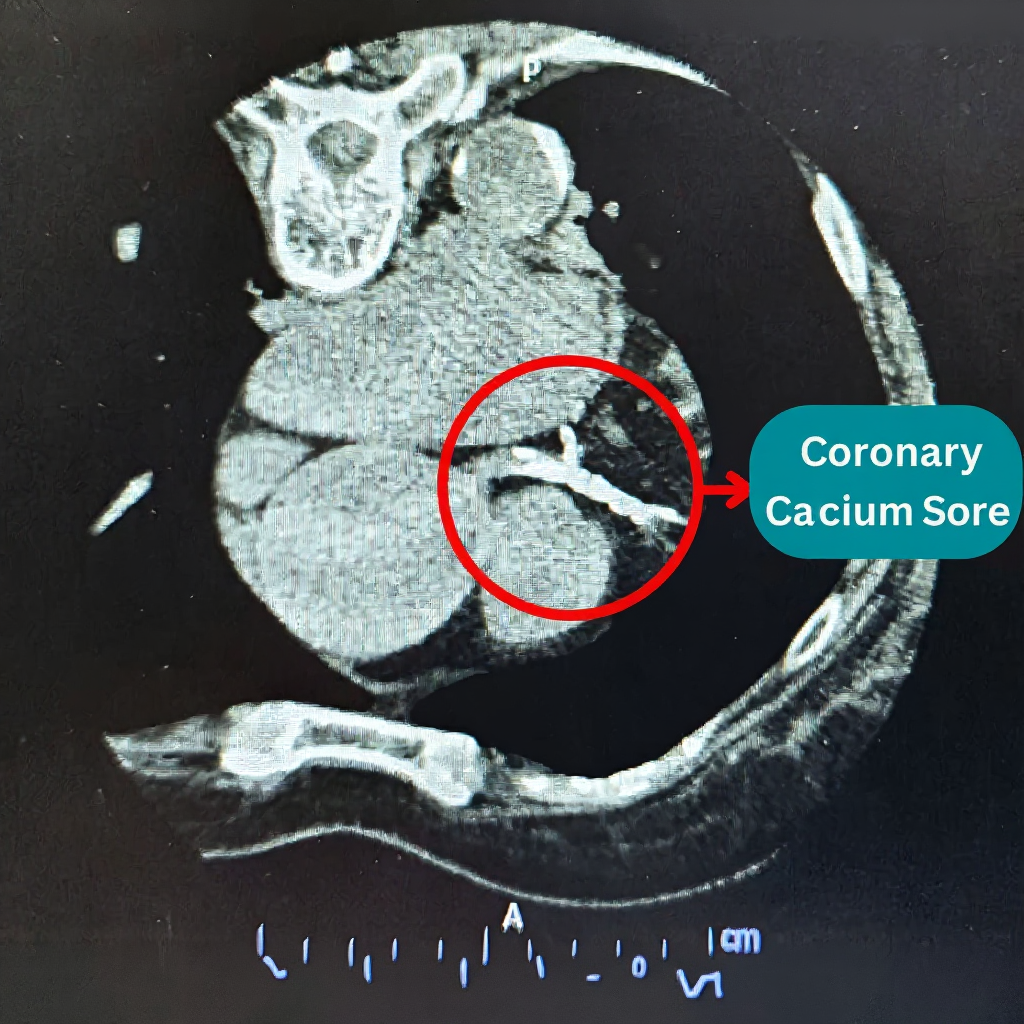
I've read 3,780+ cardiac CT scans in 16 years. If your CAC score is north of 400, I need to tell you what your preventive cardiologist isn't telling you about your ED. When a man with a calcium score over 400 walks into his urologist's office complaining of ED, I already know what his next angiogram is going to show. Not in 6-8 years. In 2-4. Because at 400+, you're not in the "early warning" window anymore. You're in the active disease window. And the ED is your last symptom that isn't an emergency. I'm Dr. Owen Strathmore. I'm a cardiologist specializing in preventive cardiology and endothelial dysfunction. I read coronary CT angiograms and calcium scoring all day. And when my own ED started at 51 — with a baseline CAC of 62 — I knew exactly what was coming if I didn't reverse course. If you're reading this with a score over 400, you know what I know. You've been told your MACE risk is elevated. You've probably been put on high-intensity statin therapy. Maybe ezetimibe. Maybe a PCSK9 inhibitor. You've cleaned up your diet, you exercise, you check your ApoB. You're doing everything the protocol says to do. And your ED is still there. That's not a coincidence. That's the diagnosis your statin can't fix. Statins stabilize plaque. They don't restore endothelial function. And endothelial function — specifically the bioavailability of nitric oxide in your arterial endothelium — is what actually controls erection physiology and what controls coronary flow reserve. A man with a CAC of 400+ and persistent ED on optimal medical therapy has flow-limiting endothelial dysfunction in vessels too small to stent. That's the part nobody is treating. Your statin is buying time on the larger vessels. Your endothelium in the 1-2mm penile arteries — and the equivalent microvasculature feeding your myocardium — is still failing. That's why your ED isn't responding to lifestyle changes. The damage is past the threshold where lifestyle alone reverses it. I want to walk you through what I see in my cath lab so you understand exactly what your score means and what it doesn't. I've seen thousands of men with calcium scores in your range. The pattern is consistent. They get the score, get aggressive lipid management, feel reassured, and continue masking their ED with sildenafil or tadalafil. They believe — because their cardiologist tells them — that the statin is doing the protective work. Then I see them 2-4 years later in my cath lab. The 56-year-old. CAC of 487 in 2019. LDL controlled on rosuvastatin 40mg. ApoB at 65. ED for three years, managing with daily tadalafil 5mg. Came in with crescendo angina last March. Angiogram showed 80% stenosis in his proximal LAD with positive remodeling — meaning the lesion was active and progressing despite optimal medical therapy. Three drug-eluting stents. He did everything right. The plaque progressed anyway. The 52-year-old. CAC of 612. On atorvastatin and ezetimibe. ED for four years on PRN sildenafil. His follow-up CCTA showed two new soft plaque lesions that weren't there on his prior scan. New plaque. On dual lipid therapy. Because lipid management addresses one mechanism. It doesn't address endothelial inflammation, oxidative stress, or NO bioavailability — which is what drives plaque progression in the post-400 patient. These men weren't unlucky. They were under-treated for the part of the disease their cardiologist wasn't measuring. Here's what I want you to understand about your specific score range. Below 100, plaque is detectable but the disease is mostly endothelial. Lifestyle and statin do most of the work. 100-400 is moderate disease. Aggressive medical therapy reduces event risk significantly. Above 400, you've crossed into a different category. MESA data show your annualized MACE risk is roughly 2.5-3% per year on optimal medical therapy. That's the residual risk your statin can't touch — because it isn't a lipid problem at this stage. It's an endothelial problem with a lipid component. And the endothelial problem is what your ED is screaming about. When my own CAC came back at 62, I was alarmed but I had time. I had years. A reader with a score of 400+ doesn't have years to spend masking symptoms. The math is different. I'll tell you what I did and what the data showed. Then you can decide whether the mechanism is worth your time. September 14th, 11:23 PM. I was reviewing journals after a late shift. My ED had progressed. Morning erections had been gone for nine months. I'd already implemented every lifestyle intervention. Mediterranean diet, zone 2 cardio, resistance training, sleep optimization, ApoB at 61 on rosuvastatin. My calcium score was stable. But endothelial function testing — flow-mediated dilation — was still impaired. I wasn't progressing toward stents yet. But I wasn't healing either. I was holding the line, which at my age and trajectory meant I'd eventually lose it. I came across a research line on TRPV1 receptor agonism and endothelial nitric oxide synthase activity. Capsaicin — the active alkaloid in Capsicum annuum — binds TRPV1 receptors expressed on vascular endothelium. TRPV1 activation triggers calcium influx, which activates eNOS, which produces nitric oxide. Sustained NO release. The same NO pathway sildenafil exploits downstream by inhibiting PDE5. But upstream. At the source. The relevant distinction for a CAC 400+ patient: PDE5 inhibitors don't fix the eNOS dysfunction that's driving your endothelial impairment. They preserve cGMP after NO is already produced. If your endothelium isn't producing adequate NO in the first place — which is what high CAC scores tell us about coronary flow reserve — PDE5 inhibition has a ceiling. TRPV1 agonism works on a different lever. It upregulates eNOS expression and improves NO bioavailability over time. Several papers show endothelial function improvement on FMD testing within 8-12 weeks of consistent capsaicin exposure. A subset of those papers — controversial but in print — show measurable plaque reduction in the same window. I was skeptical. I'm a cardiologist. We don't usually believe supplement claims. But the receptor pharmacology was sound and the mechanism was upstream of where statins act, which is exactly the gap I was trying to close. I ordered pharmaceutical-grade cayenne extract softgels. Started September 15th. Three softgels daily with meals. I kept everything else identical — same statin, same diet, same training. I wanted to isolate the variable. September 18th, three days in. Spontaneous nocturnal tumescence. First time in nine months. I was lying there at 4am running differential diagnoses on my own physiology. It wasn't placebo — it was too fast and too consistent. September 27th, twelve days in. Symptoms fully resolved. I felt 38 again. But the ED resolution wasn't what I was looking for. I needed to know if this was treating the underlying problem or just amplifying NO downstream like sildenafil does. November 10th. Eight weeks in. I ordered a follow-up coronary CT angiogram with calcium scoring on the same scanner, same protocol, same radiologist as my baseline. Calcium score: 41. Down from 62. A 34% reduction in 8 weeks. I want you to understand how I'm reporting this and what it means and doesn't mean. This is n=1. My own data. Same imaging center, same protocol, scored by the same radiologist who flagged the discrepancy independently. Calcium scores can fluctuate 5-10% on test-retest variability. A 34% reduction is well outside that variance. But it's one patient — me — and I'm telling you exactly that. What I will say is that the published literature on TRPV1 agonism and endothelial function is consistent enough, and my flow-mediated dilation improved alongside the calcium reduction, that the mechanism is real. Whether you'll see a 34% reduction in your numbers is something I can't promise. What I can tell you is that the upstream pathway — eNOS expression, NO bioavailability, endothelial repair — is the part of your disease your statin is not treating. And that part is what your ED is telling you about. I walked the scans down to my colleague Dr. Reyes. He looked at the images, looked at me, looked back at the images. "Owen, plaque doesn't reverse this fast." I explained the receptor pharmacology. He studied the comparison for another minute. "What was your FMD?" "Improved from 4.4% to 7.3%." He was quiet. "Endothelial function is moving. That's the variable." That's the variable for you too. If your CAC is 400+ and you're on optimal medical therapy and your ED is still progressing, your endothelial function is moving in the wrong direction. Lipid management isn't going to reverse that. Lifestyle alone, at this stage of disease, isn't going to reverse it either. You need an intervention that targets the eNOS pathway directly. That's what TRPV1 agonism does. I want to address what your preventive cardiologist will say if you bring this up. He'll tell you the supplement industry is unregulated. He's right. He'll tell you the calcium reduction literature is mixed. He's right. He'll tell you n=1 case reports aren't evidence. He's right. And then he'll write you another prescription for tadalafil and check your LDL in three months. What he won't do is address the endothelial dysfunction that's driving both your symptoms. Not because he's a bad doctor. Because there isn't a pharmaceutical for it. The lipid pathway has billion-dollar drugs. The endothelial repair pathway has supplements and lifestyle, and most cardiologists don't know the receptor pharmacology because it's not on the boards. I'm telling you this because I'm one of the cardiologists who does know it. And I used it on myself. The supplement I used is Aurivita Capsaicin Power. Three softgels per day, formulated with capsaicin from cayenne plus supporting compounds for absorption — BioPerine to enhance bioavailability, grape seed extract for additional endothelial support, hawthorn for vascular tone. The full ingredient panel matters because TRPV1 agonism alone produces a transient effect; the supporting compounds extend the endothelial benefit between doses. It is not a medication. It is not a substitute for your statin. It is not a substitute for the lifestyle work you're already doing. If you stop your statin and replace it with this, you're going to harm yourself, and I'm telling you that as a cardiologist. What it is, is a tool that targets the part of your disease your statin doesn't touch. The endothelial part. The part your ED is reporting on. Here's what I'd suggest if you're a CAC 400+ patient considering this. Get baseline numbers. CAC if you haven't repeated in over a year. Flow-mediated dilation if your cardiologist will order it. Endothelial PAT testing if available. Standard lipid panel and ApoB. Blood pressure. Resting heart rate. Document where you are. Run the protocol for 8-12 weeks. Three softgels per day, consistent timing. Keep your statin. Keep your lifestyle. Change nothing else. Repeat the imaging. Repeat the FMD. Compare. If your endothelial function moves, you have evidence the pathway is responsive in your physiology. That's the data point that matters. The CAC reduction may or may not move in 8 weeks. FMD typically does. Aurivita has a 120-day money-back guarantee, which is what made the math work for me when I first ordered it. If your numbers don't move, you've spent nothing and you've ruled out a mechanism. If they do move, you have a tool your cardiologist didn't give you. I want to close with the thing I think about most often. I see CAC 400+ patients in my cath lab two to four years after their score was first measured. Most of them did everything their preventive cardiologist told them to do. Statin. Diet. Exercise. PRN sildenafil for the ED that wouldn't go away. Every one of them tells me the same thing in recovery. "I felt like I was doing everything right. I don't understand why this happened anyway." I understand why. The statin treated the lipid problem. Nothing treated the endothelium. And the endothelium was what the ED was reporting on for years before the chest pain. You have one early warning indicator left that hasn't progressed to an emergency. Your ED. Your statin can't read it. Your urologist can't connect it to your score. Your preventive cardiologist isn't measuring the pathway it's reporting on. You can. You know your number. You know what it means. And you know that whatever you're doing right now isn't enough to reverse it — because if it were, your ED would be resolving instead of progressing. Eight weeks of TRPV1 agonism is not a guarantee. It's an experiment with a defensible mechanism that targets the part of your disease nobody else is targeting. You can always go back to tadalafil if it doesn't work. You cannot un-do plaque progression if your endothelium kept failing while you waited. — Dr. Owen Strathmore, MD, FACC Cardiologist, 16 years Board Certified in Cardiovascular Disease P.S. — The product is Aurivita Capsaicin Power. If you're a CAC 400+ patient on a statin with persistent ED on optimal medical therapy, the pathway I described is the most likely explanation for what you're experiencing. Get baseline FMD if you can. Run the protocol for 8-12 weeks. Repeat. If the endothelial function moves, you have your answer. If it doesn't, the guarantee covers you. The downside is bounded. The upside, if the pathway responds, is the part of your disease no other intervention is treating.
A Cardiologist Can't See This
Support your cardiovascular health with our capsaicin softgels, a premium supplement meticulously formulated for those who prioritize long-term heart vitality.
LEARN MORELike this ad? Make it yours.
Crush rebuilds this exact creative around your product — your brand, your colors, your offer — in about a minute.