
Inactive· since Mar 17, 2026
- 21
- days it ran
- 0
- relaunches
Ad copy
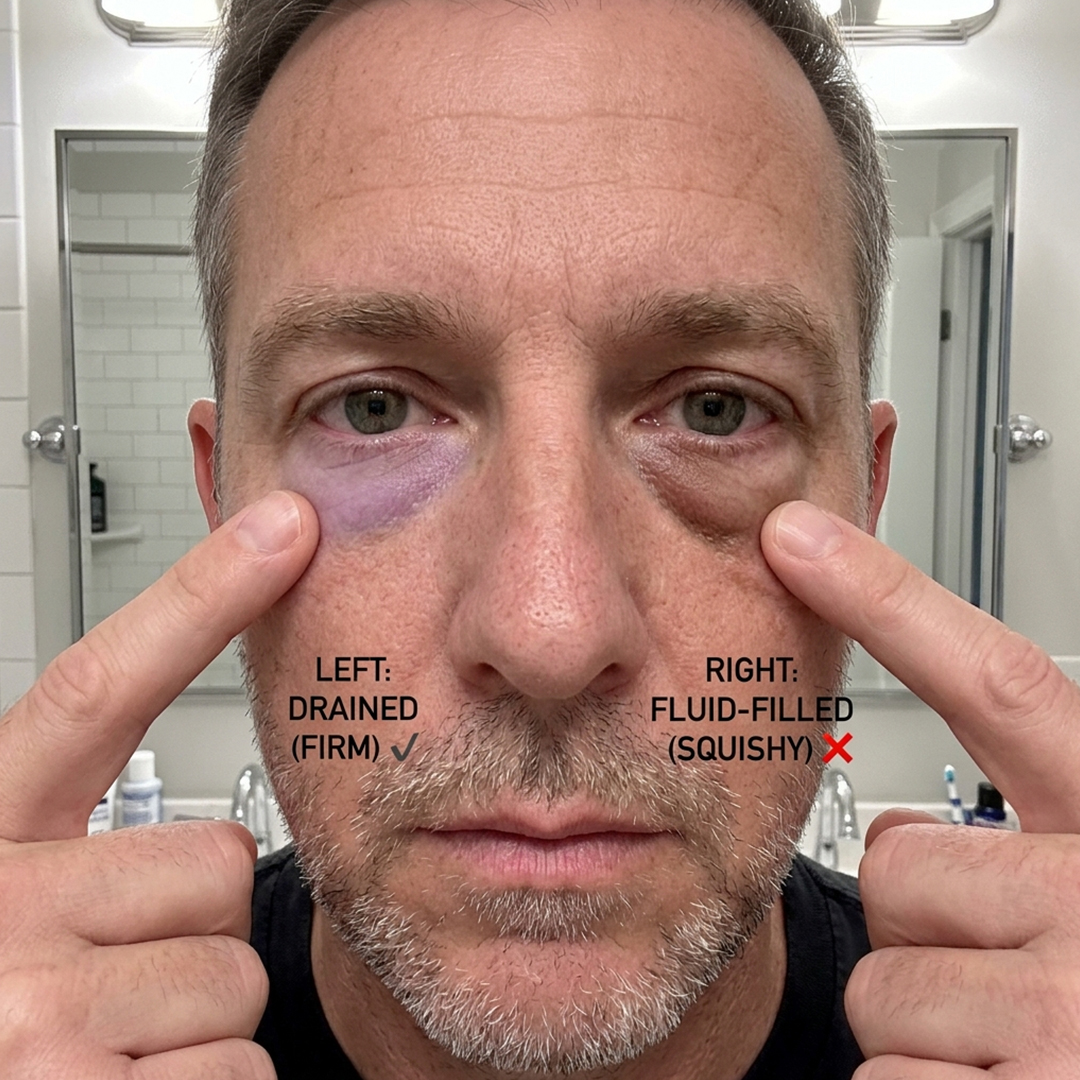
I’m 44 years old. I feel sharp. I feel strong. I still run three miles every other morning. I eat clean. I sleep well. I’m sharper at work now than I was at 30. But when I look in the mirror, the man staring back at me looks like he gave up a decade ago. Two heavy, dark, swollen bags hanging beneath my eyes like sacks of stagnant water. Deep hollows carved underneath, shadowed purple-brown, making me look permanently ill. Skin so thin and translucent over the under-eye area that you can almost see the blood pooling beneath it. I feel 35. I look 55. And the world treats you like you look. Not like you feel. Colleagues talk to me slower. Like I might not follow. Younger guys at work ask if I’m "doing alright" in that careful tone people use when they think you’re declining. My doctor — who is ten years younger than me — looks at my face during annual checkups and asks questions about my stress levels, my sleep, my mental state. Not because anything is wrong. Because my face tells him something is wrong. At the last family reunion, my brother pulled out old photos. There I was at 25. Lean, alert, clear-eyed. The bags weren’t there yet. My face matched the man I was. Somewhere between then and now, the match broke. The internal man kept sharpening. The external man collapsed. I looked into it. Deeply. What I learned is that this isn’t aging in the normal sense. It’s a specific structural failure. The collagen matrix beneath the eye — the scaffolding that holds the tissue tight against the orbital bone — degrades over time. As it weakens, the fat pads behind it shift forward. The lymphatic drainage system slows down. Fluid that used to be cleared while you sleep starts pooling in the gaps. Blood vessels dilate and pool deoxygenated blood in tissue that’s too thin to hide it. The result: heavy, dark, fluid-filled pouches that make a healthy man look chronically ill. And no amount of sleep, exercise, or clean eating can reverse a structural collapse. I tried creams. Several of them. Retinol, vitamin C, caffeine, peptides, hyaluronic acid. Each one hydrated the surface for a few hours and evaporated. The bags never changed. Not once. A doctor quoted me $1,200 for tear-trough fillers. Lasts nine months. Then you come back and pay again. Another quoted me $6,500 for blepharoplasty. Three weeks of recovery. And the bags can come back because the surgery removes tissue without fixing the drainage system underneath. Then a friend explained something no cream brand, no dermatologist, and no surgeon had ever told me. The 500-Dalton Rule. Male skin is 20-25% thicker than female skin. The barrier is a testosterone-fortified wall. Active ingredients in every cream I’d ever used degraded before reaching the tissue at 0.3mm depth where the damage actually lives. The creams weren’t weak. The wall was too strong. He showed me a breakdown by a biotech analyst named Simon Vance. Vance explained a transdermal microneedle system — 1,500 dissolving needles that physically bypass the skin barrier and deposit 600-Dalton peptides and 39% hyaluronic acid directly into the drainage layer, the vascular network, and the collagen matrix at 0.3mm depth. Not topical. Transdermal. Through the wall. To where the damage lives. The man in the mirror doesn’t have to be a stranger. The structural collapse beneath your eyes isn’t permanent decay — it’s a tissue layer that never received the compounds it needed, because no delivery system could get them there. Until now. If the man in your mirror hasn’t matched the man inside you for years — read Vance’s full analysis. It’s the first thing that’s made biological sense in all the years I’ve spent looking for an answer.
Like this ad? Make it yours.
Crush rebuilds this exact creative around your product — your brand, your colors, your offer — in about a minute.