
Active· since Aug 29, 2026
- 21
- days running
- 0
- relaunches
Ad copy
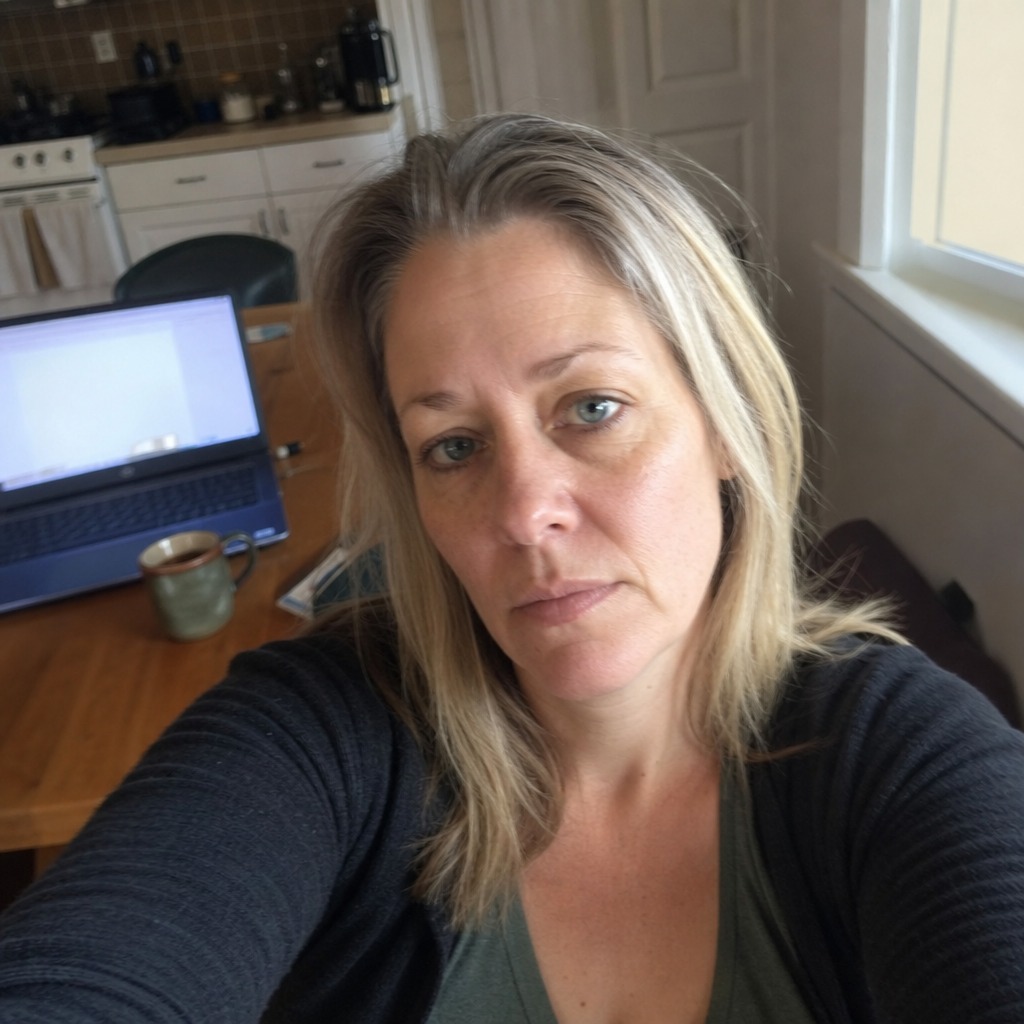
There is a spreadsheet on my desktop I have not opened since February. It is called LAUNCH TRACKER FINAL v4. I know every number in it anyway. That is the problem with a file you are afraid of. You memorise it so you never have to look. I'm Marnie. I'm 44. Boise, Idaho, in a house with a converted garage that everybody in my family calls the studio, which is generous, because it is a garage with a rug in it. I teach people how to run a small residential cleaning company without going broke or going insane. I did it for eleven years before I taught it. Two vans, six employees, a route, a schedule, insurance, a payroll disaster in 2016 I still tell people about because it cost me nine thousand dollars and taught me everything. I am writing this on a Thursday morning at my kitchen table, with the studio door shut and my laptop closed, because for the first time in two years the thing I built is doing something today that I did not personally do first. If you have a course, a program, a coaching offer, anything that sold beautifully when you first put it out and then just stopped, and you cannot work out what you did wrong, read all of this. I know exactly how long it is. Read it anyway. Here is what the last two years actually looked like. I built the course in 2021. It is called The Route. It is nine modules, forty one videos, a hiring pack, three spreadsheets, a phone script for quoting jobs and a whole section on what to do when an employee quits on a Friday. It is nine hundred and ninety seven dollars. It is genuinely, provably good, and I am not being modest about that because it is the only part of this story where I am allowed to be certain. I launched it to my email list in October 2021. My list was four thousand one hundred people, built over three years of a small podcast and a lot of answering questions in Facebook groups for cleaning company owners at eleven at night. I launched again in March 2022. It went well again. Slightly less well, which I explained away, because everybody explains away the second one. And then it stopped. I launched four more times over the following two years. Each launch was five days of emails, a week of preparation before that, and a week of recovery after. Each launch sold to fewer people than the one before. Not because the course got worse. It got better. I added the hiring pack. I re recorded eleven videos. I added a section on quoting commercial work that people specifically asked for. The people got fewer because there were only ever four thousand one hundred of them, and every launch I was selling a nine hundred and ninety seven dollar product to the same shrinking pool of people who had already decided. My list still grew. Slowly. Eleven, twenty, sometimes forty new people a week, from the podcast and from the free checklist I made in 2020. Nine hundred and something people joined that list last year, and I want you to sit with this, because it took me a very long time to be able to say it: almost none of them ever bought anything, and I never once found out why, because there was nothing they could have bought except a nine hundred and ninety seven dollar decision from a person they had heard talk once. I checked the dashboard every morning. Every single morning, before coffee, on my phone, in bed. It became a physical habit, like checking a lock. Most mornings it said the same thing it said yesterday, and I would put the phone down and start the day slightly worse than if I had not looked. I had a folder in my Google Drive called COURSE 2 IDEAS. There were six documents in it. Outlines for a follow up program about scaling past four vans. All six were started and none of them were finished, because every time I got two thirds of the way in, the same thought arrived: I do not have anybody to sell it to. I have the same four thousand people, and the ones who wanted this already have The Route. The worst part was that I had built the best thing I have ever made and I had no way to put it in front of a person who did not already know me. Eleven years of running vans and three years of building the course and the entire distribution engine was four thousand one hundred email addresses collected by accident. And a course that nobody new can find is not a business. It is an archive. I have to tell you about the tracker spreadsheet, because that is where this actually broke. I made it in 2021 for the first launch. Columns for each day, opens, clicks, sales, revenue. Then I copied the tab for launch two. Then launch three. By February this year there were six tabs in it and the last three had a shape I could see from across the room. The line goes up on day one, up on day four when the cart close emails go out, and it is a shorter line every time. In February I opened it to start the tab for launch seven and I sat there and I could not type. I closed the laptop. I did not open that file again. Then in March my mother fell. She is seventy three. She lives in Coeur d'Alene, three hundred and eighty miles from us, in the house my grandfather built, which she has been saying she needs to sell for four years and has never sold. She broke her wrist and cracked two ribs on the back steps in the rain, and she was on the ground for about forty minutes before the neighbour heard her. Here is the thing I have to explain, and it is embarrassing, so I am going to say it plainly. I did not go the same day because I was on day three of a launch. Day three is the case study email and the objection email and the two hour window where you answer every reply personally because that is what makes launches work. That is the actual mechanics of it. A launch is five days where you cannot be anywhere else, because the entire revenue of your quarter is compressed into a hundred and twenty hours and every hour you are absent is money that does not come back. My mother was on a kitchen floor with a broken wrist and I answered eleven emails about payment plans before I got in the car. I drove up the next morning and stayed nine days. She healed. She is fine. But on the fourth night I sat in my grandfather's house at the kitchen table with the same laptop and I did the arithmetic, and this is the part that changed everything, so pay attention if you skim anything else. I asked myself what my business would have produced that week if I had not opened the laptop at all. The answer was zero. Not less. Not slower. Zero. Six figures of course sales over three years, forty one videos, eleven years of expertise, four thousand one hundred subscribers, and if I do not personally run a launch, nothing happens. Ever. There is no month where money arrives because a system did something. There is only me, writing seven emails, to a smaller room, again. I had not built a business. I had built a very good product and a habit of asking the same people to buy it. And the thing about my mother's house is that it is going to be sold. She knows it. We all know it. There is a summer coming where that house is somebody else's and my daughter Josie, who is seventeen, will not have any more summers in it. I have spent two of those summers on launches. I have four tabs in a spreadsheet that prove it. You cannot rerun a summer. You can rerun a launch forever, which is exactly the trap. So I went home and I tried to fix it. Properly. With money. Here is everything, in order, and what each one actually did. I ran the launch again anyway, in April, because a launch is the only tool I had. Ten emails instead of seven this time. It did what the last one did, slightly worse. Launches do not fail because your emails are bad. Launches fail because a launch is a way of harvesting a list, and I had been harvesting the same field for three years without ever planting anything new in it. I built the evergreen webinar. Four weeks of work. A forty five minute presentation, an automated sequence, a countdown timer on the checkout page. I ran my own traffic to it. Registration was fine. Attendance was under a quarter. The people who did attend had never heard of me before that morning, and forty three minutes in I was asking a stranger for nine hundred and ninety seven dollars on the first click. The mechanism there is not the webinar. The mechanism is asking somebody who has never given you a dollar to give you a thousand of them because they watched a video. That has always been a very long jump, and it got longer every year while I was not paying attention. I did an affiliate launch. I recruited nine people with lists in adjacent spaces, wrote all their swipe copy myself, made the graphics, ran a live training for their audiences. Three of them actually mailed. It produced sales, and it produced the single most useful realisation of the whole two years: I had rented somebody else's list for a week, paid fifty percent for it, and at the end of the week I did not own a single thing. The buyers were mine, technically. The mechanism was not mine. I could not do it again in April and again in May, because there are only so many people who will mail for you and they all get tired. I paid for two list rentals. Dedicated sends to somebody else's audience. Eighteen hundred dollars and eleven hundred dollars. Both delivered clicks. Both delivered a handful of people who joined my list and then sat there like everybody else on my list, because I had nothing for a new person to do except wait for a launch and consider a thousand dollar purchase. Renting attention does not fix what happens after the attention arrives. I would have to hear that sentence said out loud by somebody else before it actually landed. I did a podcast tour. Twenty two shows in five months. I am good on podcasts. I have stories, and eleven years of them are true, and I have a payroll disaster from 2016 that always lands. I tracked it. The tour brought about three hundred people onto my list and a very small number of sales, and it took the equivalent of a full working month of my life, spread out in ninety minute slices that wrecked every day they sat in. And when I stopped, it stopped completely. That is the tell. Every single thing on this list has that tell, and I could not see the pattern yet. I hired a cheap traffic agency. Nine hundred a month. Three months. They were not crooks. They ran ads to my free checklist and the cost per lead went down every month, which they showed me in a report with a green arrow on it. I was getting cheaper and cheaper access to people who had never proven they would spend a dollar on anything, and then dropping them into a list where the only offer was a thousand dollar course and a launch that was four months away. The green arrow was real. It was pointed at the wrong thing. I looked at what I was paying for every month, one Sunday in the summer. Course platform, email platform, page builder, webinar software, scheduler, two AI writing tools, video hosting, a form tool, and a Zapier account holding about half of it together. Nine hundred and something dollars a month for infrastructure that produced nothing on its own. I added it all up. A little over sixteen thousand dollars in two years, not counting my time, and not one of those dollars bought me a single thing that put a new human being in front of my work at a profit while I was doing something else. And here is what every one of them had in common, which took a stranger to point out to me. Every single one was a way of getting more attention. Cheaper attention. Warmer attention. Borrowed attention. Rented attention. Not one of them changed what happened after the attention arrived. Because when it arrived, there were exactly two things it could do. Join a free list and wait months. Or spend nine hundred and ninety seven dollars on the first click. There was nothing in my entire business that a person who found me on a Tuesday could buy on that Tuesday. I found the answer through a woman called Roz, who runs a small janitorial supply distributor in Nampa and has bought basically everything I have ever made. She emailed me in August to ask a question about commercial quoting and at the end of it she mentioned, in the way you mention weather, that she had started selling a nineteen dollar pricing calculator and it had changed her entire year. I asked her about it and she said something I wrote down on the back of an envelope and still have on the shelf above my desk. She said the calculator was not the business. The calculator was the front door to the business. Then she sent me a link to a free workshop run by a man called Gregory Cooke. I want to be honest about my reaction because it is probably yours right now. My reaction was: absolutely not. I have a folder of screenshots of men in rented cars with their arms folded. I have spent two years being marketed to by people whose entire business is selling the dream of a business. I did not want to be the woman who fell for it. I watched it anyway, on a Sunday, arms folded. It is two hours. He is twenty seven. He builds the thing on screen while he talks. He does not ask for a card at any point, and the only thing he asks for at the end is an application. About half an hour in he said a sentence that took my two years apart. He said you do not have a traffic problem, you have a nothing to sell a stranger problem. Then he drew it, and I am going to give it to you the way he gave it, because this is the part I paid sixteen thousand dollars not to be told. He drew a building with two ways in. A free thing that costs you money to give away, and an expensive thing nobody buys on the first click. And he said there is nothing in the middle, so the only way anybody ever gets inside is if you personally walk them in, which is why your business only produces money in the weeks you are personally standing at the door doing a launch. Then he drew the front door, and there are four parts to it. One. The front door itself. A low ticket digital product, built out of what you already know, priced so a stranger can buy it today without a call, without a webinar, without a launch, without knowing who you are. His front end is twenty seven dollars. Cheaper than dinner. Something a person can say yes to on the day they meet you. Two. The path behind it. This is the part I had literally never heard described. Order bumps at the checkout. Upsells after the purchase. A downsell after that. Email sequences that keep working for months. He said a single product at a single price will never survive paid traffic, and that is arithmetic, not opinion. His own funnel runs a twenty seven dollar front end with two order bumps and three upsells, and his average order value is a hundred and sixty eight dollars and forty two cents. Not twenty seven. A hundred and sixty eight and change, because of the corridor behind the door. That is his number, in his account, and he said so in the same breath. Three. The traffic, at volume, with a system that keeps making it. He said a static ad fatigues in about eight days. Eight days. I had run six ads in my life and concluded I was bad at ads when they died. I was not bad at ads. I was making six things a month in a game where roughly six or seven percent of ad variants ever become performers, which means you need fifty or eighty in the pipeline to find the handful that carry everything. Six ads is not a test. Six ads is a coin toss you lost. Four. The back end. The thing I already sell. The Route, and the follow up program in the six unfinished documents, now sold to people who have already bought something from me and liked it. And this is where he said the thing that reorganised me. A buyer is not a lead. Somebody who has paid you nineteen or twenty seven dollars and got something genuinely good has crossed a line that a person who downloaded your free checklist never crosses. Cold buyers close at something like five to ten percent. People who have already bought from you close at twenty to thirty five. Free leads cost you money to acquire and prove nothing about whether that person will ever spend anything. I had four thousand one hundred email addresses and almost no buyers, and I had spent three years congratulating myself on the wrong number. So the front door does not have to make you rich. The front door has to pay for the ad. Then the thing you already sell gets sold to somebody who has already trusted you with money, and no launch is required for any of it, because nothing about it depends on a five day window where you cannot leave the house. He put his own numbers up. On the thirty first of March he spent fourteen thousand four hundred and fifteen dollars on ads and did fifty seven thousand four hundred and twenty five in sales, just under four times, about forty three thousand net in a single day. And in the same breath, without being asked, he said that is my result, in my account, and very few people ever have a fifty thousand dollar day. He said it as flatly as the number itself. He also said the line I have thought about most since. He said everybody pays somehow. You either pay in years of posting and podcasting and launching, or you pay in ad spend that comes back. I had paid in years. Twenty two podcasts. Six launches. Three years of answering questions at eleven at night in Facebook groups. And here is what finally broke open in the garage that Sunday. Every single thing on my sixteen thousand dollar list was a different way of getting more people to the outside of the building. The affiliates, the list rentals, the podcast tour, the cheap agency, the subscriptions, the evergreen webinar. All of it was renting attention and then walking it to a door that was either free or nine hundred and ninety seven dollars. There was never a door in the middle. That is the entire diagnosis. And I had paid four different professionals who all had perfectly good reasons not to mention it. Go Midnight AI is Gregory's company, and the reason I applied is that they do not sell you the education. The courses and the workshops and the meetups are free. What you pay for is the build. I applied. I got a call with Ben. It was not a pitch. About a third of it was him telling me who this does not work for, unprompted, out loud, which has never once happened to me in a sales conversation. If you have no real expertise, no offer anybody has ever paid for, and no budget to put into ads, he says so plainly and the call ends kindly. I had eleven years in vans, forty one videos, three years of buyers, and no front door. That is precisely who it is for. Then they built it. I keep saying we built it and correcting myself, because I did not build any of it. I sat in interviews and answered questions and they built the product, the checkout, the bumps, the upsells, the emails, the pages and the ads, and handed the whole thing over live and running. Not a strategy deck. I have paid for strategy decks. This was a thing that was on and working when they gave it to me. Weeks one and two were interviews and the build. They pulled out of my head things I have said a thousand times, the seven jobs you should never quote for, the Friday quit protocol, the 2016 payroll disaster, and turned them into an actual product with an actual price on it. Week three it went live. The first sale came in at 6:41am on a Wednesday while I was standing in the kitchen waiting for the kettle. My phone buzzed and it was a man in Alabama I have never heard of, who has never listened to my podcast, who is not on my list, who did not wait for a launch, and who had just bought something from me before I had made coffee. Week four the ads were running properly and the thing I noticed was not any number. It was that an ad died and nothing happened. Nobody panicked. There were more behind it. A dead ad used to be a bad month for me. Week six, I opened LAUNCH TRACKER FINAL v4. First time since February. I looked at all six tabs and the shrinking lines and I did not feel anything much, which surprised me. It was a record of a method, not a verdict on me. I moved it into an archive folder. I did not delete it. It is a good reminder. I am not going to put an income number in this and I am not going to promise you one. Nobody promised me one either, and if somebody shows you their number sitting next to a sentence about your future, be careful with them. What I can tell you is structural, and structure is the exact thing I did not have. There is now a thing in my business a stranger can buy at four in the morning in a state I have never visited, there is a corridor behind it that keeps working while I am asleep, and none of that existed after three years of doing everything right. Last month Josie and I drove up to Coeur d'Alene on a Friday and stayed until Monday, in the middle of what would have been launch week, and my business did not stop because I was on a dock. That is the whole thing. Not the money. The fact that a weekend at that house cost me nothing except the drive. If you are living what I was living, you know all of this already. You know the dashboard check before coffee. You know the launch tab you cannot bring yourself to make. You know the folder of half finished second products and exactly why they are half finished. You know the five day window where you cannot leave, and what it costs the people in your house. You know the affiliate partners who mailed once and are now busy, the podcast tour that ended when you stopped booking, the agency with the green arrow on the report. You know that all of it was you paying, in money or in years, to introduce yourself over and over again forever. Here is the part nobody says about being good at what you do. Being good at it is not the bottleneck. It never was. You can have the best product in your niche and still have a business that only produces money in the weeks you personally stand at the front of it shouting, because there is nothing at the front of it cheap enough for a stranger to say yes to today. And nobody is coming to build that for you. I waited two years for a version of me with more time and fewer clients and better focus to appear and build it. She never showed up. There is no evening where you build a front end product, a bump, three upsells, an email engine and sixty ads a month, alone, after dinner. I know. I have six unfinished documents that prove it. The door does not build itself. Every month it stays unbuilt is another month where the only people who can buy from you are people who already know you, and there are a fixed number of those, and you are spending them. And another summer at a house that is going to be sold. So if any of that is you, a real offer, real expertise, people who have actually paid you and come back, and no way at all to put a stranger in front of any of it at a profit, this is the time to fix it. Not next quarter. Not after the next launch, because there is always a next launch, that is what the trap is made of. Go Midnight AI builds the whole thing. The low ticket front end out of what you already know, the funnel, the order bumps, the upsells, the emails, the high ticket offer at the back, and the ads at volume that keep the front door open, and they hand it to you live. The courses and the workshops are free. What you pay for is the build. That sentence is most of the reason I trusted them, because it is the reverse of how everybody else in this industry makes their money. And the only thing they guarantee is their own work. They keep working with you, at no further fee, until your funnel can profitably absorb a thousand dollars a day in ads with the back end counted, for as long as you hold up your end, on the conditions in the agreement. It is a promise about their effort, not about your income. After sixteen thousand dollars of promises about my income, I found that unusually reassuring. Watch the free workshop first. Two hours, no card, he builds it on screen. If it is not for you, you will know within twenty minutes, and he tells you himself who it is not for. gomidnight.ai/masterclass Then apply and talk to Ben, and let him tell you no if it is a no. gomidnight.ai/apply Marnie Vasquez P.S. The spreadsheet is still in the archive folder. I opened it again last week, on purpose, to check something. Six tabs, four of them going the wrong way, and every one of them was a week I spent asking the same four thousand people the same question in a slightly different voice. I was not bad at launching. I was very good at launching, and I was launching because it was the only door I had.
Like this ad? Make it yours.
Crush rebuilds this exact creative around your product — your brand, your colors, your offer — in about a minute.