
Inactive· since May 26, 2026
- 35
- days it ran
- 2
- relaunches
Ad copy
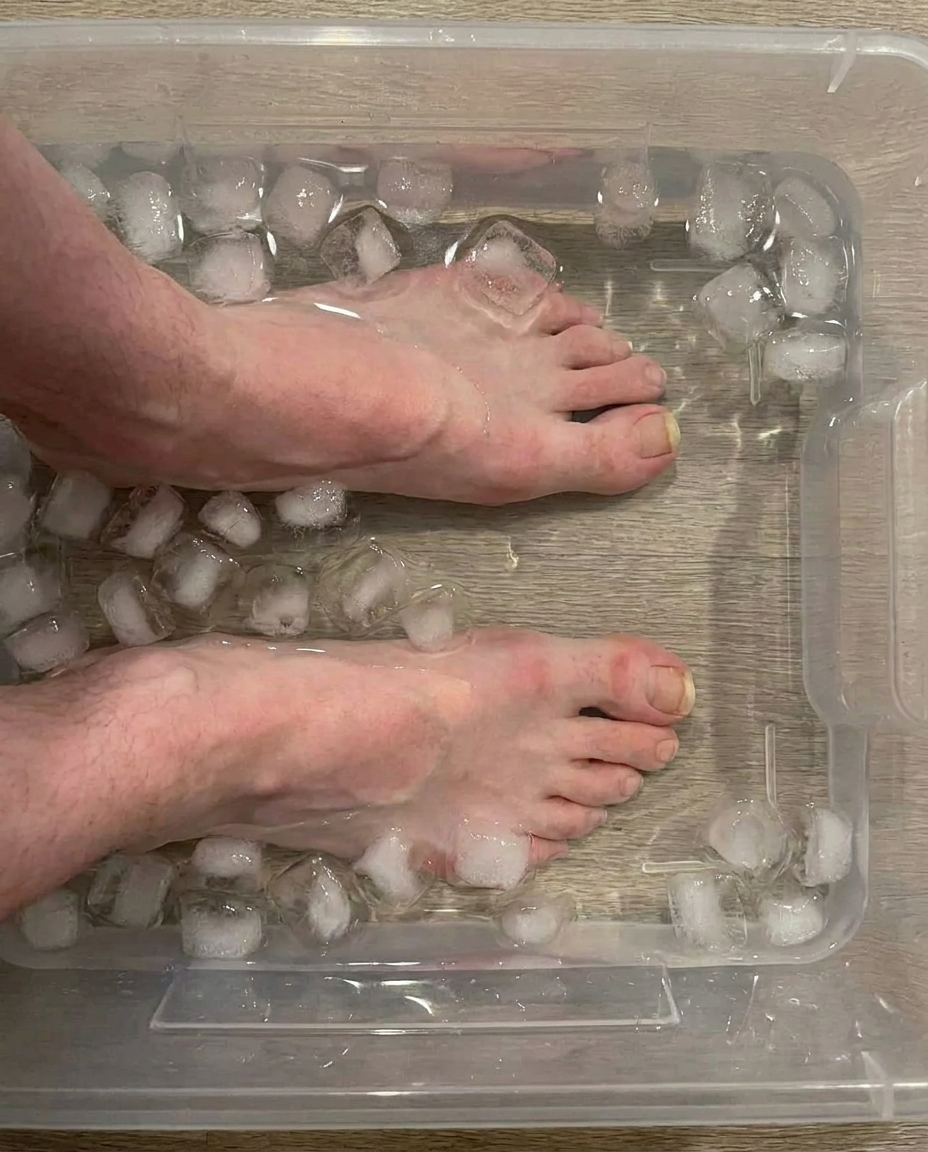
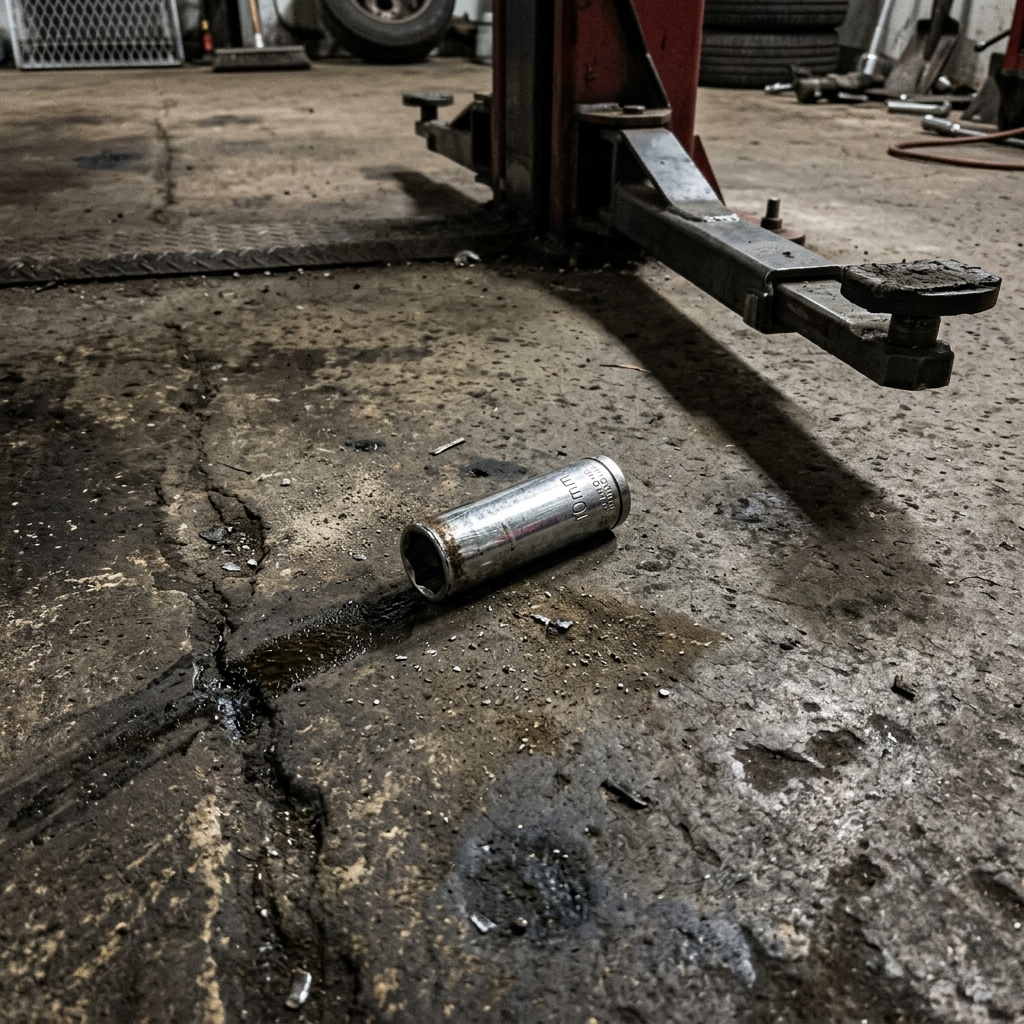
My mechanic dropped a 10mm socket on his own foot two Tuesdays ago and laughed about it. I wasn't supposed to be at the shop that day. I'd come in to pick up my F-150 after a brake job and I was standing in the doorway between the customer waiting area and the bay because I've known Lupe for almost 20 years and we always talk for a few minutes before I leave. He was under a Tacoma on the lift, on the creeper, and he was tightening something on the exhaust, and the socket just slipped out of his hand and bounced off his boot and rolled under the next bay. He laughed. "Third one today, mija," he said. "Pretty soon I'm gonna start charging the shop floor for storage." He laughed but his eyes didn't. I drove home that afternoon thinking about Lupe's eyes. My name is Marisol. I'm 52 years old. I live in Bakersfield, California with my husband Hector and a 13 year old beagle named Frijol who has more health problems than the rest of us combined. We've been in the same little stucco house off Niles Street since 1998. My oldest son lives in Fresno and my youngest is in his last year at Cal State. I work part time at a dental office on Coffee Road, and I've been doing that for 11 years. Lupe Mendoza has been my mechanic since 2006. He owns a 3 bay shop on Edison Highway called Mendoza Auto, and his apprentice is his 27 year old nephew Danny who has a sleeve tattoo of the Virgin Mary and a baby on the way. Lupe is 63. He has been a mechanic since he was 18. He used to be the kind of man who could find a stripped bolt by feel, in the dark, with one hand. I want to tell you what was happening at that shop, because it's where this whole thing started, and because it's why I'm sitting here writing this on a Wednesday morning when I should be folding laundry. I'd noticed something at Mendoza Auto a few months before the socket fell. Little things at first. I'd come in to drop off the truck and Danny would be the one writing up the work order, not Lupe. Lupe would be in the back, on his stool, drinking from a thermos and watching. The first time I noticed it, in February, I figured he was just letting the kid learn. The second time, in March, I thought he might have hurt his back. The third time, in May, I asked him about it. "Tio," I said. We all call him Tio. "You okay? You haven't been doing the write ups." He shrugged. He smiled. He waved me off. "My hands aren't doing what I tell them, Marisol. The pen is too small. The numbers come out like a kid wrote them. Danny does the paperwork now. I do the wrenching." I thought about that for a second. "Okay but Tio, the wrenching needs your hands too." He looked at me for a long beat. Then he shrugged again and walked over to the coffee maker. "The wrenching, the hands know what to do. The pen, the hands argue with me." I didn't push it. But after that, I started watching. I couldn't help it. Every time I came in I'd watch him work, and the man I had known for nearly 20 years was moving differently. He used to glide. He used to walk under a car and have it diagnosed before he'd even finished his coffee. He had hands like a sculptor's, big and dark and strong, with knuckles that looked like he could break a hammer in half. Now he was setting things down too carefully. He was picking up wrenches with his whole fist instead of his fingers. He was using his palm to brace against the fender when he stood up. And he was dropping things. A 10mm socket. A flashlight. A small ratchet. A spark plug. A foam coffee cup that splattered all over the concrete one morning while I was waiting on an oil change. He'd laugh every time. But the laugh was a little smaller every time. And his eyes weren't laughing. The day of the 10mm on the boot was the day I went home and didn't fold any laundry. I sat at my kitchen table and I cried. I want to tell you why I cried, because it wasn't just for Lupe. My father was a mechanic. Antonio Castillo. He worked in a garage in Delano for 41 years, on tractors and pickup trucks and once, famously in our family, on a 1962 Impala that belonged to the man who owned the grapes. My father retired in 2003. Within 18 months of retiring, his hands started doing the same thing Lupe's were doing. Not pain, exactly. Numbness. A loss of fine control. He'd reach for the salt and his fingers wouldn't quite close. He spent the last 6 years of his life with hands that couldn't button his own shirt. My mother buttoned it for him every morning until the morning she didn't have to anymore. His doctor said it was the years on the tools. He said it was just what happens. He said it was the price of a working life. I have hated that explanation for 11 years. So when I sat at my kitchen table that Tuesday and thought about Lupe's eyes and Lupe's laugh and the socket on his boot, I was also thinking about my father in the dining room in Delano with my mother bent over his collar, working a button through a buttonhole, and I was thinking about her hands shaking, and I was thinking about the way my father would look out the window the entire time so he didn't have to look at her, and I was crying in my kitchen with a dish towel pressed against my mouth. I texted Lupe the next morning. I just said, "Tio, can we get coffee. Not at the shop. Somewhere quiet." He texted back, "Saturday. Dewar's. 9 AM." Dewar's is a candy shop on Eye Street that's been there since the 1930s and they make breakfast on weekends. It's not really a candy shop on Saturday mornings, it's a diner with too many old men in too many baseball caps eating eggs. I got there at 8:50. He was already in a booth in the back, with two cups of coffee, sitting with his hands flat on the table like he was bracing for something. I sat down. I didn't even take my purse off my shoulder. "Tio," I said. "What's going on with your hands." He looked at me for a long time. Long enough that I almost apologized and changed the subject. Then he said, "Marisol, I've been a mechanic for 45 years. I've turned a wrench every day of my adult life. I've had cuts and burns and a busted thumb in 1991 from a jack handle that snapped back. None of that ever scared me. This scares me." He picked up his coffee. His hand shook. He set it back down. "It's not the pain," he said. "It's the feeling. The feeling is going. I can't feel a bolt the way I used to. I pick up a 10mm and I have to look at it to know I'm holding it. My fingertips, it's like somebody put a glove over them. A glove I can't take off." He went quiet for a minute. "And it's moving up. It used to just be my fingertips. Now it's most of my fingers. My feet too. I stepped on a wrench last week, a half inch box end, just sitting on the floor of the bay, and I didn't feel it through my boot until I looked down." He looked at me with the saddest eyes I have ever seen on a grown man. "I have a baby coming in October. Danny's baby. My great nephew. I'm supposed to teach him to ride a bike one day. I'm supposed to teach him to fix the chain." I reached across the table and I put my hand on his hand. His skin was warm and thick and the calluses were as hard as they'd ever been. But underneath them I could feel that something was wrong. I don't know how to describe it. It was like holding a hand that didn't quite know I was holding it. "What did the doctor say," I asked. "He said it's diabetic neuropathy. He said my A1C has been creeping up for years and now the nerves are paying for it. He gave me a pill. The pill makes me sleepy and dizzy and I can't drive home from the shop. So I stopped taking the pill." "And then what." "And then nothing, mija. He shrugged. He said this is what happens. He said it'll get worse. He told me to lose weight, eat better, watch my sugar, and try to come to terms with it." He looked out the window. There were two old men outside the diner, both in straw cowboy hats, both leaning on the same pickup truck. "Come to terms with it," he said, very quietly. "That's what he told me." I didn't go home and fold laundry that afternoon either. I went home and I sat at my computer for 6 hours. I made coffee twice. I forgot to eat lunch. Hector came home from work and asked me what I was doing and I told him I was helping Lupe and he kissed the top of my head and let me alone. I read about neuropathy until my eyes burned. I read about what was actually happening inside Lupe's hands and feet. Not the surface explanation, not "your nerves are damaged from sugar." The deeper one. The one his doctor didn't have time to explain in a 9 minute appointment. What I learned, in plain language, was this. There's a thing your nerves do all day, every day, that nobody thinks about. They send signals. Touch. Pressure. Temperature. The feeling of a bolt in your fingertips. The feeling of a wrench through a boot. All of it. And to do that, the nerves themselves need to be in good shape. They need their protective coating intact. They need to be supplied with steady fuel. They need the tissue around them to be calm and well kept. When blood sugar runs high for a long time, even just a little high for a lot of years, a few things start happening underneath the surface. The small blood vessels that feed your nerves start to get stiff and inflamed. The sugar in the blood reacts with proteins in a process called glycation, which is basically the same thing that happens to a steak when you sear it. The reactions kick off a kind of slow, oxidative damage. The nerves stop getting the supply they need. The protective coating starts to break down. The signals start to misfire. And the part that nobody talks about, the part that made me sit up in my chair, is that this is a smoldering process. It's not one big event. It's a slow fire of oxidation and inflammation, burning quietly inside the smallest vessels of your hands and feet, year after year, eating at the nerves from the outside in. That's why it starts in the fingertips and toes. Those are the longest, thinnest nerve endings, fed by the smallest vessels, the furthest away from the heart. They're the first to lose supply when the fire starts. Like the last houses on a power line in a brownout. The pills Lupe's doctor gave him, the ones that made him too dizzy to drive, those pills do nothing about the fire. They just dampen the signal of the pain that the dying nerves are sending up the line. They don't help the nerves. They don't help the vessels. They don't touch the slow oxidation underneath. I'm not a doctor. I work at a dental office. But after 6 hours of reading I understood the shape of what was happening better than I had ever understood it for my own father. And the next thing I read about, late that night, around 10 PM, when Hector was already asleep on the couch with Frijol on his chest, was something called amla. I had never heard the word. I almost scrolled past it. What stopped me was a paragraph that said researchers had been looking at amla, which is a fruit from India, also called Indian gooseberry, for its role in supporting healthy blood sugar response, supporting healthy inflammation levels, and supporting the small vessels and tissues that get hit hardest by long term metabolic stress. The same vessels and tissues that feed the nerves. The compounds in amla, particularly a family of polyphenols and tannins and a marker compound that's apparently a big deal in the research world, have been studied for their connection to oxidative stress reduction. The slow fire. They've been associated with healthier markers of inflammation. They've been linked, in studies, to the kind of pathways that help the body handle the byproducts of high blood sugar more gracefully. Including the byproducts that quietly cook the nerves. I want to be clear about something. I'm not telling you amla is a cure for nerve damage. The research brief I read was very honest about what the studies actually show and what they don't. What I am telling you is that for the first time in 11 years, I read something that made sense of what had happened to my father, and what was happening to Lupe, at the level of the actual mechanism. Not a shrug. Not "this is what happens." Not "come to terms with it." A real explanation. A slow fire fed by metabolic stress, eating at the smallest vessels, starving the longest nerves, and a fruit from the other side of the world that has been used for 2,000 years and is now being studied for the way it supports the body's own ability to handle that fire. I sat there in my kitchen at 10:47 PM and I had what I can only describe as a feeling of being talked to like an adult. I want to tell you what happened next, but first I want to say one more thing about Lupe, because it matters. Lupe is the kind of man who has never asked anybody for anything in his whole life. His father came up from Sonora in 1959 with $40 and a wooden suitcase. His mother cleaned houses in Beverly Hills for 30 years. Lupe paid for community college himself by working at a tire shop on Brundage Lane. He bought Mendoza Auto in 1992 with money he saved one tire rotation at a time. He has never accepted a free meal or a free oil filter or a free piece of advice in his life. So I didn't tell him I'd been researching. I didn't show up at the shop with a printout. I knew how he would react. He would smile, and he would thank me, and he would walk away from the conversation and never come back to it. What I did was, I bought a bottle of Alevia Amla for myself. The brand is Alevia. The product is Alevia Amla. I bought it on a Tuesday night, sitting in bed in my reading glasses, while Hector watched a Dodgers game in the living room. The bottle is small and dark and the label is clean and it has 60 capsules in it. 2 a day. The instructions said to take it with food in the morning. There was a 90 day money back guarantee, which meant I could try the whole bottle, and if I didn't notice anything different, I could send it back and get my money refunded. I'm 52. I don't have neuropathy. But I have my father's history and my own creeping numbers and I have been tired for the last 4 years in a way that feels different from regular tired, and my hands have started to feel a little less reliable when I'm doing crowns at work, and I have been quietly worried about it for longer than I have admitted to anyone, including Hector. So I started taking it. 2 capsules with my morning coffee. I did not feel anything for the first 12 days. I almost forgot about it. I'd put the bottle next to my multivitamin and I'd take both at the same time and I'd go to work. Around day 16, I noticed that I'd stopped reaching for my afternoon Coca Cola at work. I'd been drinking one every day at 2 PM for 6 years. I just hadn't been wanting it. I didn't connect it to the amla at first. I just thought I was breaking a habit. Around day 22, I noticed that I'd been sleeping straight through the night. I hadn't been getting up at 3 AM to pee. I have been getting up at 3 AM to pee since 2016. I almost cried in the bathroom that morning, brushing my teeth, because I had slept 7 hours in a row. Around day 30, Hector said to me at dinner, "Marisol, you've got color in your face. What are you doing different." I told him about the amla. He raised one eyebrow and said, "Huh." And around day 38, I decided it was time to talk to Lupe. I went to the shop on a Friday afternoon, right before closing. Danny was out on a parts run. Lupe was alone, sitting on his stool, wiping his hands on a shop rag. I sat down on the other stool. I didn't say hello. "Tio," I said. "I'm going to talk and you're going to listen. And then you're going to let me give you something." He looked at me. I told him about my father. I told him I'd been thinking about my father for 11 years and that I'd never forgiven the doctor in Delano for shrugging. I told him I'd watched him drop the 10mm and I'd gone home and cried because his eyes looked like my father's eyes had looked in 2004. I told him I'd spent 6 hours reading about what was actually happening inside his hands and his feet. I told him about the slow fire. I told him about the small vessels. I told him about the nerves at the end of the line, starving, year after year. And I told him about Alevia Amla. I told him I'd been taking it for 38 days. I told him it didn't fix me, because I wasn't broken in the way he was, but I told him about the Coca Cola I'd stopped wanting and the night I slept all the way through and the way my face looked in the mirror at the dental office last Tuesday morning. I pulled the bottle out of my purse and I set it on the workbench between us. "I'm not asking you to believe me," I said. "I'm asking you to try one bottle. 30 days. If it does nothing, you send it back and you get every dollar refunded. 90 day guarantee. You don't even have to be nice about it on the phone." He looked at the bottle for a long time. He picked it up. He turned it over slowly. He put it back down. He didn't say anything. I almost left. Then he said, "Mija, what's the fruit again." "Amla," I said. "Indian gooseberry. They've used it over there for thousands of years. Researchers have been looking at it for what it does for the kind of slow tissue damage that comes with high sugar." He nodded slowly. "My grandmother used to talk about a fruit. Not amla. Something from back home. She said her mother gave it to her father when his feet went numb. She said it was an old village thing." He picked up the bottle again. "Every culture has one," he said. "Maybe it's the same fruit. Maybe it's a different one. But every culture, mija. The old ones knew." He took it home that night. It has been 11 weeks since Lupe took that bottle home. I want to tell you what changed for him, and I want to tell you carefully, because I don't want to be the woman who oversells a thing to people who are reading on their phone. In the first 3 weeks, he said he didn't feel much. He kept taking it. I checked in with him every Sunday by text. He'd say "still here, still wrenching." I left him alone. In week 4, he texted me at 6:42 in the morning. The text said, "I felt the bolt today." That was it. That was the whole text. I called him on my lunch break. He told me he'd been changing out a starter on a Honda Civic and he'd reached down to feel a 13mm without looking at it, the way he used to, and his fingertips had told him what size it was. He said he'd sat on the creeper underneath that Civic for almost 5 minutes just holding the bolt. He said the glove was lifting. Not gone. He was very specific. He said it wasn't gone. He said his pinky and his ring finger still felt thicker than they should. But the index finger and the middle finger and the thumb, on both hands, were starting to feel more like themselves. In week 7, he stopped dropping the 10mm. He stopped dropping anything. In week 9, he told me his feet had started feeling the floor of the shop again. He'd gone home one night and walked from his car into his house with no shoes on the front walk, in the gravel, and he'd felt every stone. He cried when he told me that. On the phone. A 63 year old Mexican mechanic who hasn't cried in front of me in 20 years. Last Tuesday, I went into the shop to get my F-150 inspected. Lupe was on his feet. He was writing up the work order himself. The handwriting was steady. The numbers were the size they were supposed to be. He looked up at me when I walked in and he winked. I want to say something to you, whoever you are reading this. Because I know the kind of person who reads a story like this. You're somebody who has watched somebody you love start to lose pieces of themselves quietly, the way my father did, the way Lupe almost did. Or you're somebody who has started to notice it in yourself. The fork that doesn't sit right in your hand. The feet that feel like they're wrapped in something. The button that takes too long. The grip that isn't there. And somebody has told you it's just what happens. I am telling you that there is more going on underneath the surface than your doctor in a 9 minute appointment is going to explain to you. There is a slow fire, fed by years of metabolic stress, burning quietly in the smallest vessels of your body, eating at the nerves at the end of the line. The pills don't put out the fire. They just turn down the volume of the alarm. And there is a fruit from the other side of the world, used for thousands of years, that researchers are looking at for the way it supports the body's own ability to handle that fire. Not as a cure. Not as a miracle. As a daily, quiet, supportive thing that gives your body what it needs to do what it's been trying to do for itself the whole time. Alevia Amla. One bottle. 60 capsules. 2 a day with food. Made in the USA. 90 day money back guarantee. If you take it for the bottle and you feel nothing, you send it back, and they give you your money back, no fight. You can find it here: 👉 alevia.com/amla/33 P.S. Lupe is teaching Danny how to use a torque wrench on the engine mounts of a Tacoma this Saturday. He's standing up to do it. He's holding the wrench in his right hand. His grandbaby is going to be born in 6 weeks. He said the first thing he wants to do after holding her is feel the back of her head with his fingertips, the way he felt his own kids' heads when they were born. He said for a year he was afraid he wasn't going to feel anything when he did. P.P.S. I started Hector on Alevia Amla last month. He works construction and his numbers have been creeping up the same way Lupe's were and he is the most stubborn man I have ever met and he agreed to try it because he could see what it had done for me. He's been on it for 5 weeks and he came in from work last Friday and he told me he hadn't needed his afternoon Mountain Dew all week. He didn't connect the two things. I didn't say anything. Some men have to find their own way. P.P.P.S. If you have a Lupe in your life, or a father in your life, or a husband in your life, or if you are the Lupe in somebody else's life, I am asking you to read about what is actually happening at the level of the mechanism, and then decide for yourself. You have 90 days to send it back. You have nothing to lose except, maybe, the feeling of a 10mm in your fingertips at 7 in the morning under a Toyota. 👉 alevia.com/amla/33
Like this ad? Make it yours.
Crush rebuilds this exact creative around your product — your brand, your colors, your offer — in about a minute.