
Inactive· since May 22, 2026
- 12
- days it ran
- 0
- relaunches
Ad copy
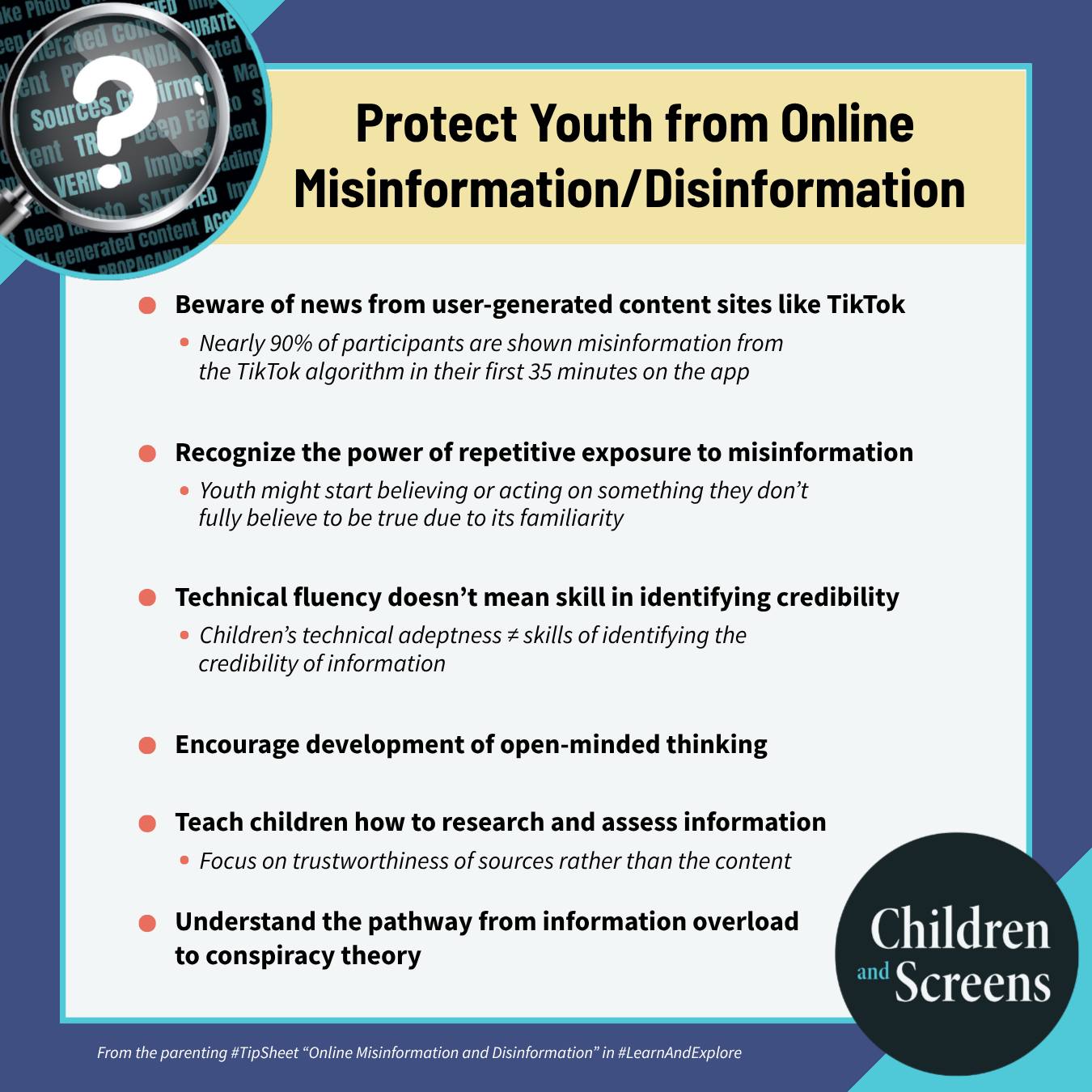
The content youth see online on a daily basis is full of unfiltered, biased, and even inaccurate data - whether AI-generated or not. How can parents, caregivers, and educators help youth develop the critical skills needed for deciphering misleading and false information they come across online? The expert-backed, research-based #TipSheet “Online Misinformation and Disinformation” discusses the difference between misinformation versus disinformation, and why children are more susceptible to this type of content online along with practical recommendations for teaching media literacy skills at an early age. Read the full tip sheet NOW to learn more #ParentingTips on how to limit exposure to misinformation and disinformation, how to show children trusted, quality sources, how to teach children essential research skills, and more 👉 https://bit.ly/4jxGZRF
Online Misinformation and Disinformation - Children and Screens
Date April 2025 Ages & Stages (6-10 yrs) Elementary School (11-13 yrs) Middle School (14-18 yrs) High Schoolers Topics Media Literacy Artificial Intelligence (AI) Share Options Share to Twitter Share to Facebook Share to Linkedin User- and AI-generated internet content is produced every day in stagg...
LEARN MORELike this ad? Make it yours.
Crush rebuilds this exact creative around your product — your brand, your colors, your offer — in about a minute.
More ads from Children and Screens: Institute of Digital Media and Child Development
Children and Screens: Institute of Digital Media and Child Development Children and Screens: Institute of Digital Media and Child Development
 Children and Screens: Institute of Digital Media and Child Development
 Children and Screens: Institute of Digital Media and Child Development