Innertune Affirmations
Innertune Affirmations Facebook ad: “The Law of Attraction works, but not for the reasons you…”
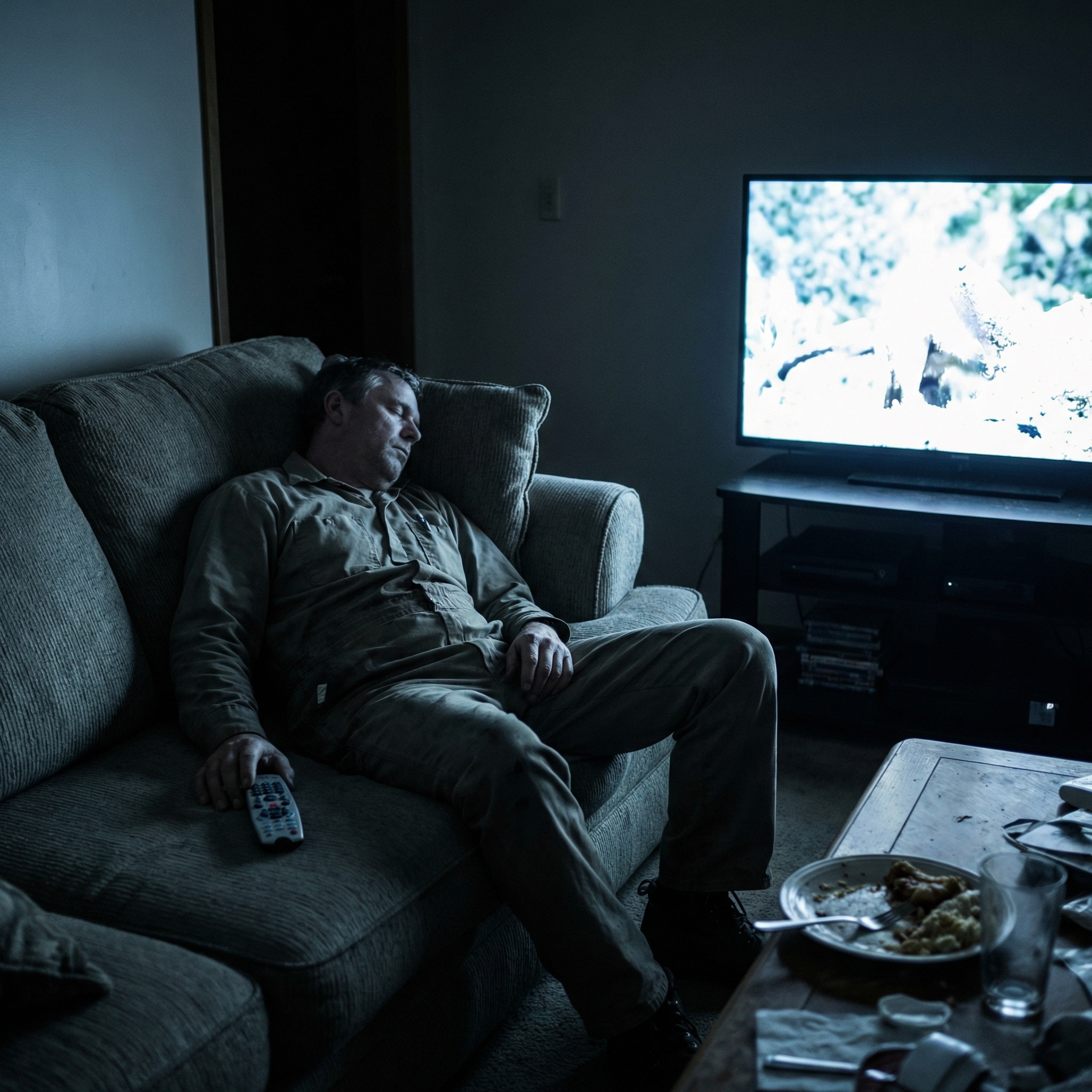
Ran for 3 days, from February 17 to February 20, 2026, the last day Crush saw it.
Run by Innertune Affirmations on Facebook. Crush is not the advertiser and does not verify its claims. See this ad in Meta's Ad Library(opens in a new tab)
Want an ad like this for your product?
Crush makes new ad images for your product from this ad: your logo, your product photo, your offer.
Trials from $19.95 USD, then $79.95 USD a month. Cancel anytime.
About this ad
- Meta Ad Library ID
- 1489937722645611
- Platforms
- Facebook, Instagram, Audience Network, Messenger and Threads
- Relaunches
- 1
Ad text
I was fifty-three years old the day I decided I was done. Not done with life. Done with the version of me I'd been living as. I'm a trucking logistics manager. Have been for twenty-two years. Loading schedules, dispatch routes, warehouse coordination — the kind of work where nobody notices you unless something goes wrong. And nothing had gone "wrong" in my life. Not in any dramatic way. No divorce. No bankruptcy. No breakdown. Just... nothing. A slow, creeping nothing that had settled over everything like dust. I'd wake up at 5:15 AM. Same alarm. Same coffee. Same drive. Same desk. I'd come home at 6. Eat whatever was quick. Watch something on TV I wouldn't remember. Fall asleep on the couch. Drag myself to bed around midnight. Repeat. For twenty-two years. My body felt it. My knees ached. My back was stiff every morning. I'd gained fifteen kilos since my thirties and couldn't remember the last time I'd gone for a run. My mind felt it too. I was sharp at work — logistics requires precision — but outside of work, my brain felt like it was running on idle. I couldn't remember the last time I'd read a book. Couldn't remember the last time I'd tried something new. Couldn't remember the last time I'd looked in the mirror and felt anything other than tired. I wasn't unhappy. But I wasn't alive either. I was just... moving. On autopilot. Getting through each day like a freight train on a fixed track. The moment I remember — the one that cracked something open — happened in France. I was there for a logistics conference. One of those trips where you fly in, sit in a hotel ballroom for two days, and fly home. I had a few hours free on the last day, so I walked through the city. No plan. No map. Just walking. And I saw a sign on the back of a bus. It said: "One Life. One Chance. Make It Count." I don't know why it hit me the way it did. I'd seen a thousand motivational quotes. On mugs. On posters. On the internet. They never meant anything. But standing there, on a sidewalk in a foreign country, watching that bus pull away — something in me broke open. Because I realized I wasn't making it count. Not even close. I was fifty-three. My kids were grown. My body was breaking down. And I couldn't name a single thing I was doing for myself — not for work, not for the mortgage, not for anyone else — just for me. I stood there for a long time. People walked past. The city moved around me. And for the first time in decades, I asked myself a simple question: "What if it's not too late?" When I got home, I started reading. Not logistics manuals. Books about the brain. I don't know what led me there — maybe the bus sign shook something loose. But I found myself obsessed with one question: Why do people get stuck? Not financially stuck. Not physically stuck. Mentally stuck. Emotionally stuck. The kind of stuck where you know you should change but something invisible keeps you in place. I found an article about neuroplasticity — the brain's ability to rewire itself at any age. It explained that our brains run on patterns. That by the time we're adults, 95% of our thoughts, emotions, and behaviors happen automatically — driven by subconscious programs installed decades ago. That's why you can know you should exercise and still not do it. That's why you can want to change and still feel stuck. Because knowing isn't enough. Your conscious mind can want one thing while your subconscious runs the opposite program. The article described it as an operating system. You can install new apps all day long — new goals, new resolutions, new habits — but if the underlying operating system is running old code, the apps keep crashing. And here was the part that changed everything: The Law of Attraction isn't about wishing. It's about programming. Your brain doesn't attract what you want. It attracts what it's wired to expect. If your subconscious is programmed for "get through the day" and "just survive," that's exactly the life it creates. Not because life is against you. Because your brain is running a program you never chose. I sat with that for a long time. Twenty-two years of autopilot. Not because I was lazy. Not because I didn't want more. Because my subconscious had been running a program that said, "This is enough. Don't ask for more. Just keep moving." And I'd obeyed. The article said the way to break the pattern isn't willpower. It's reprogramming. Using repetition, sound, and the right mental state to install new neural pathways that replace the old defaults. I wanted that. I wanted a new operating system. A week later, I mentioned all this to my mate Greg over beers. He nodded slowly, then said, "My daughter told me about something. She reckons it changed everything for her. Called Innertune." "What is it?" "Some kind of mind-reprogramming tool. You take a test, it tells you what patterns you're running, and then it gives you a personalized plan — audio you listen to that rewires your subconscious." "That sounds—" "Weird? Yeah. I thought so too. But she went from barely getting out of bed to running her own business. So either it works or she's lying. And my daughter doesn't lie." That night, I sat in my recliner — the one I'd fallen asleep in a thousand times watching TV I didn't care about — and opened the site. It asked me to take a test. An introspective assessment about my habits, my energy, my mindset, my sense of purpose. I answered honestly. Maybe for the first time in years. The results appeared: "You've been operating under a subconscious loop of routine and emotional suppression, formed during years of prioritizing function over fulfillment. Your brain has encoded survival as success." Survival as success. That was my whole life in four words. Right after, it gave me a Mind Reprogramming Plan — a personalized audio program designed to help me install new patterns. Calm soundscapes with targeted messages. Built specifically for what I needed to shift. Fifteen minutes a day. Morning or night. I started the next morning. 5:15 AM. Same alarm. But instead of reaching for my phone or shuffling to the coffee machine, I put on my headphones and pressed play. The sound was unlike anything I'd expected. Warm. Layered. Deep. Like the inside of a cathedral if cathedrals had a frequency. And the messages were calm but direct. Not airy motivation. Things like, "You are allowed to want more." And, "Your life is not over. It's beginning again." Fifteen minutes. When it ended, I sat there. Still. Quiet. And for the first time in years, I didn't feel like I was just starting another day. I felt like I was starting something. I made it a ritual. Every morning. Before coffee. Before work. Before the world got loud. Fifteen minutes of reprogramming. By the end of the first week, I noticed something: I wasn't dreading the mornings anymore. The second week, I started walking. Just twenty minutes around the block before driving to work. My knees still ached, but something was different — I wanted to move. My body wasn't just a machine for getting through the day. It was mine. And it deserved attention. By the third week, I changed what I ate for breakfast. Swapped the instant coffee and toast for something with actual nutrition. Started drinking more water. Small changes. But they felt enormous. Because they weren't changes I was forcing. They were changes that felt right. Like my brain was finally asking for different inputs. By the second month, the changes were visible. My coworkers noticed first. "You seem different, mate," one of them said. "Lighter or something." I'd lost five kilos. Not from a diet. Just from moving more and eating better — things my brain finally wanted to do. I started a journal. First time in my life. Nothing fancy. Just a few lines each night about what I did, what I felt, what I wanted. I started setting goals. Not work goals — personal ones. Read one book a month. Learn something new every quarter. Call my kids more. I wasn't just getting through days anymore. I was designing them. By the third month, something shifted at a deeper level. I was sitting at my desk one afternoon, reviewing a dispatch schedule, when I realized I was humming. Humming. I hadn't hummed in years. Maybe decades. I stopped and thought, "Where did that come from?" And the answer was simple: I was content. Not ecstatic. Not manic. Just content. Quietly, deeply satisfied with the fact that I was alive and awake and trying. That night, I looked in the mirror. Really looked. The tired man was still there. But there was something else now, too. Something behind his eyes that hadn't been there in a long time. Purpose. It's been ten months now. I still listen every morning. It's the first thing I do. Before coffee. Before everything. I've lost twelve kilos. I walk every day. I've read more books in the last year than in the last decade combined. I started a side project — a logistics consulting blog. Nothing big. But it's mine. And I built it because I wanted to, not because I had to. My relationship with my kids has deepened. I call them twice a week now. Actually listen. Share things I'm learning. They say I sound like a different person. I'm not a different person. I'm the person I always was — underneath twenty-two years of autopilot. Innertune didn't make me someone new. It helped me find the version of me that had been buried under routine, suppression, and a subconscious program that said "just survive." Through repetition, sound, and targeted messages delivered in the right mental state, it rewired the neural pathways that had kept me stuck on the same fixed track for two decades. I think about that bus in France sometimes. "One Life. One Chance. Make It Count." I'm making it count now. Not because I'm trying to be extraordinary. But because I'm finally awake. Present. Choosing. And that's enough. That's everything. Now, when blokes my age tell me they feel stuck — they feel like the best years are behind them and the rest is just running down the clock — I don't give them a pep talk. I tell them the truth: It wasn't luck. It wasn't a midlife crisis that magically resolved. It was Innertune. A powerful tool trusted by over one million users worldwide, helping people reprogram their minds for energy, focus, purpose, and calm. You can reprogram your mind for anything — even starting over at fifty-three — just like I did. Fifteen minutes a day is all it takes to start teaching your brain to work for you, not against you. Take the Innertune Test today. Discover the subconscious patterns keeping you on autopilot, and get your personalized Mind Reprogramming Plan. Because the life you've been putting off isn't behind you — It's already in your mind, waiting to be reprogrammed. *Inspired by a true Innertune review.*
Where the ad sends people
innertune.com/download
The Law of Attraction works, but not for the reasons you think. Neuroscience explains it better than any spiritual book.
Inspired by a true story. Take the free Innertune test.
Download: appstack.link(opens in a new tab)