
Stopped· since Apr 18, 2026
- 89
- days it ran
- 0
- relaunches
Ad copy
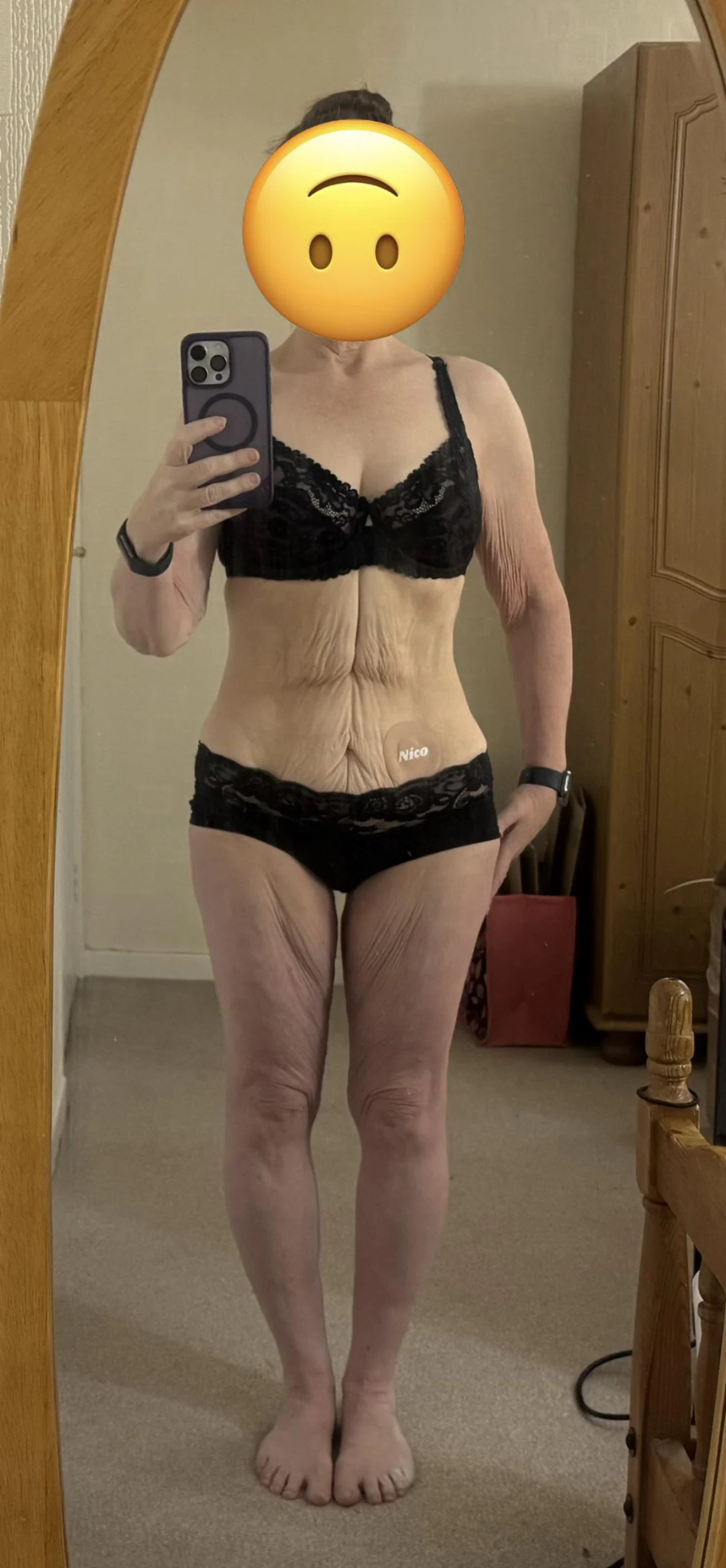
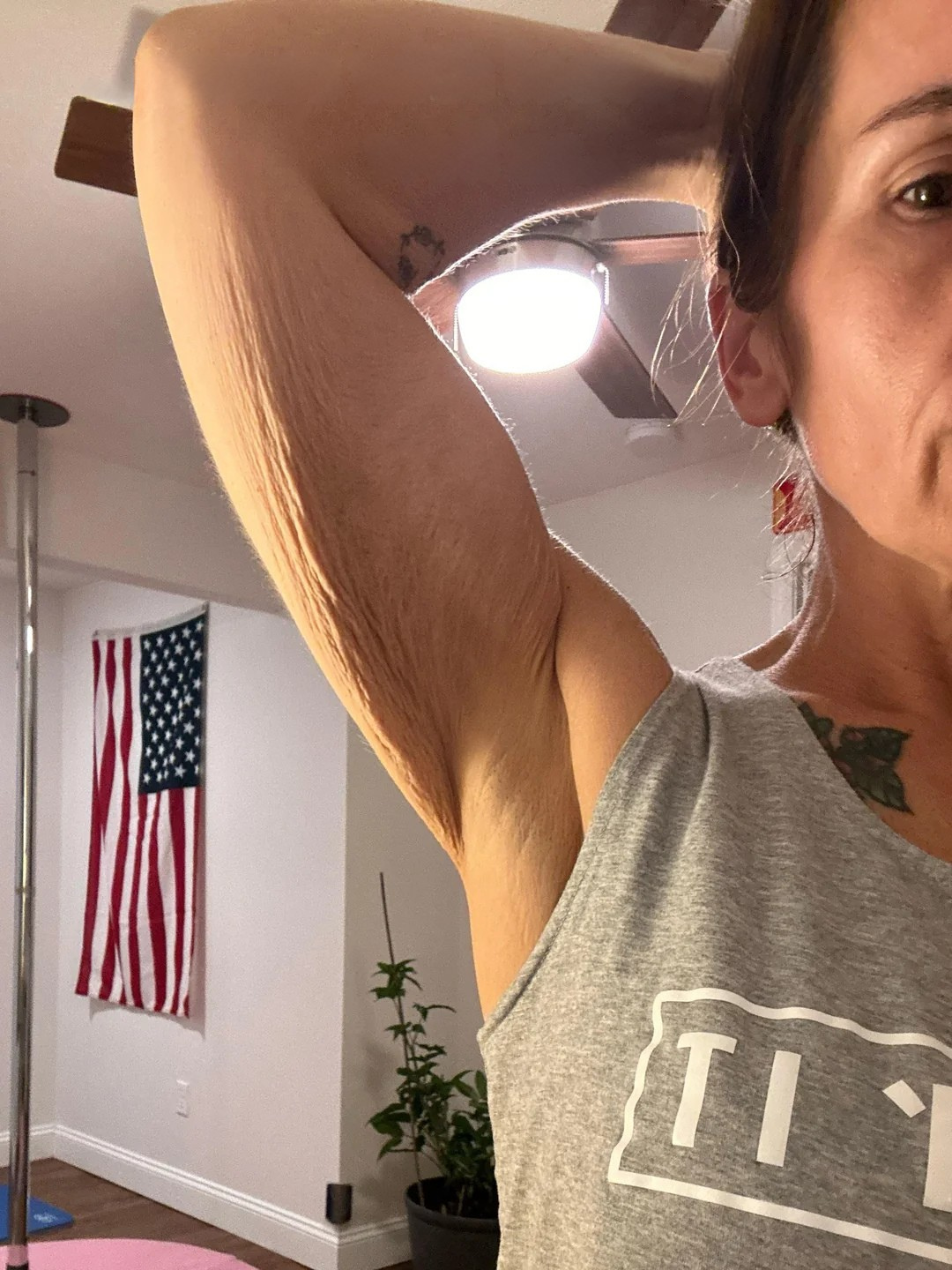
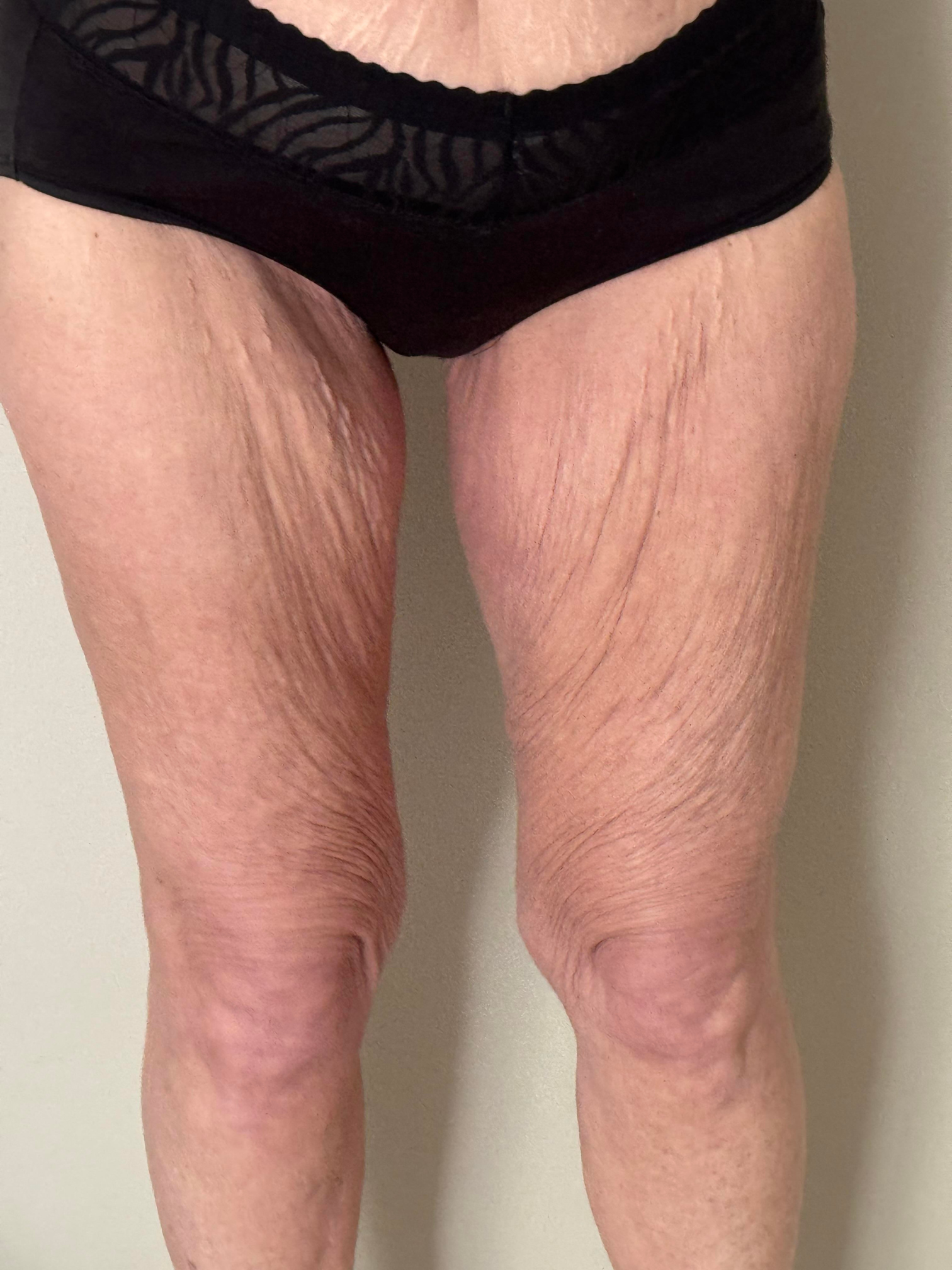
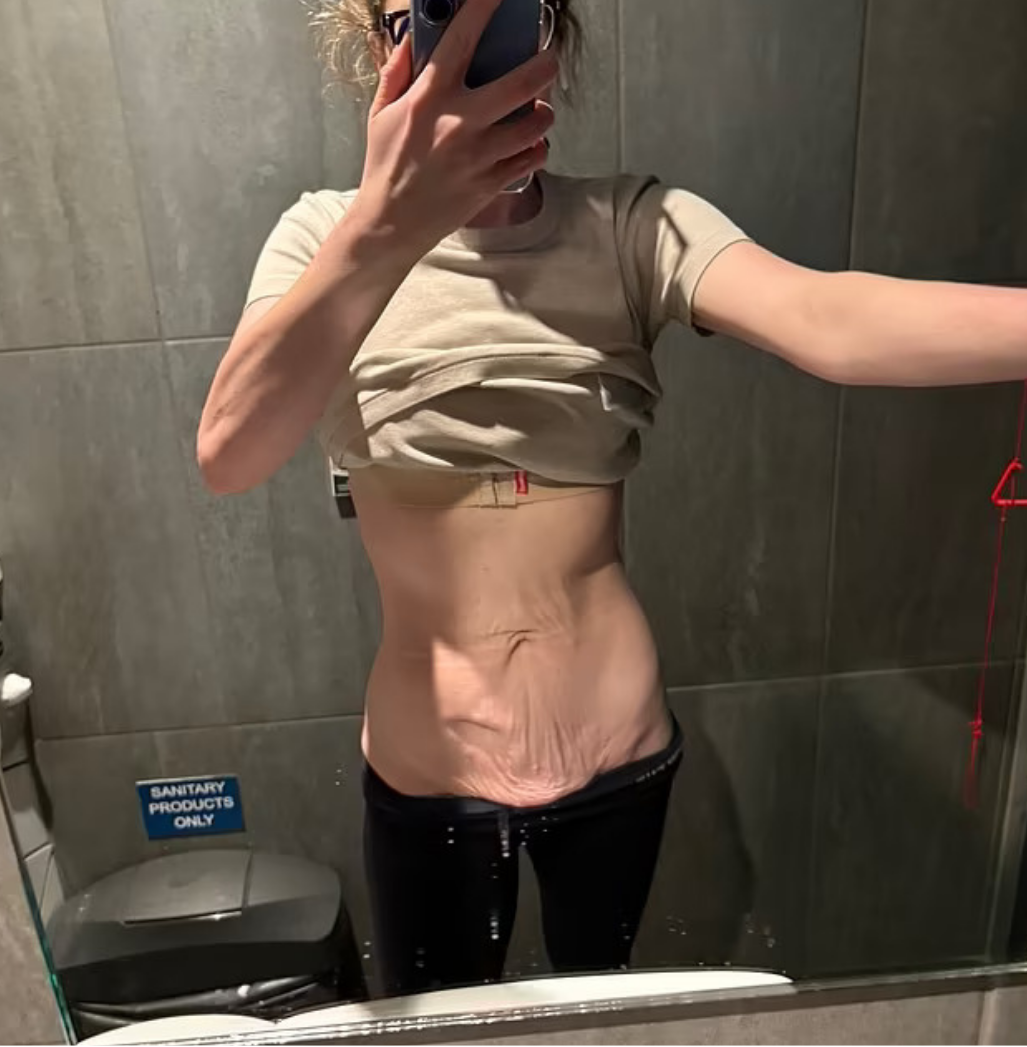
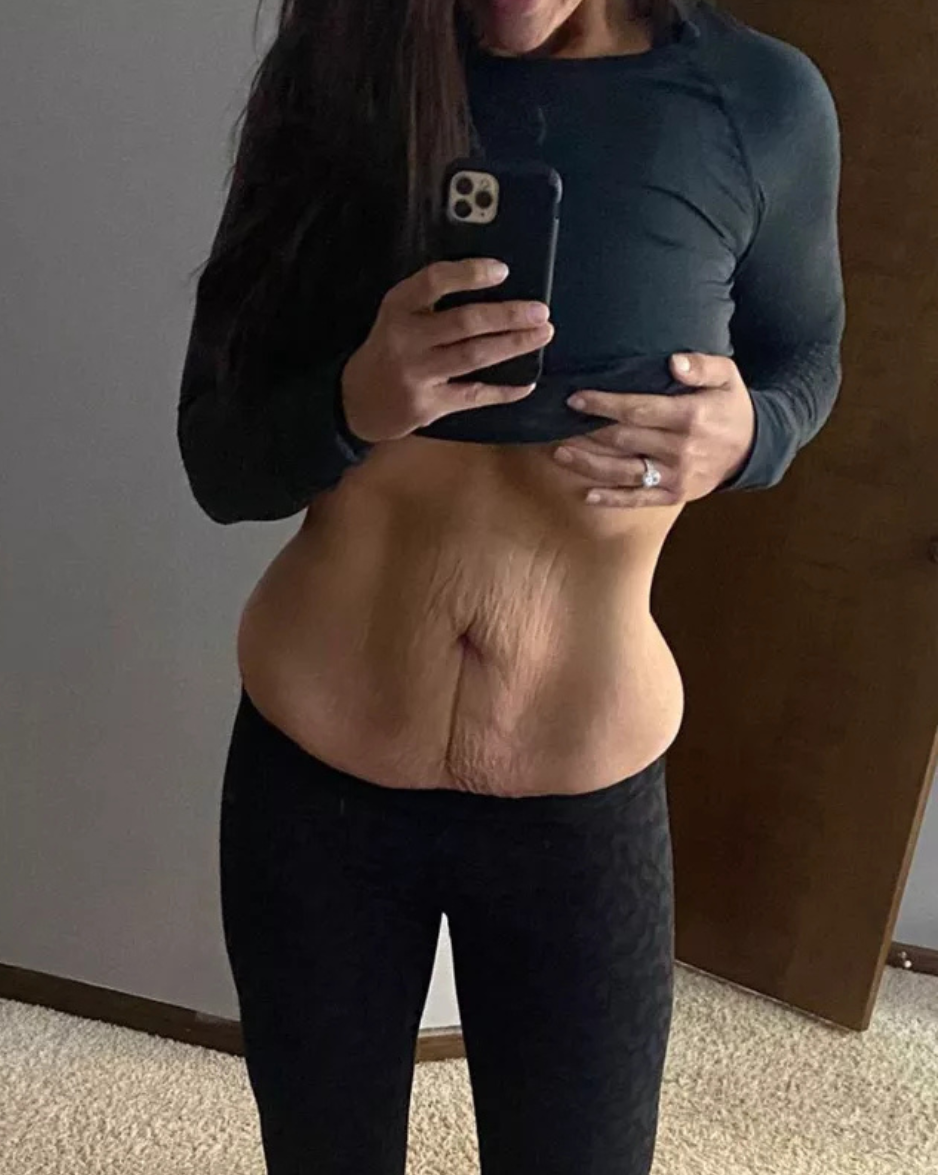
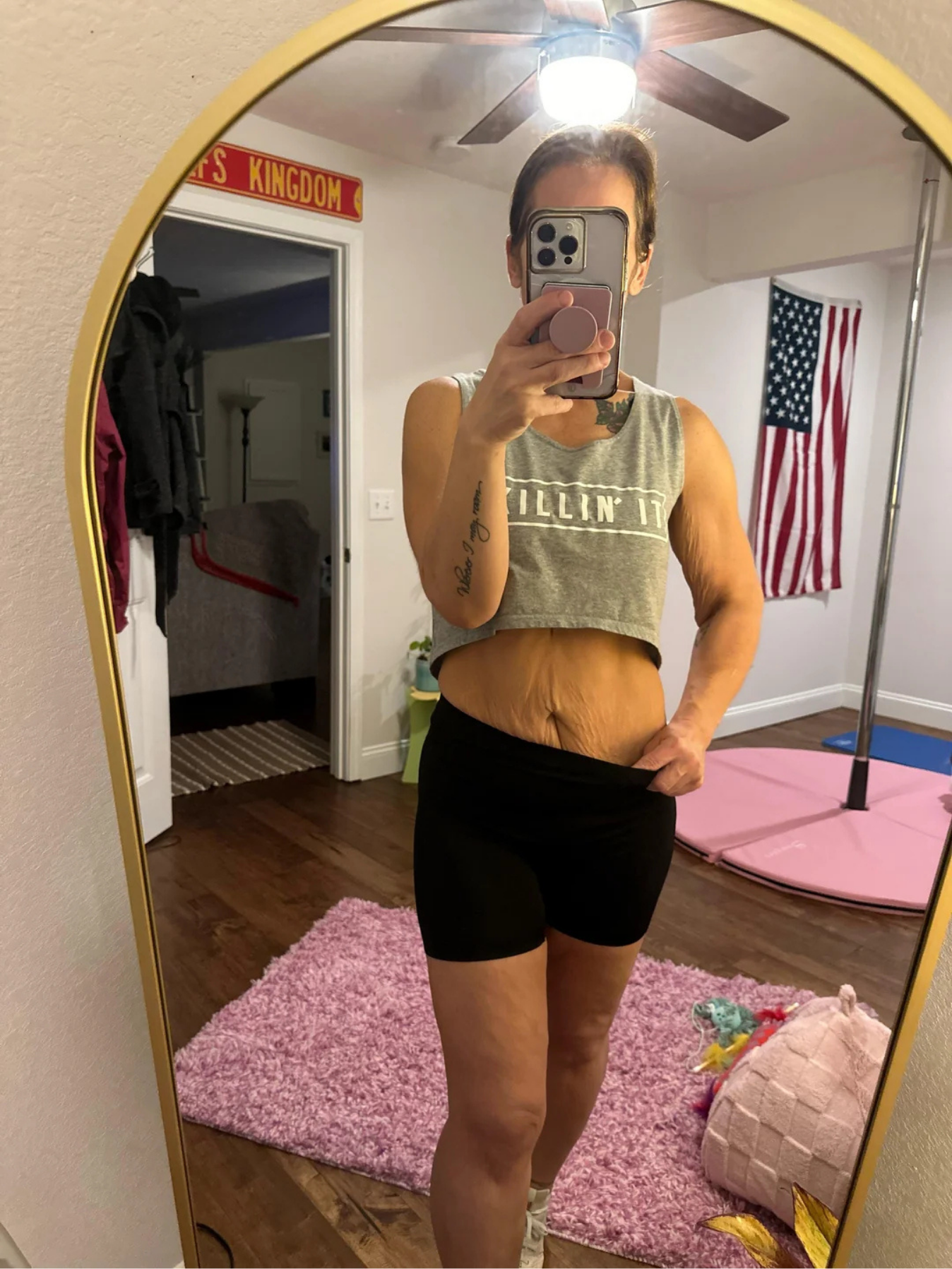
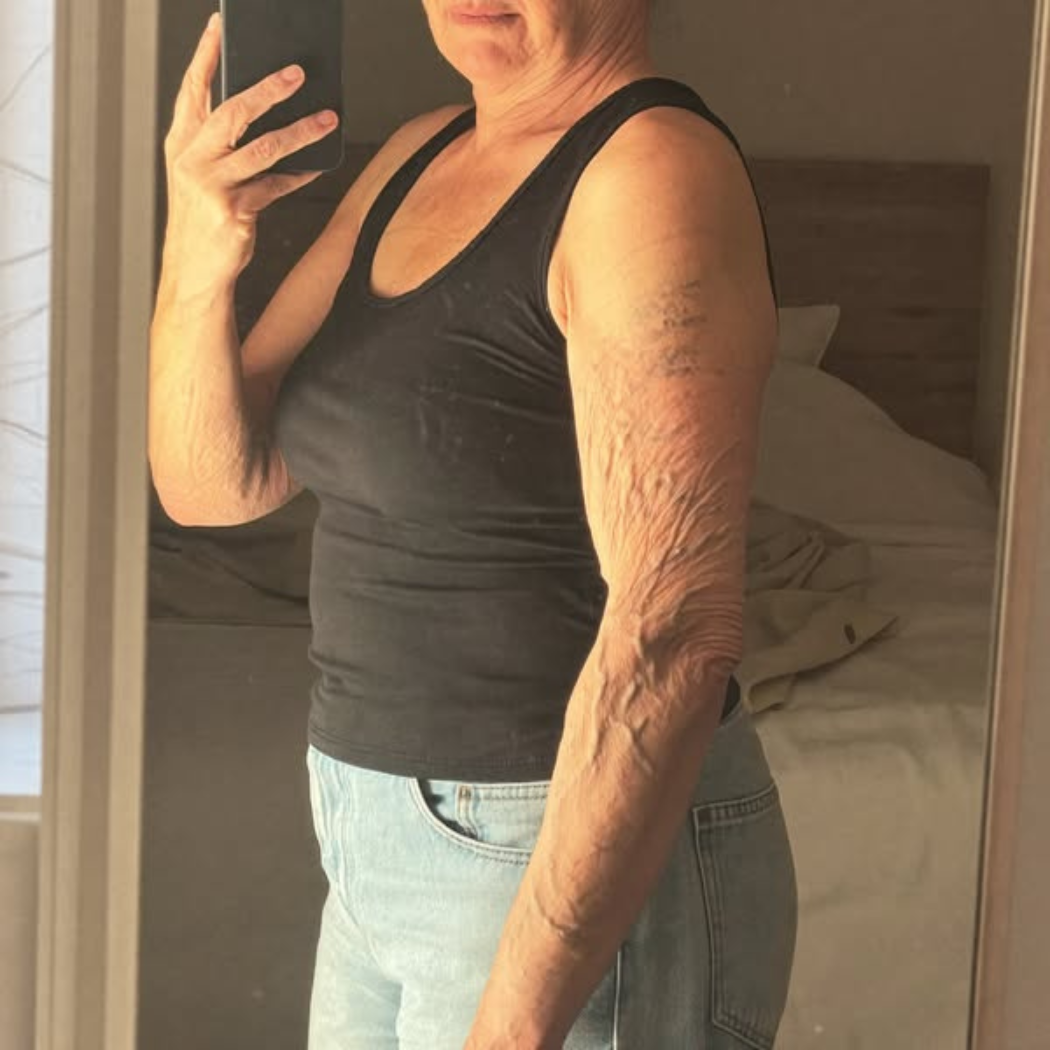
I lost 82 pounds on Mounjaro. I was SO excited to finally wear shorts and sleeveless tops again. I bought three sundresses before I even hit my goal weight. I've worn none of them. My dermatologist never mentioned this would happen. She was celebrating with me while my skin was collapsing. I'm 55. I started Mounjaro in January last year. By August I was down 82 pounds and I felt like I'd gotten my life back. I could walk upstairs without being winded. I could cross my legs. I could sit in a restaurant booth without calculating whether I'd fit. I bought the sundresses in July — strappy, sleeveless, the kind I hadn't worn in nine years. I remember holding them up in the store and almost crying because I was going to BE that woman again. Then I took off my compression top for the first time in front of the full-length mirror. My arms looked like someone had deflated them. The skin hung loose, crepey, wrinkled — worse than when I was heavy. My thighs had this papery texture I'd never seen before. My stomach looked like a half-empty balloon. I stood there staring at a body I didn't recognize. Not the heavy body. Not the body I'd imagined at goal weight. Something in between — a deflated version of who I used to be. I called my dermatologist the next morning. She said "give it time — the skin will tighten on its own." She was wrong. And she didn't know why she was wrong. ======== I became an expert in things that don't work on post-weight-loss skin. The $89 "skin firming" cream from Sephora — designed for "body contouring." I used it twice a day for ten weeks. It made my skin feel temporarily tighter. The way a mask makes your face feel tighter. It wore off by noon. Every day. A red light therapy device — $299. I used it on my arms every night for twelve weeks. The instructions said to expect "visible improvement in 8-12 weeks." At week twelve, I couldn't see any difference. My arms still looked like they belonged to someone twenty years older. Professional RF skin tightening — $350 per session, four sessions over two months. The aesthetician was confident. "This will stimulate collagen." The sessions hurt. The results were invisible. Collagen supplements — $62 a month for five months. I took them every morning with my Mounjaro shot. My joints felt slightly better. My skin? Nothing. A body wrap subscription — $120 per month, three months. They literally wrapped my arms and thighs in heated sheets with "firming serum." I lay there thinking this is what desperation looks like. Fourteen months. Eleven products and treatments. $3,400. Every single one was designed for gradual aging. Not one of them was designed for what actually happens to skin after rapid weight loss. Nobody told me these were two completely different problems. And every month I spent on the wrong treatments, the actual structure underneath was continuing to break down. I wasn't just wasting money. I was wasting a window I didn't know existed. ======== Three weeks ago, I was at a wellness expo in the city. One of those big open-floor events with booths everywhere. I was walking past a skincare section — already skeptical, already exhausted — when a woman at a small booth called out. "Free skin elasticity testing. Ninety seconds." Her name was Anne. French. Mid-70s maybe. Silver hair, quiet manner. She had this small device and a clipboard and she was testing women's arms. I almost didn't stop. Another person to confirm what I already knew. But I stopped. Because at this point what did I have to lose except ninety more seconds. She pressed her thumb gently into the skin on my upper arm and held it for a second. Released. The indent sat there. Five full seconds before it crept back. She looked at me. Not at my arm. At me. "When did you lose weight?" Not "when did your arms get like this." Not "have you tried firming cream." When did you lose weight. Nobody had ever asked me that. "Eighty-two pounds over eight months," I said. "Mounjaro." She nodded slowly. "May I see your other arm?" I held it out. She pressed again. Same thing. Five seconds. "This isn't loose skin," she said quietly. "This is cushion collapse." ======== Anne had been a clinical esthetician in Paris for nearly 40 years — specializing in what happens to skin structure after hormonal disruption. She pulled a pen and a napkin toward her. "When you lose weight gradually — a pound or two a month — your skin has time to adjust. The internal structure contracts slowly. The cushion underneath redistributes." She drew a slow declining line. "But when you lose weight rapidly — especially on GLP-1 medications — two things happen at once." She drew a second line, steep, almost vertical. "The fat that was supporting your skin from underneath disappears faster than the skin can adapt. And the medication itself disrupts hormonal signals that maintain your skin's structural cushion." She tapped the steep line. "Your dermatologist told you the skin would tighten with time. She's thinking about elastic recoil — the surface layer bouncing back. That does happen. In your twenties." She pressed my arm again. Five-second indent. "What happened to you isn't a surface problem. The structural cushion — the layer that gives skin its thickness, its bounce, its hold — collapsed when the fat left and the hormonal signals changed. Creams can't reach that layer. They sit on the surface. That's why eleven products did nothing." ======== Then she said the thing that made my stomach drop. "From the onset of structural collapse — which for you started when the rapid weight loss began — there's a window of roughly 18 to 24 months where the cushion can be fully rebuilt. The cells that produce the internal structure — fibroblasts — aren't dead. They're dormant. Shocked by the sudden hormonal and structural shift." She looked at my arms. "You started Mounjaro in January last year. You hit your major loss around August. That means you're approximately fourteen months into your window." Fourteen months. Eleven useless products. Maybe ten months left. "After the window closes," she continued, "the fibroblasts go permanently dormant. You can still improve the surface — moisturize, exfoliate. But the structural cushion? The part that gives your skin its actual substance? That becomes much, much harder to rebuild." I'd spent fourteen months celebrating weight loss while the internal structure of my skin was collapsing. And nobody — not my prescribing doctor, not my dermatologist, not a single product I bought — mentioned that a clock was running. ======== "The women I've seen reverse cushion collapse after rapid weight loss," she said, writing on the napkin, "did three things simultaneously." Deep penetration — pure plant oils with molecular weights low enough to absorb past the surface into the dermis, where the collapse actually happened. Passionfruit seed oil. Rice bran oil. They reach the layer that creams physically cannot get to. Fibroblast reactivation — botanicals that wake up dormant collagen-producing cells that went silent when the structural support disappeared. Wakame seaweed. White lupin. They target the specific cells that shut down during rapid loss. Structural protection — antioxidants that protect fragile new collagen as it forms, because tissue rebuilding after structural shock is extremely vulnerable to damage. Passionfruit. Vitamin E. Açaí. Babassu. "All three. At the same time." She circled where they overlapped on the napkin. "Firming creams address surface elasticity. Red light addresses inflammation. Collagen supplements dissolve in your stomach. None of them reach the dermal layer where your cushion collapsed. You need direct structural intervention at the site of the collapse." I stared at the napkin. Three requirements. Fourteen months of products that met zero of them. ======== I went home that night and sat on my bed with the three sundresses still hanging in my closet, tags still on. Furious. Not at my body. Not at the weight loss. At every doctor and dermatologist who celebrated my Mounjaro results without once mentioning that my skin's internal structure was on a clock. At every product that promised "firming" and "tightening" without disclosing that it couldn't reach the layer where the problem lived. And terrified. Because the window Anne described was more than half gone. I started searching Facebook groups. Not for "skin tightening after weight loss." For women who'd experienced rapid structural collapse after GLP-1s. Patricia, 52, Mounjaro: "Lost 95 pounds. Arms were the worst — deflated, crepey, hanging. Every firming cream did nothing. Eight weeks with this oil and my pinch test went from 4.8 seconds to 2.1. My daughter grabbed my arm last week and said 'Mom, it feels different.' She was right." Sandra, 58, Wegovy: "My doctor told me the skin would bounce back. It didn't. It got worse. I found this after fourteen months of failed products. Skin fold measurement on my upper arm went from 17mm to 9mm in ten weeks. I wore a sleeveless dress to my son's graduation. First time since before the weight loss." Michelle, 49, Zepbound: "I was more self-conscious at 140 pounds than I was at 260. Nobody warns you. This was the only thing that changed the texture — not moisturized it, not temporarily plumped it — actually changed it. Like the skin was rebuilding from underneath." They all mentioned the same product. Lumié Queen Oil. ======== I checked it against Anne's three requirements. ✓ Deep penetration: Passionfruit seed oil and rice bran oil — low molecular weight, absorb past the surface into the dermal layer where the cushion collapsed. Not sitting on top pretending to firm. ✓ Fibroblast reactivation: Wakame seaweed and white lupin — target the dormant cells that shut down when the structural support disappeared during rapid loss. Wake them up. ✓ Structural protection: Passionfruit, vitamin E, açaí, babassu — protect fragile new collagen forming in a dermis that's been structurally shocked. The new tissue is vulnerable. These shield it. All three. Working together. Not a cream designed for gradual aging. An oil formulated for structural collapse — the exact condition Anne described. The reviews were full of women who'd lost weight on GLP-1s and Mounjaro specifically. Women who'd tried everything. Women in my exact situation. 60-day guarantee. Full refund, no questions, no forms. I ordered that night. The three sundresses were still hanging in my closet with the tags on. I looked at them while I clicked "confirm order." ======== The bottle arrived two days later. Heavy glass. The oil smelled real — botanical, clean, not like a department store counter. Not like any of the eleven products I'd tried. First application: it absorbed in about thirty seconds. I stood there waiting for the greasy film. It didn't come. The oil was gone. Into the skin. Not on it. I'd never felt anything absorb like that. Day four: I pressed my thumb into my upper arm the way Anne did. The indent lasted 3.6 seconds. Down from 5. Day ten: I was drying off after a shower and looked at my forearms. The papery texture — the one that appeared during the weight loss and never left — looked less deep. Not smoother on top. Like something underneath was filling back in. Week two: Skin fold measurement on my upper arm — 12mm. Down from 16mm when I started. I measured three times because I didn't believe it. The collapsed structure was rebuilding. Fourteen months of failed products and in two weeks I could measure a difference with a $9 caliper. ======== Week three. I was getting dressed for a Saturday morning errands run. Not thinking. Autopilot. Reached into my closet and grabbed one of the three sundresses — the yellow strappy one. Put it on. Looked in the mirror. And didn't reach for the cardigan. For fourteen months — through the entire weight loss, through hitting my goal, through every single day since I saw the deflated body in the mirror — I had covered my arms before leaving the house. Every time. Without exception. Compression top or cardigan or long sleeves. Automatic. Like breathing. But that Saturday I stood there in a strappy sundress with my arms out and I didn't move to cover them. I didn't think "my arms look amazing." I didn't cry or have a cinematic moment. I just... saw myself. In a sundress. The version I'd imagined in the store when I bought it. The version I'd lost 82 pounds to become. I drove to the farmer's market with the windows down and my arms in the sun. I almost pulled over twice because I couldn't stop looking at them at red lights. ======== Eight weeks in, I went back to find Anne at another expo. She did the pinch test. "2.3 seconds. Down from 5 in January." She measured with calipers. "Upper arm skin fold: 9 millimeters. Down from 16." She looked at the numbers. Then at me. "54% structural improvement. Your fibroblasts responded to reactivation. The cushion is rebuilding." She paused. "You were at fourteen months when we met. If you'd waited another six to ten months, this would have been exponentially harder. The cells were dormant — not dead. But they were close." She asked for the website. Said she had clients in Paris who'd done Saxenda, Wegovy — rapid weight loss, same collapse, same failed products, same dermatologists shrugging. ======== My friend Diane started three months ago. She'd lost 110 pounds on Mounjaro over ten months. Her arms were worse than mine — she'd told me she hadn't worn anything without sleeves since her first month of weight loss. Eighteen months of covering up the body she'd worked so hard to get. She texted me last week. A photo. Tank top. Arms out. Standing in her kitchen, not posing. "I'm wearing a tank top. In my own house. With the curtains open. I haven't done that in a year and a half. I forgot what it felt like to just... have arms." Her pinch test went from 5.1 seconds to 2.5 in ten weeks. Skin fold from 18mm to 11mm. She told me she cried in the car after her first sleeveless grocery run. Not because her arms looked perfect. Because she forgot to check them in the window reflection on the way in. The shame was just... gone. I explained what Anne told me. About cushion collapse versus surface elasticity. About the window. About fibroblast reactivation. "Why didn't my doctor tell me?" she asked. "She prescribed the Mounjaro. She weighed me every month. She watched my skin change and never said a word." Because doctors are trained in weight management. Not structural collapse. They see loose skin after weight loss and call it inevitable. They don't measure when it started. They don't know about the window. And they don't understand the difference between surface recoil and dermal cushion collapse. ======== If you're reading this because you lost weight — on Mounjaro, Wegovy, Zepbound, Ozempic, or anything else — and your reward is a body you're still too ashamed to show anyone — if you're still wearing baggy clothes at your goal weight — if you traded the fat prison for a skin prison — understand this: You don't have "loose skin" that needs to "tighten with time." You have cushion collapse. Gradual weight loss = skin adjusts slowly, surface recoil handles most of it Rapid weight loss = structural cushion collapses, fat support disappears, hormonal signals disrupted simultaneously They look similar on the outside. They are completely different conditions. And they require completely different approaches. Firming creams address surface elasticity. You need structural reactivation at the dermal level. ======== You have a window. After rapid structural collapse, that window is 18 to 24 months from when the major weight loss began. Your fibroblasts — the cells that build the cushion — haven't died. They've gone dormant from structural and hormonal shock. They can still be woken up. The collapsed cushion can still be rebuilt. But only while the cells are still responsive. Every month you spend on surface treatments — firming creams, red light, body wraps — is another month closer to permanent dormancy. Another month of hiding the body you worked so hard to get. I wasted fourteen months. I almost missed my window. You lost the weight. You did the hard part. Don't lose the window too. ======== Lumié Queen Oil does what Anne said was necessary for cushion collapse: ✓ Penetrate the dermis with pure plant oils — Passionfruit, Rice Bran — low molecular weight, absorb past the surface where creams can't reach ✓ Reactivate dormant fibroblasts — Wakame Seaweed, White Lupin — wake up the collagen-producing cells that shut down during rapid loss ✓ Protect new structure — Passionfruit, Vitamin E, Açaí, Babassu — shield fragile new collagen as it rebuilds in structurally-shocked tissue All three. Simultaneously. Every application. The only product I found designed for structural reactivation — not surface firming. 60-day guarantee. Full refund. No forms, no questions. ======== Every day you wait is another day your window shrinks. Every week is another week closer to permanent dormancy. Every month is another month hiding a body you fought to earn. Anne was clear: after 24 months from onset, even the best intervention faces exponentially harder odds. I wasted fourteen months. I almost lost my window completely. You did the hardest thing — you lost the weight. Now you know about the window. It's still open. But it won't stay open forever. ======== P.S. Three months in, second bottle. Total cost: $118. Compared to $3,400 on firming creams, red light devices, and body wraps that couldn't reach past the surface? I want to scream. Last weekend I took the tags off all three sundresses. Wore the yellow one to the farmer's market. The blue one to a friend's birthday dinner. The white one is hanging ready for next Saturday. I didn't lose 82 pounds to live in cardigans. And neither did you. P.P.S. I went back to my dermatologist last month for a skin check. She looked at my arms and paused. "Your skin texture has improved significantly. Whatever you're doing — keep doing it." I told her about Anne. About cushion collapse versus surface recoil. About the 18-24 month window. About fibroblast reactivation versus surface firming. She wrote it all down. Said she had dozens of patients on GLP-1s with the same collapse and no protocol beyond "give it time." She prescribed Mounjaro to change my life. She just didn't know the second half of the story.
$1200 worth of failed products in the trash
WOMEN'S WELLNESS INSIDER Dermatologist: '19 Years of Training Didn't Teach Me How to Reverse Crepey Arms. 30 Minutes in Paris Did March 28, 2026 at 9:15 am EST "By the time you notice the damage, the optimal reversal window is already half-closed. This is the most preventable traged...
LEARN MORELike this ad? Make it yours.
Crush rebuilds this exact creative around your product — your brand, your colors, your offer — in about a minute.