
Inactive· since May 27, 2026
- 12
- days it ran
- 0
- relaunches
- 217
- EU reach
Ad copy
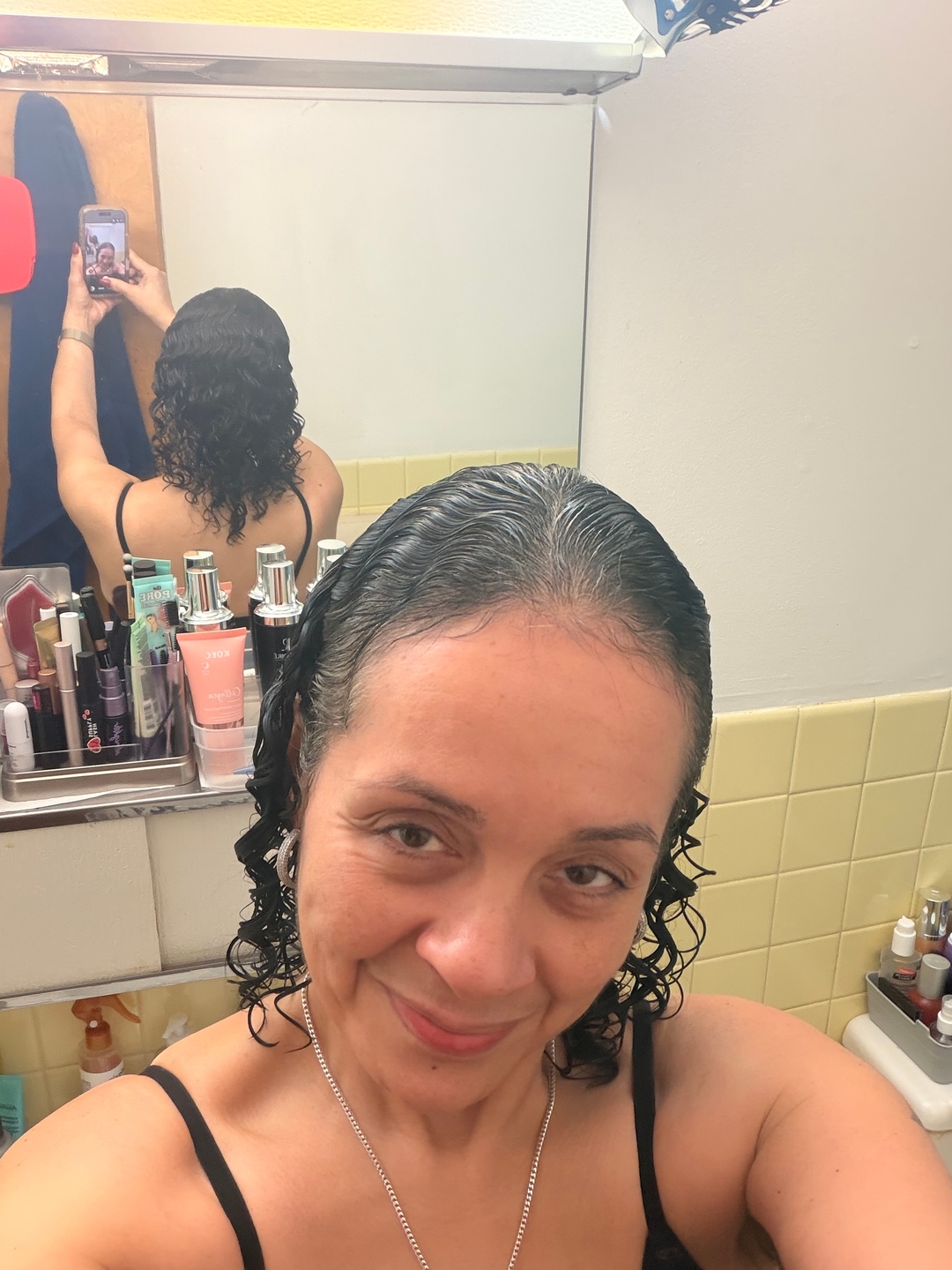
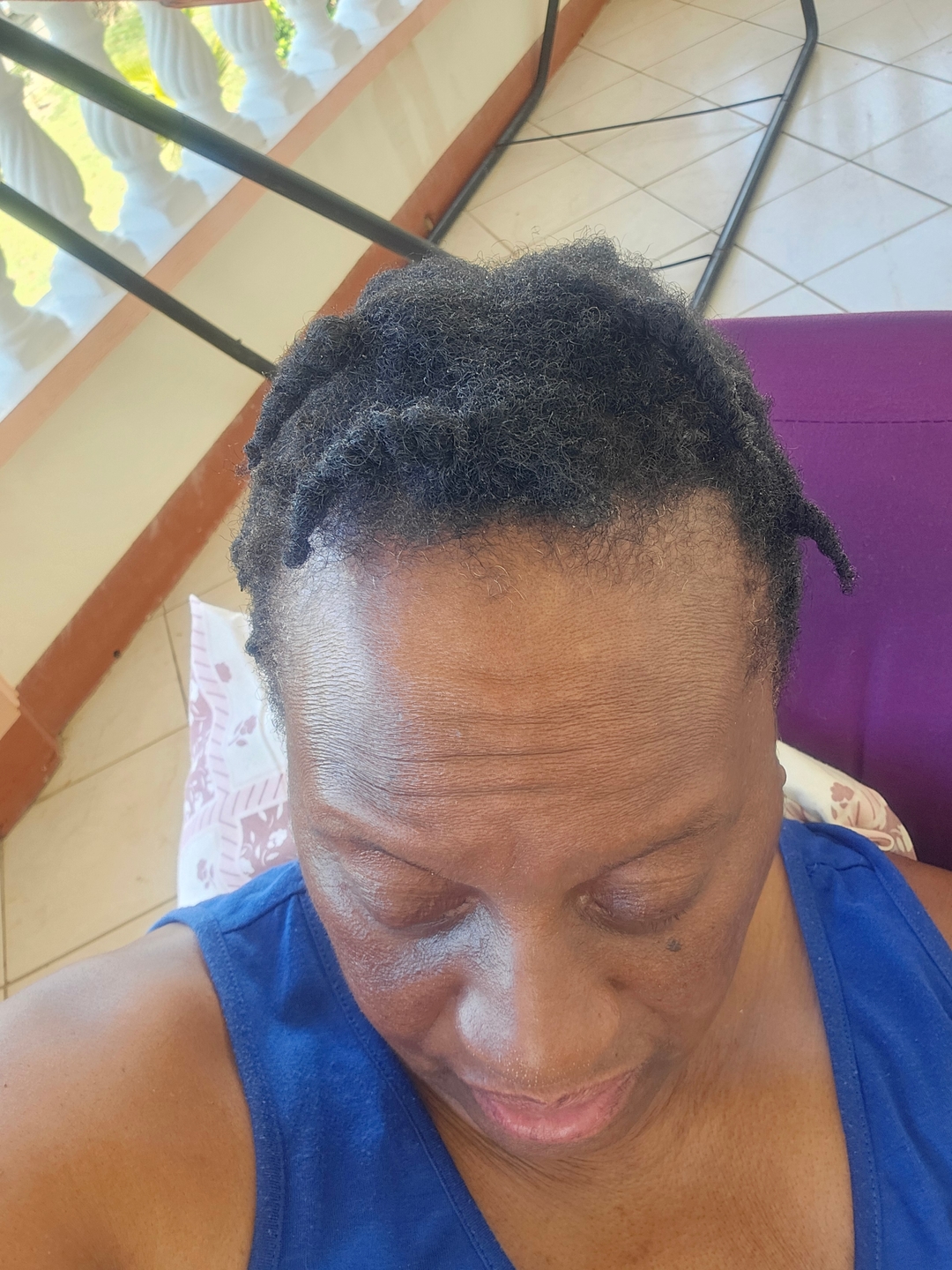
If you're a Black woman in your 40s or 50s and there are patches on your scalp that have been there for two, three, sometimes five years — and you've quietly built your whole hair routine around hiding them — this is for you. I want to start by saying I'm not a beauty influencer. I'm not a stylist. I work in admin at a hospital in Atlanta and the only reason I'm writing this is because three women I know personally have asked me what I'm doing differently and I am tired of typing the same thing in DMs. My patches showed up after the worst year of my life. My mother was diagnosed with cancer in early 2022. I spent four months sleeping in a chair next to her hospital bed. By the time she went home in August, I had three smooth patches on my scalp — one over my crown the size of a half-dollar, two smaller ones at the temples — and my edges had thinned out so badly that the gel I used to slick down my baby hairs had nothing to slick down anymore. My doctor called it telogen effluvium. Which is the medical way of saying your hair fell out because your nervous system was at war with itself for too long. She told me it would "probably grow back on its own." It did not. Two years later, the patches were still there, the edges were still gone, and I had been quietly building my entire life around hiding them. I'd like to walk you through what I tried in those two years, because I think it's important that you know I am not someone who just got lucky. – Castor oil from the Indian grocery store. $9. Made my scalp greasy and didn't move the needle in six months. The smell alone made me dread bedtime. – Mielle Rosemary Mint scalp oil. $13 a bottle, I went through four. My coworkers swore by it. My patches did not respond. My edges thinned a little more. – Wild Growth (the green bottle). $8 at Sally's. The smell almost ended my marriage. No regrowth where I needed it. – A scalp consult with a Black trichologist on Zoom — found her on Instagram, paid $250. She was lovely. She told me to "manage stress" (yes ma'am, I'll add that to the list) and prescribed a $400-a-month minoxidil-and-finasteride combo through a telehealth service. I tried the minoxidil for six weeks and my scalp burned every single application. My pillowcase was sticky. I quit. – Two PRP sessions at a dermatology office. $1,200 total. Some new growth on the temples, nothing on the patches. The doctor said I'd need at least three more sessions for any visible result. I couldn't justify another $1,800. – A 3-month subscription to a viral "hair gummies" brand. $87. The only thing that grew was my appetite. So at this point I had spent close to $2,500 trying to grow hair on three small patches and the only thing that grew was my exhaustion. I want to share what I learned in that process because I think most of us are missing one piece, and once I understood it, the next thing I tried actually worked. The reason most "hair growth" products don't work on Black women's scalps is because they were not formulated for our scalp. They were formulated for thin, fine European hair sitting on a scalp that runs warmer and produces oil very differently from ours. When you put a synthetic stimulant — a minoxidil, a peppermint oil, anything aggressive — on a scalp that is already inflamed from years of relaxers, tension from braids, glue from wigs, or just the chronic dryness so many of us live with, you don't trigger growth. You trigger more inflammation. The follicle that was dormant doesn't wake up. It just gets more irritated and stays asleep. What woke my follicles up was the opposite of a stimulant. It was an oil that has been used by the Miskito women in the La Moskitia region of Honduras for centuries on their own dense, coily, very similar to ours hair texture. Pure unrefined Batana oil. Cold-pressed by Miskito harvesters. Single-origin, no fillers, no fragrance, no minoxidil, no finasteride. Intertek-verified at 99%+ purity. The brand is Botanic. They sell it in a small brown jar that looks like a tin of shea butter. I almost didn't buy it. I was tired of trying things. I bought one jar — one — because if it didn't work I wanted my refund and I wanted out. Here is the honest, week-by-week version of what happened: Week 1: I felt nothing visually but my scalp felt different at the rinse. Less tight. Like my scalp had been thirsty for years and I didn't know it. I was applying a quarter-size amount, melting the wax between my palms until it turned into oil, and massaging it into the three patches twice a week before bed. I didn't expect anything. I told myself I'd give it the full 90 days because they had a refund guarantee and that was the only reason I felt safe spending the money. Week 3: My husband said, "did you do something to your hair?" He's not the noticing-hair type. I went to look in the bathroom mirror with the harshest light I could find and I saw fuzz. New baby hairs. Two years of nothing, and there were baby hairs filling in the smallest patch on my left temple. I cried in the bathroom for about ten minutes and didn't tell anyone for another three weeks because I was scared it was a fluke. Week 6: The patch on my crown — the largest one, the one I had truly given up on — had fill-in I could see in side-by-side photos. I had started taking weekly photos at this point because I didn't trust my own eyes anymore. The photos didn't lie. The fuzz was now real hair, dark, growing at an angle, anchoring into the scalp. Week 12: I am writing this. The patches are not fully closed yet. I am not going to lie to you and say my hair is the way it was when I was 28. But there is hair where there was none. My twist-outs hold differently. My edges are filling in — slowly, but they are filling in. I shed less in the shower than I have in three years. And I sleep at night without rehearsing in my head what hat or headwrap I was going to wear in the morning to hide what people had no business looking at anyway. I have given a jar to my sister. She is in week 5 and she texted me a picture last Tuesday of new growth at her hairline. I have given a jar to my best friend, whose alopecia has been there since her son was born in 2019. She is in week 9 and she is starting to talk about wearing her hair down at her cousin's wedding in June. If you have been scalp-staring for two, three, five years and you are tired of the cycle of hope-and-disappointment with the next viral oil, the next $50 serum, the next telehealth subscription that costs more than your phone bill — this is the one I would tell my own daughter to try. The brand is Botanic. They have a 90-day money-back guarantee. If your patches don't fill in by week 12, you get a refund. That is not marketing — that is how I felt safe spending the money in the first place. I would start with one jar. Apply it twice a week, the way I described, before bed. Be consistent. The first month is patience. The second month is when you start to believe what your own eyes are telling you. The third month is when you stop covering. That's my whole testimony. Take it for what it is. — Brenda Atlanta, GA
BUY 1 GET 1 FREE!
Lab-verified Honduran Batana. Clean, cruelty-free care that deeply conditions, reduces breakage, and boosts shine for healthier-looking hair. Ethically sourced. 90-day money-back guarantee. Ships in 24h, worldwide.
SHOP NOWLike this ad? Make it yours.
Crush rebuilds this exact creative around your product — your brand, your colors, your offer — in about a minute.