
Inactive· since Jun 27, 2026
- 41
- days it ran
- 0
- relaunches
Ad copy
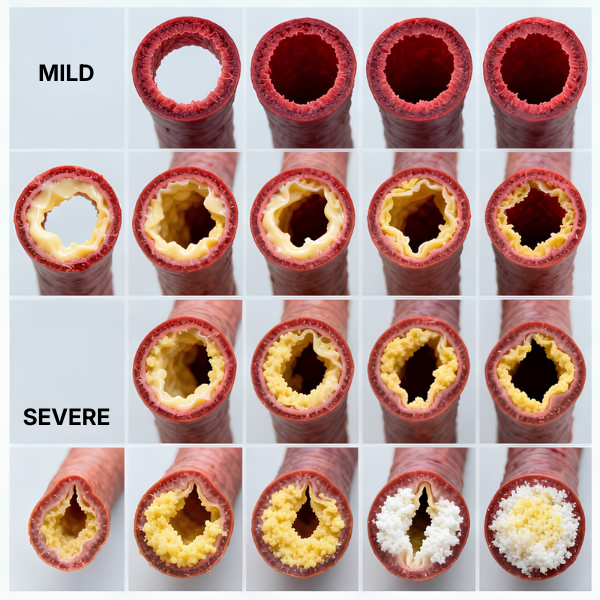
Your GP says your blood pressure is "controlled." So why can't you get an erection anymore? Last spring a man named Robert sat across from me after his stress echocardiogram. He was 63. Retired teacher. On blood pressure medication for nine years. Cholesterol "excellent" according to his last three annual checks. His GP had referred him after he mentioned chest tightness walking uphill. I ran the test. Twelve minutes progressive exertion. ECG monitoring throughout. Results printed within the hour. Borderline abnormal. Reduced blood flow to the heart muscle under stress. The pattern I've seen thousands of times in 21 years of cardiovascular medicine. I walked him through the results. Showed him the concerning segments. Explained what reduced cardiac perfusion under exertion means. Robert listened. Then he said something I wasn't expecting. "I've been on two blood pressure medications for nine years. My GP tells me my readings are perfect. So why is my heart still not getting enough blood when I push myself?" I told him the truth. "Robert, your medications have been managing the pressure reading on the gauge for nine years. That's important. But the arterial narrowing showing up on this test developed over the 20 to 30 years before you started those medications. The deposits were building inside your arterial walls from your late twenties onward. The medication controls the pressure. It doesn't dissolve what's already inside the walls." He stared at the printout. "So the deposits that are already there — they're just staying?" "Yes." "And nothing I'm taking is touching them?" "No." Long pause. Then Robert said something that changed how I approach every patient consultation since. "Is that why I can't get hard anymore?" I'm Dr. James Whitfield. Consultant cardiologist, 21 years. I have conducted over 9,000 cardiac stress tests. I measure blood flow through arteries for a living. And until Robert asked me that question, I had never once — in 21 years — connected reduced cardiac perfusion to a patient's erectile dysfunction in a clinical conversation. Not because the connection doesn't exist. It does. The research is overwhelming. The penile arteries are 1 to 2 millimetres in diameter. The coronary arteries are 3 to 4 millimetres. The same cholesterol and calcium deposits narrow both simultaneously. But the smallest pipes reach critical narrowing first. Erectile dysfunction symptoms appear 3 to 5 years before cardiac symptoms on average. The Princeton Consensus Panel — the leading authority on men's cardiovascular health — officially classified erectile dysfunction as "the earliest clinical manifestation of systemic vascular disease." Not a bedroom problem. A vascular disease. Presenting in the smallest arteries first. "Robert, when did your erectile problems start?" "About five years ago. Morning erections disappeared first. Then things became unreliable. I've been on Viagra for three years." "And Viagra works?" "Less and less." I pointed to his stress test results. "The reduced blood flow showing up on this test — it's also happening in your penile arteries. Same disease. Same deposits. Your penile arteries are smaller, so they showed symptoms first. Five years ago. Your coronary arteries are just now crossing the threshold." Robert looked at the printout for a long time. "The Viagra isn't fixing any of this, is it." "No. Viagra forces blood through narrowed vessels for a few hours by preserving whatever minimal signal your arteries still produce. The deposits stay. The narrowing stays. When the pill wears off, your arteries are exactly where they were before you took it." "So what actually addresses the narrowing?" That question stayed with me after Robert left. Because I couldn't answer it. In 21 years of measuring cardiac blood flow, I had never been asked to solve what I measured. I told him I would look into it. Then I did something I had been quietly avoiding for months. I tested myself. Same protocol. Same treadmill. Twelve minutes progressive exertion. Results printed. Borderline abnormal. Reduced perfusion under stress. The same pattern I had just shown Robert an hour earlier. I am 56. I walk five miles daily. My blood pressure is managed. My last three cholesterol panels have been "excellent." And there it was. And my erectile function had been declining for two years. Morning erections gone. Reliable function becoming unreliable. The slow deterioration I had been attributing to work stress, fatigue, getting older. Every excuse men use to avoid acknowledging what I was now staring at on my own test results. I went home that evening. My wife was reading in the kitchen. I sat down and told her I had tested myself. Told her the results. Told her what they meant. She put her book down. "Is that why things have been..." "Yes. That's why." She reached across the table and put her hand over mine. We sat like that for a while without saying anything else. Robert's question — "what actually addresses the narrowing?" — became my question. And I spent the following weeks answering it. Not as a cardiologist. As a 56-year-old man with declining cardiac perfusion and erections that were failing. Here is what I found. Blood pressure medication manages the pressure reading. It does not dissolve the deposits inside the arterial walls. Viagra preserves whatever minimal signal your arteries can still produce — for a few hours. That is why the dose has to keep working harder and why it worked reliably at 58 and barely functions at 63. The escalating dose is not a medication issue. It is a measurement of how much more blocked your arteries have become since you started. L-arginine and nitric oxide boosters send the "open up" signal to arteries that are physically barricaded with cholesterol and calcium. Like honking louder in a traffic jam. Testosterone supplements target the hormonal pathway. But 70% of erectile dysfunction in men over 50 is vascular in origin. Not hormonal. What addresses the actual deposits is clinical-dose vessel cleaning. Hawthorn extract — used in standard cardiology practice across Europe for decades — relaxes vessel walls and improves coronary blood flow directly. Therapeutic-dose garlic extract at concentrations six times higher than any health store product has been shown in peer-reviewed meta-analyses to reduce plaque volume inside arterial walls. Olive leaf extract matched the blood pressure reduction of a leading pharmaceutical ACE inhibitor in a published clinical trial. Without the erectile dysfunction that ACE inhibitors commonly produce as a documented side effect. Combined at clinical concentrations, these compounds address the deposits themselves — not the pressure reading, not the temporary dilation signal, not the hormonal pathway. The actual structural blockage inside the arterial walls. Here is what your body has already told you for free. During sleep, your vascular system runs its own diagnostic. If your endothelium is producing adequate signal, you wake with an erection. If morning wood has disappeared, your smallest arteries — the penile arteries — can no longer respond adequately. The same process is happening in your coronary arteries. You just don't feel cardiac symptoms yet because those vessels are slightly larger and haven't crossed the threshold. But they are following the same path. I confirm this on stress tests every week. Men with erectile dysfunction for 3 to 5 years arriving for stress tests showing early reduced perfusion. The ED came first. Every time. If morning wood is gone and your blood pressure is "controlled" — one of those is measuring the wrong thing. After 21 years and 9,000 stress tests, I know which one I trust more. I started the clinical-dose vessel cleaning protocol the same week I tested myself. Week two: I woke up differently. The steadiness that comes when circulation is improving — not a stimulant effect. Something quieter. Week three: Morning erections returning. Partial at first. Then more consistent. Week six: My wife noticed before I said anything. She didn't need to say anything either. I retested at three months. Normal. The reduced perfusion pattern present on my initial test had resolved. I called Robert. He had been on the same protocol for ten weeks. "Some mornings I wake up and things are just working again. First time in years. I've barely used Viagra this month." His follow-up stress test: normal. Your GP is managing a number on a blood test. He is not measuring 30 years of deposits inside your arterial walls. He is not measuring your endothelium's ability to keep arteries dilated. He is not measuring the thing that is actually causing your symptoms. Your erectile function is. Your body already ran the diagnostic. It ran it every morning for years. And it has been trying to tell you the same thing each time morning wood didn't come. The deposits are the problem. Not the pressure number. Not the cholesterol figure. Not the testosterone level. The deposits accumulating inside arterial walls — present in both sets of arteries, showing symptoms in the smallest ones first. There is now a clinical-dose formula designed to address exactly that. Not to mask the symptom. Not to force blood through blocked pipes temporarily. To dissolve what has been blocking them.
Your Blood Pressure Is “Controlled.” So Why Are Your Erections Getting Worse Every Year?
It’s the silence of lying awake, staring at the ceiling, while the woman you love sleeps with her back turned to you. It’s the crushing weight of knowing you are the one who pulled away.
SHOP NOWLike this ad? Make it yours.
Crush rebuilds this exact creative around your product — your brand, your colors, your offer — in about a minute.