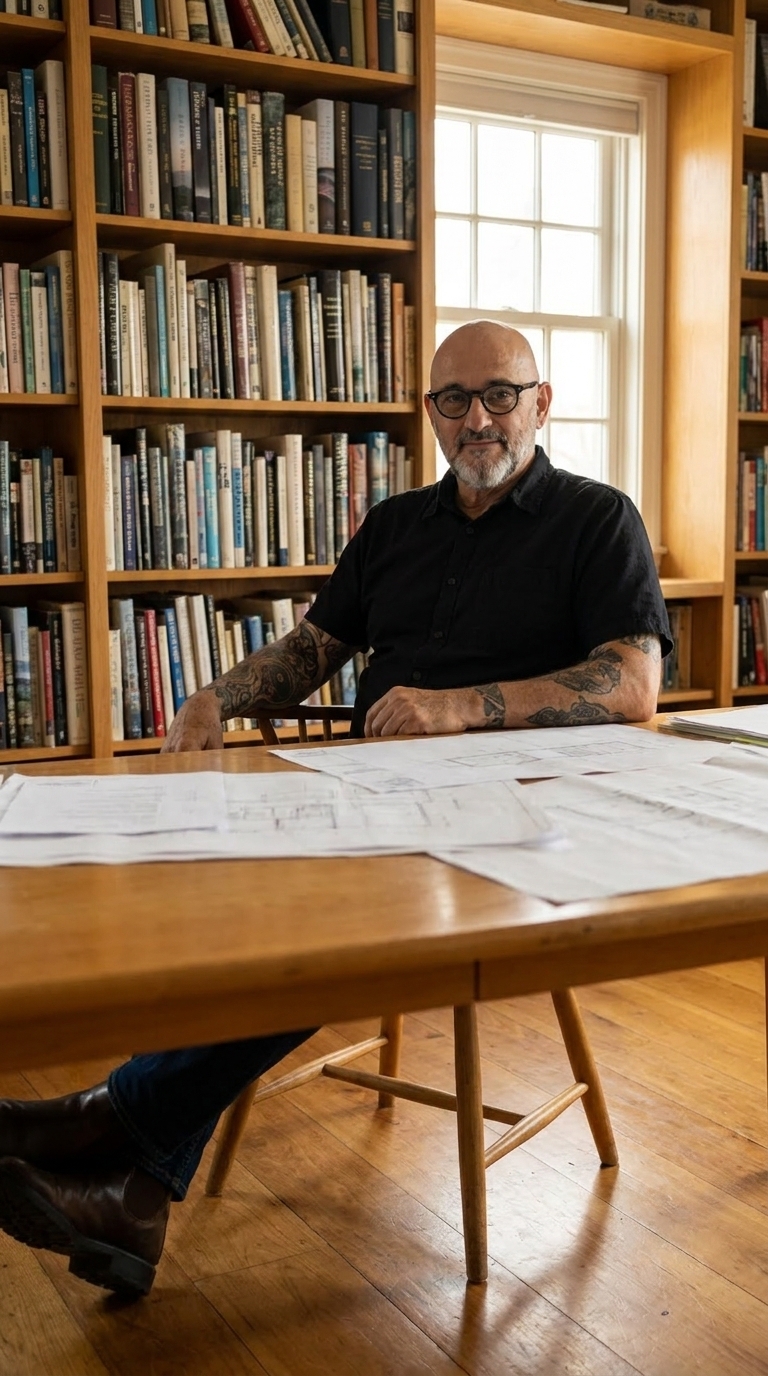
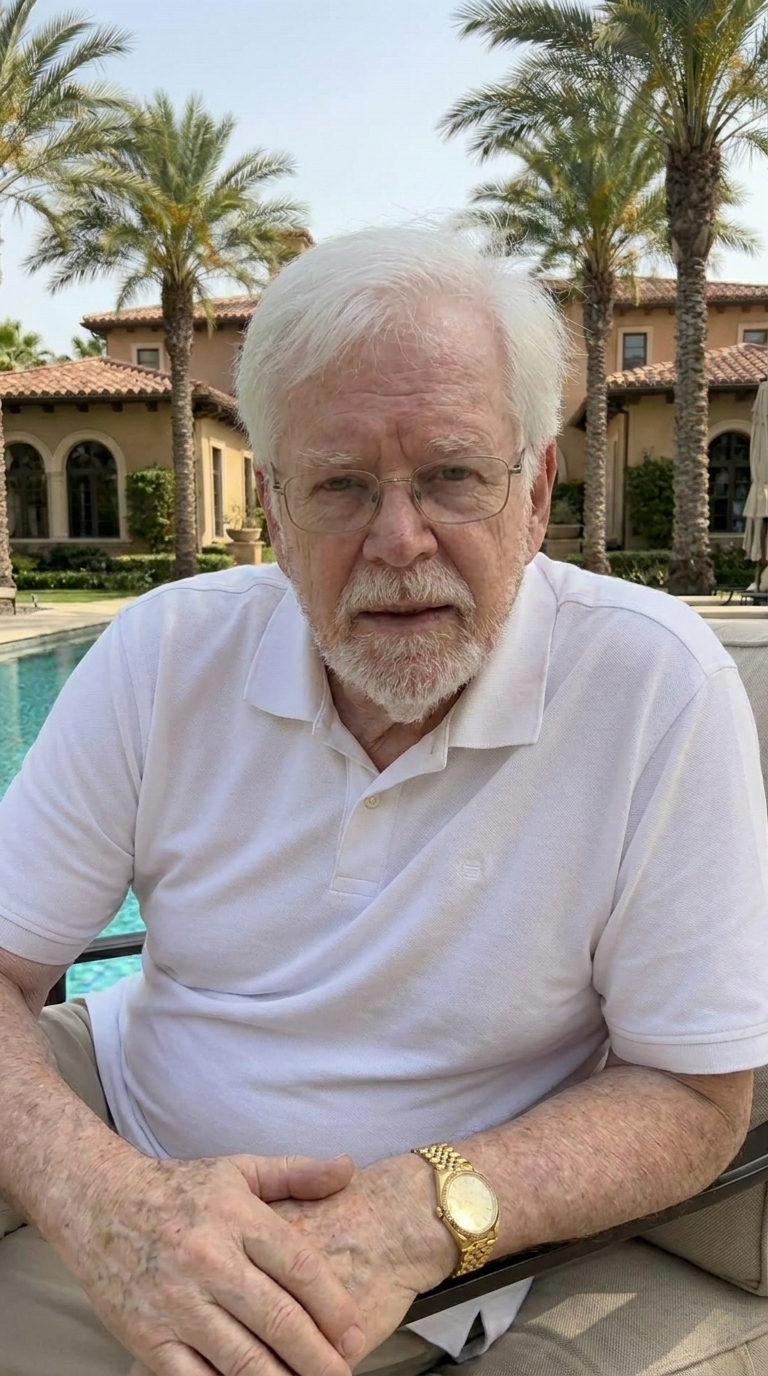
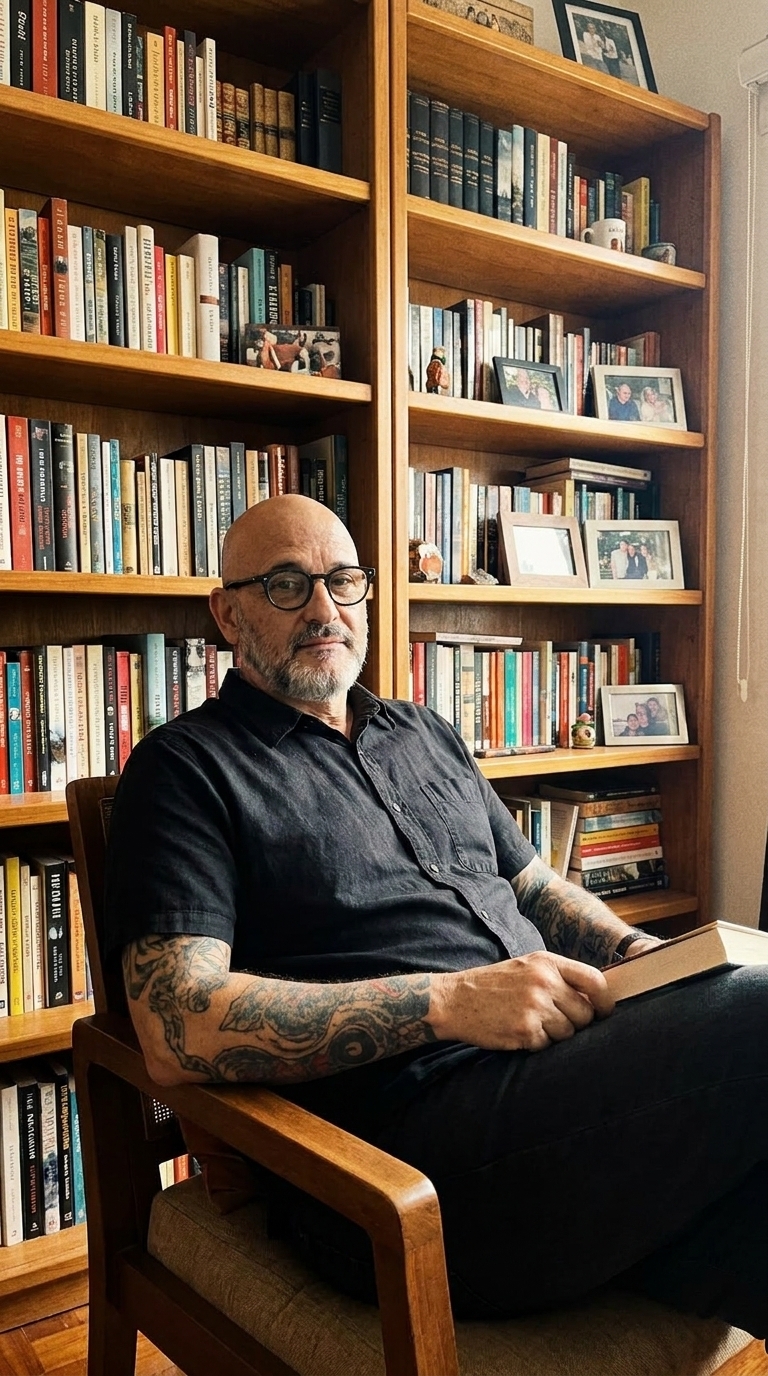
Professor Silas Thorne
Professor Silas Thorne Facebook ad: “Feeling stuck even when you know what to do?”

Ran for 2 days, from May 17 to May 19, 2026, the last day Crush saw it.
Run by Professor Silas Thorne on Facebook. Crush is not the advertiser and does not verify its claims. See this ad in Meta's Ad Library(opens in a new tab)
Want an ad like this for your product?
Crush makes new ad images for your product from this ad: your logo, your product photo, your offer.
Trials from $19.95 USD, then $79.95 USD a month. Cancel anytime.
About this ad
- Meta Ad Library ID
- 1498202935276607
- Platforms
- Facebook, Instagram, Audience Network, Messenger and Threads
- Relaunches
- 0
- EU reach
- 20
Ad text
I spent twenty-six years married to the most capable man I have ever known. Then I watched him sit at his desk every night for three years and finish nothing. Robert is the person our friends call when something genuinely difficult needs solving. He has built three businesses. He reads two books a week. He can walk into any broken situation and see, within minutes, exactly what needs to happen. He is not lazy. He is not weak. He is a man whose brain stopped producing the signal that says begin. The pattern was consistent enough that I eventually began to recognize it the way you recognize weather. He would sit down after dinner. Laptop open. Legal pad beside it, covered in organized notes from the night before. He looked exactly like a man working. That posture — slightly forward, pen moving occasionally — I had seen it for two decades and associated it with output. With progress. With the Robert who built things. What I did not understand for a very long time was that the pen moving was not writing. It was organizing. Reorganizing. Outlining the outline. He was producing the scaffolding of work without ever actually constructing the building. The first project I remember noticing: a consulting proposal he had been developing since the previous spring. By November it had seventeen pages of notes, a competitive analysis, a pricing framework, three different structural approaches. It did not have a cover page. It had not been sent. I asked about it once, casually, the way you ask. He said he was still refining the approach. I accepted this because he is a person who refines things carefully, and careful refinement had always, before, produced something refined. By the following March the proposal was twenty-two pages of notes. It still had not been sent. The client had moved on. I noticed but said nothing. I told myself this was a particular project with a particular complexity. I moved this explanation around for another year before I could no longer make it fit. By month eighteen I had a different project to observe. A book chapter. A business plan for a new service line. The preparation was always real — the legal pad covered, the laptop open, the notes detailed and intelligent. The output was always absent. I began to understand that I was not watching someone stuck on one difficult project. I was watching a pattern that moved from project to project and produced the same result regardless of the subject matter. That was the moment I knew it was not about the projects. I want to tell you about the secondary cost of this, because I have not seen it described anywhere and it is the part that stayed with me the longest. When your partner is stuck in this way — unable to begin, spending the hours that look like work in the elaborate preparation for work — you absorb a version of it too. I stopped asking about the projects because asking produced a tension I had learned to avoid. I told people, when they asked how Robert's consulting work was going, versions of the truth that left things out. I watched him carry something I couldn't name and I carried the watching of it. There is a specific loneliness in living alongside someone who is perpetually about to do the thing they care about most. You are both waiting. But you are waiting differently, and only one of you knows you are both waiting, and saying so seems cruel. The social cost of it is also specific. Robert had been telling colleagues and former clients about projects that were in development. Over time, the in development phase stretched long enough that people stopped asking. He noticed when they stopped asking. I noticed him noticing. We did not discuss this. There were several things we had quietly stopped discussing. I am not saying this to assign blame. I am saying it because the cost of this condition does not stay on one side of the table. It spreads. Quietly, without drama, it changes the temperature of the house. And you accommodate the temperature change without noticing, because you love the person, and accommodation is what love does. The accommodation itself becomes part of the pattern — you build your life around the space where the thing is not happening, and the building becomes so normal that you forget it is an accommodation at all. The conversation that changed things happened on a Sunday in October. I came into the office at nine in the evening. Robert was at his desk. I knew from the posture, from the quality of the silence, that nothing had happened since dinner. I sat down on the couch across from him and I did not approach it carefully. "Robert. When is the last time you finished something?" He looked up. A long pause that told me everything. "I finish things." "Name one. This year." He put the pen down. He looked at the legal pad. He didn't answer, which was its own answer. "I don't know what's happening," he said finally. This is from a man who could diagnose any other kind of problem in under ten minutes. "I sit down. I intend to start. And then I don't. I'm not avoiding it. I'm facing it directly and nothing happens." I had not expected that much precision. I had expected a defense. What he gave me instead was a description that I would later recognize, when I read it in a clinical framework, as almost technically accurate. His initiation system was not producing the start signal. Not sometimes. Reliably. Every time he sat down with the thing that mattered most. "How long has it been like this?" I asked. He thought about it. "Longer than I've let myself admit." We sat there for a while without saying anything at all. That is its own kind of conversation. I found the assessment on a Tuesday afternoon, three weeks after that conversation. I want to be honest about my skepticism. I have very little patience for productivity content. The category is saturated with things that are obvious dressed as insight. What I read was different. It did not tell Robert to believe in himself or break tasks into smaller pieces or use a timer. It described, with clinical specificity, a neurological mechanism — the way the amygdala intercepts the start signal when a task carries sufficient emotional weight, the way the prefrontal cortex goes quiet under that kind of threat load, the way preparation becomes a substitute for action that the brain accepts because preparation carries no risk of failure. It described four distinct patterns of how this manifests. It said each pattern has a different neurological trigger and requires a different intervention. It said the method that follows the diagnostic is not motivational. It said the quiz takes five minutes. I sent it to Robert with one line: "This is what I think is happening. Take the quiz before you open the laptop tomorrow." He called me from his office at seven forty-five the next morning. "How long have you known?" "I didn't know. I suspected." "It's the Perfectionist Starter," he said. "Every sentence. I cannot begin until I'm certain I'm beginning correctly. And I'm never certain. So I never begin." "Yes," I said. "That's fixable?" "That's what they say." A pause. "Okay," he said. Not relieved, exactly. More like a man who has finally found the correct diagnosis after a long time treating the wrong condition. What I watched change over the following months I will describe carefully because I watched it carefully. Week two: the consulting proposal was sent. Not the twenty-two-page version. A twelve-page version he produced in a single afternoon. "I stopped waiting to know how it would go," he told me that evening. "I just started." The client responded within three days. The engagement began the following week. Robert called to tell me about the first meeting and there was something in his voice I recognized from the early years of our marriage — the specific energy of a person in motion. Week five: he mentioned, without apparent weight, that he had started two other things he had been circling for months. He mentioned it the way you mention something unremarkable. This was the detail that told me something real had shifted — not the output alone, but the absence of effort around it. He was not reporting a victory. He was not even noting it as progress. He was sharing news, the way you share news about things that have become normal. That casualness was the proof. Month two: I came into the office on a Saturday afternoon. The legal pad was on the desk. It was open to a page I hadn't seen before. Things had been crossed out. Not planned — completed. The notebook had always been full of plans. This was the first time it contained evidence of things done. Month three: he came home on a Friday and talked for forty minutes about a new project. Not planning it. Not describing what he was going to do. He had already started it and he was telling me about something that existed in the world. I recognized the voice. It was the voice I had married. The one that moved. Month five: a former client contacted him based on work he had submitted. The engagement was significant. He handled the call at his desk, and I heard him, through the door, speaking with the authority of a person who had recently done things rather than a person who was preparing to. That is its own kind of sound. I knew it when I heard it. I am writing this because I know there are people reading it who are not the one who is stuck. You are the one watching. You have been watching long enough that you have stopped naming what you see. You have stopped asking about the project. You have built accommodations around it the way you build accommodations around anything that does not change. You have told people partial truths. You have learned which questions not to ask. You have carried the watching, and the watching is its own weight. What I want to tell you — as someone who carried it for three years before understanding what I was seeing — is this: What you are watching is not a character problem and it will not be fixed by the right conversation, the right amount of space, the right encouraging comment at the right moment. It is a specific malfunction in a specific neural mechanism. It has a name. The name is Task Paralysis. There is a five-minute quiz that identifies which of the four patterns is running in the person you are watching — and a specific method, matched precisely to that pattern, that can interrupt it. You can take it yourself to understand what you're seeing. Or you can send it the way I sent it to Robert — one line, no pressure, no explanation required. The mechanism does the rest of the work, and it turns out that is enough. Take the assessment.
Where the ad sends people
plan.getattainify.com
Feeling stuck even when you know what to do?
See details: plan.getattainify.com(opens in a new tab)