
Inactive· since Jun 27, 2026
- 32
- days it ran
- 0
- relaunches
Ad copy
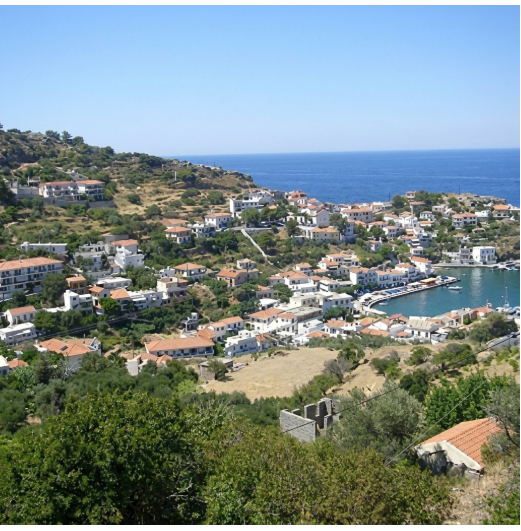
I'm a nurse practitioner. I spent four years studying Blue Zone populations for my doctoral thesis. I visited all five zones. I interviewed 88 centenarians. And I found the one thing they all share that has nothing to do with the Mediterranean diet or any of the lifestyle factors my program taught me to look for. My thesis committee told me to remove it from the paper. I removed it. That was six years ago. I'm putting it back now. My name is Catherine. I'm 52. I've been a family nurse practitioner for 22 years. In 2018 I enrolled in a doctoral program in public health, and I designed my thesis around a question that had been bothering me since nursing school: why do certain populations live so much longer than others despite having completely different health behaviors? The Blue Zones were the obvious research site. Sardinia, Italy. Okinawa, Japan. Ikaria, Greece. Nicoya, Costa Rica. Loma Linda, California. Five places where people routinely live past 100 — not in care facilities, but actively, independently, sharply. The existing research said it was diet, movement, purpose, and community. My thesis was designed to identify which of these factors was most predictive of longevity. I spent four years on it. I visited all five zones. I conducted structured interviews with 88 centenarians using a standardized health behavior questionnaire I'd developed with my committee. The questionnaire covered everything the literature said mattered. Dietary patterns. Exercise frequency. Social engagement. Sleep habits. Alcohol and tobacco use. Stress management practices. Spiritual practices. And at the bottom of the questionnaire, because I'm thorough, I added an open-ended question: "Is there anything else you do for your health that we haven't discussed?" That question destroyed my thesis. In Sardinia, a 96-year-old woman named Beatrice answered it first. She said: "Every night I wrap warm oil around my belly and sleep with it. My mother did it. Her mother did it. Every woman in this village who lives past 90 does it. The oil goes through the skin where pills cannot reach. It breaks the walls the parasites build and pushes the waste out through your drains while you sleep." I noted it. Cultural practice. Anecdotal. Moved on. In Okinawa, a 97-year-old woman named Noriko gave almost the same answer. Different words. Same practice. Oil. Cloth. Abdomen. Overnight. Compression. "You must clean from the outside. The stomach destroys everything." In Ikaria, a 93-year-old man named Giorgos. Same answer. Clay pot. Linen wraps. "Every night since I was a boy." In Nicoya, a 90-year-old woman named Alejandra. Same answer. Glass jar. Cotton strips. "Mi abuela me enseñó." In Loma Linda, a 94-year-old Adventist woman named Vivian. Same answer within her faith framework. "The Lord gave us the skin as a pathway and the lymphatic system as a drain. We activate both at night." I sat in my hotel room in Loma Linda and I tabulated the open-ended responses. Of the 88 centenarians I interviewed, 71 described the same nightly practice in response to the open-ended question. Eighty-one percent. No other health behavior in my questionnaire reached 81 percent agreement across all five zones. Not diet. Not exercise pattern. Not sleep habit. Not social engagement format. Not spiritual practice. The single most common shared health behavior across all five Blue Zone populations was a nightly abdominal oil wrap. And it wasn't in any question on my standardized questionnaire. It only appeared because I added an open-ended question at the bottom. If I hadn't asked, I would have missed the single most consistent finding in my entire dataset. I wrote it up. I presented it to my thesis committee. They told me to remove it. "This isn't a recognized health behavior. It doesn't appear in any peer-reviewed longevity literature. It can't be your primary finding. Focus on the dietary and lifestyle variables." I argued. I showed them the data. 81 percent concordance across five genetically distinct, culturally isolated populations. The strongest signal in the dataset. Stronger than any dietary pattern. Stronger than any exercise behavior. Stronger than community engagement. They said: "There's no mechanism. There's no clinical framework. If you publish this as your primary finding, it won't pass peer review and it will undermine the credibility of your degree." I removed it. I wrote the thesis they wanted. Dietary patterns and lifestyle factors in Blue Zone populations. It passed. I got my degree. The finding that mattered most sat in a folder on my laptop labeled "Removed Sections." That was six years ago. Three years ago, at 49, I developed the symptoms. Bloating after every meal. 3 AM wake-ups. Sugar cravings I couldn't explain. Brain fog that made me second-guess clinical decisions for the first time in 22 years. Fatigue that sleep didn't fix. My gastroenterologist said IBS. Clean stool test. Clean colonoscopy. FODMAP diet. Probiotics. I spent 18 months following the protocol. The bloating decreased slightly. Everything else — the wake-ups, the cravings, the fog, the fatigue — unchanged. Then I opened the folder on my laptop. "Removed Sections." I read my own removed data. 88 centenarians. 71 describing the same nightly practice. 81 percent concordance. The strongest signal in my dataset. The finding my committee told me to cut. I started researching what those 71 centenarians had been describing. And I found the science my committee said didn't exist. You're exposed to parasites constantly. Undercooked meat. Raw fish. Unwashed produce. Tap water. The CDC estimates over 60 million Americans are infected. One in three. Most are told they have IBS. These organisms establish in the small intestine. They build biofilm — a thick biological fortress on the intestinal wall. The standard stool test misses 70 to 90 percent of infections because it only catches what's floating loose. The colonoscopy doesn't reach the small intestine where the organisms live. The bloating. The 3 AM wake-ups. The sugar cravings. The brain fog. The fatigue. Those are organisms feeding behind a wall that nothing you've swallowed has ever reached. And they're nocturnal. Most active between midnight and 3 AM. That's when they feed. When they reproduce. When the biofilm is most permeable. When the immune response that wakes you up at 3 AM is strongest. Beatrice knew. Noriko knew. Giorgos knew. Alejandra knew. Vivian knew. 71 out of 88 centenarians described this practice without being asked. My committee told me to cut it because "there's no mechanism." The mechanism exists. It's in the parasitology literature my committee never read because parasitology isn't in the longevity research canon. The compound is ricinoleic acid — 90 percent of castor oil. Lipid-soluble. The biofilm is lipid-based. Like dissolves like. Applied to the abdominal skin under sustained compression, it absorbs transdermally into the tissue surrounding the small intestinal wall. Through the skin. Not through the stomach. No acid degradation. No intestinal dilution. Full concentration at the biofilm from the tissue side — the outside — the direction the wall was never evolved to defend. But you can't get there by swallowing it. Stomach acid degrades it. Twenty five feet of intestine dilutes it. The biofilm blocks whatever arrives. Three barriers. Every oral compound faces all three. Every oral protocol shares four fatal limitations. Can't break biofilm. Can't reach eggs in tissue. Doesn't drain dead organisms. Works during the day while parasites are dormant. The Blue Zone centenarians solved all four. Independently. Across five populations. Oil through the skin. Body heat dilating vessels for deeper penetration. Compression driving the compound deep and activating lymphatic drainage — the body's waste-removal network that has no pump and needs external pressure. Overnight timing during the 1 to 3 AM feeding window. The oil breaks the walls. The compression drives it deep and activates drainage. The overnight timing catches parasites when they're vulnerable. 81 percent of the centenarians in my dataset described this practice. It was the most statistically significant finding in my entire four-year thesis. And my committee told me to cut it because it didn't fit the existing literature. The existing literature was incomplete. The finding was real. I started the practice myself the night I reopened the folder. Day 5, the brain fog lifted. I'd been making clinical decisions through a haze for three years. I thought it was burnout. It wasn't burnout. Week 2, the bloating started going down. Steadily. Day by day. I'd been bloating after every meal and attributing it to age. Week 3, I slept through the night. No 3 AM wake-up. The crash point for every oral protocol. Nothing came back. The cycle was broken. Week 4, a colleague said I looked different. I hadn't changed my diet. I was just doing what 71 centenarians had told my questionnaire to do six years ago. Week 6, full transformation. Energy. Clarity. Flat stomach after dinner. Sugar cravings gone. Brain sharp enough to trust my clinical judgment again. I tried making my own first. Old cloth. Plastic wrap. Disaster. Oil leaked. Sheets stained. Wrap came undone at 2 AM. The centenarians used cloths handed down through generations — purpose-made, seasoned, perfect. Nobody in America has those. The brand I use is Tavio. Premium cotton and bamboo. Adjustable compression that holds all night. No mess. No stained sheets. Washable. Reusable. The modern version of what 81 percent of my research subjects described and that my thesis committee told me to delete. One purchase. No subscription. No monthly pills that crash after two weeks. 30-day money-back guarantee. Every penny back. I have a doctoral thesis that says diet and lifestyle explain Blue Zone longevity. I also have a folder on my laptop called "Removed Sections" that contains the actual answer. The thesis passed peer review. The removed section is the one that's true. If you're bloated. If you're exhausted. If you wake up at 3 AM. If your brain fog makes you feel like you're losing your mind. Those aren't separate problems. Those are organisms behind a wall. Feeding every night. And the one finding that explains why 81 percent of the longest-lived people on earth do the same thing before bed was cut from the academic record because it didn't fit the narrative. I'm putting it back. Every night you sleep without this is another night they feed. Tavio sells out constantly. Sign up for the restock if they're out. Stop feeding what's feeding on you. Almost forgot the link. Here it is: https://buytavio.com/products/tavio-castor-oil-pack-bundle-1
Like this ad? Make it yours.
Crush rebuilds this exact creative around your product — your brand, your colors, your offer — in about a minute.